
Carisma Therapeutics
Developer of Cell Immunotherapy
Appia Bio
Hematopoietic Stem Cell (HSC) Engineered Allogeneic Cell Therapy Developer

On the evening of October 31, 2025, the eve of Halloween, *Fierce Biotech* released an annual special report documenting the "casualty list" of the global biotech field over the past year. This report not only reflects the harsh reality of the industry's downturn but also reveals the brutal survival rules behind regulatory fluctuations, funding shortages, and technological transformations.

In 2025, a total of 16 biotech companies have officially shut down, with another 3 on the brink of bankruptcy, struggling to survive, bringing the total number of companies in crisis to 19. This figure shows a slight decrease from 22 in 2024 and a significant reduction from the record high of 27 in 2023, but the industry's difficulties have yet to see fundamental relief.
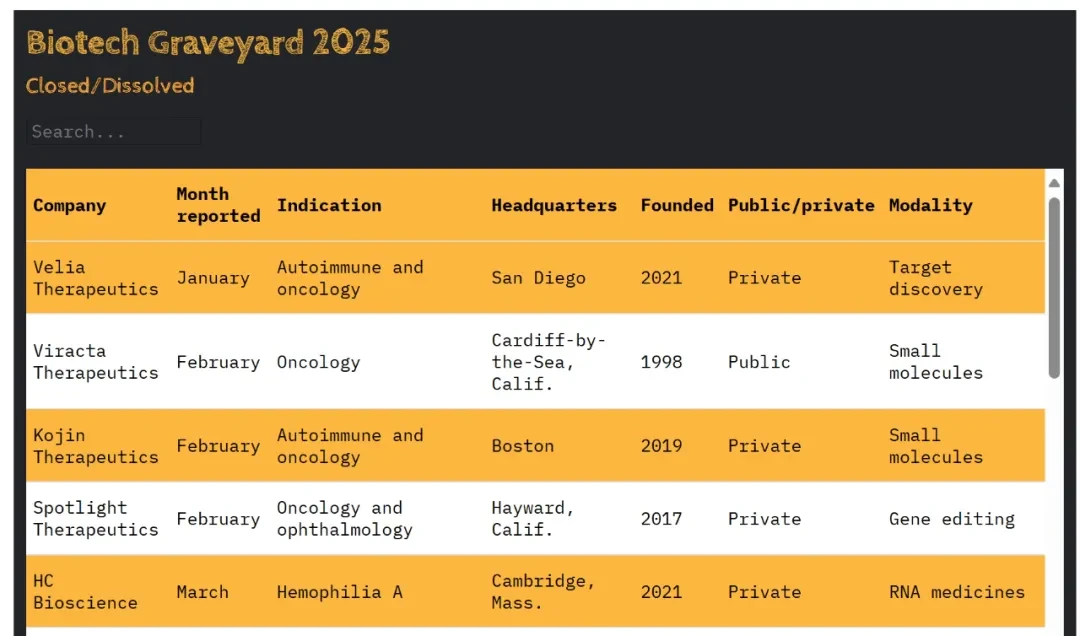
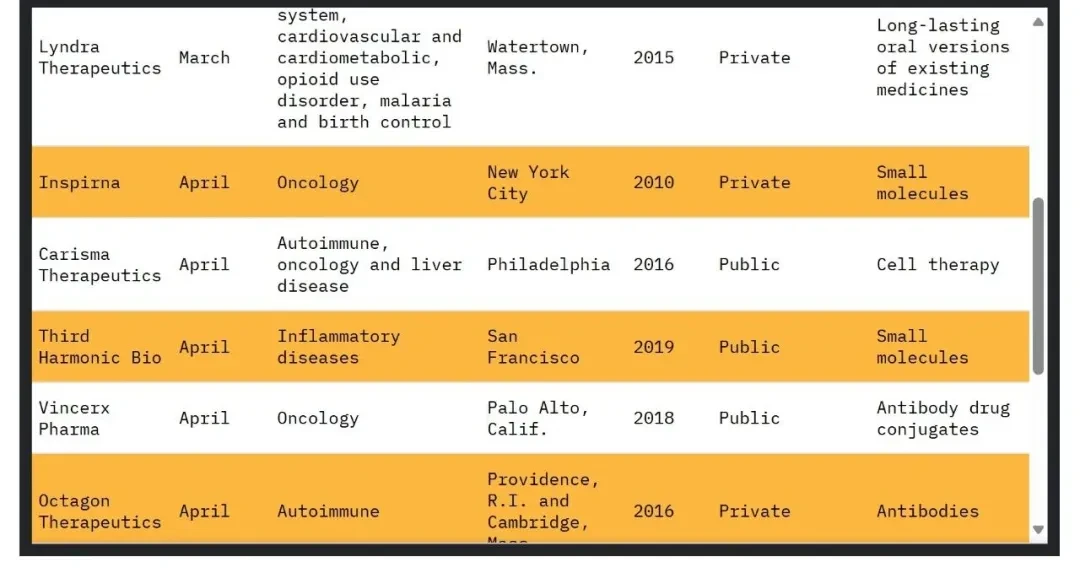
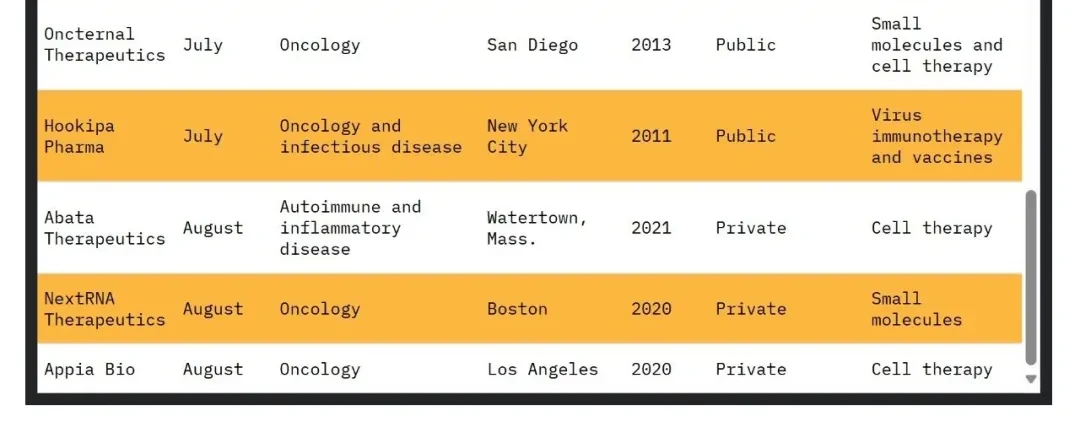
16 Shut-down Biotechnology Companies
The fall of these companies was no accident. In 2025, the biotech industry suffered multiple blows: a turbulent regulatory environment during Trump's second term, including massive layoffs at federal agencies, the complete termination of research funding, ongoing government shutdowns, increased tariffs on pharmaceuticals, and the shadow of drug pricing reforms, which forced several large pharmaceutical companies to reach compromises with the White House. Industry activity in the first half of the year came to a "complete standstill," becoming the last straw that broke the backs of many small and medium-sized enterprises.
In the 2025 biotech "graveyard," the cell therapy sector is undoubtedly the hardest hit.Carisma Therapeutics、Oncternal Therapeutics、Abata Therapeutics、Appia BioFour cell therapy companies, including [Company Names], have successively shut down, and even with the backing of large pharmaceutical companies, they were unable to reverse their fate.
Carisma TherapeuticsThe fall of Carisma Therapeutics is quite representative. This company, which focuses on macrophage therapy, downsized to just six employees in April, responsible for strategic evaluation and liquidation work. Although it had temporarily gained a lifeline by reaching a reverse merger agreement with OrthoCellix, a subsidiary of Ocugen, the deal fell through in September. At the same time, Moderna terminated its cooperation, leaving the company no choice but to sell off its remaining assets. The in vivo cell therapy collaboration for cancer treatment that Moderna and Carisma Therapeutics reached in 2022 also ended with Moderna paying $4 million to terminate the agreement.
Appia Bio's fate is equally regrettable. After completing a $52 million Series A financing in 2021, it signed a cooperation agreement of up to $875 million with Kite Pharma under Gilead Sciences. However, with the agreement expiring in 2024, the depletion of subsequent funds ultimately led to the shutdown of the company.
Notably, the cell therapy field is undergoing a dramatic transformation. Giants like Takeda, Novo Nordisk, and Galapagos have completely withdrawn from the field, while Gilead Kite and Roche Genentech have torn up multi-billion-dollar cooperation agreements. Meanwhile, in vivo cell therapy has become a new focus: Kite reached an in vivo CAR-T cooperation agreement with China's Prugene Biotech worth up to $1.64 billion; Bristol Myers Squibb acquired in vivo cell therapy company Orbital Therapeutics for $1.5 billion; the U.S. Advanced Research Projects Agency for Health (ARPA-H) also launched multiple special funding initiatives for in vivo cell therapy.
There are exceptions even in the cold winter,Vor Bio In May, it announced its shutdown, but in June, it was brought back to life through a $175 million private placement financing and a potential $4 billion licensing agreement for autoimmune disease assets in China. Founded by Nobel laureate Dr. Siddhartha Mukherjee, this company originally focused on gene-editing stem cell therapies for blood cancers. Now, with a new management team in place, it has embarked on a path to transformation.

Among the companies shutting down in 2025 are a group of "explorers" who bravely challenged the medical frontier. Although they ultimately failed, their technical attempts are still meaningful.
Velia TherapeuticsDedicated to finding tiny therapeutic targets from the depths of the "dark genome," though it shut down just four years after its establishment, its founder still firmly believes in the therapeutic potential of microproteins. Co-founder Dr. Alan Saghatelian launched a new tool for microprotein screening within the year and candidly admitted that the core reason for the company's failure was the lack of early-stage development projects. In a harsh funding environment, basic science projects struggle to sustain operations.
Coded HC BioscienceAttempted to develop a new therapy for treating Hemophilia A, which uses transfer RNA, an important group of molecules that deliver amino acids to proteins under construction. However, due to poor early preclinical data, the company decided to abandon the effort, believing the challenges of pioneering a new drug class were too great.
Lyndra TherapeuticsIt is a representative failure in reinventing old drugs. The company spun out from the laboratory of Moderna co-founder Robert Langer at MIT, aiming to create long-acting oral medications, such as a week's worth of medication that can be taken in a single dose.
Despite raising $101 million in Series E funding in 2023 and demonstrating in a Phase 3 trial of 90 patients that its long-acting schizophrenia drug LYN-005 can provide the same drug levels as the daily version, Lyndra found it impossible to raise further funds, and its dream ultimately collapsed.

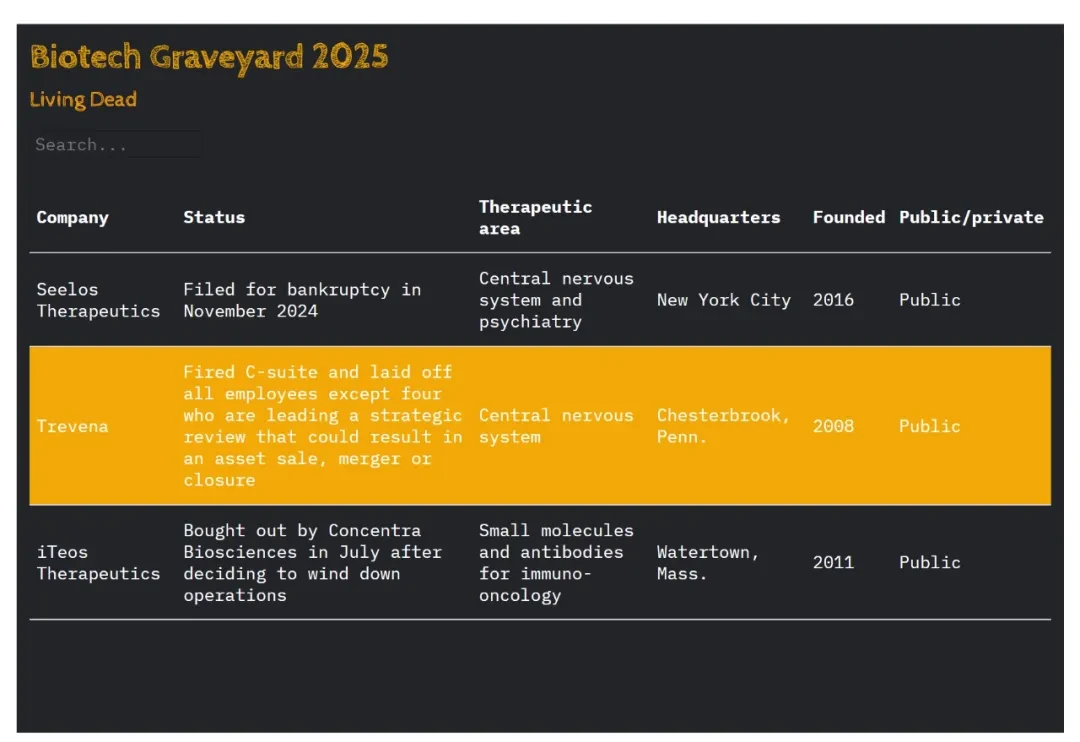
In addition to the 16 enterprises that have been shut down, there are three more in a "near-death state," teetering on the brink of survival:
Seelos Therapeutics:Applied for bankruptcy in November 2024 due to the failure of its Phase 2/3 clinical trial for the amyotrophic lateral sclerosis candidate drug.
Trevena:Dismiss the executive team, retain only 4 employees for strategic evaluation, and may face asset sale, merger, or complete shutdown in the future.
iTeos Therapeutics:Initiated liquidation after the failure of the TIGIT drug collaboration with GlaxoSmithKline, and was eventually acquired by Concentra Biosciences at a low price in July.
It is worth noting that,Concentra and Xoma RoyaltyThis year has been actively seeking to acquire struggling biotech companies. Turnstone Biologics was acquired by Xoma for less than $8 million, while Essa Pharma was acquired by a research nonprofit in a deal backed by Xoma.
Facing acquisition pressure,Pliant Therapeutics and AcelyrinAdopting a "poison pill plan" for self-protection, while Xoma has begun the acquisition of Lava Therapeutics, Mural Oncology, and HilleVax, a spin-off from Takeda.
In order to survive, some companies have adopted extreme strategies:Aptose BiosciencesWhen on the brink of bankruptcy, the CEO personally provided loans to keep the company afloat; another company barely managed to survive through unconventional measures such as acquiring waste management businesses and cutting employee salaries by 70%. However, it remains uncertain whether these actions can help them escape the bankruptcy crisis.
The biotech industry in 2025 has been called "an undefinable year," with multiple impacts from regulation, funding, and technology making it difficult for companies to move forward. For 2026, while the report hopes for a further decrease in the number of company closures, there is still no clear end in sight for the industry's winter.
This industry shakeout is both a crisis and an opportunity. The iteration of technological directions and the restructuring of business models may drive the biotech field to embrace a new landscape. Companies that can adapt to changes and focus on core value may find a way to survive the winter.
Compiled from:Fierce Biotech Image/Fierce Biotech