LambdaVision Secures $7M Seed Funding to Advance Space-Manufactured Artificial Retina for Restoring Vision in Blind Patients

Lambda vision
Artificial Retina Developer

Seven Seven Six
Venture Capital Firms

Aurelia Foundry
Deep-Tech Venture Capital Firm
LambdaVision Announces Completion of 700Million-dollar seed round financing, led by Seven Seven Six Fund and Aurelia Foundry Fund, with Seraphim Space participating.
Investor Evaluation
"LambdaVision is redefining possibilities at the intersection of space and human health. Their mission to restore vision through space biotechnology deeply resonates with me, serving as a powerful testament to how technological innovation beyond Earth can transform human destiny. We are proud to support entrepreneurs who translate scientific breakthroughs into lasting human impact—LambdaVision is a shining example of this."
---Katelin Holloway Founding Partner of Seven Seven Six Fund
"LambdaVision demonstrates the potential of space biotechnology to achieve transformative treatments on Earth. We look forward to supporting their expansion of the microgravity manufacturing platform, ultimately realizing clinical value."
---Rob Desborough Partner of Seraphim Space
Executive Evaluation
"The support from investment firms such as Seven Seven Six Fund, Aurelia Foundry Fund, and Seraphim Space in this round indicates that the potential of space biomanufacturing technology to accelerate the development of life-changing therapies is gaining increasingly widespread recognition. The seed funding will help us move toward the clinical trial stage and continue to lead the scalable production of artificial retinas, including manufacturing technologies implemented in low Earth orbit."
---Nicole Wagner CEO of LambdaVision
Globally, the incidence of blindness caused by retinal degenerative diseases — including retinitis pigmentosa and age-related macular degeneration — is rising significantly with the increase in average life expectancy and the growth of the elderly population. Statistics show that worldwide,Patients with pigmentary retinitis and age-related macular degeneration blindness have reached millions. Unfortunately, the lack of effective treatment technology means many patients cannot reverse their condition and are forced to live in darkness.
LambdaVisionThe space artificial retina manufactured by the global "space" processing technology is expected to help these patients restore their vision and regain brightness.
Space Artificial Retina
LambdaVisionThrough research, it was found that:ColorRetinitis Pigmentosa and Age-Related Macular Degeneration, these two diseasesAll are characterized by the loss of photoreceptor cells (rods and cones). These specialized neurons, located in the retina, can absorb light and transmit impulses through bipolar cells and ganglion cells, which are ultimately interpreted by the brain as visual signals. After the photoreceptor cells in a patient's retina are damaged, they cannot respond to light effectively. Fortunately, during the degeneration of photoreceptor cells, the bipolar cells and ganglion cells of the retina mostly remain intact.This makesSpace Artificial RetinaAble to assist in visual signal transmission by activating these nerve cells.
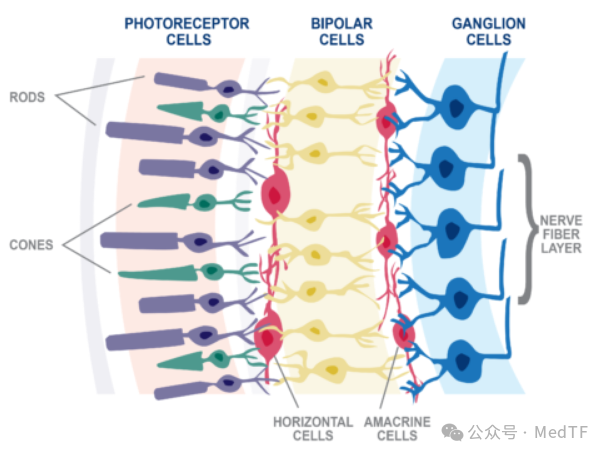
Space Artificial RetinaIt utilizes light-activated proteins — bacteriorhodopsin — to restore functional vision for patients blinded by retinal diseases such as retinitis pigmentosa (RP) and age-related macular degeneration (AMD). By employing proteins similar to the naturally occurring visual pigment rhodopsin found in the human eye,Space Artificial RetinaCapable of simulating the light absorption characteristics of photoreceptor cells and activating remaining nerve cells in the degenerated retinas of blind patients.
Space Artificial RetinaCompared with traditionalCompared with electrode-based implants, solvingLow resolution,Issues such as the need for external hardware to transmit and process incident signals.Space Artificial RetinaNot only canAchieve higher resolution, andNo external power supply or bulky hardware inside/outside the eye is required (only with the artificial retina).Achievable with incident light power supply)。
Space Artificial RetinaThis excellent performance is due toSpace Artificial RetinaUnique Processing Technology and Materials。
Space Artificial RetinaDeveloped using a layer-by-layer production process to ensure it has sufficient density to absorb the appropriate amount of light.
The artificial retina body is composed of alternating layers of bacteriorhodopsin protein and polymer, while the supporting substrate uses a synthetic fiber thin film that has been widely adopted in the medical field. The final product includes highly oriented bacteriorhodopsin protein layers, which can generate a unidirectional ion gradient after absorbing light, effectively stimulating residual neural circuits in degenerated retinas.
Space Artificial RetinaThe layer-by-layer production process needs to be implemented in the microgravity environment of the International Space Station (ISS). With this microgravity environment in space,LambdaVisionSuccessfully prepared a highly uniform 200-layer protein thin film (which is very difficult to achieve on Earth).
CurrentlyLambdaVisionAndNThe nine successful space missions conducted by ASA in collaboration with its executive partner, Space Tango, have not only validated their manufacturing processes but also optimized space production methods, paving the way for scaled-up production and future clinical trials.
Due to the advanced technology,LambdaVisionObtainNASA, the National Science Foundation and the National Eye Institute have provided strong support, with funding exceeding 15 million US dollars.
LambdaVision
LambdaVisionLambdaVision, Inc. is an innovative medical device company that is leveraging the space environment to develop protein-based artificial retinas, aiming to restore effective vision for millions of patients blinded by degenerative retinal diseases, including retinitis pigmentosa and age-related macular degeneration.