Domestic TIL Therapy GC101 Achieves Complete Tumor Clearance in 4 Weeks, Highlighted at 2025 SITC Annual Meeting
Juncell Therapeutics
Solid Tumor Cell Therapy Developer


Glioblastoma (GB) is the most aggressive subtype of primary brain cancer, characterized by rapid recurrence. Despite the availability of various treatment modalities, the median overall survival for patients with recurrent GB is only 6 to 10 months. In the history of brain tumor treatment, "complete remission" has been an almost unattainable luxury.
However, a breakthrough occurred at the 40th Annual Meeting of the Society for Immunotherapy of Cancer (SITC) held from November 7-9, 2025 — as one of the world's largest and most prestigious international conferences dedicated to cancer immunotherapy, the case data jointly published by the Second Affiliated Hospital of Soochow University and Juncell Therapeutics brought a stunning advancement in brain tumor treatment:A Grade IV glioblastoma (GBM) patient achieved complete clearance of the lesion just four weeks after receiving GC101 TIL (tumor-infiltrating lymphocyte) therapy produced in China. As of June 2025, the patient has maintained remission for over 1.4 years.. This is not only a life miracle for a single case, but also validates the lasting efficacy of TIL therapy with vivid clinical data, bringing new hope and options to countless patients with solid tumors who are in desperate situations!
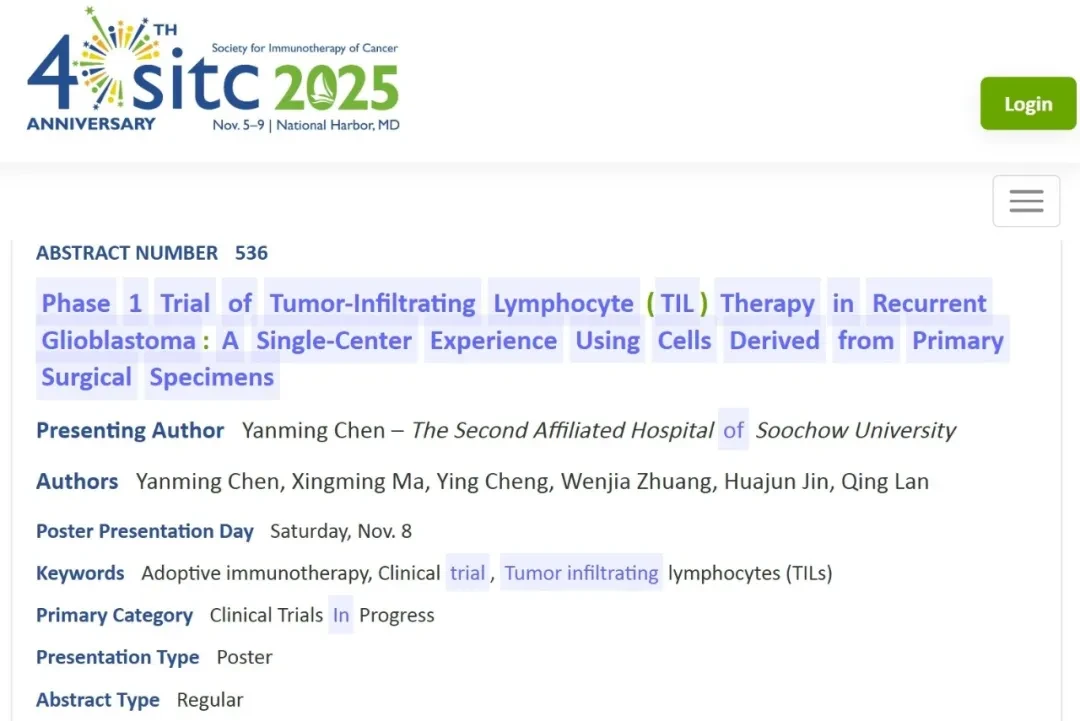
▲Screenshot source“SITC”
The Phase I clinical trial (NCT04943913) conducted by the Second Affiliated Hospital of Soochow University aims to evaluate the safety and efficacy of GC101 TIL therapy in patients with recurrent glioblastoma (GB).
The case reported at the 2025 SITC Annual Meeting involved a 56-year-old male patient diagnosed with left frontal lobe glioblastoma (IDH wild-type, WHO Grade 4, EGFR amplification) – this subtype is one of the most malignant and treatment-resistant types of glioma. On January 5, 2023, the patient underwent tumor resection surgery and initially received the Stupp regimen post-surgery. After a brief period of stability, the disease recurred. Despite subsequent treatments with CAR-T cell therapies targeting two different antigens, IL-13Rα2 and B7-H3, the tumor continued to progress, leaving the patient and his family in despair.
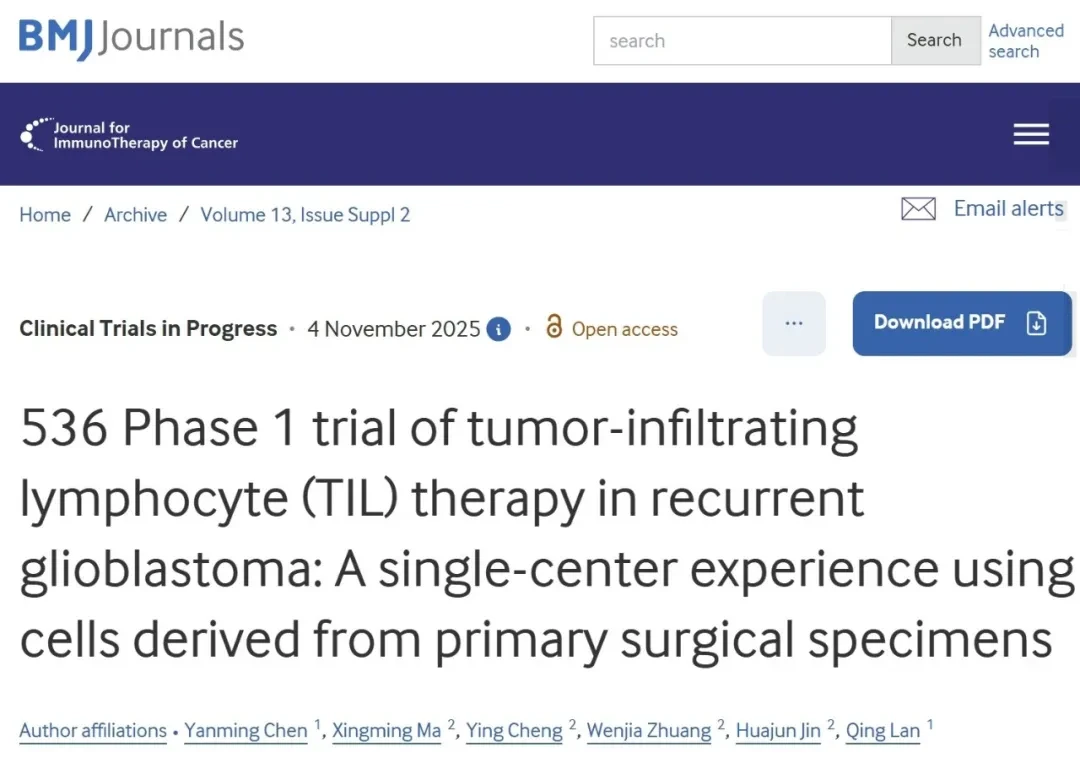
▲Screenshot source“BMJ”
At the end of 2023, a turning point emerged: the patient successfully enrolled in the GC101 clinical trial and received TIL cell infusion therapy. Researchers prepared tumor-infiltrating lymphocytes (TILs) from the patient's initial surgical excision specimen taken in January 2023. The TILs consisted of 99.92% T cells, primarily CD8⁺ T cells (97.85%). After pre-treatment, the patient completed the TIL infusion on December 12, 2023.
Results showed that: Baseline MRI in December 2023 showed,The maximum diameter of the recurrent lesion reached 2.8cm.;4 Weeks After TIL Cell Infusion(2024-01-08) First Imaging Assessment,The tumor was completely cleared, and the treatment outcome was assessed as Complete Response (CR).. As of June 2025,The patient has been in continuous complete remission for over 1.4 years, with no new lesions.Nowadays, the patient has long been freed from the constraints of the hospital bed, regained a new life, and returned to normal living.
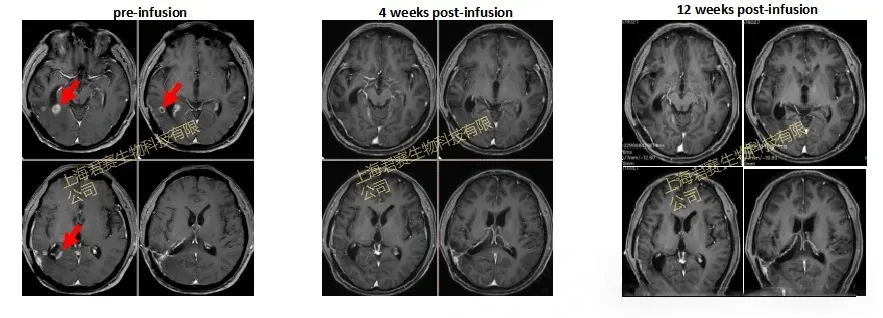
▲Source of the Image“JUNCELL”`, owned by the original author, if unintentionally infringing intellectual property rights, please contact us for deletion.`
Tumor-Infiltrating Lymphocytes (TIL) therapy is a novel T-cell immunotherapy that finds the "anti-cancer breakthrough" from the tumor lesions of cancer patients themselves, and is also known as the "solid tumor weapon." The importance of the aforementioned typical cases lies not only in the rarity of the results, but also in conveying two key signals:
①"Cold Tumors" Successfully Activated: Although glioblastoma is considered a "cold tumor," tumor-infiltrating lymphocytes (TILs) can be effectively expanded in vitro and possess the ability to cross the blood-brain barrier, ultimately achieving complete remission of intracranial lesions and breaking the immunotherapy dilemma for this type of tumor.
②"The Core Value of Storing TIL Cells as Early as Possible": TILs extracted from early surgical tissues in January 2023 successfully alleviated recurrent tumors at the time of enrollment in November of the same year, highlighting the significance of the "early tissue sampling, TIL reinfusion after recurrence" strategy for patients with recurrent GB.
However, the Global Oncologist Network continues to remind cancer patients that the number of TIL cells decreases gradually with the progression of the tumor. Additionally, adjuvant radiotherapy and chemotherapy after surgery may affect immune cells and normal cells in the body. A clinical study on "the application of TIL cell therapy for cervical cancer" showed a significant reduction in CD4+ and CD8+ cell counts in TILs during the late stages of the tumor (see figure below for details).
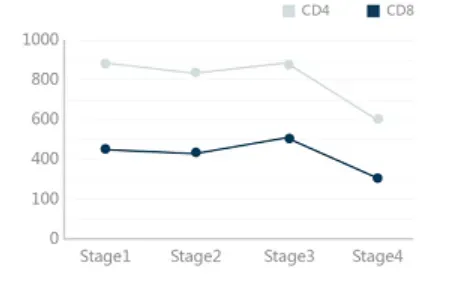
Therefore, it is recommended that patients store TIL cells when the tumor is newly diagnosed and before receiving other treatments such as radiotherapy or chemotherapy. Generally speaking, the earlier the storage, the better, to achieve the expected anti-cancer effect.
Patients who want to learn more about TIL cell storage can submit their recent pathology test results, treatment history, etc. toGlobal Cancer Doctors Network Medical Department (400-666-7998), for preliminary evaluation.
In addition to its use in brain tumor treatment, GC101 has shown remarkable efficacy in clinical studies of various advanced solid tumors: the objective response rate (ORR) exceeds 35%, with four patients achieving complete response (CR), and the longest disease-free survival surpassing three years.
Notably, one patient with advanced lung adenocarcinoma, who had lymph node, pleural, and bone metastases, enrolled in the study after failure of radiotherapy and targeted therapy, and received GC101 TIL cell infusion treatment. Imaging evaluation showed,Target lesions shrank by 36% at 6 weeks after infusion, and partial response (PR) was achieved at 12 weeks.;By 24 weeks, the patient had not received other treatments, and the tumor continued to shrink.The figure below shows the CT image comparison of the patient before receiving TIL infusion, as well as at 6 weeks, 12 weeks, 18 weeks, and 24 weeks after TIL treatment.
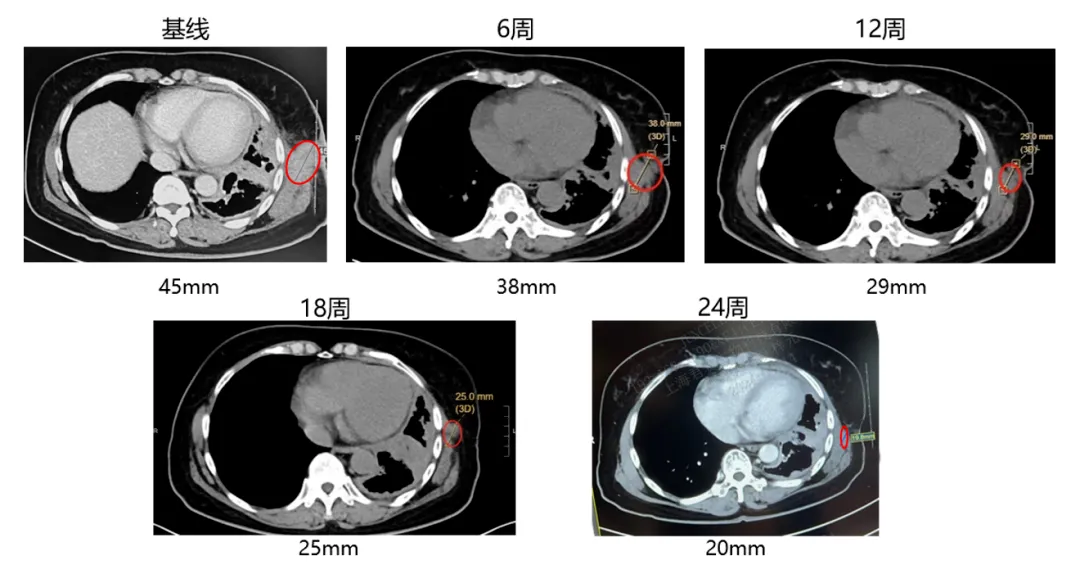
▲Source: "JUNCELL", all rights reserved. If we unintentionally infringe on intellectual property, please contact us for removal.
The Philadelphia Inquirer reported an inspiring case:A Patient with Metastatic Colon Cancer Achieves Regression of All Seven Pulmonary Metastatic Lesions After TIL Cell Therapy!
At the age of 47, the patient developed symptoms such as fatigue, frequent urination, and bloody stools, and was diagnosed with KRAS-mutated colorectal cancer. Despite initial surgical treatment, the cancer spread to the bladder and lymph nodes and metastasized to the lungs. Subsequent surgeries, chemotherapy, and radiotherapy were not effective, leading to enrollment in TIL cell therapy. During the treatment, doctors extracted and screened CD8+ T cells that specifically recognize the mutated KRASG12D (these cells can precisely kill tumor cells) from tissue removed from the lung lesions. After expansion and cultivation, 148 billion immune cells were obtained and infused back into the patient intravenously. This was followed by IL-2 (interleukin-2) treatment to support the growth and activation of immune cells.
The efficacy results are very significant:At the first follow-up 40 days after treatment, CT showed that all seven metastatic lesions in the patient's lungs had regressed.; whereinSix lesions remained in a state of complete or sustained regression 9 months after treatment.(See the figure below for details).The patient first achieved a partial response for 9 months.(According to the Response Evaluation Criteria in Solid Tumors),Only lesion 3 did not completely resolve., followed by video-assisted thoracic surgery (VATS) to remove the progressing lesion and Lesion 2. Postoperative positron emission tomography scan was negative. Currently, it has been 4 months since the lesion removal.No clinical signs of disease in the patientFrom worrying about not living past 50 at the time of diagnosis, to now successfully celebrating her 50th birthday, she is looking forward to more time spent with her family in the future!
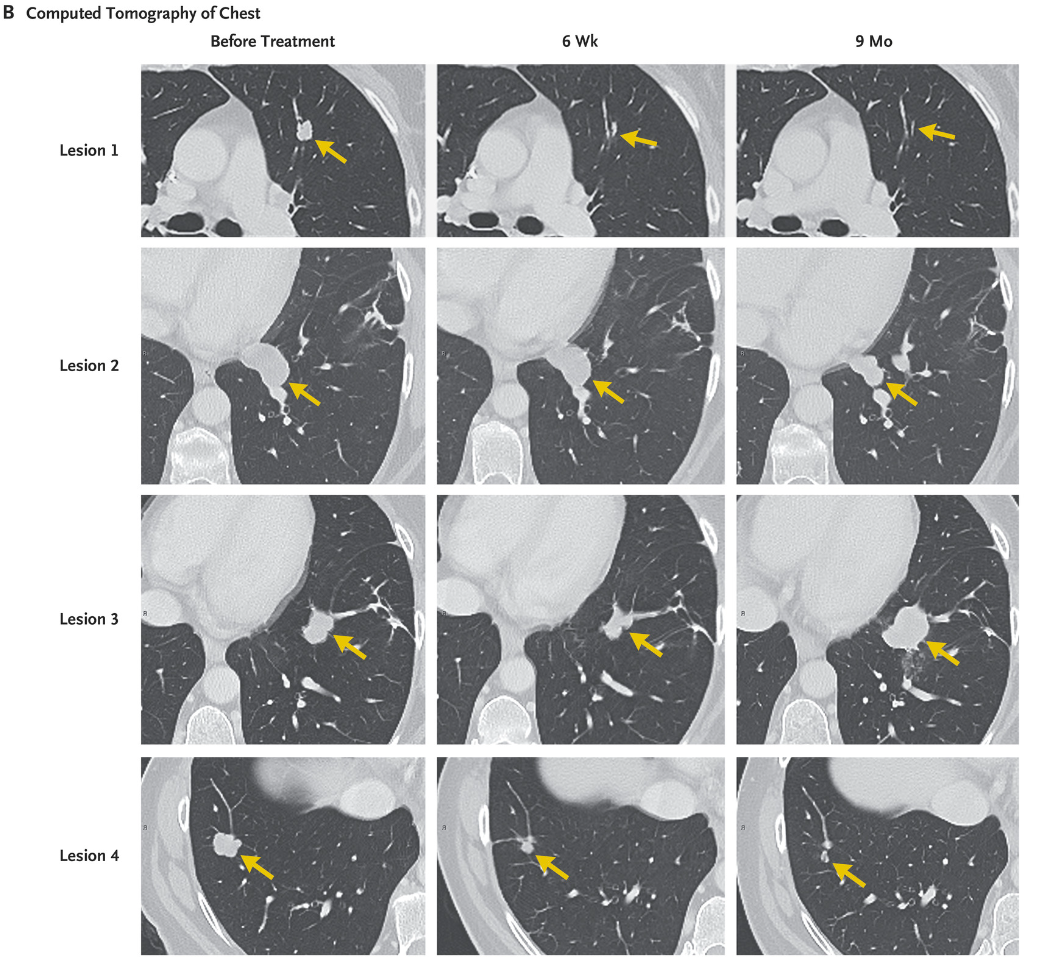
▲Source of the Image"The Philadelphia Inquirer", copyright belongs to the original author. If we unintentionally infringe on intellectual property rights, please contact us for removal.
The Phase I clinical trial (NCT04443296) published in the Journal of Clinical Research showed remarkable results in treating advanced cervical cancer with TIL combined with concurrent chemoradiotherapy, bringing new hope to patients with locally advanced cervical cancer.
The study enrolled a total of 27 patients with stage III-IV cervical cancer, with an average age of 56 years (range 42-70 years), including 24 cases of squamous cell carcinoma (SCC) and 3 cases of adenocarcinoma (AC).
Results showed: all enrolled patientsThe median progression-free survival (PFS) was up to 23 months, and the median overall survival (OS) reached 25 months.As of the last follow-up on March 1, 2022, among the 12 patients who received TIL infusion,75% (9 cases) achieved complete regression of one or more tumors, with disease control lasting 9-22 months.Among them, 5 patients (numbered 2, 4, 22, 23, 26) after 3 months of concurrent chemoradiotherapy combined with TIL infusion,The tumor completely disappeared, achieving complete remission (CR).; Another 5 patients (numbered 10, 11, 18, 19, 25) at 3 months of treatmentTumor shrinkage exceeds 30%, reaching partial response (PR)。
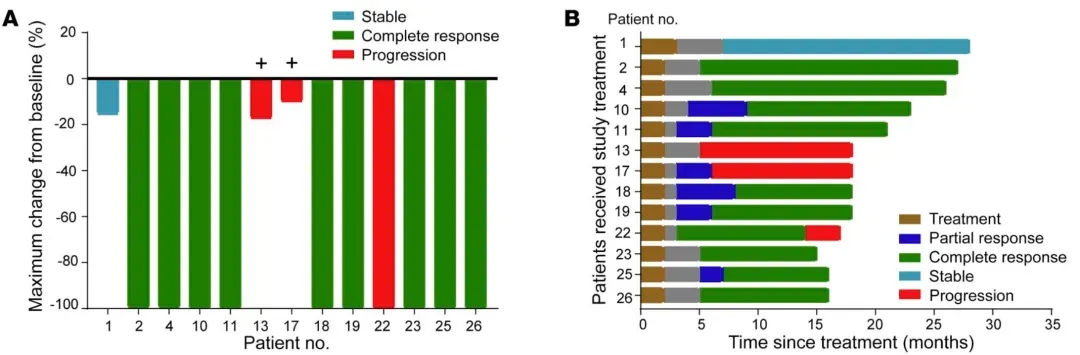
▲Source: "J Clin Invest", all rights reserved. If we unintentionally infringe on intellectual property, please contact us for removal.
In February 2024, the world's first TIL cell drug (Lifileucel) was震撼 launched, officially opening a new chapter in the clinical application of TIL novel immunotherapy. The successful case of TIL cell therapy for recurrent glioblastoma (GB) by the team from the Second Affiliated Hospital of Soochow University and Juncell Therapeutics has further demonstrated the impressive performance of the autologous immune system in the treatment of central nervous system tumors.
Fortunately, in recent years, China has kept up with international frontiers and developed multiple novel TIL therapy candidates. Early clinical studies have already shown positive efficacy, and they have now been officially approved for clinical trials, covering various solid tumors such as lung cancer, melanoma, cervical cancer, breast cancer, head and neck tumors, and biliary tract tumors. Chinese patients finally have the opportunity to join clinical trials for free! Cancer patients who have not responded well to existing treatment options or who seek help from TIL therapy and other new treatment technologies at home and abroad may contactGlobal Cancer Doctors Network Medical Department (400-666-7998), conduct a detailed assessment of the condition or apply for international consultation.
[1]Chen Y, et al. 536 Phase 1 trial of tumor-infiltrating lymphocyte (TIL) therapy in recurrent glioblastoma: A single-center experience using cells derived from primary surgical specimens[J]. 2025.
https://jitc.bmj.com/content/13/Suppl_2/A613
[2]Tran E, Robbins P F, Lu Y C, et al. T-cell transfer therapy targeting mutant KRAS in cancer[J]. New England Journal of Medicine, 2016, 375(23): 2255-2262.
https://www.nejm.org/doi/full/10.1056/nejmoa1609279
[3]https://www.inquirer.com/philly/health/cancer/In-a-first-immune-therapy-tames-mutation-in-colon-and-pancreatic-cancers.html
[4]https://www.juncell.com/en
This article is original content from Global Oncologist Network. Reproduction is strictly prohibited without authorization.
Scan to Add Patient Group
Cancer News|New Technologies|New Drug Development|Leading Experts
Join the group to receive free anti-cancer resources