Home Enreka Biologics' Off-the-Shelf CAR-NK Therapy KN5501 Achieves Historic Breakthrough in SLE Treatment, Published in The Lancet

Enreka Biologics' Off-the-Shelf CAR-NK Therapy KN5501 Achieves Historic Breakthrough in SLE Treatment, Published in The Lancet

Nov 14, 2025 10:31 CST Updated 10:31
Rui Therapeutics

A New Generation of Cell-Based Drug Developer
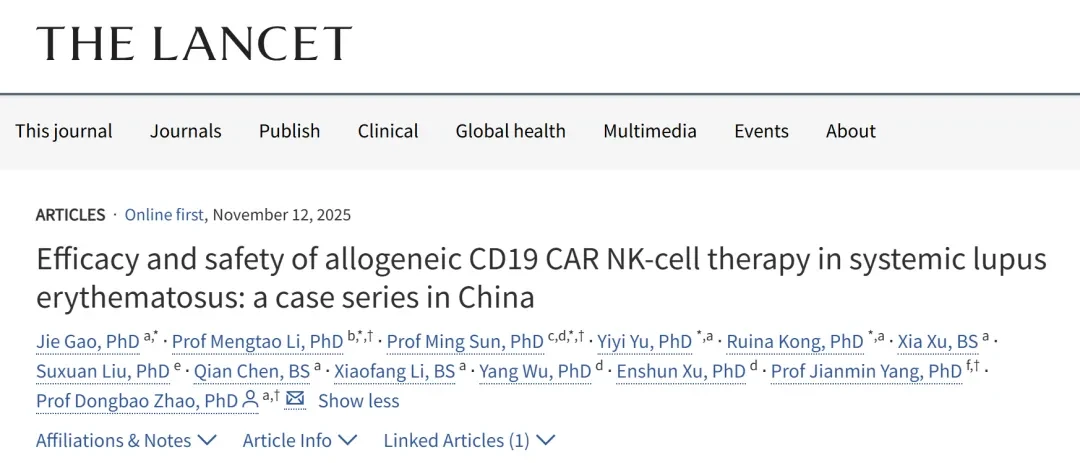
UK Time 23:30, November 12, 2025Rheumatology Department, Shanghai Changhai HospitalDongbao Zhao/Jie GaoProfessor Team, Shenzhen Rui Therapeutics TeamIn the international authoritative medicalTopPublication"The Lancet"The LancetImpact Factor88.5Released a New TypeGeneralized CAR-NK Cells (KN5501) for the Treatment of Relapsed/Refractory Systemic Lupus Erythematosus (SLE)Research results showKN5501In TreatmentRelapsed/Refractory SLEAspect showsExcellent efficacy andExcellenceSafetyOriginal link: https://www.thelancet.com/journals/lancet/article/PIIS0140-6736(25)01671-X/abstract
Image
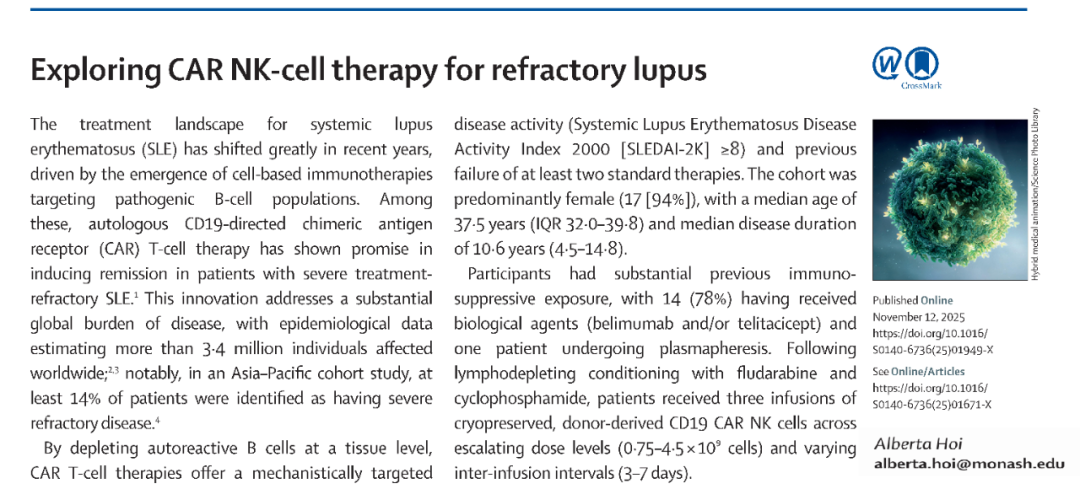
The Lancet invited Professor Alberta Hoi, Chief Investigator of the Clinical Sciences School at Monash University in Australia and Director of the Lupus Clinical Research Center, a global authority in the field of lupus, to write an independent commentary article titled "Exploring the Application of CAR-NK Cell Therapy in Refractory Systemic Lupus Erythematosus."Original link: https://www.thelancet.com/journals/lancet/article/PIIS0140-6736(25)01949-X/abstract
Image
The comment on the first human trial of allogeneic CAR-NK (KN5501) therapy in systemic lupus erythematosus (SLE)ClinicalThe study was highly praised.This research achievement not only providesRelapsed/Refractory SLEThe patient brings new hope, and also forRelapsed/Refractory SLEThe field of treatment provides important scientific evidence, markingInnovation in Relapsed/Refractory SLEAnother milestone in drug developmentMilestoneProgress.
Image
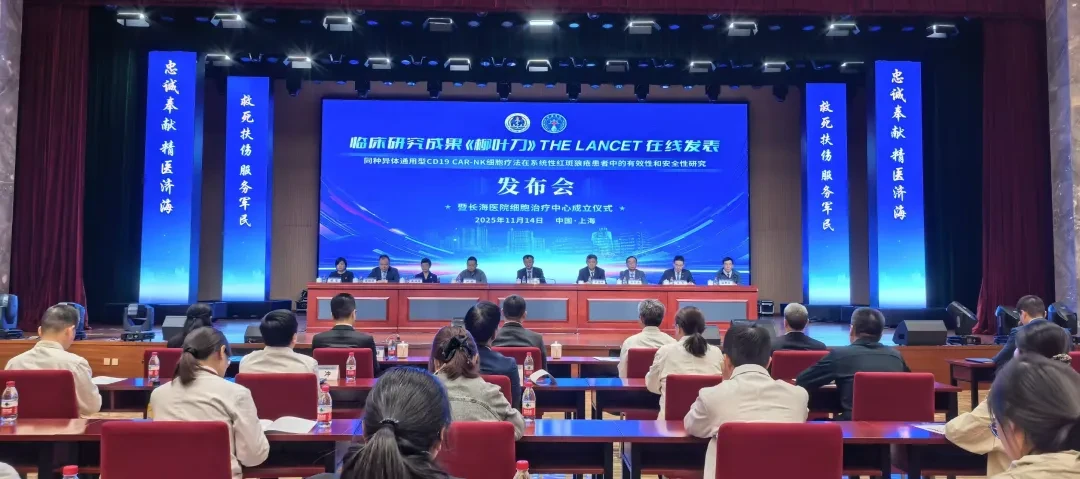
At 10:00 a.m. on November 14, Changhai Hospital held a press conference for significant research findings.

China's SLE Burden is Severe: Challenges and Hopes Coexist

Systemic Lupus Erythematosus (SLE) is one of the major autoimmune diseases that seriously endanger the health of people worldwide and is also an important disease causing death and disability among women in China. Epidemiological data show that there are approximately 1.06 million SLE patients in China, with an average age of onset at 30.7 years. Surveys indicate that 65.61% of SLE patients are unable to continue their previous work, creating a significant burden on families and society. In recent years, biologics have made some progress in the treatment of systemic lupus erythematosus, improving the overall response rate of patients; however, more than half of the patients still do not respond or experience repeated relapses. How to develop new therapeutic approaches to restore immune homeostasis in patients and improve the current state of treatment has remained a major scientific challenge in the field of autoimmune diseases globally.
The production of autoantibodies by B cells is a core pathogenic mechanism in autoimmune diseases such as SLE. In the treatment strategies for SLE patients, targeting the depletion of B cells to induce immune system resetting has been at the forefront of recent explorations in drug development for autoimmune diseases. Therefore, achieving rapid, deep, and long-lasting B cell depletion is key for SLE patients to rebuild naive B cells and restore immune homeostasis, enabling long-term deep remission.

KN5501Research Shows Breakthrough Results
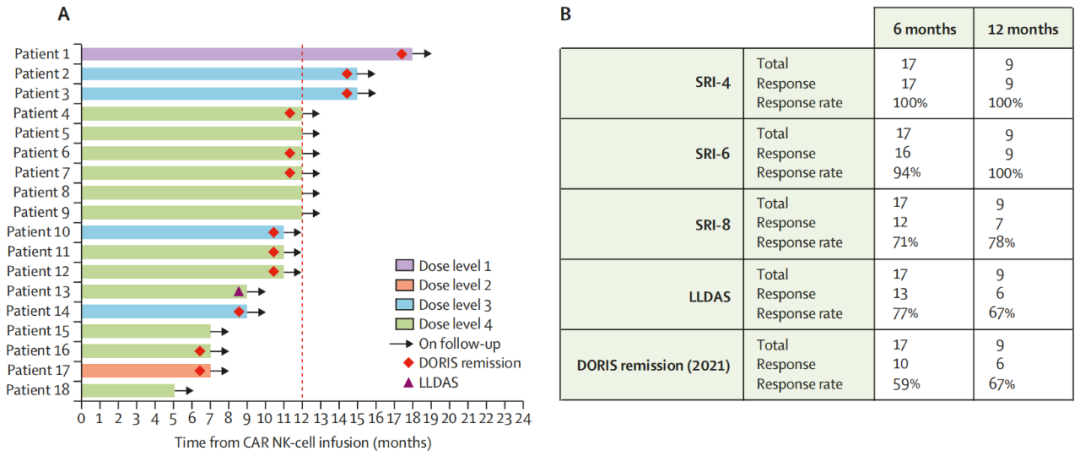
As the world's first team to initiate allogeneic CD19 CAR-NK therapy research for systemic lupus erythematosus (SLE), Shenzhen Rui Therapeutics, in collaboration with...Changhai Hospital, ShanghaiProfessor Zhao Dongbao / Gao Jie's TeamAs early as20233MonthAs forLaunched relevant research workInEvaluate whether this innovative therapy can bring long-term deep remission to patients with relapsed/refractory and moderate-to-severe active SLE.The research team used NK cells derived from healthy donors, which were genetically engineered to prepare.Targeting CD19,Targeting B lymphocytesClearUniversal, Spot GoodsKN5501, a CAR-NK cell therapy. The first patient was enrolled in August 2023.ToJune 2024Completed18Example of patient enrollment, lastingRecent2 years.截As of the submission dateThe median follow-up exceeded 12 months, with the longest follow-up reaching18 monthsAmong patients with more than 1 year of follow-up, 67% achieved complete Doris remission and reached a low-level lupus activity state, with no cases of recurrence. Analysis through BCR sequencing and flow cytometry showed that CAR-NK therapy...AbsoluteAchieve B-cell immune reset in the majority of patients, laying the foundation for long-term deep remission.
Image
Clinical data show:CAR-NK Therapy, andExistingTherapy andCAR-T Cell TherapyCompared toIn addition to achieving the same immune reset efficacy, its advantages are even greaterDemonstrated excellent safety, with only 2 cases of transient fever observed. No other treatment-related adverse events were noted during the treatment and follow-up period.OrThe occurrence of severe infections,AvoidTraditional treatments often bring severe toxic side effects such as avascular necrosis of the femoral head and infections caused by immunosuppression. Meanwhile, after CAR-NK treatment, patients showed significant improvement in mental state, a remarkable enhancement in quality of life, and regained work capacity.Demonstrate the additional effects of NK cell therapy.

Clinically Significant

This study isCurrentlyPatients with SLE and other autoimmune diseases lacking effective treatment optionsFinishedNewRevolutionary Therapy, demonstrating the great potential of universal CAR-NK cell therapy in terms of efficacy and safety,PowerfullyAdvance the treatment of autoimmune diseases into a new eraHistorical Stage. With the launch of registered clinical trials, this therapy will provideExtensive SLEPatient bringsUnprecedentedGospel.

Research Team

This project is jointly carried out by the State Key Laboratory of Immunology and Inflammation, the Clinical Research Center of Changhai Hospital, and Shenzhen Rui Therapeutics Co., Ltd., and has received funding from the Shanghai Municipal Health Commission's clinical research special project. Led by the team of Zhao Dongbao and Gao Jie from the Rheumatology and Immunology Department of Changhai Hospital, it is executed as a single-center study at Changhai Hospital under the joint guidance of Professor Zhao Dongbao from Changhai Hospital, Professor Li Mengtao from Peking Union Medical College Hospital, the R&D team of Shenzhen Rui Therapeutics Co., Ltd., and Professor Yang Jianmin from the Hematology Department of Changhai Hospital.
Associate Professor Gao Jie from Changhai Hospital, Shanghai; Professor Li Mengtao from Peking Union Medical College Hospital; the research team from Shenzhen Rui Therapeutics; Dr. Yu Yiyi and Dr. Kong Ruina from Changhai Hospital, Shanghai are the co-first authors of this article; Professor Zhao Dongbao from Changhai Hospital, Shanghai is the corresponding author of this article.