Beyond Steroids: Breakthroughs in Lupus Etiology, Cellular Therapies, and Low-Dose Belimumab for Relapse Prevention
Rui Therapeutics
A New Generation of Cell-Based Drug Developer
▼Follow the official account to watch daily content updates.
In mid-November 2025, the field of lupus diagnosis and treatment witnessed several significant advancements – including Stanford University unraveling a century-old mystery of the disease’s cause; the successful application of a Chinese-produced traditional Chinese medicine formulation; and promising news in pediatric cellular therapy. Each breakthrough brings new hope to millions of patients worldwide. The SLE Solution Shop has compiled the top five crucial updates worth noting recently, offering fans a quick grasp of the cutting-edge developments.

On November 15, a team from Stanford University School of Medicine published a breakthrough achievement in *Science Translational Medicine*:The direct trigger of systemic lupus erythematosus is the Epstein-Barr virus (EBV), which nearly everyone carries, and this conclusion may apply to 100% of lupus cases.
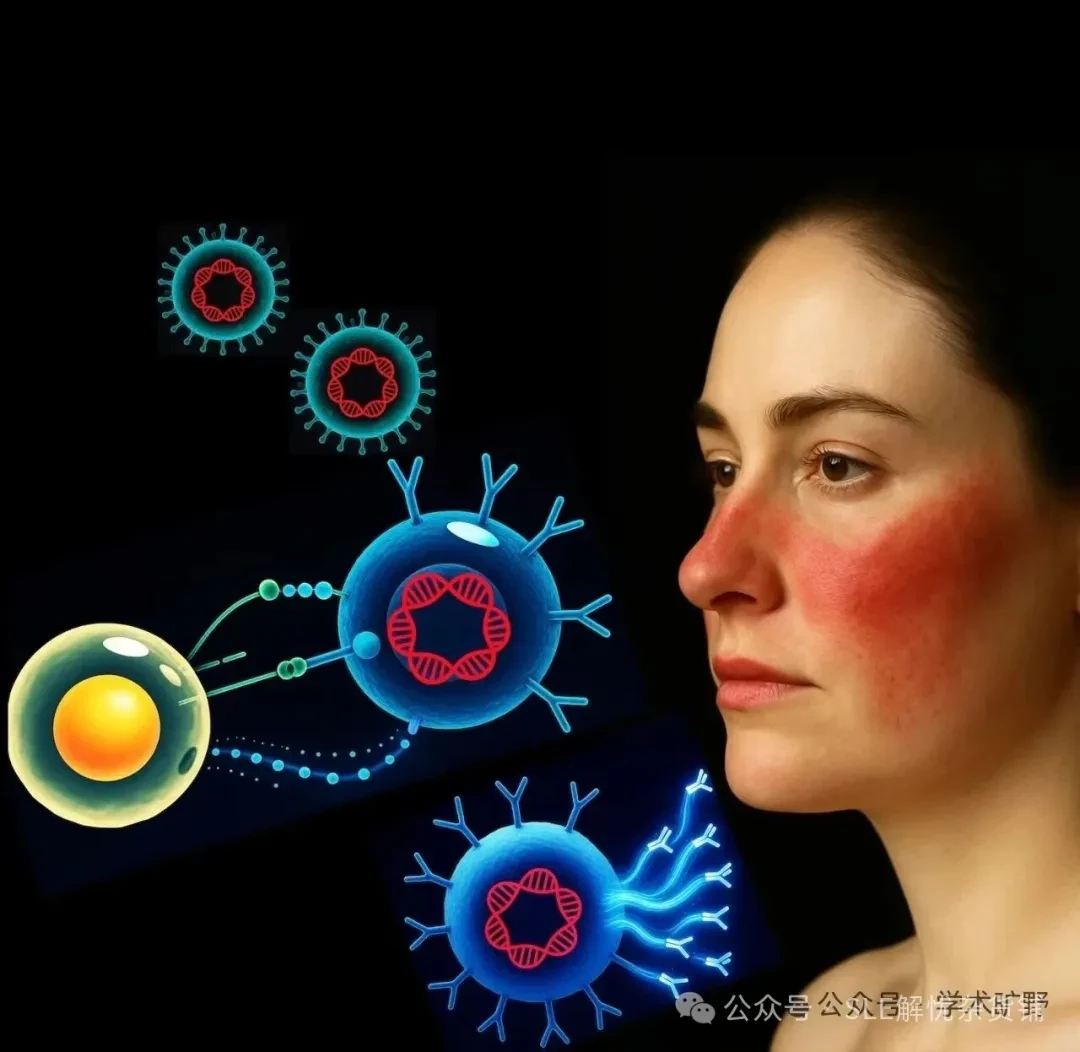
The pathogenic chain of the EB virus has been clearly dissected.It lurks inside human B cells, activating dormant genes by producing the EBNA2 protein, transforming B cells into drivers of inflammation. This, in turn, stimulates helper T cells, ultimately assembling an immune army that attacks the body's own cell nuclei, triggering hallmark lupus symptoms. More critically, research has found that the proportion of EBV-infected B cells in lupus patients (1 in 400) is 25 times higher than in healthy individuals.
This discovery not only provides a standard answer for the cause of lupus but also points to three major prevention and treatment directions: the EB virus vaccine has entered clinical trials (requires vaccination during childhood), "profound B cell depletion" therapy is under development, and in the future, it may also cover other autoimmune diseases such as rheumatoid arthritis.
Link to related articles:Heavyweight! EB Virus Carried by 95% of People Turns Out to Be the "Culprit" of Lupus? Stanford's New Research Solves a Century-Old Medical Puzzle

On November 15, the First Affiliated Hospital of Sun Yat-sen University (Sun Yat-sen No. 1) signed an agreement with Kangchen Pharmaceutical Group to commercialize hospital formulations.White Flower Purple Lotus GranulesPromote the transformation of achievements, with a transformation amount reaching 20 million yuan.
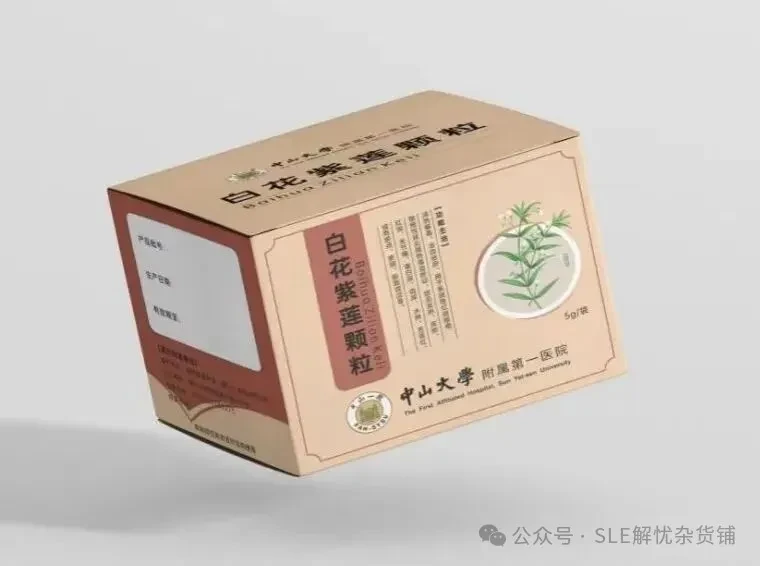
This formulation is derived from the "Lupus Formula" created by Professor Ye Rengao, a renowned nephrologist in China. Its core efficacy is to clear heat and detoxify, as well as activate blood circulation and remove blood stasis, specifically targeting systemic lupus erythematosus and lupus nephritis with the pattern of heat toxicity and blood stasis.Clinical data show that, when used in conjunction with conventional Western medicine, it can significantly improve treatment efficacy, while reducing recurrence rates and drug side effects.
From Research to Application, Baihua Zilian Granules Have Taken Over 20 Years. Supported by the National Natural Science Foundation, the team completed studies on efficacy and safety. In August 2024, it passed the evaluation by the Guangdong Provincial Drug Administration and was applied in the First Affiliated Hospital of Sun Yat-sen University. It has now been awarded the 2025 Guangdong Province Outstanding Pharmaceutical Achievement Award, officially stepping into marketization, and will benefit more patients at home and abroad in the future.
Link to related articles:In-Hospital Preparation "Baihua Zilian Granules" Achieves Transformation of Scientific Research Results

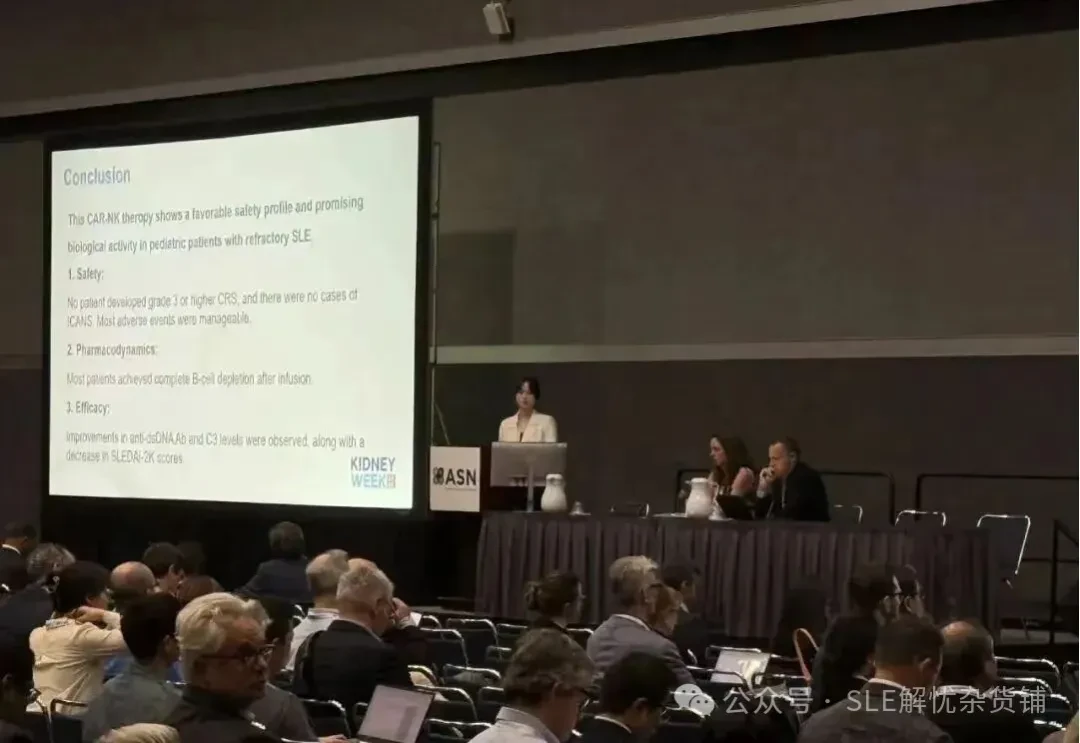
On November 16, at the 2025 American Society of Nephrology (ASN) Annual Meeting, Rui Therapeutics announced clinical data for its CD19/BCMA CAR-NK cell therapy KN5601, offering a new option with both efficacy and safety for pediatric relapsed/refractory lupus.
The core advantage of this therapy lies in its universal design. By using the HTAS-RV™ system to introduce the CAR gene into healthy donor NK cells, combined with expansion and cryopreservation techniques, it achieves "off-the-shelf" production. This perfectly addresses the challenges faced by pediatric patients.No need to extract cells from the patient (children's immune systems are immature, and blood collection is challenging), enabling rapid response to treatment needs and avoiding disease progression during the waiting period.
Clinical data show that the treated children exhibited significant improvements in SLEDAI (Systemic Lupus Erythematosus Disease Activity Index) and PGA (Physician Global Assessment), stable proteinuria levels, decreased autoantibody titers, and no severe adverse events were reported. Similarly, SNC103, a universal CAR-NK therapy developed by Rui Therapeutics, also reported data: 5 patients (including children) who were unresponsive to multiple lines of treatment achieved 100% SRI-4 response within one month, with 60% achieving DORIS remission at three months, and without risks such as CRS (Cytokine Release Syndrome) or GVHD (Graft-versus-Host Disease).

Clinical Research Team Led by Professor Dong Lingli from Tongji Hospital, Tongji Medical College, Huazhong University of Science and Technology Achieves Significant Breakthrough: CAR-T Cell Therapy Targeting B-Cell Maturation Antigen (BCMA) Brings New Hope to Patients with Refractory Lupus Nephritis; Relevant Findings Published in the Prestigious Rheumatology Journal, Annals of the Rheumatic Diseases.
The study enrolled seven refractory patients with a median disease duration of 12 years, who were given a single infusion of BCMA CAR-T cells.Significant efficacy achieved with a median follow-up of 9 months:All patients' disease activity scores (SLEDAI-2K) decreased from 18 to 0, with 5 achieving complete remission and 3 maintaining drug-free remission for over 6 months; levels of autoantibodies decreased, complement levels increased, and proteinuria significantly improved in some patients.
In terms of safety, only one patient experienced grade 1 cytokine release syndrome, with no neurotoxicity or severe infections.Hypogammaglobulinemia can be managed with intravenous immunoglobulin supplementation, with overall good tolerance. This study is the first to demonstrate that single-target BCMA CAR-T therapy can safely and effectively induce remission in lupus nephritis, providing a novel treatment strategy for refractory autoimmune diseases.

On November 13, the research team led by Professor Ye Shuang from Renji Hospital, affiliated with Shanghai Jiao Tong University School of Medicine, published their study in the top rheumatology journal *Annals of the Rheumatic Diseases*, offering a new long-term management strategy for lupus patients with low disease activity.
Study on Patients with Stable Condition but Still at Risk of Relapse (Annual relapse rate during lupus stability phase is 30-40%), Treated with Low-dose Belimumab (120mg intravenous injection). During an average follow-up of 31 weeks, only 7.8% of patients in the low-dose group relapsed, significantly lower than the 19.1% in the placebo group. Moreover, the SELENA-SLEDAI score decreased more significantly (-0.62 vs. +0.12), and the incidence of adverse events was similar to that of the placebo group (61.2% vs. 64.3%).
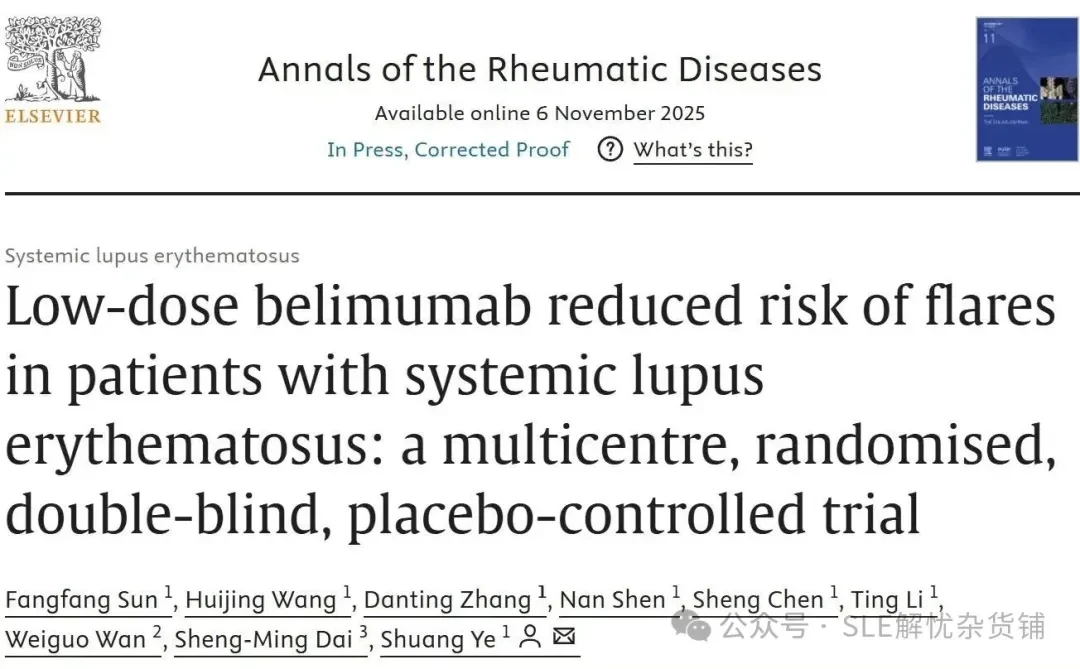
This discovery breaks the traditional understanding that no intensive treatment is needed during the stable phase.Prove that low-dose belimumab can mitigate the risk of relapse for patients with stable conditions and has good safety., especially suitable for patients who need long-term management and are concerned about drug side effects, providing assurance for the stable lives of millions of lupus patients in China.

This week's multiple advancements are outlining the future direction of lupus diagnosis and treatment.In terms of etiological research, breakthroughs in the EB virus and the PLD4 gene (previously discovered by the Zhejiang University team to cause lupus when defective) have made "quasi-targeted etiology" possible; in terms of therapy development, the exploration of universal cell therapies (such as CAR-NK), traditional Chinese medicine formulations, and low-dose biologics not only addresses the needs of special populations (children, patients in stable condition) but also continuously achieves breakthroughs in safety and accessibility.
For patients, these advances are not only medical breakthroughs but also tangible hope.From symptom control to tracing the cause, from prioritizing adults to covering children, and from high-dose treatments to low-dose long-term management, the diagnosis and treatment of lupus are advancing towards more precise, safer, and more accessible goals. We will continue to keep an eye on the latest developments and bring more good news to everyone as soon as possible.
In order to better assist patients with rheumatic immune diseases,We hereby recruit patientsJoin the national patient/family communication group.Scan the QR code below or add WeChat ID: pyq202406
Please note:"Systemic Lupus Erythematosus", "Sjögren's Syndrome", "Rheumatoid Arthritis", "Connective Tissue Disease", "Antiphospholipid Syndrome", "Membranous Nephropathy Group", "Parents of Children with Lupus", "Autoimmune CAR-T"etc., you can join the group after the administrator's review!
【Must include a note! Must include a note! Must include a note!】
Here, you can exchange insights with other patients, share treatment experiences, and access professional information and event updates. We hope that through this platform, every patient can feel the warmth and strength from the community, and together we can face the challenges of illness.
If you or your family members are suffering from rheumatic immune diseases and are willing to share your experiences, you are welcome to join our communication group.Let us join hands and strive for health together!