Home AntBot Microsurgical Robot 'Kai' Empowers Complex Abdominal Wall Tumor Resection and Reconstruction with Deep-Narrow Precision Breakthrough in Collaboration with Shanghai Ninth People's Hospital

AntBot Microsurgical Robot 'Kai' Empowers Complex Abdominal Wall Tumor Resection and Reconstruction with Deep-Narrow Precision Breakthrough in Collaboration with Shanghai Ninth People's Hospital

Nov 19, 2025 18:08 CST Updated 18:08

KouTech

Developer of Microsurgical Robots

Image
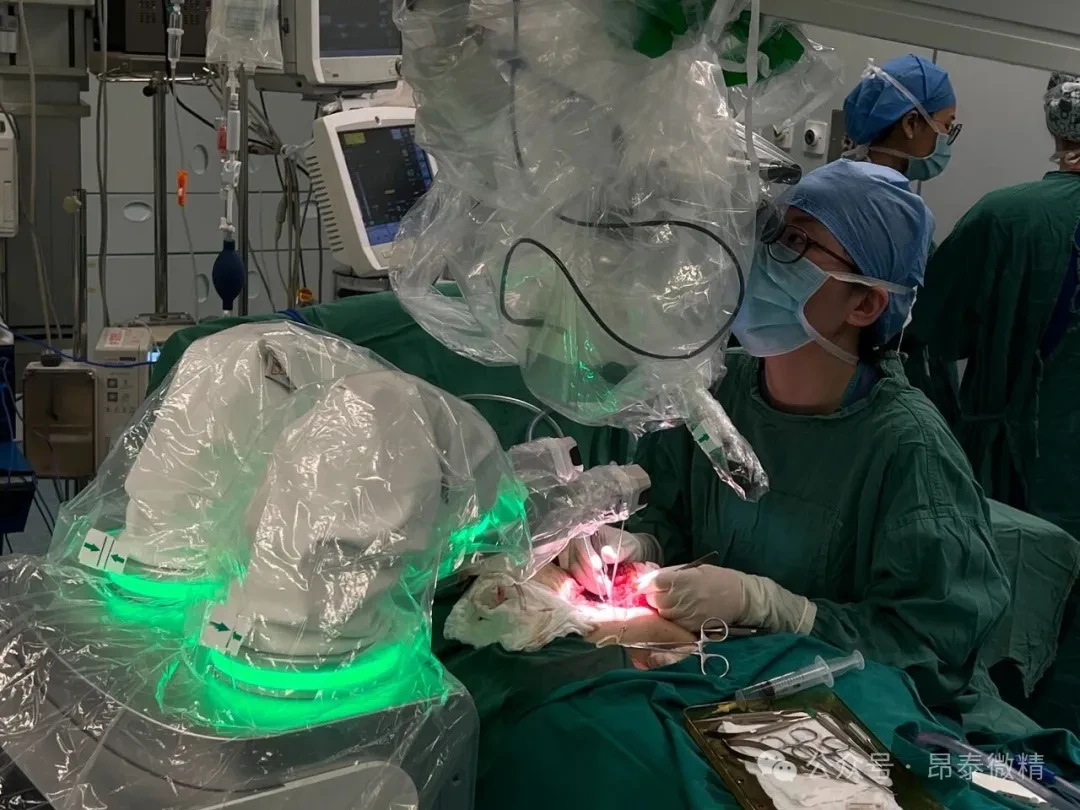
Recently, the team of Professor Zhang Yixin from the Ninth People's Hospital affiliated with Shanghai Jiao Tong University School of Medicine utilized KouTech's self-developed microsurgical robot "Kai" in collaboration with the departments of general surgery, urology, and plastic surgery to complete a flagship joint reconstruction for an abdominal wall tumor with extensive defects. Following successful coverage of high-precision reconstruction scenarios such as limbs, neck, and oral and maxillofacial areas, this case marks the first in-depth application.Deep and Complex TrunkAnatomical gaps, the entire process lasts for several hours of high-intensity operation, with numerous steps that are closely linked and seamlessly connected. "Kai" completed all steps efficiently and to a high standard throughout, once again demonstrating its strong adaptability to complex scenarios and system-level stability advantages.
"Kai" quickly completes positioning with minimal footprint and gets close to the surgical field. Its miniaturized body and flexible positioning stand out in such scenarios: relying on instant multi-angle approaches and end-posture fine-tuning, it achieves instantaneous path and needle angle switching, actively bypassing retractors and microscope stands, creating a truly zero-obstruction, non-interfering working channel. This significantly reduces repeated repositioning and retraction, continuously locking the microscopic view and instrument accessibility. Under the hard constraints of "deep, narrow, and restricted" areas in the trunk region, it makes "accessibility, clarity, and stability" the default settings.
Image
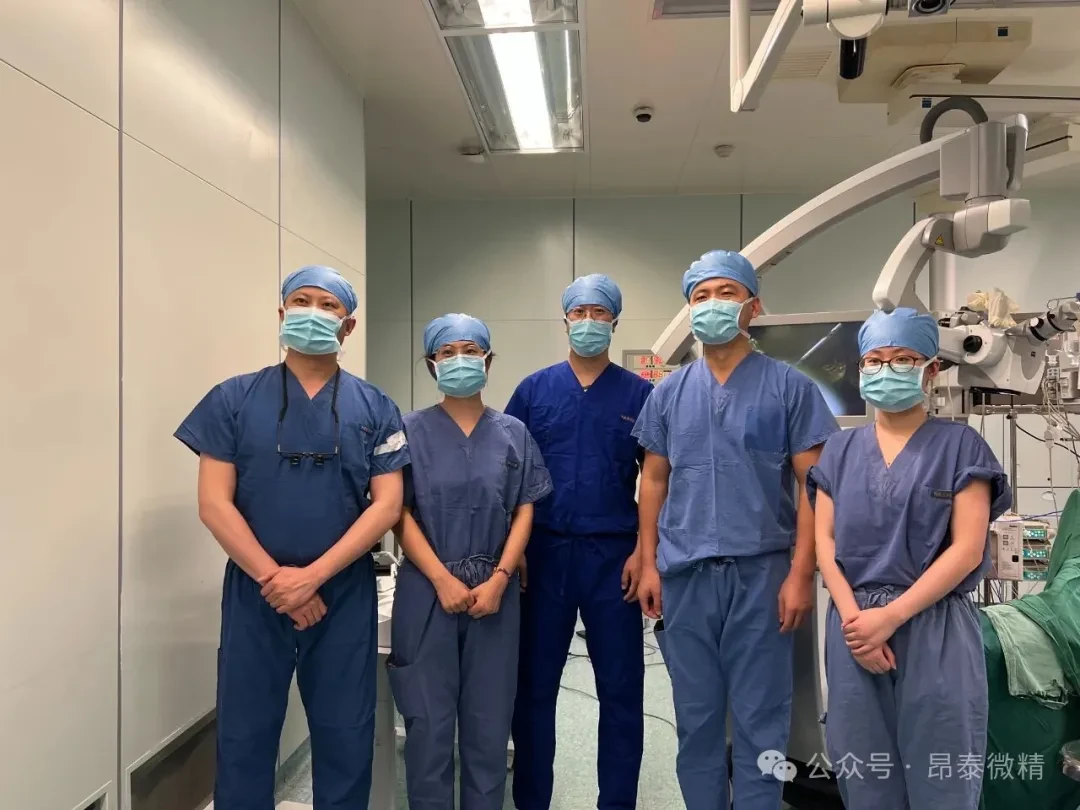
"Kai" DirectSubcutaneous over 46 mmAt the deep stenosis level, fine operations can still be performed with stability. Under the coordination of Professor Zhang Yixin and Director Feng Shaoqing, Dr. Wen Ke controlled “Kai” to sequentially clean, precisely align, and complete the critical vascular anastomosis and deep suturing. Relying on motion scaling, jitter elimination, and micro-adjustment of position, the docking and approach calibration were quickly completed, locking onto the target level in one go; while reducing traction and interference with adjacent tissues, a clear field of view and steady tactile feedback were maintained. As a result, the stitch spacing was more uniform, tension easier to control, the anastomosis tighter, and perfusion smoother, providing solid assurance for blood supply and tissue survival in the reconstructed area.
It is worth mentioning that Dr. Wenke has won awards multiple times in national-level micro/ultra-micro anastomosis competitions before using the robot, demonstrating solid microsurgical skills. After completing the systematic training provided by KouTech, the feedback was clear: after only a short training period, the speed of suturing/anastomosis matched that of handheld methods. With advanced training and the rapid accumulation of cases, “Kai” will surpass handheld techniques in all aspects—faster pace, steadier trajectory, more precise endpoints, and more ideal needle angles—rewriting the efficiency and quality standards of microsuturing.
"Kai" directly liberates long surgeries from the severe demand for "endurance": The detachable remote operation allows surgeons to perform prolonged, delicate procedures in a natural, comfortable, neutral sitting posture, significantly reducing physical strain. Even if the entire surgery is lengthy and intense, stable hand-eye coordination and clear judgment can still be maintained during critical moments, preserving a state of "ease, focus, and endurance" until the final suture. For the surgeon, it is not merely an aid but an ergonomic shield and stamina amplifier: eliminating chronic load at its source, preventing fatigue buildup and precision loss, keeping peak performance consistently online.
“Kai” is the first to extend robotic microscopy to the trunk area, achieving full-range access and steady control of deep, narrow sites in real surgical environments, while significantly reducing the surgeon's physical strain and enhancing smooth intraoperative transitions. As a result, complex trunk reconstruction has advanced from "individual case experience" to an executable and reproducible collaborative pathway. The next step for KouTech will be to accelerate deployment through standardized protocols and multicenter collaboration, making smaller trauma, higher certainty, and predictable outcomes clinical norms as soon as possible, benefiting more patients sooner.
Image

Image
Image