

Nationwide Drug Shortages Due to Poor Sales: Spotlight on Nusinersen and Nitisinone

Qilu Pharmaceutical
Specialty Formulations and Active Pharmaceutical Ingredients (API) Developer

Note:This article does not constitute any investment opinions or suggestions; please refer to official/company announcements for accuracy.This article only introduces drugs related to medical health, not a recommendation of treatment options (if involved), and does not represent the platform's position.Any article reprinted needs to be authorized.
Recently, drugs for rare diseases have once again become the focus of the industry.
Two things are particularly noteworthy:First, the much-anticipated expensive drug, Nusinersen Sodium Injection, failed in its first generic production; second, another special drug for rare diseases, Nitisonone, is out of stock nationwide, leaving multiple pediatric patients in China without access to the medication.

Both are medications for rare diseases, but their situations are different. For the former, some companies have tried but with poor results; for the latter, no one has even attempted.
First, let's look at Nusinersen. The drugDeveloped by Biogen and approved by the FDA for marketing in 2016, indicated for Spinal Muscular Atrophy (SMA).
This drug has a relatively high level of attention in the industry because of SMA.Also clinically referred to as "a not-so-rare rare disease,"It has a relatively high incidence rate among rare diseases and ranks first as the cause of death in infants under 2 years old due to genetic disorders.
Before the launch of Nusinersen Sodium in China, the treatment for SMA was almost non-existent. In September 2018, Nusinersen Sodium Injection...Injection as alreadyListed overseas and clinicalUrgently Needed RareA new drug for treating the condition has been granted priority review and was officially approved in China in February 2019.
The launch of this drug is significant for the rare disease field.Of epoch-making significance, but its high price also makes many real patient families hesitate.
In the early stages of listing,Nusinersen Sodium InjectionThe price is as high as 700,000 RMB per injection.According to 2019 data, 80% of families with rare diseases in China have an annual income of less than 50,000 yuan, and the price of 700,000 yuan per injection is simply unaffordable for most families.
Until 2021, after the "soul-cutting price negotiation" by the National Healthcare Security Administration, the price of Nusinersen Injection plummeted to 33,000 RMB per dose. This marked the first time that a high-value rare disease drug was included in the national medical insurance catalog since the national negotiation began in 2016, which was of great significance.
With the price barrier lowered, more families can afford it, and clinical medication has significantly increased. Within just one year of being included in the medical insurance, sales broke through 500 million.
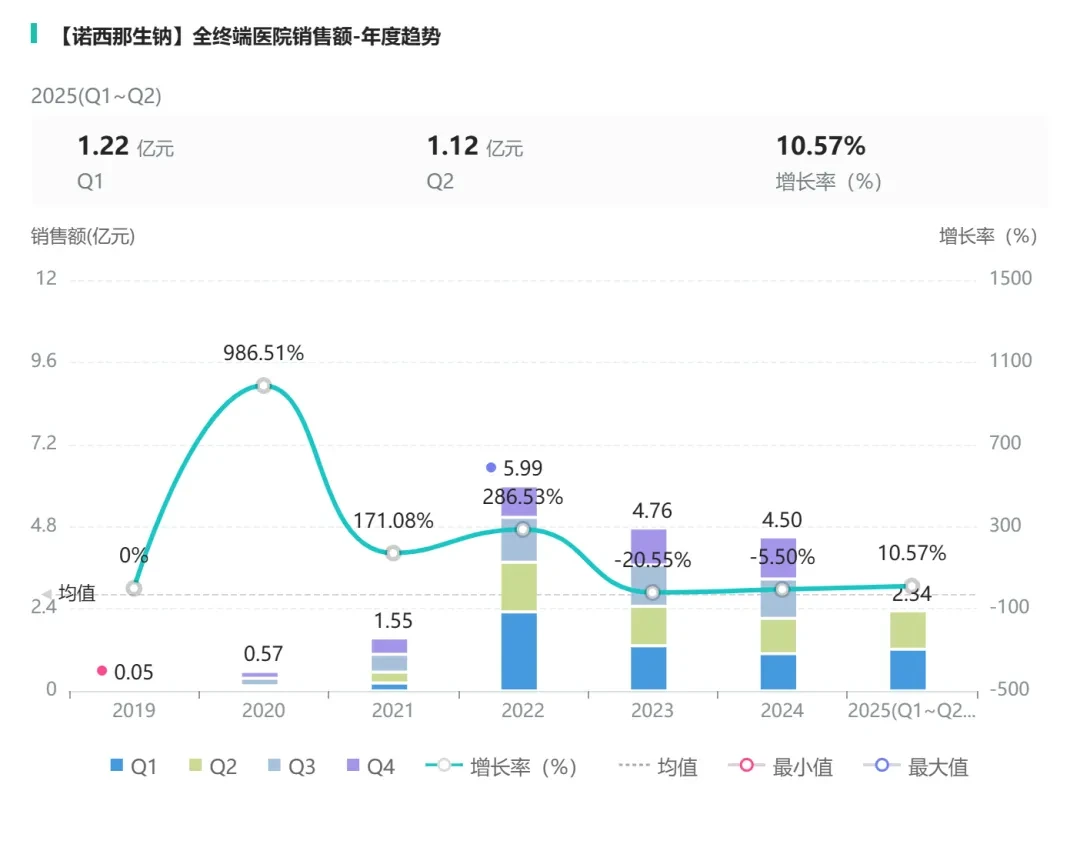
In the same year, Nusinersen Sodium Injection was included in the 61st reference catalog. To date, there are a total of 3.Copied by domestic enterprises in China, in chronological order, respectivelyChongqing Yaoyou,Qilu Pharmaceutical、Chengdu Guowei.
The race for the first generic version of this drug has drawn significant attention from the industry, and patients are also looking forward to the launch of the generic drug, which they hope will further drive down prices.Unfortunately, Chongqing Yaoyou, as the earliest company to submit for market approval, underwent more than 300 days of review and was finally notified on November 17th without being given an opportunity for supplementary submission.。
Drugs for rare diseases usually have high technical difficulties in research and development. According to industry insiders, NusinersenThe production process is relatively advanced, with complex active pharmaceutical ingredient structures, a wide variety of impurities that are difficult to control. Additionally, the drug is used for intrathecal injection, which has strict requirements for pH, osmotic pressure, endotoxins, etc.Therefore, the regulatory review will be more cautious.
Detailed Reference for Replication Challenges:Original Research Dominates the Market, the Path to Imitation of the Small Nucleic Acid Drug Nusinersen Remains Uncertain
The first applicant, Chongqing Yaoyou, has already failed. Currently, Qilu Pharmaceutical and Chengdu Guowei are still under review, hoping for a good outcome.
In contrast, the situation of another orphan drug, Nitizion.The situation is even more severe.
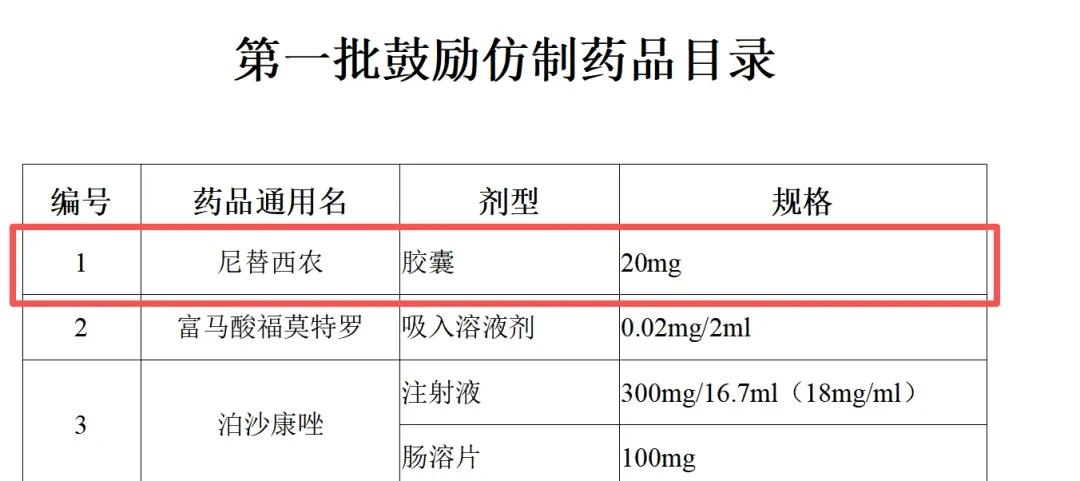
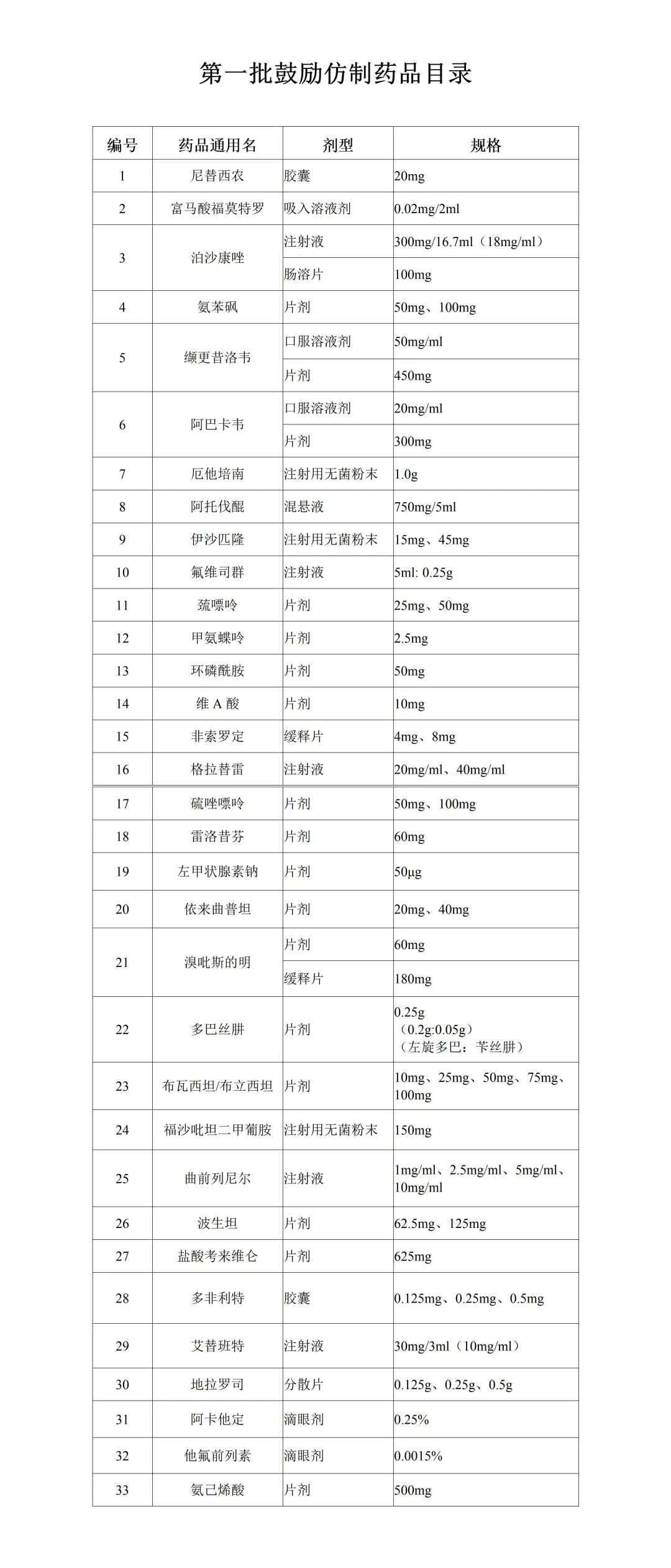
This drug is used for tyrosinemia type I and is also a very representative variety.This variety was listed at the top of the "First Batch of Encouraged Generic Drug List" by China's National Health Commission in 2019.
However, so far no domestic companies have produced a generic version, and only two foreign pharmaceutical companies have been approved in China.
Canada's Mendelikabs was launched in 2021, and the Swedish original research company was approved in 2023 but has not yet been marketed. Currently, patients in China mainly rely on drugs provided by Canadian pharmaceutical companies.
The company's products were included in the medical insurance program starting from 2024, but have recently been reported to be out of supply nationwide within less than two years.
It is reported that the drug shortage this time was caused by the停产 of the Canadian pharmaceutical company that produces the drug overseas.The main reason for the production halt is that market sales did not meet expectations, coupled with the raw materials failing to pass FDA certification.
As early as October, the domestic agent of the company began to透露to the families of the patients that there were not many库存left in China, and each patient could only获得2 bottles. There was no additional supply plan for the后续.
According to the family members of the patients, at least 8 pediatric patients are currently facing a drug shortage, the youngest being only 6 months old. The shortage has forced many pediatric patients to reduce their dosage, and some who had previously been well-controlled with medication have been compelled to undergo liver transplantation.(Liver transplantation was previously considered only when nitisinone was ineffective.)。
Of course, in terms of numbers, this disease cannot compare with SMA mentioned above. Although both are rare diseases, their incidence rates differ greatly.SMA is known as a "not-so-rare rare disease," andTyrosinemia type I is an "ultra-rare disease," with an incidence rate in China of approximately 1 in 60,000 to 1 in 50,000.In China, there are less than ten patients with Tyrosinemia Type I who have medication needs.And are sporadically distributed across China.
As a result, the sales volume is very low, with annual sales of less than 100,000, which also makes foreign companies unwilling to continue production.
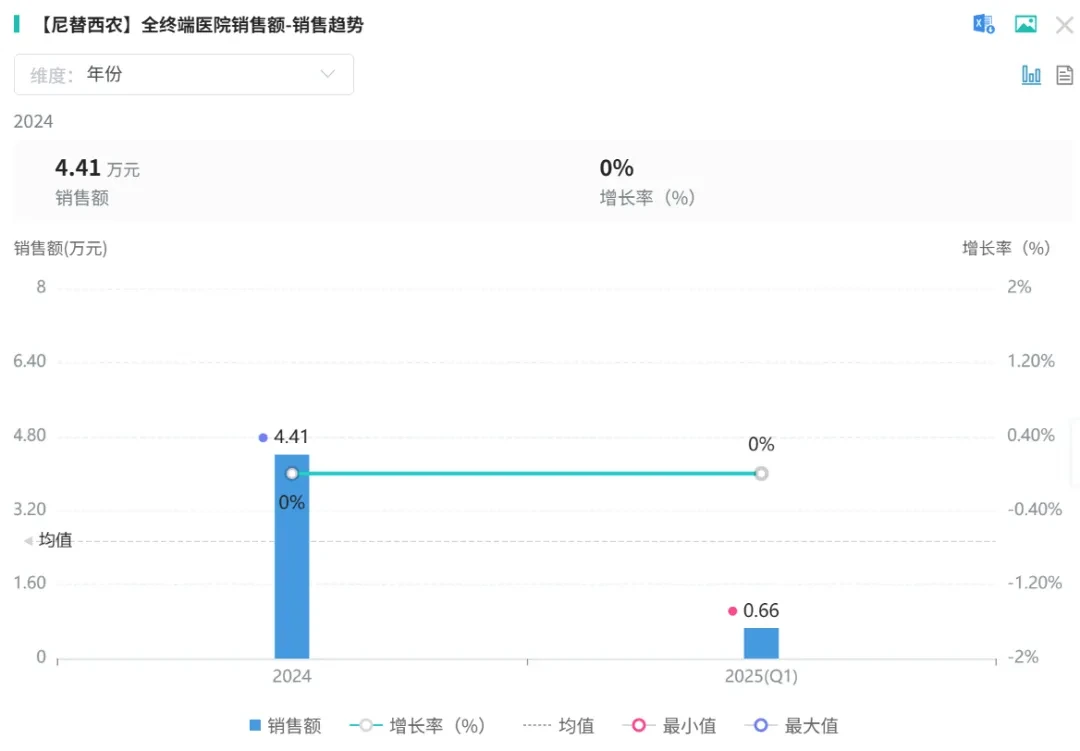
Although realistic, the current situation of rare disease drugs in China is just like this: high-value drugs can be made, but with difficulty; while the market for low-demand drugs is too small, basically no one pays attention.
The challenges faced by the industry and policies still exist, and how to enable more patients with rare diseases to have access to stable and affordable medications remains an unresolved issue.
Appendix: The First Batch of Encouraged Generic Drug List
Copyright statement: This article is reproduced from PharmaGateway., Media or individuals who do not wish to be reprinted can contact us, and we will delete it immediately.
Copyright statement: This article is reproduced from PharmaGateway., Media or individuals who do not wish to be reprinted can contact us, and we will delete it immediately.