Gao Jian | TowardPi's Zhou Jian: China's High-End Medical Manufacturing Is Accelerating Global Expansion—Avoid Domestic-Style Price Wars Overseas

TowardPi
High-end Ophthalmic Medical Device Developer

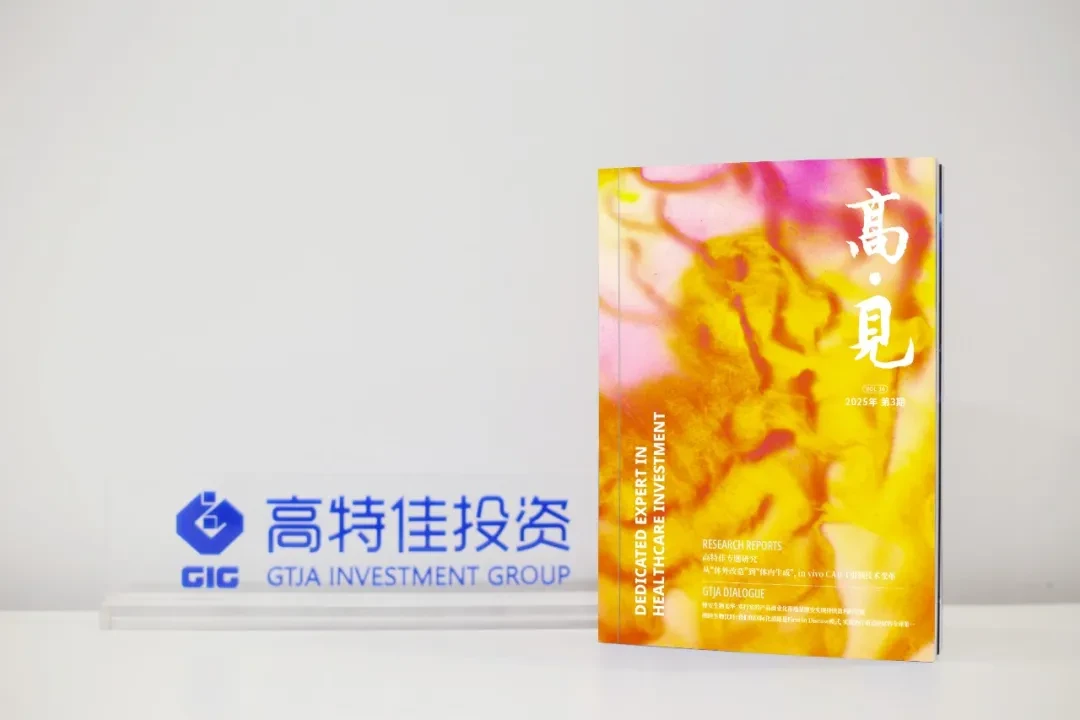
▲ The 16th issue of Gao Tejia's industry research journal《Gao·Insight》is about to be released. The core research report focuses on in vivo CAR-T (in vivo CAR-T), which has the potential to shorten treatment cycles, reduce treatment costs, and improve treatment accessibility by directly editing T-cell genes within the body. Stay tuned.
In March 2025, TowardPi announced the completion of a 500-million-yuan E-round financing, which is the highest single amount in the history of publicly disclosed private market financing events in China's ophthalmic medical device sector. In October, TowardPi completed the second financing deal of the year, with the funds raised to be continuously used for enriching the product portfolio and strengthening global market presence.
Currently, TowardPi has achieved the overseas sales of two ophthalmic OTC products. As of September this year, TowardPi's overseas market installations have covered nearly 30 countries. It is expected that by 2026-2027, TowardPi's overseas sales scale in the same category will likely surpass that in China, at which point it will become a high-end medical device manufacturer primarily focused on overseas markets.Recently, Zhou Jian, Vice President of TowardPi and Head of International Division, was interviewed by Artery Network. He shared the company's internationalization strategy and path, as well as his unique insights into innovation and development in ophthalmic medical devices.
Author: Arterial Network Zhang Xiaoxu
Full text: 5500 words, reading time: 8 minutes
For a long time, "Made in China" has formed a distinct "cost-performance" label in the global market: offering more comprehensive functions at cheaper prices, a perception that is particularly prominent in fields such as medical devices and consumer electronics.
In the past, in the process of going global, China's medical devices have opened up a vast market for low-value consumables such as syringes, infusion sets, and medical gloves by relying on high cost-effectiveness. According to statistics from the China Chamber of Commerce for Import and Export of Medicines and Health Products, in the first half of 2025, China's medical device exports maintained steady growth. In terms of product structure, it includes both traditional advantageous medical consumables and an increasing number of diagnostic and treatment equipment with higher technological content.
Behind the aforementioned data lie two mainstream trends in China-produced high-end medical devices: First, the process of domestic substitution is accelerating—having already secured a significant market share in China, these devices are now actively expanding into overseas markets. Second, the enhancement of self-research and development capabilities for core components is driving notable breakthroughs in key parameters and performance, thereby strengthening their competitiveness in the global market.
Focusing on the ophthalmology field, in the past two years, some high-end diagnostic equipment made in China has achieved comprehensive breakthroughs in key technologies, with core performance parameters surpassing similar imported products, and quickly gaining market recognition overseas.
The direct goal of going global is to push products into the international market, yet it goes far beyond merely "selling goods." In the process of expanding into overseas markets, companies often face multiple challenges such as brand recognition, certification barriers, and channel trust. Surrounding these key issues, how should innovative companies break through?
How to Break the "Low-price Theory of Made-in-China"?
OCT is the high-end ophthalmic device with the fastest localization process in China, showing a situation of "both quantity and quality rising." According to the "2025 High-End Ophthalmic Device Report" by Arterial Intelligence, the number of domestically produced ophthalmic OCT devices approved by NMPA has surpassed that of imported ones; meanwhile, in core parameters such as scanning speed, imaging depth, imaging range, and imaging resolution, products from leading domestic companies have also exceeded imported products.
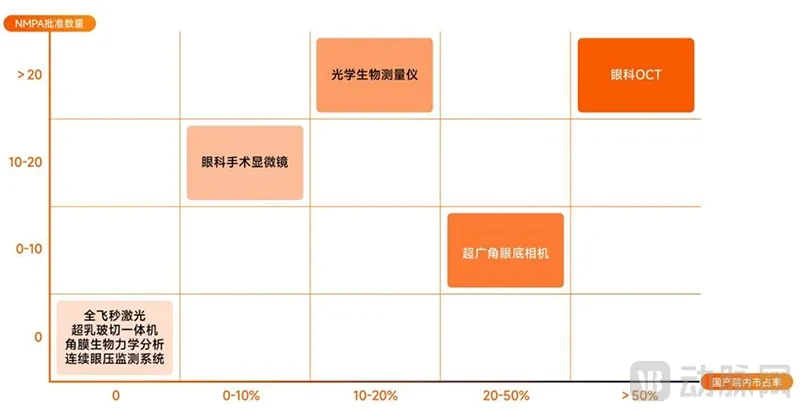 Evaluation of the Competitiveness of Domestic Products in Key Segments of Ophthalmology (The darker the color block, the better the technical performance of domestic products), Image Source: Artery Research Institute "2025 High-End Ophthalmic Equipment Report"
The overseas market is a considerable incremental market for domestically produced high-end ophthalmic equipment, and excellent performance is the confidence behind these products fully controlling pricing power in the international market. A domestically produced OCT with superior performance can be sold at twice the price of internationally renowned brands.
Taking TowardPi as an example, the company has achieved sales of two ophthalmic OCT products overseas, including the flagship model "Beiming" series and the entry-level model "Yaoguang" series. Among them, the "Beiming" series can achieve a scanning speed of 400,000 times/second, a scanning depth of 6mm, and an ultra-wide-angle range of 24mm×20mm for a single scan. In the past, the global OCT market was dominated by German, Japanese, and American brands, with mainstream products having a scanning speed of about 100,000 times/second, a scanning depth of around 3mm, and an imaging range of approximately 12mm×12mm.
Better performance parameters mean more accurate and faster measurement of retinal blood flow density, enabling more precise fundus diagnosis based on these images.
"Relying on performance advantages, we have prioritized developed countries and regions as our overseas target markets, with Europe and Japan being the main markets. About half of the equipment is sold to Europe, focusing on traditional powerhouses such as France, Italy, Germany, Spain, and Switzerland. This strategy differs from the traditional approach of Chinese medical device companies that rely on cost-performance advantages," said Zhou Jian, Vice President of TowardPi and head of the International Business Division.
It is understood that TowardPi's pricing system in overseas markets is similar to that in China: the entry-level model "Yaoguang" series is about 10% higher than the price of international flagship equipment, while the flagship model "Beiming" series far exceeds the price range of international brands, being twice or even more than the price of similar products.
Although the price is significantly higher than other international well-known brands, high-performance OCT products are still popular in various markets.
In the industry's established perception, customers in developed markets typically have a stronger willingness and ability to purchase high-end equipment. However, according to Zhou Jian, even in Latin America, the high-priced "Beiming" series remains popular. The core reason is that every country and region has leading medical institutions representing the highest local healthcare standards, and the demand for high-end equipment from such institutions is universal across global markets. In contrast, the "Yaoguang" series, which focuses on volume sales, has a higher market share in Europe. This is mainly because Europe has many ophthalmic clinics with sufficiently high basic standards, creating a situation where there is demand for top-tier models while also driving larger procurement volumes of basic models.
Moreover, just as the public enjoys sharing novelties on social media, in any type of market, when doctors experience the superior performance of high-end products and capture image quality unattainable by other devices, they also voluntarily share their experiences. This becomes a highly convincing channel for word-of-mouth promotion.
"Although many Chinese products are labeled as 'cheap' by the outside world, in specialized fields like high-end ophthalmic equipment, customers prioritize device performance over the attribute of origin. Especially in European and Japanese markets, professionals are more willing to pay for cutting-edge technology," said Zhou Jian.
How to Plan a Cost-Effective Certification Path?
The primary threshold for product globalization is obtaining market access certification in the target market. There are 190 countries and regions worldwide that require individual medical device registration applications. If companies apply one by one for each country or region, not only will efficiency be extremely low, but it will also consume substantial corporate resources and costs. For companies newly entering overseas markets, formulating an efficient certification strategy is key to determining the pace of globalization.
Given the FDA's pivotal role in the global medical device market, many devices choose it as the first stop for overseas certification. Are there more diversified pathways beyond this?
TowardPi Medical, for example, after obtaining CE certification in July 2024 and officially starting overseas shipments in September, had covered nearly 30 countries with its overseas market installations by September 2025. Zhou Jian mentioned that by the end of 2025, the number of overseas installations is expected to reach 200 units, replicating the development scale of the domestic market year by year. "By 2026 to 2027, TowardPi Medical's overseas sales volume in the same category is expected to surpass that of the domestic market, at which time the company will become a high-end medical equipment manufacturer mainly focused on overseas markets."
In terms of certification coordination, Zhou Jian summarized a set of "central axis" certification solutions, prioritizing the cost-effectiveness of investment while considering market coverage.
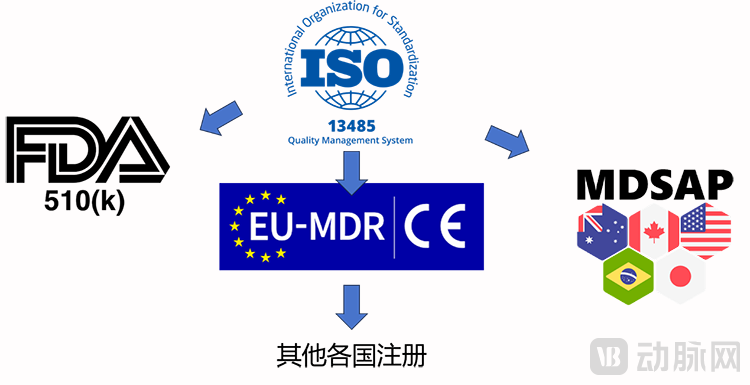
The "Central Axis" Plan for Overseas Certification Route, Photo Provided by the Interviewee
First, establish the quality system foundation with ISO13485 certification.
Zhou Jian introduced that ISO13485 is not a direct market access certificate, but it is one of the important passes for medical device companies to enter the global market. As an internationally recognized standard for quality management systems in medical devices, the core technical documents and quality control processes required for subsequent market access applications in various countries are all generated based on this system. Completing ISO13485 certification in advance can significantly reduce the difficulty of subsequent registrations. "If a company’s primary goal is to expand overseas, it is recommended to choose an internationally recognized certification body, as the ISO13485 certificates issued by such bodies are highly recognized abroad. Some overseas distributors have frankly stated that the value of this certification alone can reach several million US dollars."
Subsequently, complete the CE MDR certification to efficiently cover 2/3 of the mainstream overseas markets.
As the current EU medical device access standard, although the MDR is more stringent compared to the previous MDD: it not only strengthens the traceability management throughout the product's entire lifecycle but also imposes higher requirements on origin traceability, clinical evidence, etc., and extends the certification cycle from less than a year in the past to about two years. The value of MDR certification goes far beyond the EU market.
Zhou Jian explained that many countries in Asia, Latin America, and Africa often require CE MDR certification as a prerequisite for the registration of medical devices. Holding this certification allows entry into a fast-track process for local registration, reducing the review period. When advancing local registration, parts of the technical documentation submitted for CE MDR can often be reused, further lowering application costs. "This entire process can basically cover about two-thirds of the main overseas markets, including core regions such as Europe, Southeast Asia, and South America."
In the "Central Axis" plan summarized by TowardPi, the United States and the FDA are arranged as "branches."In Zhou Jian's view, the remaining approximately one-third of the market is mainly concentrated in the United States. Although the market volume is large, the investment required for FDA certification is also extremely high. Companies can consider it as a secondary option and decide whether it is necessary to invest based on their own resources and market demand.
Finally, MDSAP certification can be used as an optional supplement, covering five countries: Australia, Canada, the United States, Brazil, and Japan.It should be noted that MDSAP is not a one-size-fits-all certification. Only Canada allows expedited access through MDSAP, while the other four countries still require separate registration applications. However, after obtaining MDSAP certification, the annual review processes in these four countries can be combined, reducing the cost of repeated inspections. This option is more suitable for companies with relatively sufficient funds and long-term plans to enter these countries.
In general, for enterprises going overseas, it is necessary to accurately position the target market and comprehensively plan the certification process based on their own cash flow, market priorities, etc., to avoid blind or inefficient investment.
How to Win the Trust of High-Quality Distributors?
For medical device companies with relatively单一 product lines and in the early stages of expanding overseas, the advantages of the overseas dealership model are particularly显著: it not only greatly reduces the company's own market promotion costs but also减轻了收款环节的负担.In this way, the choice of distributors becomes the key to whether the overseas expansion goes smoothly.
In July 2024, TowardPi's product had just obtained CE certification when the Italian distributor Alfa Instruments swiftly helped the customer complete the first order placement the very next day, with no gap between certification and sales.
"Seamless connection" is no accident. As early as 2023, TowardPi Medical had already initiated other key steps for the overseas market layout, simultaneously advancing dealer signings, sales staff training, and product certification applications, laying a solid foundation for rapid penetration in overseas markets.
In 2023, TowardPi's Global Exhibition Center in Shanghai welcomed its first group of overseas distributors for visits, contract signings, and training certifications before its full completion. Since then, TowardPi Medical has continuously advanced the training and partnership process with distributors in various target markets.
In the process of seeking high-quality distributors, traditional methods such as mutual visits, inspections, and exhibitions remain the most crucial channels.
"In 2023, we invited Alfa Intes Group, the parent company of Alfa Instruments, to visit TowardPi's R&D headquarters in Beijing. With over 60 years of沉淀 in ophthalmic medical technology, Alfa Intes, as the commercial arm of the group, has experience installing and maintaining nearly a thousand high-end OCT devices, making Alfa Instruments our ideal distribution partner in Italy." Zhou Jian mentioned that during the visit, Alfa Intes experienced the production equipment firsthand, learned about the R&D capabilities and future plans, gaining a more comprehensive understanding of TowardPi Medical and its products. "According to the original plan at the time of signing, the cooperation should have been announced after TowardPi products received CE certification. However, after the visit, Alfa Intes' confidence significantly increased, and they anticipated the cooperation would exceed expectations, so they officially announced the partnership in December 2023 ahead of schedule to start market预热 as early as possible."
In Zhou Jian's view, the current research, development, and production systems of medical device companies in China have become sufficiently standardized. Actively inviting key target distributors for on-site visits has become an effective way to build trust between both parties. Additionally, exhibitions are also an important channel for connecting with high-quality distributors, especially those events that focus on niche fields and follow a specialized and refined approach. For companies that have just begun expanding overseas, 80% of their time at exhibitions may be spent interacting with end-users, but the crucial 20% lies in engaging with potential distributors, which directly impacts subsequent market planning.
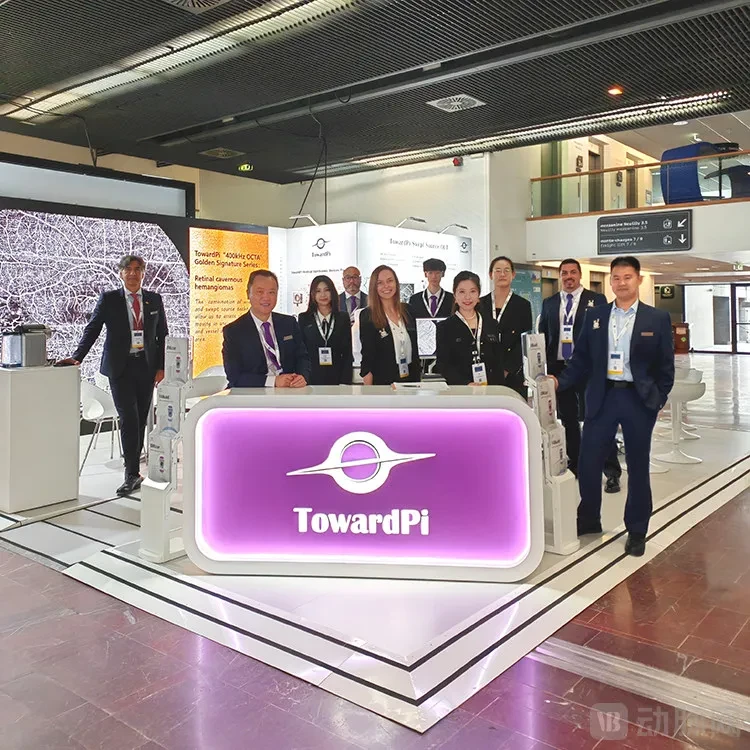
TowardPi's international team at the overseas booth, photo provided by the interviewee
The cooperation between equipment manufacturers and dealers is a two-way selection process. Adhering to clear selection criteria is as important as extensively reaching out to potential partners.
Zhou Jian stated that professionalism absolutely takes precedence over scale. Even if some distributors have experience collaborating with international giants like Philips and Siemens, they will still struggle to make the list if they lack deep expertise in the ophthalmology field. "Of course, the alignment between the positioning of the distributor and the product brand is also crucial. Just as luxury cars would never choose to be sold in moped chain stores, high-end ophthalmic equipment must also select distributors with corresponding resources and vision in order to better showcase the product's value to the industry."
The endorsement of high-quality distributors will become an important reference for other leading distribution companies to decide on cooperation, which will undoubtedly greatly accelerate the promotion process in overseas markets.
It is revealed that the signing of TowardPi Medical with its leading French distributor, EBC Europe, largely drew on the experience and recommendation of the Alfa Intes Group. After a distributor of Germany’s Oculus in Latin America became a sales partner of TowardPi Medical, internal sharing successively led to the Spain and Brazil branches of Oculus, as well as Oculus’ partnered distributors, joining TowardPi’s distribution team.
It is worth mentioning that TowardPi has gained recognition from optical giant Nikon, and its products are being introduced to the Japanese market through Nikon's distribution channels.
In early 2025, TowardPi Medical entered into a collaboration with Nikon Solutions, the equipment import and export company under Nikon; Nikon Solutions will fully represent TowardPi Medical in promoting, selling, and providing after-sales services for its OCT products across Japan. In April 2025, at the 129th Annual Meeting of the Japanese Ophthalmological Society, TowardPi's OCT product, after obtaining Japan PMDA certification, made its debut at the Nikon booth.
"Japanese companies are extremely rigorous in their choice of cooperation partners, repeatedly evaluating and reviewing every aspect, from initial contact and investigation to signing the contract. Ultimately, TowardPi (the brand name of TowardPi Medical in overseas markets) became the third major ophthalmic medical equipment brand that Nikon Solutions introduced to Japan," said Zhou Jian.
In the field of ophthalmology, Nikon has previously acquired two companies: Optos in the UK and Chuo Sangio Co. in Japan, covering the research and development of ophthalmic diagnostic equipment and equipment sales. To date, Nikon has deployed diagnostic devices such as ultra-wide-field retinal cameras and fully automatic non-mydriatic fundus cameras through Optos. Under its subsidiary Nikon Solutions, it acts as the distributor for British Optos and German Oculus ophthalmic equipment in Japan. In addition to retinal cameras, the product range also includes optical biometers, corneal topographers, and non-contact tonometers.After partnering with TowardPi, Nikon's own and distributed product lines have been expanded to include high-performance OCT, further completing its product portfolio of advanced ophthalmic equipment.
To date, TowardPi's overseas distributors have covered more than 70 countries and regions. Relying on a clear distributor network layout strategy, the company not only promotes the rapid expansion of its overseas presence but also lays a solid foundation for the professional sales and service of its products in target markets.
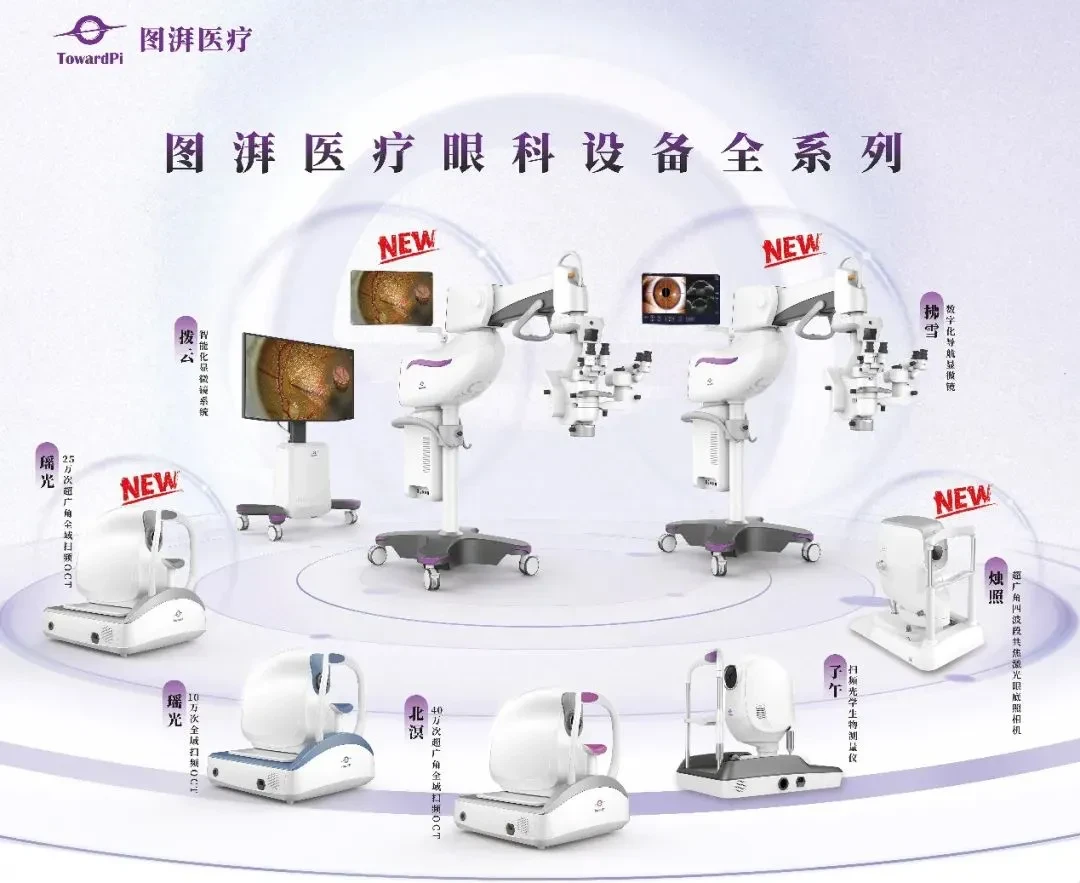
TowardPi Ophthalmic Equipment Full Series
Do Not Bring Involution and Price Wars Overseas
As statistics from regulatory authorities and industry associations show, the product structure of Chinese-produced medical devices going overseas is changing rapidly, with an increasingly evident shift from traditional low-value consumables to high-end diagnostic and treatment equipment.
Zhou Jian holds a similar view: The phase that Chinese enterprises are in is analogous to the situation Japanese firms faced in the 1970s and 1980s, gradually transitioning from cost-effectiveness to high precision and advanced technology. "As more and more of these Chinese brands enter the international market, customers will realize that this has become an inevitable trend rather than an accident."
From another perspective, the high-end image of products made in China also requires more enterprises to work together to truly establish.
For a long time, the fierce market competition in China has driven the acceleration of innovation and iteration in various fields, but it has also caused "involutionary" competition to a certain extent, even leading to price wars. The overseas market is precisely the opportunity for Chinese companies to break away from these situations."In overseas markets, Chinese companies should unite more closely, uphold the dual bottom lines of technology and price, eliminate cutthroat competition, and jointly shape the image of China's high-tech products." This is Zhou Jian's expectation for the industry's future and also the key for domestically produced high-end medical devices to overcome prejudice and establish themselves in the global market.

About Gortica Investment
GaoTJ Investment was founded in Shenzhen in 2001. It was the first in the industry to propose the investment model of "thematic industry investment," focusing on healthcare industry investments. It is primarily led by strategic equity investments, covering all investment stages including VC, PE, Pre-IPO, and M&A. With one of the few professional investment teams in China deeply focused on the healthcare track, it has built an investment ecosystem platform for the healthcare industry, aiming to become a healthcare investment institution with global influence.
Gortica Investment's asset management scale exceeds 23 billion RMB, with 35 healthcare industry funds. It has invested in over 110 healthcare enterprises and facilitated the successful listing of 41 companies, including Mindray Medical, United Imaging Healthcare, and Akeso Biopharma. Gortica Investment operates in China and globally, with operational centers in Shenzhen, Shanghai, Beijing, and Hong Kong. It is committed to investing in outstanding healthcare companies worldwide, creating new development opportunities for global capital and medical enterprises, and assisting entrepreneurs in building great companies.