GC101 TIL Therapy Shines at ESMO-IO 2025: First-in-Class Lung Cancer Data Show 66.7% Disease Control Rate and Broad Potential in Pancreatic, Colorectal Cancers

Juncell Therapeutics
Solid Tumor Cell Therapy Developer


From December 10 to 12, 2025, the European Society for Medical Oncology Immuno-Oncology Congress (ESMO-IO) will be held in London, United Kingdom. As a top academic platform focusing on cutting-edge research and clinical practice in tumor immunology, the conference will bring together leading experts and industry elites from around the world to participate in this grand event.
At the meeting,Juncell Therapeutics Announces First Release of Phase Ⅰ Clinical Data for GC101 TIL Therapy in Late-Line Non-Small Cell Lung Cancer. The study is of far-reaching significance: it is bothThe World's First Clinical Study of TIL Therapy for Lung Cancer Without Intensive Lymphodepletion Chemotherapy and Without IL-2 Administration, alsoThe First Registration Clinical Study in China to Publicly Disclose Data in This Field, bringing a key breakthrough in the field of lung cancer immunotherapy. This achievement not only demonstrates China's strong capabilities in the field of tumor immunotherapy innovation but also represents an important advancement in lung cancer immunotherapy!
Tumor-Infiltrating Lymphocyte (TIL) therapy represents a significant potential approach for advanced non-small cell lung cancer (NSCLC) after the failure of standard treatments, but its clinical application has long been limited by the stringent requirements of "high-dose lymphodepletion preconditioning" and "IL-2 supportive therapy." Juncell Therapeutics' self-developed GC101 is preciselyThe World's First Natural TIL Cell Drug That Requires No Lymphodepletion Pretreatment and No IL-2 Injection, directly breaking this treatment bottleneck.
At the 2025 European Society for Medical Oncology Immuno-Oncology Congress (ESMO-IO), the Phase I clinical trial (NCT05417750) data of GC101 for advanced NSCLC was disclosed for the first time, with both the study design and results demonstrating breakthrough value. The study enrolled a total of 12 patients with stage III/IV non-small cell lung cancer (NSCLC) who had failed standard treatments but maintained good organ function. The median age was 56.5 years, and the median number of prior treatment lines was 3 (including chemotherapy in 75%, anti-PD-(L)1 therapy in 41.7%, and targeted therapy in 75%), representing a clinically challenging population. A simplified regimen of "low-intensity preconditioning (cyclophosphamide + hydroxychloroquine) + PD-1 antibody + single infusion of TIL cells" was utilized.
The results showed:Objective Response Rate (ORR) Reached 41.7%(5/12,95%CI:15.2-72.3%),Disease Control Rate (DCR) Reached 66.7%(8/12, 95% CI: 34.9-90.1%, including5 cases of partial response (PR), 3 cases of stable disease (SD); More crucially, the median duration of response (DOR) and median overall survival (OS) have not yet been reached,12-month OS rate as high as 66.7%(95%CI:33.7-86.0%)。
In summary, this result clearly confirms that the optimized GC101 autologous TIL therapy has demonstrated manageable safety and achieved encouraging efficacy in NSCLC patients who failed multiple lines of treatment. It also lays a solid foundation for further exploration of the combination strategy of “TIL therapy + immunomodulators” to enhance the durability of efficacy.
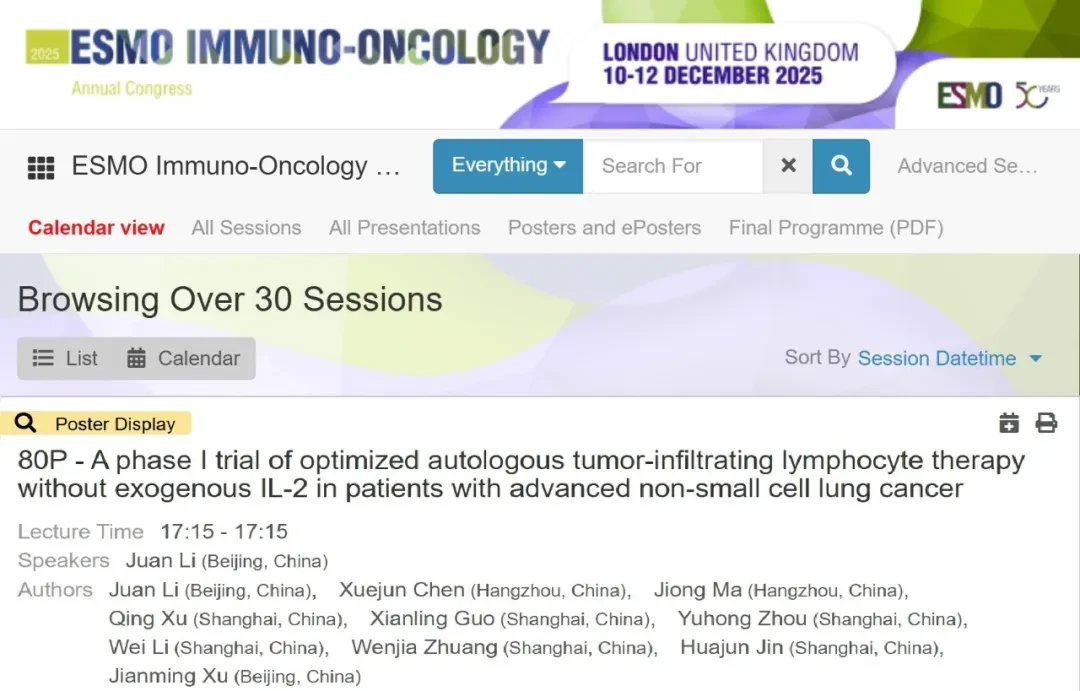
▲Screenshot source“ESMO”
In addition to clinical data, Juncell Therapeutics previously announced two GC101 treatment cases, which further concretized the anti-cancer potential of this therapy, bringing tangible hope to patients with advanced cancer.
A patient with advanced lung adenocarcinoma complicated by lymph node, pleural, and bone metastases experienced continuous disease progression despite receiving radiotherapy combined with targeted therapy. The patient was enrolled to receive GC101 TIL cell infusion treatment.
The treatment outcomes are encouraging: regular imaging evaluations at Weeks 6, 12, 18, and 24 post-infusion show (see figure below),Efficacy appears in a progressive manner——The target lesion shrank by 36% on the second enhanced CT, eventually reaching partial remission (PR).; More surprisingly,Within 24 weeks after the reinfusion, the patient did not receive any other treatment, and the tumor lesion continued to shrink., fully confirming the long-lasting anti-cancer activity of GC101!
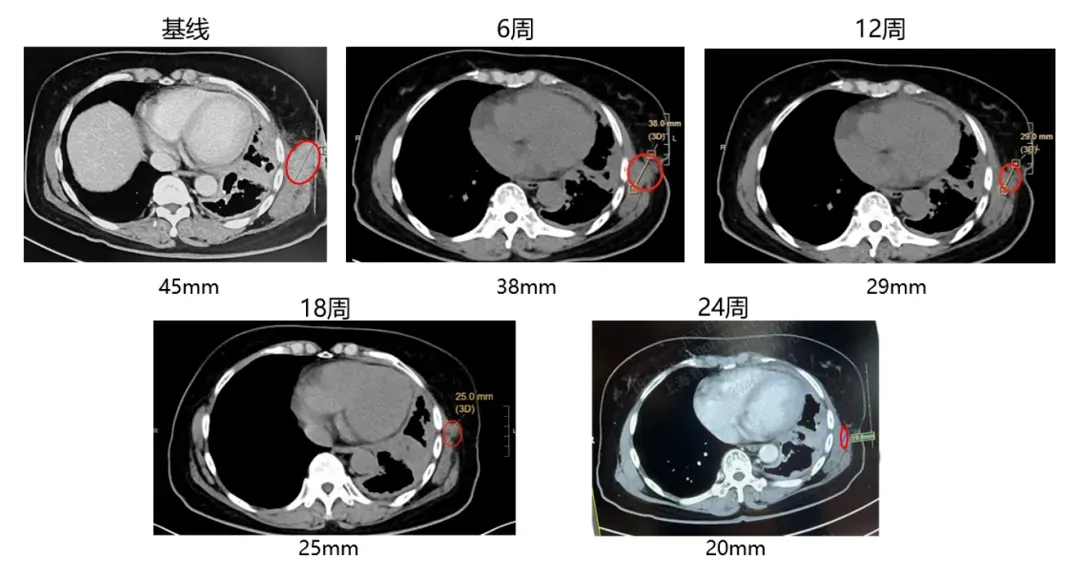
▲Source: "JUNCELL", all rights reserved. If we unintentionally infringe on intellectual property, please contact us for removal.
Another patient with advanced pancreatic cancer, after surgical resection of the pancreatic tumor, was diagnosed with tumor recurrence and intrahepatic metastasis upon follow-up examination, and subsequently enrolled to receive GC101 TIL therapy.
Results showed that: 6 weeks after a single infusion of TIL cells, the patientThe 10cm recurrent lesion in the pancreatic head rapidly shrank to 3cm, the remaining liver metastases completely disappeared, and multiple tumor markers returned to normal levels.; Subsequent follow-up examinations showed,The lesion continued to shrink to about 1 cm, and ultrasound suggested calcified plaque (with no metabolic activity).——As of now,The patient has resumed normal life for more than 39 months.!
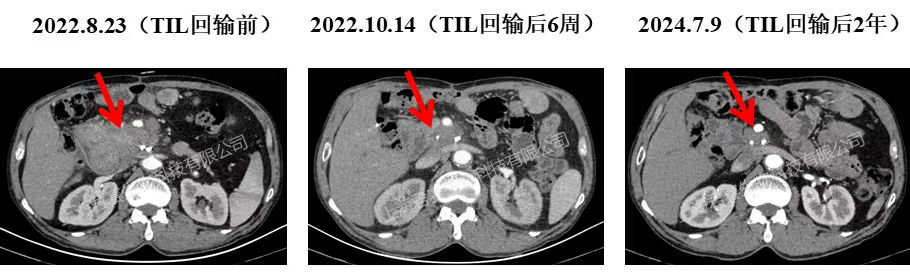
▲Source: "JUNCELL", all rights reserved. If we unintentionally infringe on intellectual property, please contact us for removal.
In summary, GC101, from breaking the traditional limitations of TIL therapy, to the impressive performance in clinical data, and further to the significant benefits observed in real-world cases of advanced cancer patients, not only provides a new treatment option for difficult-to-treat advanced cancers such as lung cancer and pancreatic cancer but also demonstrates the strong capabilities of China's self-innovated cell therapies, injecting "Chinese hope" into global advanced cancer treatment!
On November 17, 2025, the international journal *Cancer Immunology and Immunotherapy* reported an inspiring case: A patient with advanced melanoma combined with chronic lymphocytic leukemia/small lymphocytic lymphoma (CLL/SLL) achieved radiological remission and molecular complete remission after treatment with tumor-infiltrating lymphocytes (TIL), providing a new reference for the treatment of such refractory patients.
The patient, in his 60s, was diagnosed with stage pT1a skin melanoma on the chin in December 2015. After undergoing wide excision surgery, he was followed up until February 2021 when cervical lymphadenopathy was noted and fine needle aspiration biopsy (FNA) confirmed a recurrence of melanoma, prompting subsequent treatment. The patient experienced two progressions and successively received adjuvant pembrolizumab, ipilimumab plus nivolumab, and nivolumab combined with temozolomide. Considering the asymptomatic nature of the patient, favorable prognosis of CLL, and FDA approval of lifileucel for immune checkpoint-resistant metastatic melanoma, it was ultimately decided to proceed with the lifileucel TIL therapy regimen.
The results showed that: according to the Response Evaluation Criteria in Solid Tumors (RECIST) v1.1,After 6 weeks of treatment, the patient's imaging findings reached partial response (PR).。Relief persisted at 12-month follow-up, with a 65% reduction in target lesions..PET/CT shows,From 6 weeks to 1 year after treatment, metabolic activity continued to decline.(See the figure below (c, d) for details.
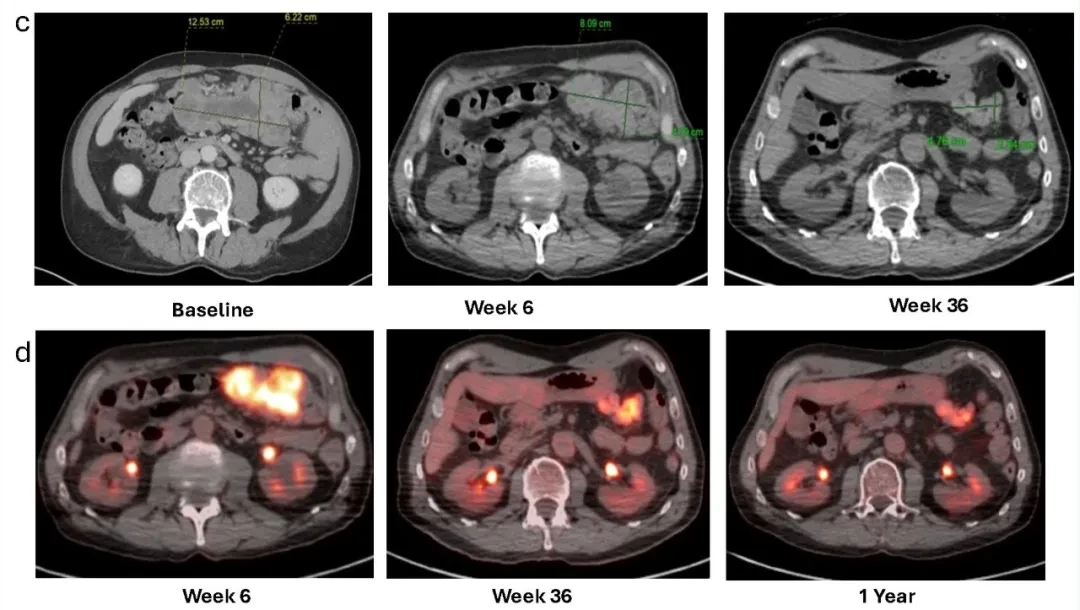
▲Source of the Image"Front Immunol", the copyright belongs to the original author. If we unintentionally infringe on intellectual property rights, please contact us for removal.
In terms of biochemical indicators,Serum Lactate Dehydrogenase (LDH, associated with tumor activity)After TIL infusionPeak value of 842 U/L reached on Day 7(Baseline value 290 U/L),Returning to normal within 1 month.(169U/L), andRemained within the normal range during the subsequent 9-month follow-up.(see the figure e below). At the molecular marker level,Circulating Tumor DNA (ctDNA, Precisely Reflects Tumor Burden)Show,The baseline average Molecular Tumor Marker (MTM) value was 1.28/mL.,Two weeks after TIL infusion, ctDNA temporarily increased to 8.38/mL.(Presumably due to the release from tumor cell death),Undetectable after 4 months of infusion,Still maintaining complete molecular remission at 12-month follow-up(0MTM/mL, see the figure f below).
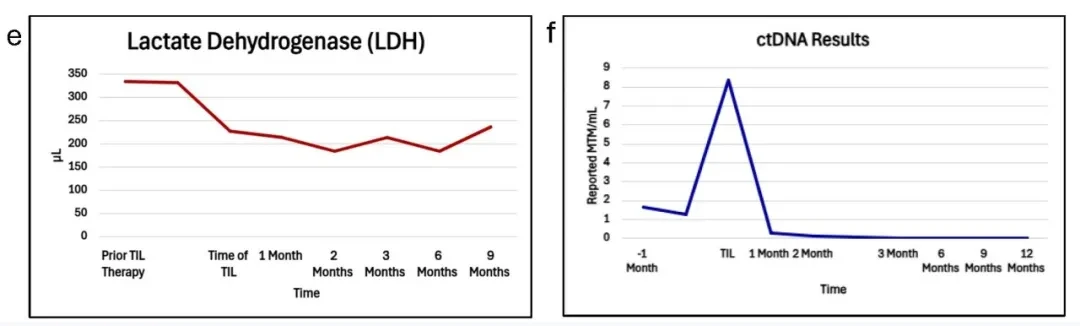
▲Source of the Image"Front Immunol", the copyright belongs to the original author. If we unintentionally infringe on intellectual property rights, please contact us for removal.
In summary, this case isFirst Global Report on TIL Therapy for Advanced Melanoma Patients with CLL/SLL, not only confirming the feasibility and effectiveness of this therapy in such patients—patients showed radiological remission and achieved complete molecular clearance of ctDNA—but also bringing important clinical insights: a transient increase in ctDNA two weeks after treatment may signal tumor cell death, and its subsequent complete clearance further confirms the depth and durability of the therapeutic effect, offering new hope for more patients with similar refractory advanced cancers.
At the 2025 SUO Annual Meeting's Urothelial Carcinoma Symposium, exciting data from the Phase I clinical trial (NCT05768347) of "Intravesical Treatment with Autologous Tumor-Infiltrating Lymphocytes (TIL) for BCG-Exposed Non-Muscle-Invasive Bladder Cancer" was announced. The study enrolled a total of 9 high-risk non-muscle-invasive bladder cancer patients who had relapsed after prior Bacillus Calmette-Guérin (BCG) treatment, all receiving TIL therapy.
Results Show: The Efficacy and Safety of This Therapy Are Impressive:The 3-month complete response (CR) rate reached 44%.; Only one patient chose radical cystectomy after recurrence, and the postoperative pathological diagnosis was pTa stage, with no patients progressing to muscle-invasive disease.Effectively controlled the deterioration of the condition; More noteworthy is that,No recurrence was observed in 2 patients during an average follow-up period of 14.1 months (standard deviation 5.0 months)., confirming that some patients can achieve lasting benefits from this therapy. In terms of safety, no significant toxicity was observed, further verifying the excellent safety profile of this therapy, offering a new treatment direction for high-risk non-muscle-invasive bladder cancer patients who have failed BCG treatment.
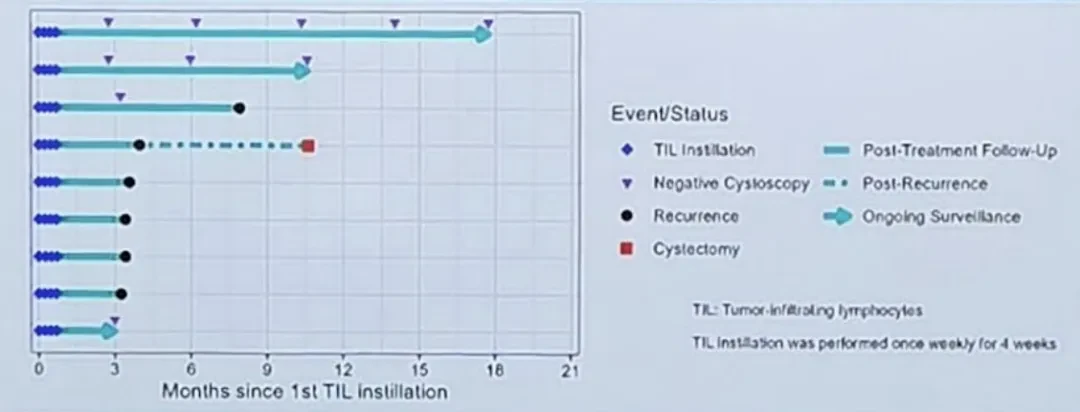
▲Source of the Image"urotoday", copyright belongs to the original author. If we unintentionally infringe on intellectual property, please contact us for removal.
The Philadelphia Inquirer reported an inspiring case: A patient with metastatic colon cancer received tumor-infiltrating lymphocyte (TIL) cell therapy, resulting in the complete regression of all seven lung metastases, successfully rewriting the "poor prognosis" fate!
At the age of 47, this patient began experiencing symptoms such as fatigue, frequent urination, and bloody stools, and was eventually diagnosed with KRAS-mutant colorectal cancer. Despite undergoing initial surgical treatment, the cancer continued to progress—spreading not only to the bladder and lymph nodes but also metastasizing to the lungs. Subsequent attempts at surgery, chemotherapy, and radiotherapy all proved ineffective, leaving her in a critical condition. She ultimately enrolled in a clinical trial for TIL cell therapy.
The treatment process is precise and rigorous: The doctor first extracts and screens CD8+ T cells that can specifically recognize the KRAS G12D mutation from the tissue removed from the patient's lung lesion (these cells can accurately target and kill tumor cells); after in vitro expansion and culture, 148 billion active immune cells were obtained and infused back into the patient's body via intravenous infusion; to further support the growth and activation of immune cells, subsequent treatment with interleukin-2 (IL-2) was also administered.
Treatment Effect Far Exceeds Expectations: First Follow-up After 40 Days of Treatment Shows CT Examination ResultsAll Seven Lung Metastatic Lesions in the Patient Have Completely Regressed. Recheck after 9 months of treatment, among whichSix lesions remained in a state of complete regression or continued regression.(See the figure below),The patient achieved a partial response for 9 months during this period.(According to the Response Evaluation Criteria in Solid Tumors). Only lesion 3 remained and showed progression, after which the patient underwent Video-Assisted Thoracic Surgery (VATS) for the resection of this lesion and lesion 2. Postoperative Positron Emission Tomography-Computed Tomography (PET-CT) results were negative.Indicates no tumor activity。
More surprisingly, as of now,It has been 4 months since the lesionectomy, and the patient shows no clinical signs of disease.From the anxiety of worrying about "not living past 50" at the time of diagnosis, to now peacefully celebrating her 50th birthday, she is wholeheartedly looking forward to more beautiful moments with her family in the future. TIL cell therapy has undoubtedly lit up a new hope for her life!
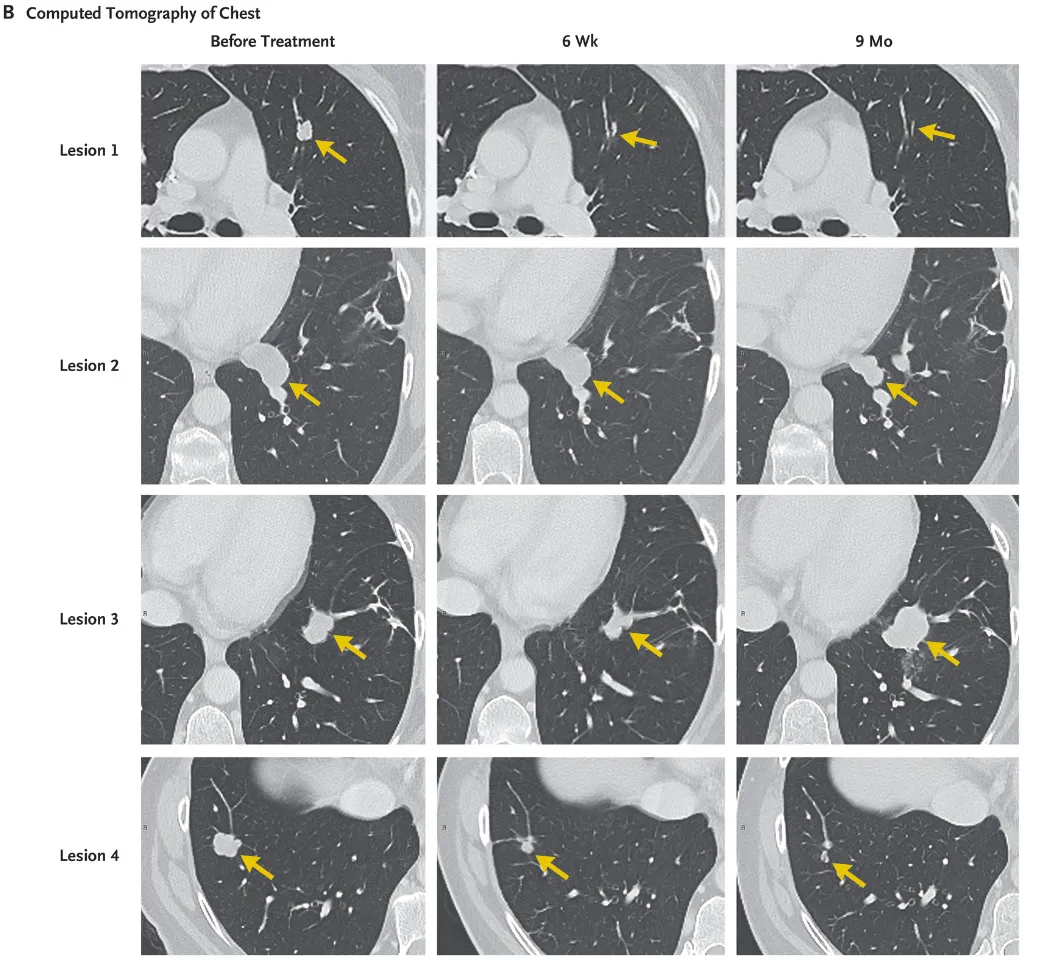
▲Source of the Image"The Philadelphia Inquirer", copyright belongs to the original author. If any intellectual property rights are infringed unintentionally, please contact us for removal.
In the past, the diseased tissues surgically removed from cancer patients were mostly discarded as medical waste, except for a small portion made into paraffin blocks for diagnostic use — this is undoubtedly a "waste of valuable resources," as the precious anti-cancer immune cells hidden within the tumor are being squandered! The good news is that now, cancer patients can, with the consent of their attending physician before surgery, preserve fresh tumor tissue samples. These samples can then be handed over to professional institutions for the isolation, cultivation, and cryopreservation of TIL cells, ensuring that this "natural anti-cancer resource" is no longer wasted.
TIL therapy is a precise solution that makes "fighting cancer with cancer" a reality — it originates from the patients themselves, not only breaking the limitations of traditional treatments but also bringing new hope to countless patients in overcoming their illness, broadening the path to extending life! More encouragingly, in recent years, China has kept up with international advancements, and multiple biotech companies have invested in TIL product development. Several products have been officially approved for clinical research, covering...Non-Small Cell Lung Cancer, Breast Cancer, Cholangiocarcinoma, Cervical Cancer, Esophageal Cancer, Ovarian Cancerand many other solid tumors. Now, this life-saving therapy is finally within reach for Chinese patients, no longer an unattainable luxury!
Patients seeking TIL therapy assistance can submit their recent pathology and genetic test results, treatment history, and other relevant materials toGlobal Cancer Doctors Network Medical Department (400-666-7998), for preliminary evaluation.
[1]Karapetyan L,et al.Case Report: Durable response to tumor-infiltrating lymphocyte therapy in a patient with metastatic melanoma and chronic lymphocytic leukemia/small lymphocytic lymphoma. Front Immunol. 2025 Nov 17;16:1718443.
https://www.frontiersin.org/journals/immunology/articles/10.3389/fimmu.2025.1718443/full
[2]https://cslide.ctimeetingtech.com/coasis_21467/attendee/confcal/show/session/4
[3]https://www.urotoday.com/conference-highlights/suo-2025/suo-2025-bladder-cancer/165197-suo-2025-feasibility-and-safety-of-intravesical-therapy-with-autologous-tumor-infiltrating-lymphocytes-in-bcg-exposed-nmibc-results-from-a-phase-i-clinical-trial.html
This article is original content from Global Oncologist Network. Unauthorized reproduction is strictly prohibited.
Scan to Add Patient Group
Cancer News|New Technologies|New Drug Development|Leading Experts
Join the group to receive free anti-cancer resources