HD CD19 CAR-T by Huadao Biologics Submits NDA with 100% Overall Response Rate; Priced at Approximately RMB 200,000 per Dose, Targeting Lymphoma and Leukemia

Huadao Biopharma
Developer and Manufacturer of Cell-Based Immunotherapy Drugs


December 12, 2025HuaDao CAR-Tcell independently developedHD CD19 CAR-T Cell Drug, officially submitted an application for market approval to the Center for Drug Evaluation (CDE) of the National Medical Products Administration (NMPA)——This is also the companyThe First CAR-T Therapy for Relapsed or Refractory Non-Hodgkin LymphomaTo date, the drug has been approved for two clinical indications, namely the treatment of refractory or relapsed non-Hodgkin lymphoma and B-cell acute lymphoblastic leukemia. Its mechanism of action is clear and specific: patient-derived T cells are transduced with a replication-defective lentivirus to express a CAR (chimeric antigen receptor) structure that specifically binds to the CD19 antigen; the modified CAR-T cells can precisely identify CD19-positive tumor cells in the body and carry out targeted elimination, ultimately achieving the goal of tumor treatment.
More exciting is that, as a "Made in China" cell drug with complete independent intellectual property rights, it is expected to reduce the previous CAR-T treatment costs, which often amounted to millions of yuan, significantly to around 200,000 yuan. This not only lowers the threshold for patients to access medication but also brings the once "unattainably expensive" precise treatment closer to ordinary patients!
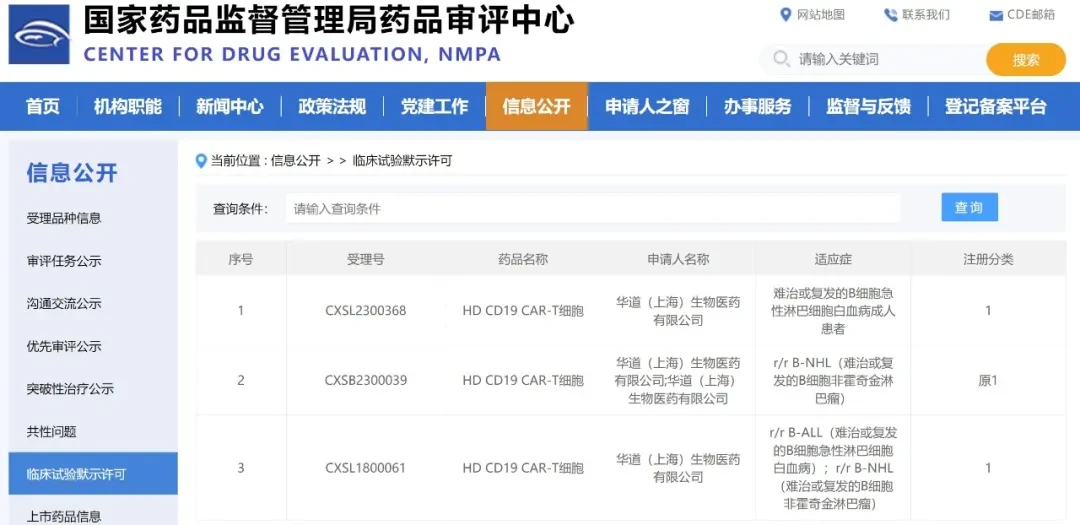
▲Screenshot source“NMPA”
The clinical treatment of metastatic colorectal cancer (mCRC) has long faced the challenge of limited efficacy. Notably, guanylate cyclase 2C (GCC) is ectopically expressed in mCRC and this antigen is only specifically present in intestinal tissues. The CAR-T cell therapy (IM96) targeting this site has shown exciting data from its Phase I clinical trial (NCT05287165), which was presented at the 2023 ESMO conference. The study enrolled a total of 9 patients, all of whom received IM96 infusions, with a median age of 52.6 years.
Results:The disease control rate (DCR) reached 66.7%, and the objective response rate (ORR) was 11.1%.After infusion, the carcinoembryonic antigen (CEA) levels significantly decreased in 5 out of 9 patients (accounting for 55.6%), while the CEA levels of all patients were abnormally elevated at baseline; meanwhile, IM96 achieved effective proliferation in all patients and reached its peak proliferation 7-10 days after infusion. Among them,Two patients continued to experience the dual benefits of tumor shrinkage and decreased CEA levels within three months., this efficacy is highly consistent with the expansion of CAR-T cells to a level of 10⁸/L. Further analysis shows that: patients with tumor cell GCC expression ≥30%,DCR Reached 100%; On this basis, when the infusion dose of IM96 is ≥6×10⁸,All patients observed tumor shrinkage.。
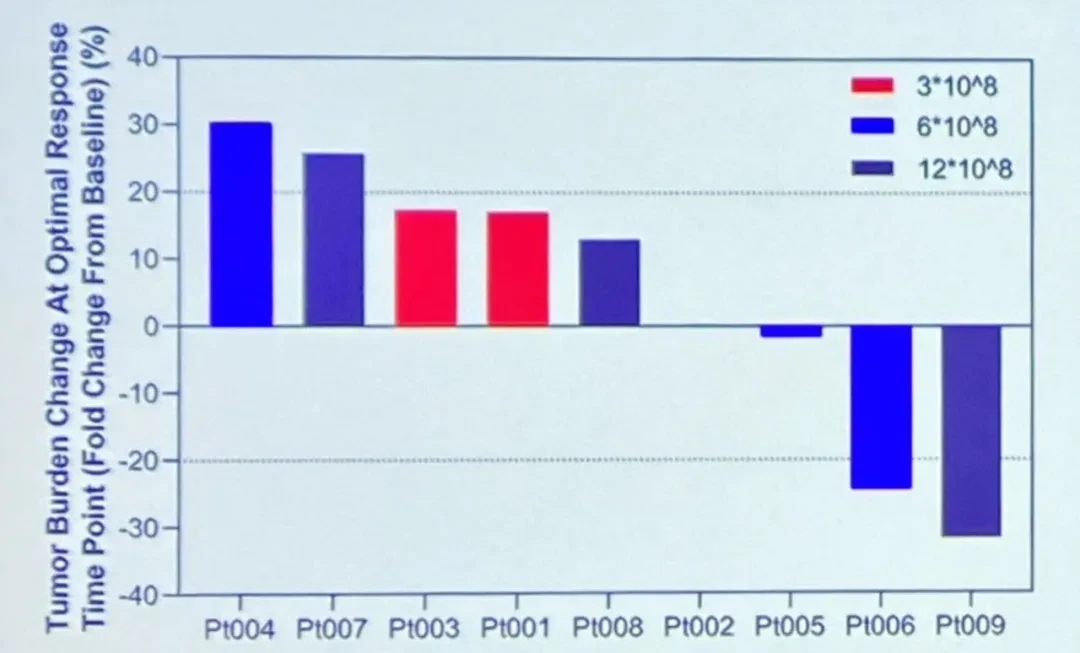
▲Source of the image“JCO"`, owned by the original author. If we unintentionally infringe on intellectual property, please contact us for removal."
The image below shows a contrast image of a 59-year-old male patient with KRAS-mutant rectal cancer: The patient had previously received third-line treatment, and after receiving IM96 CAR-T therapy, hisSignificant shrinkage of metastatic lesions in the lungs and liver。
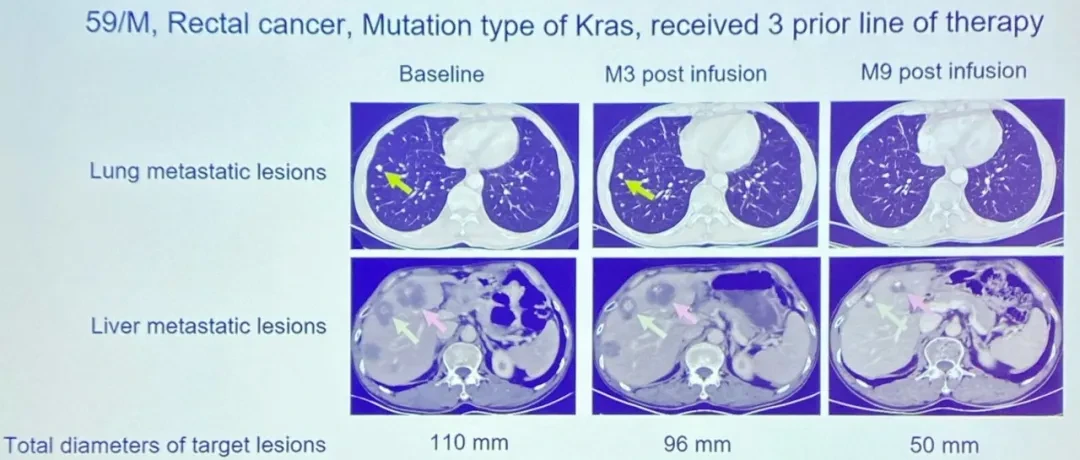
▲Source of the Image“JCO"`, belongs to the original author. If we unintentionally infringe on intellectual property, please contact us for removal."
In summary, IM96 demonstrated good tolerability and encouraging efficacy in mCRC patients. The clinical response was clearly correlated with tumor GCC expression levels, IM96 infusion dosage, and CAR-T cell expansion levels in vivo, providing a crucial direction for the exploration of subsequent precision treatment in mCRC.
The autologous CAR-T cell therapy GC012F/AZD0120, developed based on the next-generation FasTCAR-T platform, not only enables production within a day (completed in as fast as 3 days) but also significantly enhances T-cell activity. Its core targets are B-cell maturation antigen (BCMA) and CD19. Currently, this therapy has demonstrated broad potential in clinical settings — in November 2025, the journal *Blood* reported exciting Phase I clinical data for its use as a first-line treatment for newly diagnosed multiple myeloma (NDMM). Additionally, it achieves deep and durable efficacy in patients with relapsed/refractory multiple myeloma (RRMM), with manageable safety.
This Phase I study enrolled a total of 30 newly diagnosed multiple myeloma patients, all of whom received CAR-T cell infusion and entered the efficacy evaluation phase. The median age of the patients was 64 years (range: 43-78 years), with 27% of the patients being over 70 years old.
The results showed that: the therapy'sThe overall response rate (ORR) reached 100%, with a stringent complete response rate (sCR) of 97%.; PatientThe median time to first remission was 28 days, and the median time to best remission was 68 days., andAll patients in all dose groups (100%) achieved minimal residual disease (MRD) negativity.. As of the median follow-up of 30 months (range 13-47 months), the median progression-free survival (PFS) and median overall survival (OS) have not yet been reached, whileThe 30-month PFS rate has reached 88%.(95%CI:67-96),The 30-month OS rate was 92%.(95%CI:71-98)。
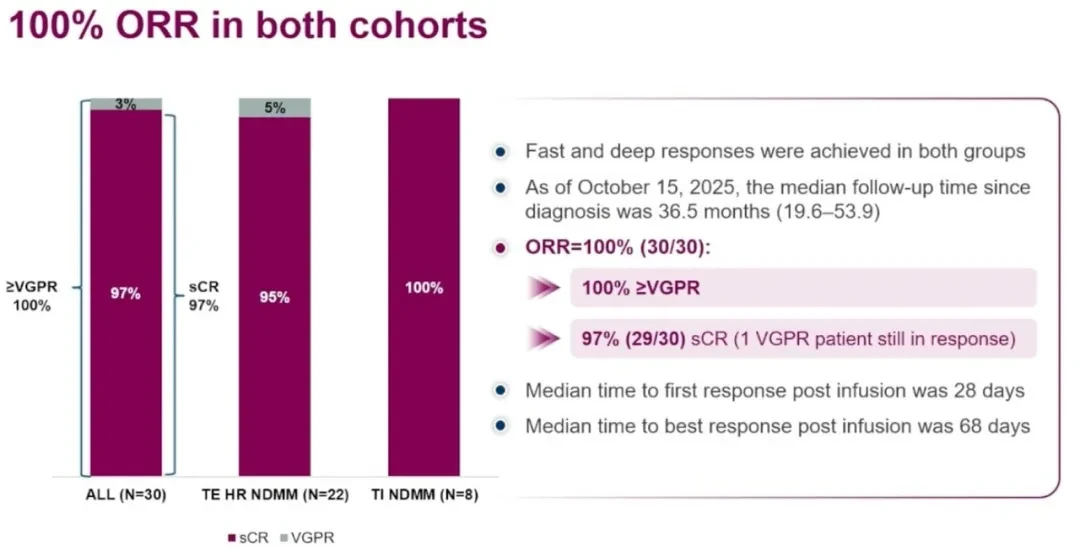
▲Source of the Image“Blood"`, owned by the original author. If we unintentionally infringe on intellectual property, please contact us for removal."
In summary, GC012F/AZD0120 can induce deep and durable responses in newly diagnosed multiple myeloma (NDMM) patients with excellent safety. These results not only confirm its outstanding performance with a 100% objective response rate and MRD negativity across all dose cohorts but also highlight its significant potential in treating high-risk NDMM patients and NDMM patients ineligible for transplant.
Gastric cancer is one of the highly prevalent and severely prognostic malignant tumors in China, with nearly half of the global new cases and mortality concentrated in the country. In this context, Claudin-18.2 (CLDN18.2) has emerged as a highly promising therapeutic target in the field of gastric cancer and gastroesophageal junction cancer (G/GEJC). The autologous CAR-T cell therapy targeting this protein, satri-cel (CT041), has demonstrated encouraging efficacy in the Phase 2 pivotal clinical trial (CT041-ST-01) for heavily pretreated advanced G/GEJC patients. The data was simultaneously published in the prestigious international journal *The Lancet*. This study enrolled 266 CLDN18.2-positive patients with advanced gastric cancer or gastroesophageal junction cancer, of which 156 patients who had failed at least second-line treatments were randomly divided into two groups: the satri-cel group (104 patients received satri-cel infusion) and the standard treatment (TPC) group (52 patients received paclitaxel, irinotecan, docetaxel, nivolumab, or apatinib).
The results showed that: in the intention-to-treat population (ITT): as assessed by the Independent Review Committee (IRC), the satri-cel groupThe median progression-free survival (mPFS) was 3.25 months.(95%CI:2.86-4.53),Significantly longer than 1.77 months in the TPC group(95% CI: 1.61-2.04), hazard ratio (HR) was 0.37 (95% CI: 0.24-0.56). In terms of overall survival (OS), the satri-cel group also demonstrated a clear trend of benefit: both groupsmOS was 7.92 months (satri-cel group) vs 5.49 months (TPC group), HR 0.69 (95%CI: 0.46-1.05), one-sided p=0.0416. Notably, even with 15.4% (16 cases) of patients in the satri-cel group not receiving cell infusion and nearly 40% (20 cases) of patients in the TPC group subsequently crossing over to receive satri-cel infusion,The risk of death in the satri-cel group was still reduced by more than 30%.。
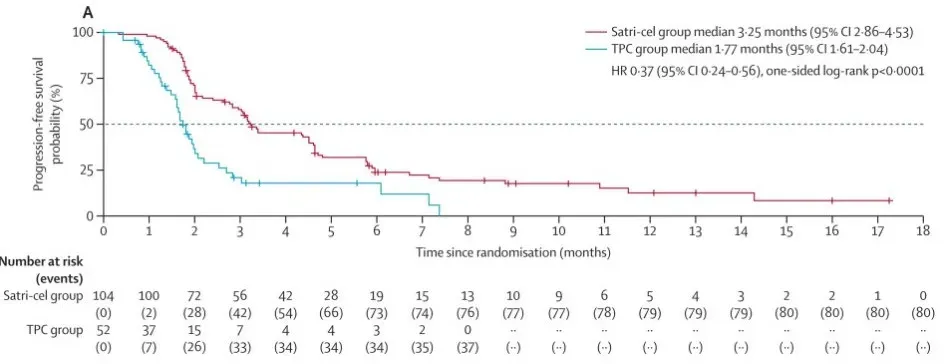
▲Source of the Image"The Lancet", all rights reserved. If we unintentionally infringe on intellectual property rights, please contact us for removal.
In the actual medication population (mITT): the efficacy advantage of satri-cel is even more significant ——The mPFS for the two groups were 4.37 months vs 1.84 months, respectively.(HR 0.30,95%CI:0.19-0.47);mOS were 8.61 months vs 5.49 months(HR 0.60, 95% CI: 0.38-0.94). Additionally, 20 patients in the TPC group crossed over to receive satri-cel infusion.mOS reached 9.20 months; and all patients who received satri-cel infusion (a total of 108 cases),Its mOS reached 9.17 months.
In summary, satri-cel significantly improved progression-free survival in patients with advanced G/GEJC, with manageable safety, providing strong clinical evidence to support its potential as a novel third-line treatment option for such patients.
Hematogenous dissemination of gastrointestinal and hepatobiliary cancers most commonly involves the liver, with many patients already having liver metastases (LM) at initial diagnosis. Carcinoembryonic antigen (CEA), due to its high expression levels and detectability in serum, is not only a highly sensitive marker for gastrointestinal cancers but is also widely expressed in the tissues and serum of colorectal cancer (CRC). Additionally, it is applicable to various other cancers such as non-small cell lung cancer, breast cancer, gastric cancer, and pancreatic cancer, making it an ideal target for CAR-T therapy in adenocarcinoma with liver metastases.
Recently, the Journal for ImmunoTherapy of Cancer reported an inspiring case (NCT02850536): A male patient in his 50s was diagnosed with persistent poorly differentiated pancreatic adenocarcinoma with liver metastasis. His Eastern Cooperative Oncology Group (ECOG) performance status score was 0. He had previously received first-line standard systemic chemotherapy (FOLFIRINOX regimen combining 5-fluorouracil, leucovorin, irinotecan, and oxaliplatin) but developed resistance to the treatment. Subsequently, he enrolled in a trial and received second-generation anti-CEA CAR-T therapy combined with low-dose interleukin-2 (IL-2) treatment.
Significant treatment outcomes: Positron Emission Tomography-Computed Tomography (PET-CT) showed at 6 weeks after CAR-T infusionComplete absence of metabolic activity in liver FDG-positive lesions, TheComplete Metabolic Response Lasted for 13 Months; Contrast-enhanced CT of the vein suggestsTarget lesions are stable or slightly reduced, with no new metastatic lesions.. After 3.7 months of treatment, PET scan showedThe liver remains metabolically inactive., but the metabolic activity of the primary lesion in the pancreatic head increased. The patient then received radiotherapy for the pancreatic mass with 5-fluorouracil as a radiosensitizer. Subsequent scans showedThe primary tumor site also achieved complete metabolic remission.。
In terms of survival period, the patientOverall Survival (OS) up to 23.2 months——The median survival period for most patients with stage IV pancreatic adenocarcinoma is only 5 months, which meansCEA CAR-T Therapy Extended the Survival of This Chemotherapy-Resistant Patient by Nearly 5 Times (4.64 Times)。
In terms of tumor markers, calculated at the lowest point during treatment,The patient's CEA decreased by 81%, and carbohydrate antigen 19-9 (CA19-9) decreased by 68%., andBoth types of biomarkers returned to normal within 2-3 months after treatment.Pathological analysis further revealed extensive hyaline fibrosis in the liver tumor biopsy specimens, with no signs of normal liver tissue damage, and a large number of CAR+ cells were detected in the specimens.
This case confirms that regional infusion of CAR-T therapy is both biologically active and safe for indications such as pancreatic adenocarcinoma with liver metastasis, which currently have low success rates with immunotherapy, offering new hope and treatment options for these patients.
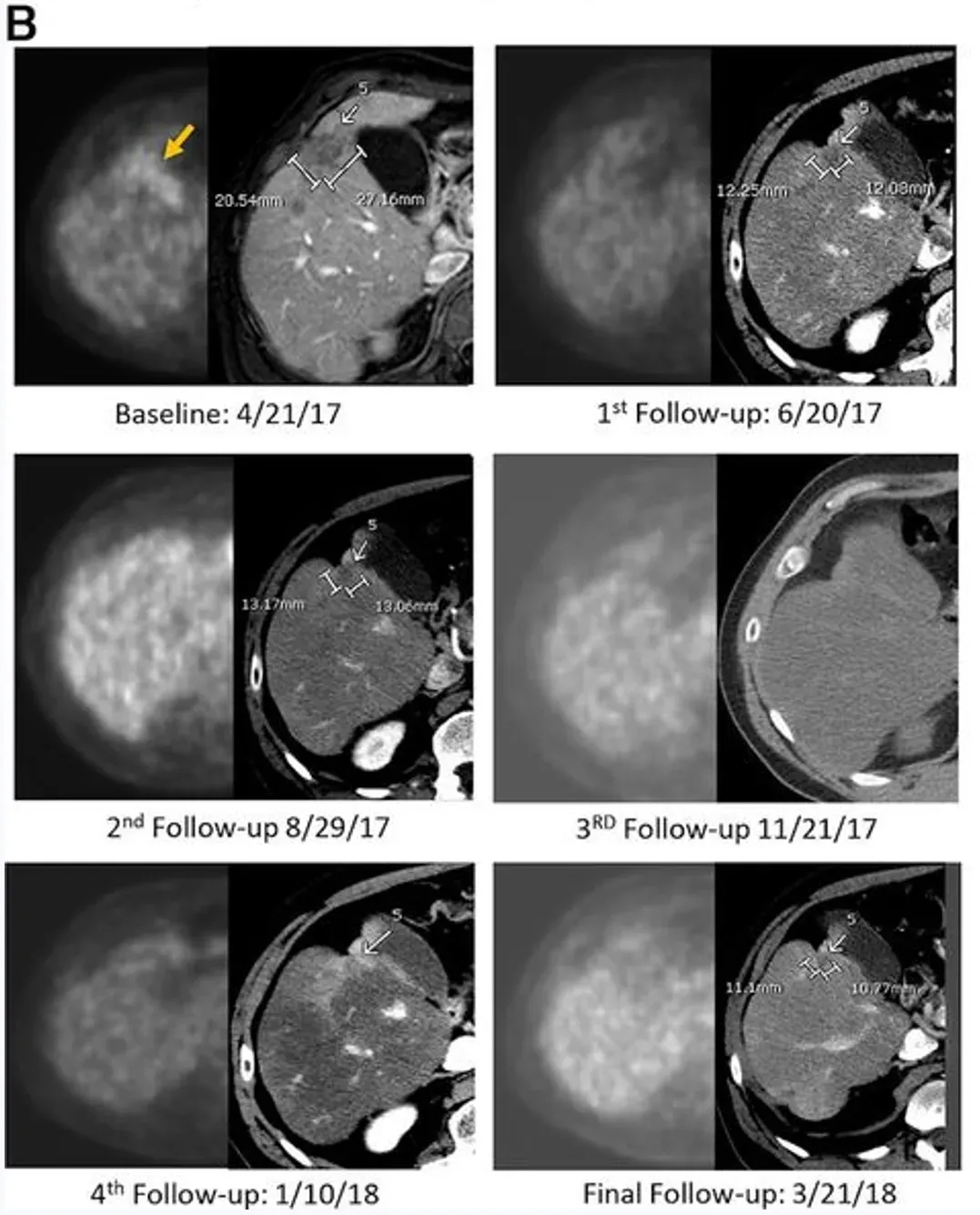
▲Source of the image"JITC", the copyright belongs to the original author. If we unintentionally infringe on intellectual property rights, please contact us for removal.
To date, CAR-T cell therapy has made breakthrough progress in the field of treating hematologic malignancies, benefiting numerous patients. Encouragingly, researchers worldwide have never ceased their explorations in recent years, continuously studying various novel strategies to reduce tumor antigen heterogeneity and break through the dilemma of immunosuppression, bringing more hope to cancer patients!
The editorial team of the Global Oncology Medical Department also hopes that with the emergence of more and more star targets and continuous technological innovation, CAR-T therapy can break through the bottlenecks of cost and cancer treatment as soon as possible, benefiting more patients with advanced cancer and achieving the wonderful vision of long-term tumor-carrying survival, improving quality of life, and reducing the risk of recurrence! Patients who wish to seek help from new domestic and international anti-cancer technologies such as CAR-T, TCR-T, and TIL therapies can submit their pathology reports, treatment history, recent imaging examinations, and other materials toGlobal Oncologist Network Medical Department (400-666-7998), conduct a preliminary assessment, or apply for a consultation with domestic and international cancer experts.
[1]Qi C,et al.1018O Phase I study of GCC CAR-T therapy IM96 in patients with advanced colorectal cancer[J]. Annals of Oncology, 2023, 34: S620.
https://ascopubs.org/doi/10.1200/JCO.2024.42.16_suppl.2518
[2]Du J,et al.A dual targeting BCMA and CD19 fastcar-t (GC012F/AZD0120) as first-line therapy for newly diagnosed multiple myeloma[J]. Blood, 2025, 146: 258.
https://ashpublications.org/blood/article/146/Supplement%201/258/548757/A-dual-targeting-BCMA-and-CD19-fastcar-t-GC012F
[3]Katz S C,et al.HITM-SURE: Hepatic immunotherapy for metastases phase Ib anti-CEA CAR-T study utilizing pressure enabled drug delivery[J]. Journal for immunotherapy of cancer, 2020, 8(2): e001097.
https://jitc.bmj.com/content/8/2/e001097
This article is original by Global Oncologist Network. Reprinting is strictly prohibited without authorization.
Scan to Add Patient Group
Cancer Fighting News|New Technologies|New Drug Development|Authoritative Experts
Join the group to receive free anti-cancer resources