GC101 TIL Therapy Shines at ESMO-Asia 2025: 70% Tumor Reduction in Pancreatic Cancer and a De-Escalated Regimen for Melanoma
Juncell Therapeutics
Solid Tumor Cell Therapy Developer


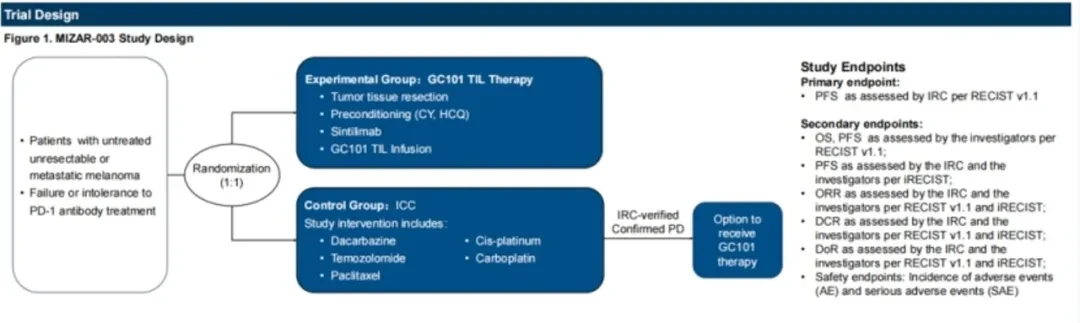
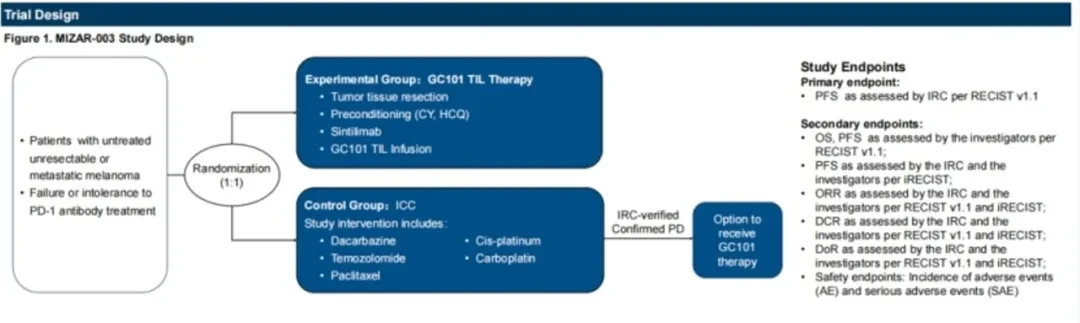
On December 5, 2025, the prestigious international academic conference in the field of global oncology diagnosis and treatment – the ESMO-Asia Annual Meeting – announced the research protocol for Juncell Therapeutics' "Autologous Natural Tumor-Infiltrating Lymphocyte Injection (GC101TIL) for the Treatment of Advanced Melanoma: A Pivotal Phase II Clinical Trial (Code Name: MIZAR-003)."
AsThe world's first registrational randomized controlled trial (RCT) of TIL therapy for the treatment of advanced melanoma in later-line settings, This study will provide higher-level clinical evidence support for TIL therapy.
Immune checkpoint inhibitors (ICIs) and targeted therapies have revolutionized the treatment landscape for advanced (unresectable or metastatic) melanoma, but clinical challenges remain: disease progression occurs within a year in most patients receiving first-line ICIs, 40%-65% exhibit primary resistance, and 30%-40% develop secondary resistance. Recent studies have found that TIL therapy has shown clinically significant efficacy in patients with advanced melanoma who failed ICIs treatment. However, traditional regimens require high-intensity lymphodepletion preconditioning (high-dose cyclophosphamide + fludarabine) combined with high-dose IL-2, which is associated with prominent adverse effects.
Based on this, Juncell Therapeutics has developed the GC101TIL therapy, which does not require high-intensity lymphodepletion or combination with IL-2, and has already shown promising results in a previous Phase I trial. Currently, its pivotal Phase II randomized open-label study, MIZAR-003 (NCT04943913), is evaluating the efficacy and safety of this drug in melanoma patients who have failed or are intolerant to PD-1 antibody therapy.
In addition to melanoma, GC101 has also shown positive progress in the treatment of pancreatic cancer. Juncell Therapeutics reported an inspiring case of "GC101 treating advanced pancreatic cancer": The patient was a male with advanced pancreatic cancer who had postoperative recurrence with liver metastasis. After enrolling in the GC101 clinical trial and receiving a single infusion of TIL cells over six weeks, the results showed:The recurrent lesion in the head of the pancreas shrank from 10cm to 3cm, and the liver metastasis completely disappeared.(See the figure below for details),Tumor markers return to normal, and the patient has been living a normal life for over 39 months as of now.。
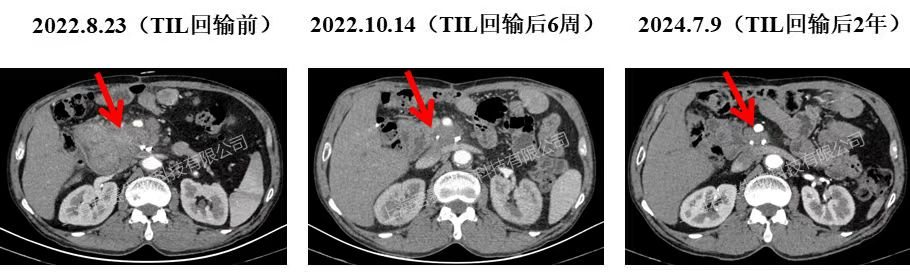
▲Source of the Image“JUNCELL”`, owned by the original author, if unintentionally infringing on intellectual property rights, please contact us for deletion.`
In addition to GC101, the efficacy of TIL therapy in treating melanoma has long been traceable and can be combined with other therapies. The book *Cancer Immunology and Immunotherapy* reported a clinical study on “TIL + Ipilimumab combination therapy for metastatic melanoma”: 13 patients were enrolled, receiving Ipilimumab treatment starting two weeks before surgery, followed by another treatment one week post-surgery. Ipilimumab was administered again two and five weeks after TIL infusion, followed by IL-2. A total of 12 patients completed the TIL infusion (median 6.5×10¹⁰).
The results showed:12-week Objective Response Rate (ORR) 38% (5 cases of partial response), among which4 casesContinuous remission for 34-46 months or more, with one case achieving complete remission at 52 months (lasting until 53 months).;Median Progression-Free Survival (PFS) 7.3 Months(95% CI: 6.13–29.9 months, see Figure B below),Median overall survival was not reached within the 35-month follow-up period.(See Figure A below for details).9 cases (75%) of target lesions shrankThe combination regimen is feasible and well-tolerated, providing a reference for subsequent studies.
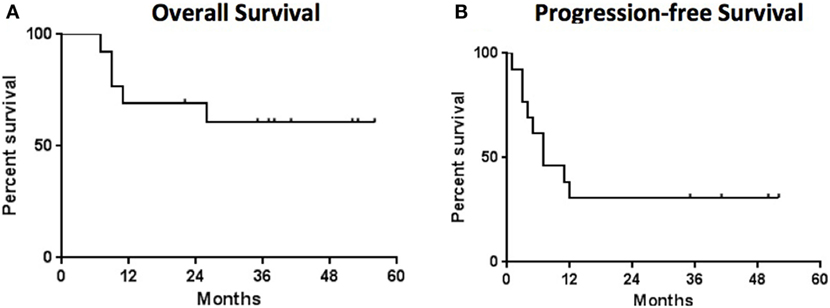
▲Source of the image“BMJ”`, owned by the original author, if we unintentionally infringe on intellectual property rights, please contact us for deletion.`
Notably, one patient achieved complete remission after receiving combination therapy with TIL and ipilimumab.The lesions in the mesentery (see Figure A and B below) and abdominal wall (see Figure C below) have completely regressed.,All other lesions (liver and retroperitoneal wall, not shown in the figure) have also completely disappeared.。
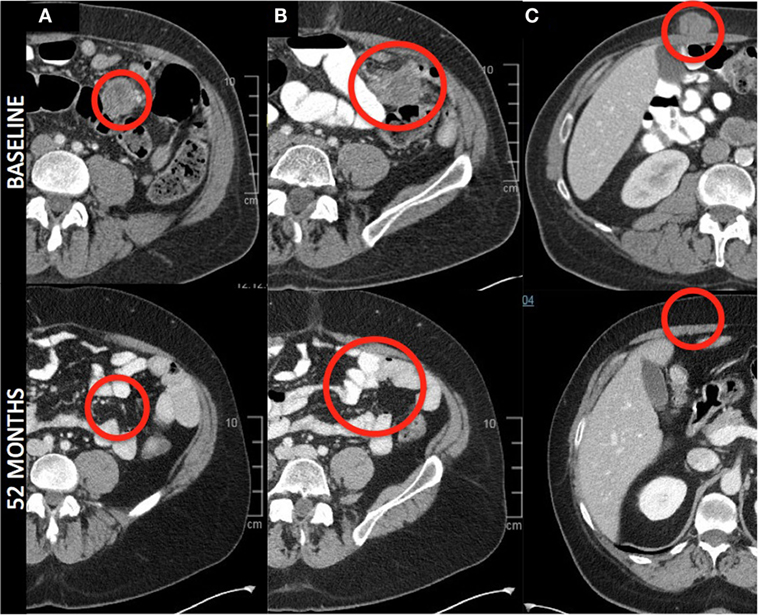
▲Source of the Image“BMJ”`, owned by the original author, if any intellectual property rights are infringed unintentionally, please contact us for removal.`
Since its first clinical trial in 1988, TIL therapy has undergone more than 30 years of development. With its unique advantages, it has achieved remarkable efficacy in various solid tumors such as melanoma, lung cancer, cervical cancer, breast cancer, and head and neck tumors, making it a true "powerful weapon" against solid tumors!
However, cancer, as a highly mutated and extremely complex disease, is difficult to treat effectively with a single therapeutic approach. Currently, traditional treatments such as surgery, radiotherapy, and chemotherapy remain the primary methods. On this basis, patients who meet the conditions for TIL cell preparation can timely cryopreserve TIL cells before initial surgery and radiochemotherapy for subsequent treatment, to prevent recurrence/metastasis, or as a last-resort measure when other options are exhausted in advanced cancer, offering patients a "glimmer of hope." Patients seeking help from TIL therapy or other new anti-cancer technologies (such as CAR-T, TCR-T, NK cell therapy, etc.) domestically or internationally can submit recent pathology reports, treatment history, and other relevant materials toGlobal Cancer Doctors Network Medical Department (400-666-7998), for preliminary evaluation.
[1]Mullinax J E,et al.Combination of ipilimumab and adoptive cell therapy with tumor-infiltrating lymphocytes for patients with metastatic melanoma[J]. Frontiers in oncology, 2018, 8: 44.
https://www.frontiersin.org/journals/oncology/articles/10.3389/fonc.2018.00044/full
This article is original content from Global Oncologist Network. Reproduction is strictly prohibited without authorization.
Scan to Add Patient Group
Cancer News|New Technologies|New Drug Development|Authoritative Experts
Join the group to receive free anti-cancer resources