

Off-the-Shelf CAR-NK Therapy for SLE Named Among 2025’s Top Clinical Breakthroughs as Antibody and Cell Therapies Race to Transform Lupus Treatment
Rui Therapeutics
A New Generation of Cell-Based Drug Developer
January 4, 2026
eMedClub News

Breakthrough! The First Allogeneic CAR-NK
Clinical Studies in Humans for SLE
SLE is a serious systemic autoimmune disease that predominantly affects young women. Its core pathological mechanism lies in the abnormal activation of the immune system, leading to the overactivation of B cells and other components, which produce large amounts of autoantibodies, resulting in irreversible damage to multiple systems and organs throughout the body. For a long time, there has been a lack of methods to completely cure SLE. Existing treatment drugs include glucocorticoids, immunosuppressants, etc., which can alleviate clinical symptoms to a certain extent, but issues such as poor response, recurring conditions, and adverse reactions still persist.
CAR-NK Cell Therapy, Selected as the Clinical Breakthrough of the Year, IsRui TherapeuticsA universal CD19 CAR-NK cell drug KN5501 under research.
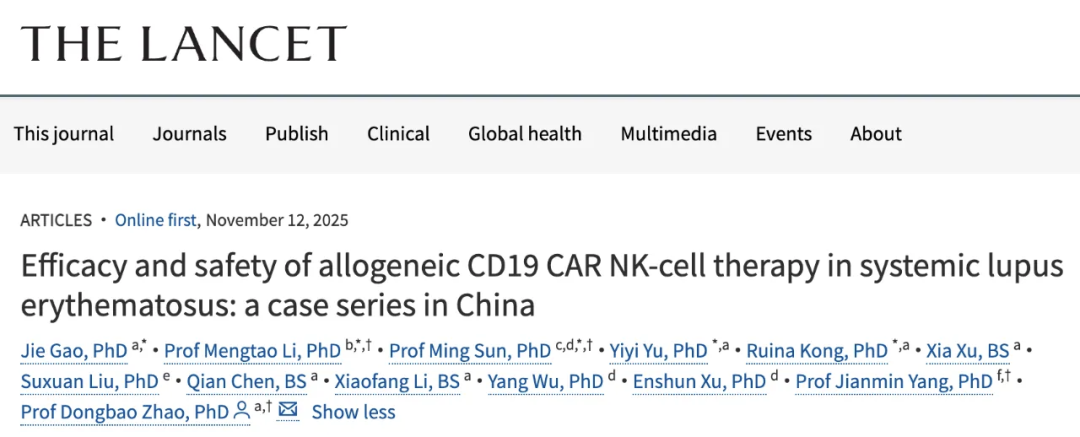
On November 12, 2025, Professor Zhao Dongbao and Professor Gao Jie from Shanghai Changhai Hospital, in collaboration with the Rui Therapeutics research team, published significant research findings in the prestigious international medical journal *The Lancet*. The study isThe World's FirstClinical Study on Allogeneic CAR-NK for SLE in Humans,First confirmed that CAR-NK therapy can bring long-term deep remission to patients with moderate to severe SLE。
From a technical perspective, the breakthrough of KN5501 is mainly reflected in three dimensions: technological pathway innovation, unlike the "personalized preparation" of CAR-T, KN5501 uses NK cells from healthy donors, which are genetically engineered to target CD19, enabling precise identification and elimination of pathogenic B cells and achieving "immune reset"; safety is significantly improved, as the natural characteristics of NK cells to some extent avoid safety risks such as CRS; accessibility is greatly enhanced, since it can be standardized for mass production, the treatment cost of KN5501 is expected to drop to one-tenth of autologous CAR-T, meaning more ordinary patients will have the opportunity to access innovative therapies.
Clinical data show that, six months after treatment, the condition of all patients was effectively controlled; 13 maintained low disease activity, and 10 achieved complete clinical remission. Among the nine patients followed up for more than one year,67% Continued to maintain complete remission or low activity, with no cases of recurrence.
More notably, a patient with both conditions experienced simultaneous improvement in both diseases after receiving KN5501 treatment.
Global Competition:
Dual-Track Breakthrough and Layout in SLE Treatment
Due to the complex pathological mechanisms of SLE, there is a significant unmet clinical need, making this field a strategic high ground for autoimmune treatment. According to previous data from Frost & Sullivan, the global SLE treatment drug market size is expected to reach $6.5 billion by 2025. The substantial unmet clinical needs and market attractiveness have driven pharmaceutical companies worldwide to continuously increase their investments in this area.
BD Trading Boom:
Seize the Opportunity through "External Collaboration"
On the strategic path, MNCs are more inclined to quickly acquire innovative assets through external collaborations, thereby reducing R&D risks and seizing the initiative.
October 2024,GSK Acquired CMG1A46 from Rui Therapeutics for a total transaction value of $850 million, with plans to focus on SLE and lupus nephritis.(LN)Public data shows that CMG1A46 is a T-cell engager targeting CD3, CD19, and CD20 simultaneously.(TCE), is the world's first tri-specific antibody candidate targeting CD3/CD19/CD20 to enter clinical trials.
As an old player in the SLE field, GSK has already achieved commercial success with belimumab. This heavy investment acquisition demonstrates its strong confidence in the prospects of the autoimmune market, particularly in the SLE treatment sector.
RocheIt is also actively expanding in the SLE field. Previously, Roche registered a Phase 1 clinical trial on Clinicaltrials.gov for a universal CD19/CD20 CAR-T cell therapy to treat severe recurrent SLE. This pipeline originated from Roche's strategic acquisition of Poseida for a total amount of $1.5 billion.
Besides traditional MNCs, a company namedCandid TherapeuticsThe American "dark horse-level" biotechnology company has also attracted industry attention. Only five months after its establishment, Candid announced six TCE-related collaborations in succession. Currently, Candid has advanced multiple TCEs into the clinical stage, with indications including SLE, IgA nephropathy, and myasthenia gravis.(MG)、Rheumatoid Arthritis(RA)And a variety of other autoimmune indications.
Pipeline Race:
Dual Progress in Antibody and Cell Therapy
According to incomplete statistics, there are currently over 600 SLE drugs globally, covering all types of drugs from traditional small-molecule drugs to cutting-edge cell therapies. Among them,Antibody DrugsAndCell TherapyAre the two most anticipated directions.
Antibody: TCE Becomes Mainstream
One of the pathological mechanisms of SLE is the overactivation of B cells producing autoantibodies. Therefore, antibody drugs mostly target B cell surface antigens or related cytokines to block B cell activation signals or eliminate pathogenic B cells. Among these, TCE has been a hotspot in recent years. It connects T cells with target cells through bispecific/multispecific antibodies, thereby activating the killing function of T cells. Compared with traditional monoclonal antibodies, TCE exhibits stronger targeting and killing efficiency.
Currently, there are no TCE products for the treatment of SLE approved for marketing globally, and most of the pipelines under research are still in the early clinical and preclinical stages, with targets mainly focused on CD19 and CD20.
AmgenBlinatumomab(CD19/CD3)It is the world's first approved and commercially available TCE bispecific antibody drug, and also one of the more advanced pipelines in clinical stages for SLE. The drug has previously demonstrated efficacy in severe systemic sclerosis and rheumatoid arthritis, with its safety preliminarily validated, and it is currently in Phase 2 clinical trials for SLE.
CC312 isHuihe BioSelf-developedThe World's FirstA trispecific TCE molecule targeting CD19/CD3/CD28 that has entered clinical trials. In July 2025, a Phase 1/2a clinical study on the safety, efficacy, pharmacodynamics, and immunogenicity of CC312 in treating patients with moderate to severe SLE was officially launched at Huaxi Hospital.
At the 2025 EULAR Annual Meeting, Huihe Bio orally presented breakthrough clinical data for CC312 ——100% Disease Remission Rate, profound and sustained B-cell depletion, extremely low CRS grade。
Specifically, all 5 SLE patients reached the SRI-4 clinical remission criteria after treatment. This includes a significant reduction in disease activity, with baseline SLEDAI-2K scores ranging from 8 to 16 points and an average decrease of over 70% post-treatment; proteinuria turned negative in SLE-4 patients after treatment, with complete renal damage remission; hemolytic anemia disappeared in SLE-5 patients, with hemoglobin and bilirubin levels returning to normal. All dose groups of CC312 demonstrated favorable clinical efficacy and rapid B-cell depletion effects, which are associated with disease progression.The maximum depletion rate of B cell subsets exceeds 99%., and the efficiency of B cell depletion has a significant dose-dependent effect.
Cell Therapy:
Highly concentrated targets, diversified technical pathways
In addition to bispecific/multi-specific antibody drugs, another important direction in the development of innovative drugs for SLE is cell therapy. According to incomplete statistics, there are over 30 cell therapy programs globally under research for SLE indications, showing characteristics of target aggregation, diverse technologies, but mainly early-stage exploration.
In terms of targeted antigens, CD19 is the most focused target. OverseasNovartis、BMS, etc. Headquartered in ChinaBaiji Gene, Bangyao Biotech, Wuxi Jumo, Precision Biotech, Ruishun Biotech, Yimiao Shen Zhou, Heinrich Biotech, Jiinno Biotech, Beiheng Biotech, Usano Biotech, Rui Therapeutics, Ronggu Biotech, SinoBioThe pipelines under research by companies such as Rui Therapeutics all target CD19.
Take BMS's CD19 CAR-T cell therapy BMS-986353 as an example. It utilizes the CAR structure from BMS's already approved hematologic tumor CAR-T therapy, Breyanzi, and integrates it with the next-generation NEX-T platform to further optimize the 5-day production process for this cell therapy.
On October 25, 2025, BMS announced for the first time the positive Phase 1 study data of BMS-986353 in three chronic autoimmune diseases, including SLE. Preliminary results showed robust CAR-T cell expansion, complete B-cell depletion, and re-emergence of naïve B-cell phenotypes across all cohorts. As of the analysis cutoff,94%The evaluable patients have discontinued chronic immunosuppressive therapy.
Some drugs also adopt a dual/multi-target design, aiming to enhance the targeting coverage and avoid recurrence caused by antigen escape, such asCBMG, Fosun Kite, Gracell Biotechnologies, Accura Bio, CARsgen Therapeutics, Legend Biotech, Songhe ImmunotherapyCompanies have developed relevant pipelines targeting BCMA, CD20, CD22, and other antigens.
In terms of drug types, the mainstream direction remains CAR-T cell therapy.
Early CAR-T cell therapy was mainly autologous CAR-T, but in recent years, with advancements in cutting-edge technologies such as gene editing and iPSC, some companies have begun to develop allogeneic "off-the-shelf" CAR-T cell therapies.Bionvoy BiotechBRL-301(TyU19)For example, after multi-gene and selective gene editing, it successfully treated four patients with SLE. The drug can achieve rapid and deep clinical remission in SLE treatment, demonstrating excellent clinical safety. Relevant research results have been published in an international academic journal.Cell Research, which is alsoWorld's First Report of Allogeneic CAR-T Cell Therapy for SLE Using CRISPR/Cas9 Gene EditingSuccessful case.
In addition to CAR-T, CAR-NK therapy also brings new possibilities for SLE treatment, such as the aforementionedRui Therapeutics' KN-5501, SNC103 from SinoBioetc.
Stem cells are also one of the frontier directions.Beike BiotechnologyHuman umbilical cord mesenchymal stromal cell injection exerts its effects through immunomodulatory mechanisms, offering new insights into organ injury repair and has now entered phase 1/2 clinical trials.
Conclusion
From Lab to Clinic: The SLE Treatment Field Sees Numerous Breakthroughs in 2025. The inclusion of universal CAR-NK therapy in the "Top Ten Clinical Breakthroughs" is just one footnote in this process, backed by market recognition from multinational pharmaceutical companies through multi-billion-dollar deals, the rapid rise of China's innovative pharmaceutical enterprises through technological iteration, and an innovative ecosystem driven by multiple technological pathways such as antibody and cell therapies.
As technology continues to mature and more clinical data accumulates, these innovative therapies have the potential to fundamentally reshape the treatment paradigm for SLE, freeing millions of patients from the burden of the "non-fatal cancer."
Editorial Director | Xuan Xiao
Proofread by Xuan Xiao
References:
1.https://mp.weixin.qq.com/s/OiKsH3PnIbe_n61HVeBqOA
2.Official WeChat Account of Shanghai Changhai Hospital
3.https://www.thelancet.com/journals/lancet/article/PIIS0140-6736(25)01671-X/abstract
4.https://www.businesswire.com/news/home/20251024606817/en/Bristol-Myers-Squibb-Presents-Encouraging-Data-from-Phase-1-Breakfree-1-Study-of-CD19-NEX-T-CAR-T-Cell-Therapy-in-Three-Chronic-Autoimmune-Diseases-at-ACR-Convergence-2025
5.https://acrabstracts.org/abstract/promising-early-outcomes-with-bms-986353-a-cd19-directed-chimeric-antigen-receptor-t-cell-therapy-in-severe-refractory-idiopathic-inflammatory-myopathies-safety-and-efficacy-findings-from-the-ongoin/
6. Official Websites and Official WeChat Accounts of Various Companies

Exciting Event Preview
Press and hold to scan the QR code to participate immediately ↓
Recommendation 1
January 9th, 13:30-17:00
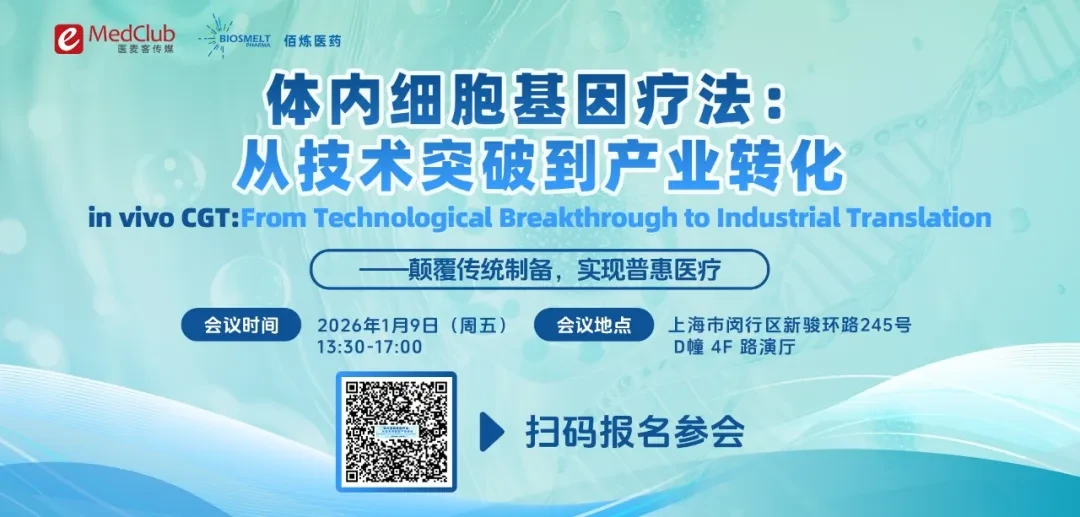
Offline Conference | In Vivo Cell and Gene Therapy: From Technological Breakthrough to Industrial Transformation

Dian Dian "Share”、“Like" and "In View”
Give me a little charge~