DBV Technologies: Pioneering Epicutaneous Immunotherapy with Viaskin Peanut Patch for Pediatric Food Allergy

DBV Technologies
Immunotherapy Developer

Note:This article does not constitute any investment opinions or suggestions; please refer to official/company announcements for accuracy.This article only introduces drugs related to medical health, not a recommendation of treatment options (if involved), and does not represent the platform's position.Any article reprinted needs to be authorized.
PharmaCircleMonitoring Shows: Statistics indicate that there are approximately 670,000 children aged 1-7 years with peanut allergies in the United States, including 280,000 toddlers aged 1-3 years and 390,000 children aged 4-7 years; in Europe, there are about 615,000 children aged 1-7 years with peanut allergies, with approximately 81,000 new diagnosed cases annually. There is a significant unmet treatment need in the global pediatric peanut allergy market. Traditional treatments include oral immunotherapy and anti-IgE monoclonal antibodies, but these therapies have pain points such as complex dose adjustments, frequent medical visits, injection fears, or risks of adverse reactions. Ninety percent of allergists believe more pediatric peanut allergy treatment options are needed.
2002Years ago, two pediatricians and an engineer, with the vision of developing a new type of immunotherapy that could avoid the risks associated with traditional injections or oral desensitization therapy, founded DBV Technologies SA in France.DBV Technologies。In March 2012, the company completed its IPO on the Euronext Paris main board, with the stock code DBV; in October 2014, the company also went public on NASDAQ by issuing American Depositary Shares (ADS).

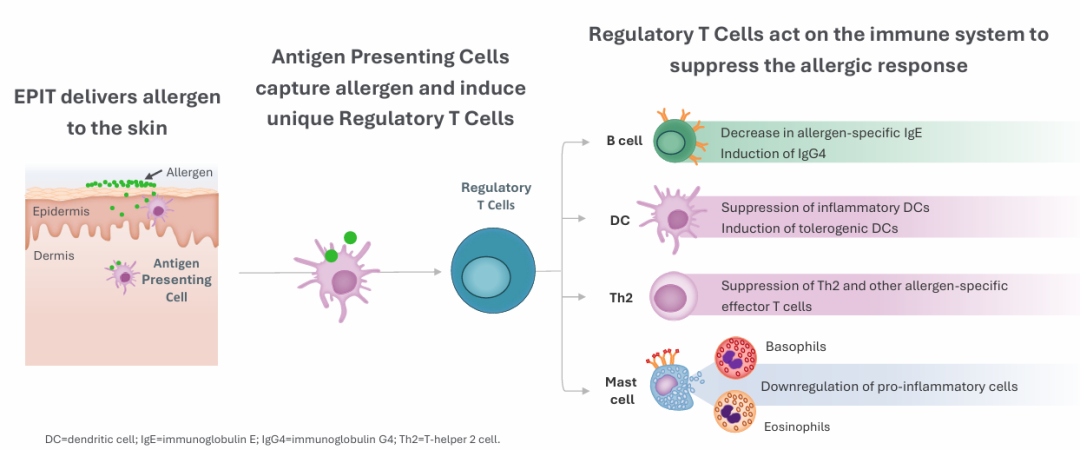
Since its establishmentSince,DBV TechnologiesJust abandonCast a wide netStrategy,All-in BetEpidermal Immunotherapy (EPIT),EPIT delivers allergens to the upper epidermis, gradually inducing tolerance by leveraging the immune properties of the skin. This therapy does not require oral administration or injection, reducing the risk of systemic adverse reactions associated with traditional therapies from the source.Compared with oral desensitization (OIT) ComparedEPIT exempts daily intake, dose escalation, and vigorous exercise restrictions, significantly reducing severe allergic reactions, making it more suitable for infants and toddlers whose physiological and psychological development is not yet mature.
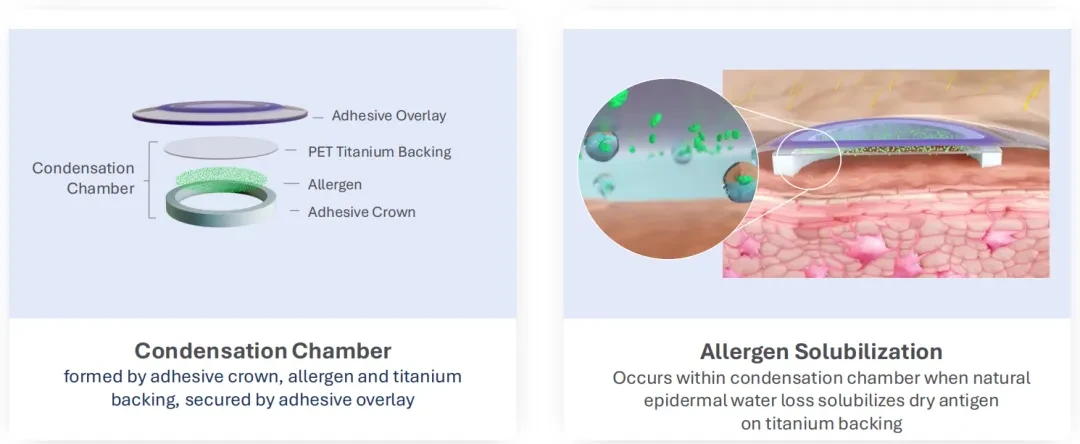
The Viaskin patch, launched by the company, can deliver allergens (such as peanut protein) to the immune system through intact skin, minimizing entry into the bloodstream and reducing the risk of systemic allergic reactions.This“PatchStyleDesensitization”The concept was a first at the time. Its drug-device combination design uses a condensation-drying chamber structure to achieve stable release of allergens and percutaneous absorption: only once daily is required.250 μgPeanut protein (approximately equivalent to1/1000particles of peanuts), which can maintain long-term desensitization effects.
Currently, DBV Technologies has built a comprehensive intellectual property matrix around this technology, covering the core structure of the patch, mechanism of action, and production process. It has also obtained patent protection in multiple countries, including the US, Europe, and Australia, with the core patent expected to expire in 2034 after extension.

DBV TechnologiesTheViaskinPeanut Patch for1~3Years old children and4~7Two key age groups for children have been targeted, with two differentiated products designed—square patches and round patches—forming a dual-track R&D and commercialization layout.Among them, the square patch is designed for toddlers aged 1 to 3 years, while the round patch has an area 50% larger than the square one and is aimed at children aged 4 to 7. Both products have the same dosage, containing 250μg of peanut allergen extract.
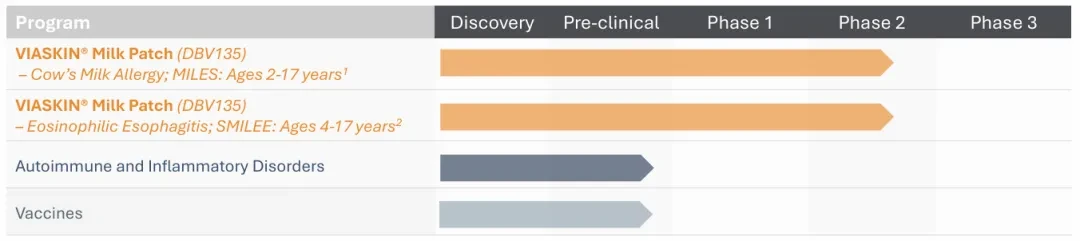
In addition, the company is also expanding the application boundaries of Viaskin technology, laying out R&D pipelines for indications such as milk allergy and eosinophilic esophagitis, and is committed to exploring the full potential of the technology platform in the long term.
1, Targeting1~3Years Old Toddler
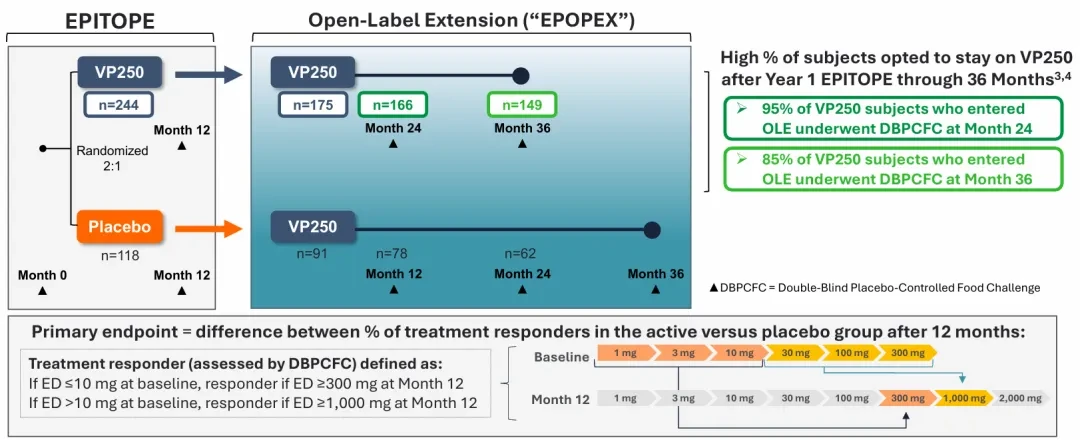
EPITOPE Trial is a Phase 3 clinical trial study for children aged 1 to 3 years. The results showed that after 12 months of treatment, 67.0% of the active group participants reached the response criteria, significantly higher than the 33.5% in the placebo group. Additionally, 64.2% of the participants achieved a tolerance dose of ≥1000mg of peanut protein, which is more than 8 times the typical dose of accidental exposure.
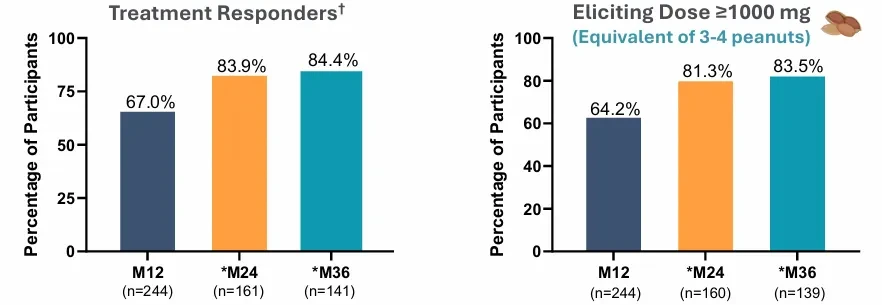
The subsequent open-label extension study of EPOPEX showed that when the treatment continued up to 36 months, the response rate further increased to 84.4%, with 83.5% of participants tolerating doses ≥1000mg. The safety profile remained consistently stable, with a serious treatment-related adverse event rate of only 0.6%, and no reports of treatment-related allergic reactions.For this age groupCOMFORT ToddlersSupplementary safety tests have been conducted in2025Year6Launched in [Month], planning to recruit300~350Active treatment subjects, expected2026Completed in the second half of the yearBLASubmit.
2. For children aged 4 to 7
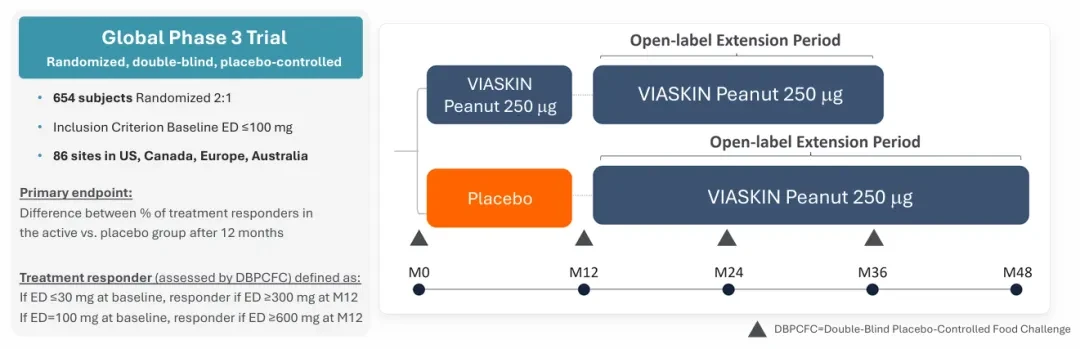
VITESSETestA Phase 3 clinical trial study, this 12-month research targets peanut-allergic children aged 4 to 7 years to evaluate the efficacy and safety of the Viaskin Peanut Patch. It enrolled 654 participants, randomly assigned in a 2:1 ratio, across 86 study sites in the United States, Canada, Europe, the United Kingdom, and Australia.2025Year11Month11Day,DBVAnnouncementVITESSEThe trial has completed the last patient follow-up, and according to the current progress, it is still planned to announce in the fourth quarter of this year.VITESSETop-line data of the trial.
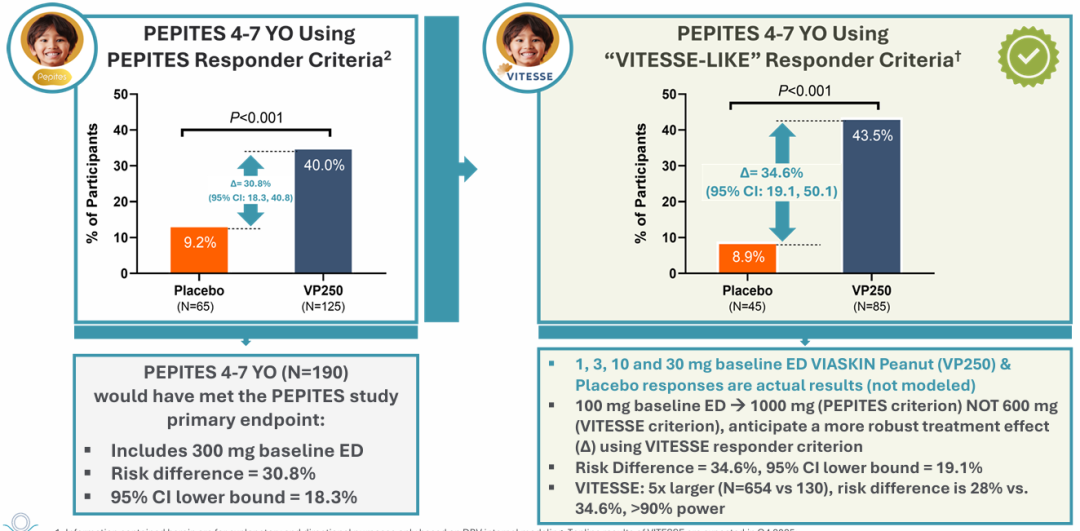
The VITESSE trial referenced the previous PEPITES trial analysis. The PEPITES results showed that the response rate for 4-7 year-old children using the Viaskin peanut patch was 40.0%, significantly higher than the 9.2% in the placebo group, providing solid data support for the VITESSE trial. Notably,2025Year3Month,FDAConfirmedVITESSEThe safety data of the trial is sufficient to supportBLASubmit, without the need for additional developmentCOMFORT ChildrenSupplementary safety tests, the company plans to conduct in China.2026Submitted in the first half of the yearBLA, expected to be obtained in ChinaFDAIf approved, it is expected to advance the product's market launch by approximately1Year.
By region,In the U.S. market,Viaskin Peanut Patch Receives FDA Breakthrough Therapy Designation; BLA Submission Pathway Confirmed for Children Aged 4-7, with Application Expected in the First Half of 2026 and Potential for Priority Review; Accelerated Approval Pathway Agreed Upon with FDA for Infants Aged 1-3, with EPITOPE Trial Data Recognized as Meeting Intermediate Clinical Endpoint Requirements for Accelerated Approval, and BLA Submission Expected in the Second Half of 2026.InEuropean Market,EMA has provided MAA guidance, stating that the MAA for the indication in children aged 1 to 7 must include data from the VITESSE trial, the EPITOPE trial, and a new safety study targeting children aged 1 to 3. The company plans to resubmit the MAA after completing the relevant data to promote the product's launch in the European market.

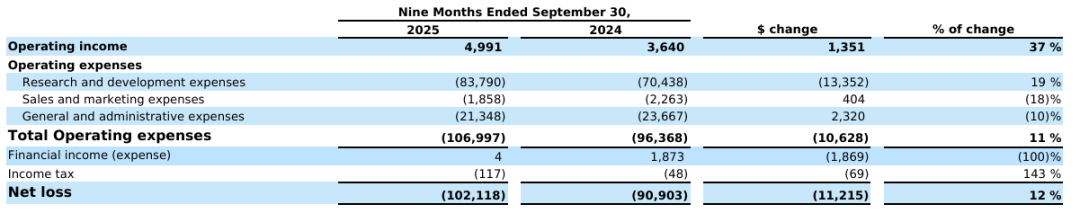
The first three quarters of 2025,DBV TechnologiesGenerated500Million USD in operating revenue,Only $3.6 million in the same period last year, a year-on-year increase of 37%;R&D expenses are8379"Million US dollars,"An increase of 13.4 million US dollars compared with the same period last year;Sales and marketing expenses are186"Million US dollars,"A decrease of 18% compared to the same period last year;General and administrative expenses are2135"Million US dollars,"A 10% decrease compared to the same period last year.Overall, net loss in the first three quarters of this year1.021Billion US dollars.
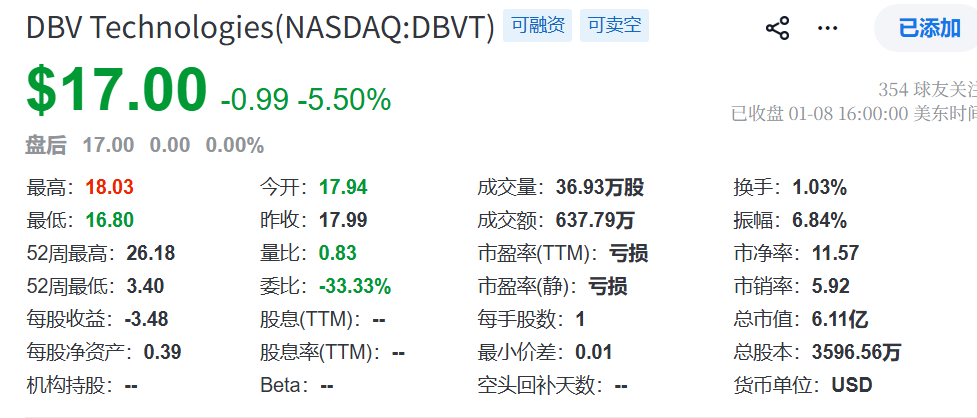
DBV Technologies has raised funds for its R&D and commercialization through multiple rounds of financing. The financing transaction completed in March 2025 raised an initial amount of $125.5 million. If all warrants are exercised in full (contingent upon the topline data from the VITESSE trial), an additional $181.4 million can be obtained, bringing the total financing scale to $306.9 million.Deadline2025Year9Month30Day,DBV TechnologiesCash and cash equivalents6980"Million US dollars."Combined with the potential subsequent ATM issuance fundraising (already approved for a maximum of $150 million), it is sufficient to support operational needs until the third quarter of 2026, covering BLA submission and pre-market preparation work.
Attached Sharing:
SendDBV(Please copy correctly) to the area belowPharmaCircle WeChat Official Account BackendThe full version of the corporate slides and quarterly report PDF is available. For learning, communication, and sharing purposes only!
Reference:
PharmaCircle Data;
NMPA/CDE;
Moxie Pharma Database, https://pharma.bcpmdata.com/;
FDA/EMA/PMDA;
Relevant companies' public disclosures (unless otherwise indicated, images in the body of the text are from the companies' official websites)
https://dbv-technologies.com/;
https://dbv-technologies.com/pipeline/;
https://dbv-technologies.com/investor-overview/;
https://dbv-technologies.com/investor-overview/news/;
https://mp.weixin.qq.com/s/t6y7Jr0UvGeohzFe4Q0QTw; etc.