

Topi Medical's Intraoperative Swept-Source OCT Technology Included in China's National Medical Insurance Reimbursement Guidelines
TowardPi
High-end Ophthalmic Medical Device Developer
In the opening year of the 15th Five-Year Plan, TowardPi Medical's another leading achievement in the ophthalmology field has gained recognition at the national level.
On January 20, 2026, the National Healthcare Security Administration officially released《Guidelines for the Establishment of Medical Service Price Items for Surgical and Therapeutic Auxiliary Operations (Trial)》(hereinafter referred to as the "Project Guidelines"), TowardPi's innovative technology "IntraoperativeSweep FrequencyOptical Coherence Tomography Imaging"Entering this guideline. Meanwhile, the technology has also been included in the high-end application demonstration projects of China's Ministry of Industry and Information Technology and the National Health Commission."
The standardization work for medical service price items follows the approach of "publishing in batches as they mature," using price setting to lead the upgrade of medical technology and guide the transition from "traditional treatment" to "precision medicine." Being included in the "Project Initiation Guidelines" means that at the national level, intraoperative swept-source OCT technology will be...Advanced Auxiliary OperationsIncluded in project initiation and management, its application is helpful forSignificantly improve surgical accuracy, reduce trauma, and benefit patients directly.。
In addition to granting doctors "X-ray vision," this technology also supports horizontal expansion and future applications, such as providing intraoperative multi-modal navigation for ophthalmic robotic surgery, remote surgery, and other scenarios, offering doctors intuitive and precise multidimensional guidance. Medical insurance support for this type of technology will effectively promote the development of precision medicine at medical institutions, ensure surgical safety, significantly improve surgical success rates, and enhance overall medical quality. On the industry side, it will stimulate original innovation by enterprises, drive technological advancement, foster efficient integration of medical engineering, and accelerate the optimization and iteration of medical equipment.
The medical insurance access of a technology must withstand scrutiny from all parties, among whichClinical PracticeParticularly important.
Traditional intraoperative OCT has serious limitations in clinical availability and utilization due to technical characteristics, such as insufficient scanning depth and range, poor tissue penetration and imaging quality, lack of real-time imaging or measurement capabilities, and interference with normal surgical procedures.
Included in the medical insurance catalog this timeIntraoperative Swept-SourceOCT TechnologyThis has formed a disruptive innovation:
Wide scanning range:The maximum scanning width is 20mm and depth is 12mm, allowing simultaneous focus on both the anterior and posterior segments of the eye during surgery.
Strong Penetrating Power:The swept-source with a wavelength greater than 1000nm is not easily affected by the turbidity of refractive media caused by air-liquid exchange, tissue staining, etc., and the imaging quality is stable.
High precision:Providing tomographic perspectives and spatial relationships that traditional microscopes cannot offer, with high-definition imaging and precise measurement capabilities to support high-precision surgical operations.
Real-time:The scanning speed is extremely fast, providing continuous, real-time tomographic images during the surgical process without interrupting the surgical flow, ensuring the smoothness and controllability of the surgery.
Objectivity:Intraoperative real-time observation and objective evaluation of key steps (such as corneal apposition, ICL vault, IOL positioning, macular hole filling, and retinal attachment after subretinal fluid drainage) effectively prevent secondary surgeries caused by intraoperative invisibility or immeasurability, improving surgical success rates.
Intelligentization:With capabilities such as automatic intraoperative measurement, pupil center detection, and instrument recognition and tracking, manual operation is eliminated, further reducing the need for intervention by doctors and assistants.
Not only useful, but also requires hospitals to dare to use, doctors to find easy to use, and patients to benefit from. Just as bulk procurement chooses cost-effective and high-quality equipment rather than merely cheap equipment, cutting-edge technology needs to be "user-friendly" and not just "usable." The medical insurance catalog places more support on innovative technologies that assure hospitals, relieve doctors, and comfort patients. This is also TowardPi's...Integration of Medical and Engineering Transformation, Independent Technological InnovationThe insistence.
The Growth Journey of TowardPi Medical: The Persistence of Chinese Innovative EnterprisesTechnological self-reliance and strength, Determined DevelopmentNew Quality ProductivityA true portrayal.
Independently developed ultra-high-speed data acquisition card, achieving the localization of core components.
High-end surgical microscopes are widely used, breaking the monopoly of imports.
Open the intraoperative swept-source OCT interface to support surgical robot development.
Dedicated to AI development, providing simpler, more accurate, and safer ophthalmic diagnosis and treatment solutions.
Building the Zhongguan Village Ophthalmology Specialty Industrial Park and initiating the formation of an alliance, for the vigorous development of China's intelligent manufacturing and serving the globe.
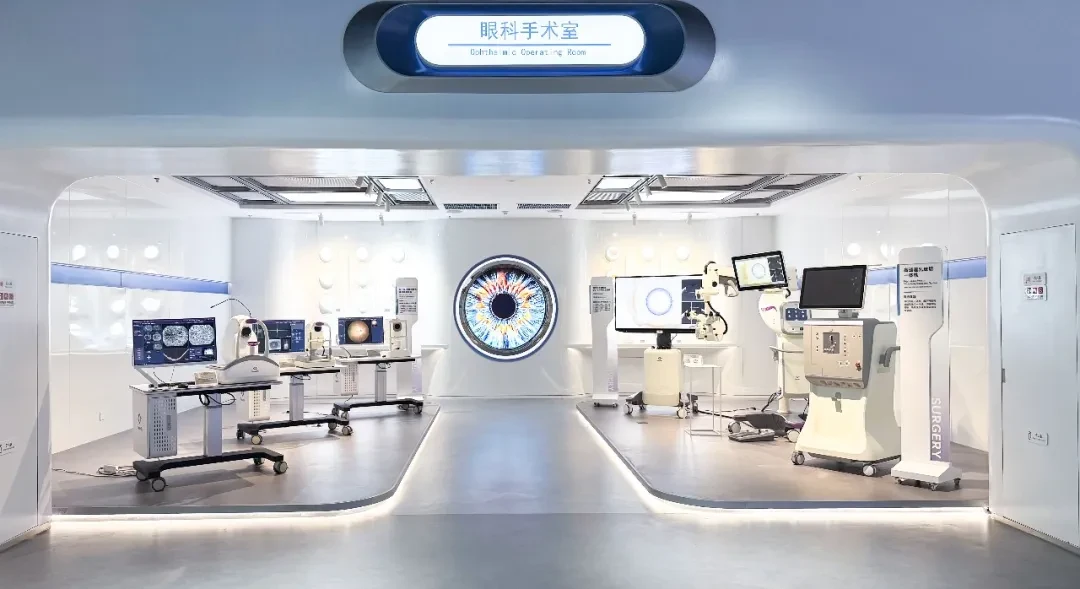
From ophthalmology to otology, surgery, from microscopes to surgical robots, artificial intelligence, from equipment to platforms, ecosystems, TowardPi's development mindset has long transcendedLimited to in-house R&D, but with ophthalmic practitionersCo-Building Ecosystem, with the medical insurance access of intraoperative swept-source OCT as a milestone,To enable more hospitals to use higher-quality equipment, more doctors to perform more complex surgeries, and more patients to receive better diagnosis and treatment.
A brief message, a starting point, a boat full of starlight; technological innovation, technological equity, technological inclusiveness.