TRex Bio Secures $50 Million in Funding to Advance Tissue-Targeted Treg Therapies for Autoimmune Diseases

TRexBio
Immunotherapy Developer

January 27,San Francisco, TRex Bio, a clinical-stage biotechnology company discovering and developing precision immunomodulatory drugs based on tissue Treg biology, announced the completion of a $50 million oversubscribed financing. The financing included funds from new investors Janus Henderson Investors, Balyasny Asset Management, and Affinity Asset Advisors, as well as existing investors Alexandria Venture Investments, Avego BioScience Capital, Delos Capital, Eli Lilly, Johnson & Johnson Innovation, Pfizer Ventures, Polaris Partners, and SV Health Investors.


Johnston Erwin, CEO of TRexBio, said:"We thank this group of leading healthcare investors for their support, who, like us, believe that Treg modulation has the potential to transform the treatment of autoimmune and inflammatory diseases. TRB-061 and our other pipeline projects aim to apply decades of deep understanding of Treg-mediated immune regulation to more precise therapeutic approaches, addressing significant unmet needs in immune-mediated diseases. This additional funding enables us to execute the clinical program for TRB-061 while advancing multiple projects into the clinic."
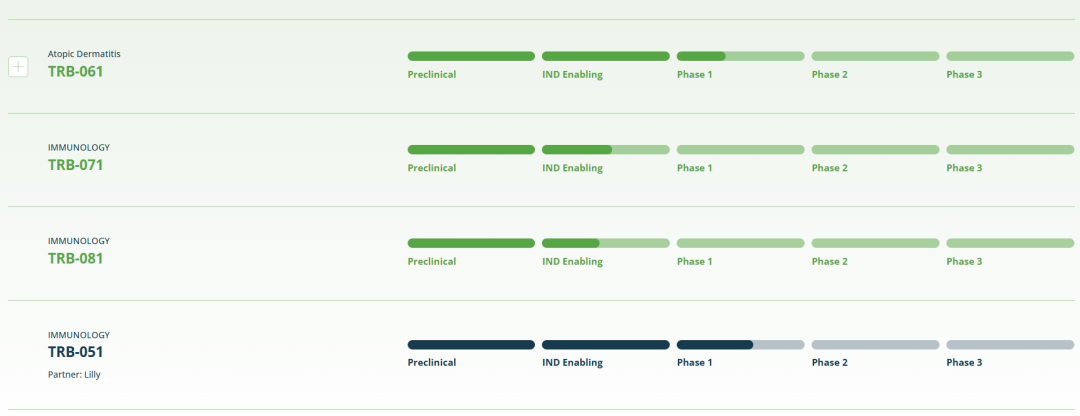
The proceeds from the latest financing will be used to further advance TRexBio's clinical and preclinical programs. These include TRB-061, a specially designed TNFR2 agonist fully owned by TRexBio, which is currently in Phase 1a/b studies for atopic dermatitis. TNFR2 is a co-stimulatory receptor preferentially expressed on the most suppressive Tregs in the skin and gut. TRB-061 is designed to selectively agonize TNFR2, activating tissue-permissive Tregs for the treatment of a range of immune-mediated diseases.
This funding also supports TRexBio's development candidate drugs TRB-071 and TRB-081, two wholly-owned programs with distinct mechanisms of action aimed at addressing a range of inflammatory and autoimmune diseases. TRexBio anticipates initiating Phase 1 clinical trials for TRB-071 and TRB-081 in 2027. All pipeline programs of TRexBio are derived from the company’s proprietary platform, which leverages computational and functional analyses of patient samples to gain a deeper understanding of Treg biology within human tissues.
TRB-061 aims to reduce inflammation and promote barrier tissue repair by preferentially expanding the subset of tissue-resident Tregs most relevant to immune modulation. TRB-061 activates TNFR2, a key activator of effector Tregs predominantly located in disease-relevant tissues, designed to precisely mimic the natural TNF ligand. The selective activation of TNFR2 by TRB-061 may represent a new therapeutic pillar for the control of chronic inflammatory diseases. TRB-061 is currently under clinical development for the treatment of moderate to severe atopic dermatitis.