

Tenpoint Therapeutics Submits IPO Prospectus Following FDA Approval of YUVEZZI, the First Dual-Drug Fixed-Dose Ophthalmic Solution for Presbyopia with 30-Minute Onset and 10-Hour Duration

Tenpoint Therapeutics
Ophthalmic Treatment Drug Developer
As the demand for non-invasive vision improvement solutions continues to grow among patients with presbyopia (commonly known as "farsightedness due to aging"), pharmacological pupil modulation is gradually becoming a key research and development focus in this field. Tenpoint Therapeutics recently announced that the U.S. FDA has approved Yuvezzi (carbachol and brimonidine tartrate ophthalmic solution, 2.75%/0.1%) for the treatment of presbyopia in adults, marking the company's first commercial product in the presbyopia treatment area. According to the press release, Yuvezzi is the first FDA-approved dual-drug combination eye drop for the treatment of presbyopia. Yuvezzi is administered once daily and can induce miosis within 30 minutes of application, lasting for 10 hours, thereby improving near vision.
Presbyopia: A Gradual Loss of Near Vision Due to AgingPresbyopia is an eye condition characterized by the gradual loss of near vision due to aging, making it difficult to perform tasks such as reading small print. Presbyopia symptoms typically begin to appear in people in their 40s and become almost universal in those in their 50s. Presbyopia affects billions of people worldwide, with approximately 600 million patients in China, South Korea, and Southeast Asia. Currently, there are no approved treatments for presbyopia in the Asia-Pacific region. In fact, the most common method of correcting near vision is wearing reading glasses. However, many people find wearing glasses inconvenient or choose not to wear them due to aesthetic concerns.
"Double-Drug Compound," 1+1>2 "Pinhole Effect"
Yuvezzi is a fixed-dose combination ophthalmic solution composed of two active ingredients with complementary mechanisms of action: carbachol and brimonidine tartrate. The product is an isotonic, sterile, clear yellow-green solution designed for single-dose ocular administration.
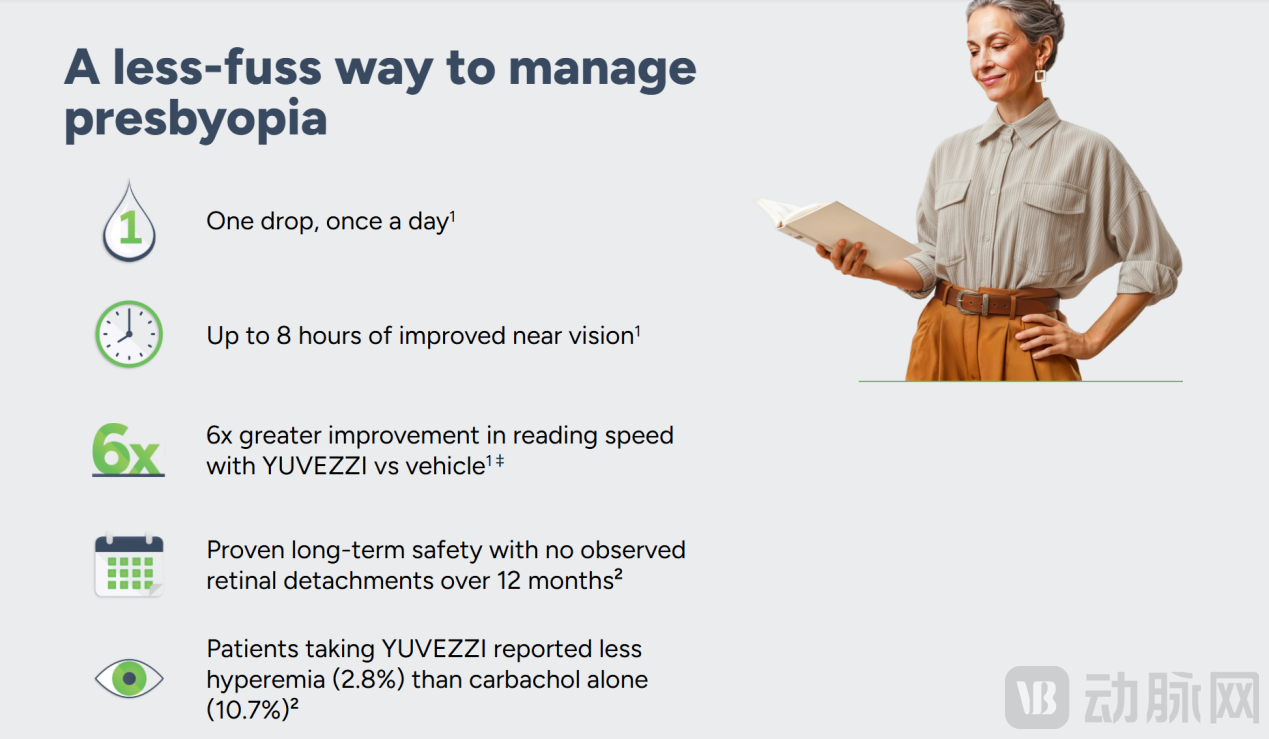
Introduction to the main highlights of Yuvezzi, including dosing frequency, duration of efficacy, etc.
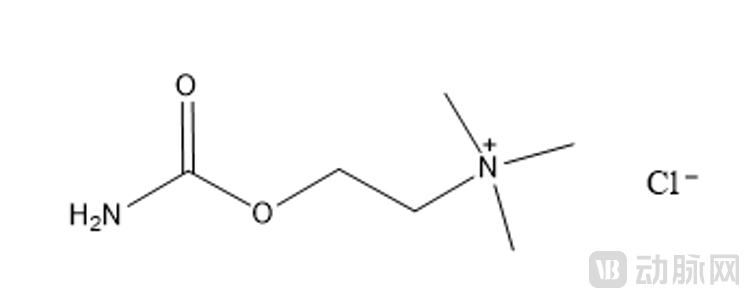
Among them, carbachol has the chemical name 2-carbamoyloxyethyl(trimethyl)ammonium chloride. Its molecular weight is 182.65 g/mol, and its molecular formula is C₆H₁₅ClN₂O₂. The molecular structure is as follows:
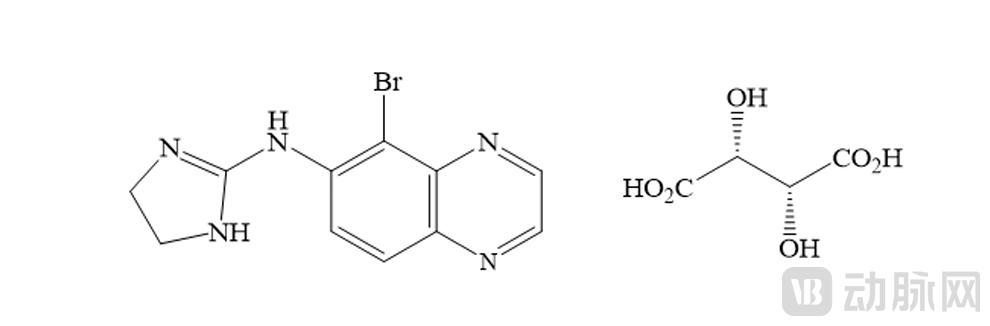
Brimonidine Tartrate Chemical name: 5-Bromo-N-(4,5-dihydro-1H-imidazol-2-yl)-6-quinoxalinamine L-tartrate. Molecular weight: 442.226 g/mol, Molecular formula: C₁₅H₁₆BrN₅O₆. Molecular structure is as follows:
From a pharmacological perspective, the treatment concept of Yuvezzi does not involve altering the refractive power of the lens but rather inducing a "pinhole effect" through controlled pupil constriction, thereby enhancing near visual acuity and increasing depth of field. This strategy in presbyopia treatment is considered effective for improving near vision while minimizing the impact on distance vision.
In this mechanism, carbachol acts as a cholinergic receptor agonist, directly inducing the contraction of the iris sphincter and ciliary muscles, which leads to pupil constriction; brimonidine tartrate is an α-adrenergic receptor agonist that enhances the selectivity and stability of pupil constriction by inhibiting the contraction of the iris dilator muscle and modulating ciliary muscle tension. The two components work synergistically to make pupil constriction more balanced and long-lasting, also helping to prolong the action time of carbachol in the anterior chamber.
At the formulation level, each milliliter of Yuvezzi contains 2.75% (27.5 mg/mL) carbachol and 0.1% (1 mg/mL) brimonidine tartrate. The formulation also includes hydroxypropyl methylcellulose (HPMC) to enhance the retention of the eye drops on the ocular surface, and a phosphate buffer system is used to maintain solution stability. The pH is adjusted with hydrochloric acid or sodium hydroxide when necessary.
Safety + Efficacy + Tolerability + Duration of Action: Four Dimensions Considered
The pharmacodynamic characteristics of Yuvezzi have been systematically evaluated in multiple Phase III clinical trials. Researchers used automated digital pupillometry to quantify changes in pupil size before and after administration under scotopic conditions. In the BRIO I study, YUVEZZI demonstrated a significantly greater reduction in mean pupil diameter from 0.5 hours to 10 hours post-administration compared to two active monotherapies. In the BRIO II study, Yuvezzi also showed a significantly greater pupil-constricting effect from 0.5 to 8 hours post-administration compared to the vehicle control, exhibiting stable and sustained pharmacodynamic properties.
In terms of systemic exposure, Yuvezzi demonstrated low levels of systemic absorption. In presbyopic subjects, after a single bilateral instillation of one drop in each eye, quantifiable plasma drug concentrations were detectable in only a few subjects. The peak concentration of brimonidine was up to 0.066 ng/mL, with a time to peak concentration of approximately 0.52 hours; the peak concentration of carbachol was up to 1.02 ng/mL, with a time to peak concentration of approximately 4.42 hours, suggesting that this combination formulation primarily exerts local effects.
Studies have shown that the protein binding rate of brimonidine in plasma is approximately 29%, and it undergoes extensive metabolism in the liver, with its metabolites primarily excreted through urine. In contrast, the systemic metabolism and excretion characteristics of carbachol have not been systematically studied in humans, but existing data do not indicate significant systemic safety risks.
In terms of non-clinical safety, neither of the two active ingredients showed mutagenic or chromosomal damage effects in in vivo and in vitro studies. In reproductive and fertility studies of brimonidine tartrate in rats, no adverse effects on male or female fertility were observed at oral doses up to 1 mg/kg. No specific fertility or carcinogenicity studies have been conducted for Yuvezzi or carbachol.
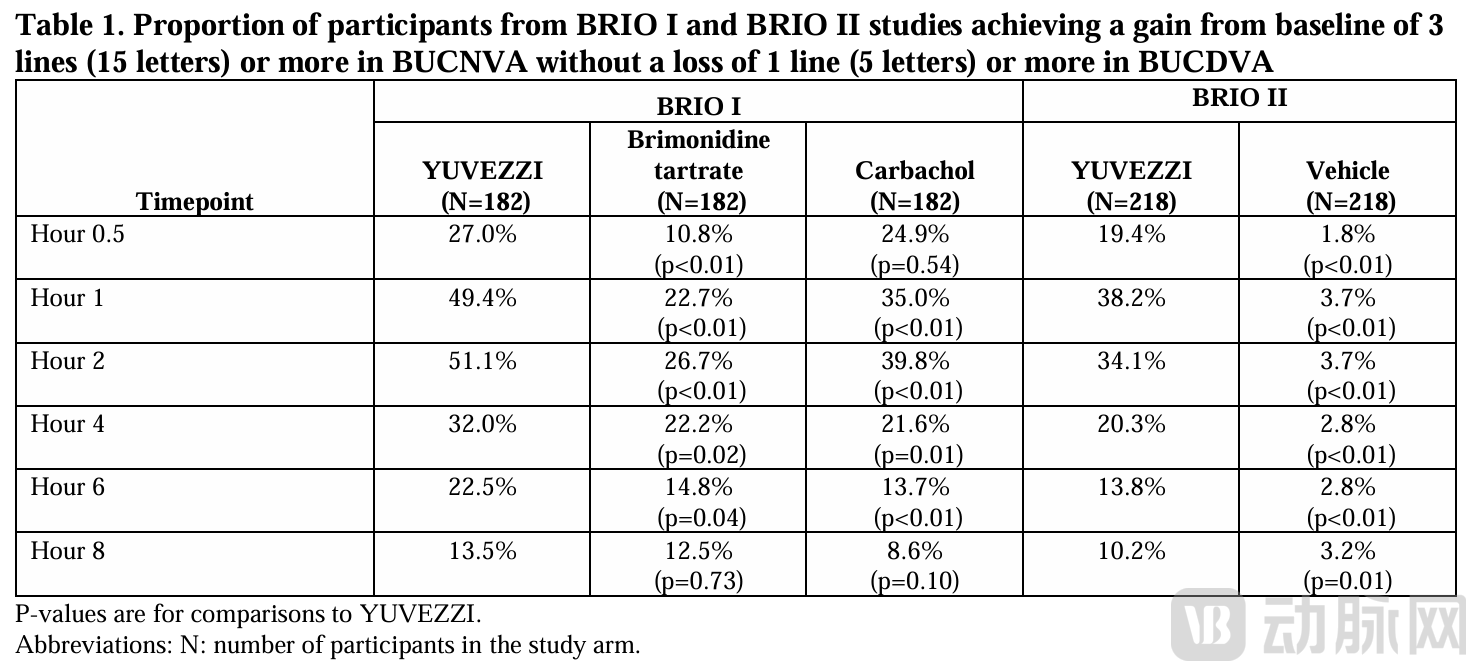
The clinical efficacy of Yuvezzi is primarily based on two Phase III, randomized, double-blind, controlled studies. BRIO I (NCT05270863) utilized a crossover design, enrolling a total of 182 presbyopia patients aged 45-80 to evaluate the effects of a single dose; BRIO II (NCT05135286) was a parallel control study, enrolling a total of 358 subjects.
The results showed that, between 30 minutes and 8 hours after administration, the proportion of subjects in the Yuvezzi group who experienced an improvement of ≥3 lines (≥15 letters) in binocular uncorrected near visual acuity (BUCNVA) under scotopic conditions from baseline, without a decrease of ≥1 line (≥5 letters) in binocular uncorrected distance visual acuity (BUCDVA), was significantly higher than that in the vehicle control group (p<0.01), supporting its clinical value in improving near vision while maintaining stable distance vision.
In terms of commercialization and usage, Yuvezzi is supplied in the form of low-density polyethylene (LDPE) single-dose containers, with each box containing 30 single-dose droppers (6 pouches, each containing 5 droppers). The product is recommended to be stored at 2°C-25°C and should be kept away from light before use; the single-dose container must be used immediately after opening, and any remaining solution should be discarded.
Overall, Yuvezzi achieves precise control of pupil size through a compound mechanism, providing a non-surgical, reversible, and fast-acting treatment option for presbyopia patients. This also marks a new phase in drug-based presbyopia treatment in terms of mechanistic synergy and clinical controllability.
"More Controllable Pupil Contraction" Creates Differentiated Advantages
From an industry perspective, the approval of Yuvezzi is not only an important milestone for Tenpoint Therapeutics but also further solidifies the feasibility and commercial potential of the drug-based presbyopia treatment niche. Unlike traditional solutions centered on a single miotic mechanism, Yuvezzi achieves finer control over pupil size and dynamic changes through the synergistic modulation of cholinergic and α-adrenergic pathways. This was reflected in its clinical studies as longer-lasting effects, higher selectivity, and controlled impact on distance vision.
From a differentiation perspective, the core value of Yuvezzi lies primarily in more controllable pupil constriction. In the treatment of presbyopia, where functional visual improvement is the main goal, the balance between efficacy and tolerability is particularly crucial. Through its compound design, Yuvezzi avoids excessive pupil constriction and the resulting visual discomfort that may be caused by single cholinergic agents, providing a more reasonable pharmacological basis for long-term, repeated use.
Moreover, the composite endpoint adopted by Yuvezzi in its Phase III study—significantly improving near vision without compromising distance vision—also reflects the growing maturity of regulatory standards for evaluating presbyopia treatments. This clinical and regulatory pathway may serve as a reference for the endpoint design and approval strategies of subsequent similar products.
Phase II Clinical Trial Ongoing in China, Commercialization Imminent
As early as May 2022, Zhejiang Therapharm Ophthalmology entered into an exclusive licensing agreement with Tenpoint Therapeutics, obtaining the rights for the development and commercial production of Yuvezzi in China, South Korea, and selected Southeast Asian regions; subsequently, in February 2024, both parties further expanded their cooperation, extending the licensed territory to additional markets. Meanwhile, Zhejiang Therapharm Ophthalmology is currently conducting a Phase II clinical trial in China for Yuvezzi's treatment of presbyopia.
On November 6, 2025, ZK Ophthalmology's South Korean partner, Kwangdong Pharmaceutical, submitted a new drug application for Yuvezzi in South Korea, marking the product's first regulatory submission outside the United States. On December 8, 2025, ZK Ophthalmology announced a strategic partnership with TTY Biopharm in Taiwan.
This FDA approval will inject strong momentum into ZKT Ophthalmology's established commercialization strategy. ZKT Ophthalmology has currently built an extensive collaboration network for Yuvezzi, covering eight commercial partners across the Asia-Pacific region. Furthermore, the FDA approval will also help ZKT Ophthalmology accelerate the drug's commercialization plans, marking a significant step for ZKT Ophthalmology on a global scale.
About Tenpoint Therapeutics
Tenpoint Therapeutics, Ltd. is a global biotechnology enterprise with a core business focused on advancing the commercialization of YUVEZZI. This product is the world's first and currently the only compound eye drop used to treat presbyopia. Presbyopia, an age-related eye condition, affects nearly 128 million people in the United States alone, with a global impact reaching approximately 2 billion individuals. Tenpoint Therapeutics addresses clinical needs by collaborating deeply with ophthalmic healthcare professionals, striving to provide innovative treatment solutions for aging eyes.
In addition to Yuvezzi, Tenpoint Therapeutics has two other R&D pipelines, TPT161 and TPT005, targeting presbyopia/cataracts and geographic atrophy (GA), respectively. TPT161 is a multi-targeting NCE that has the potential to treat and reverse crystallin aggregation, restoring lens flexibility and clarity.
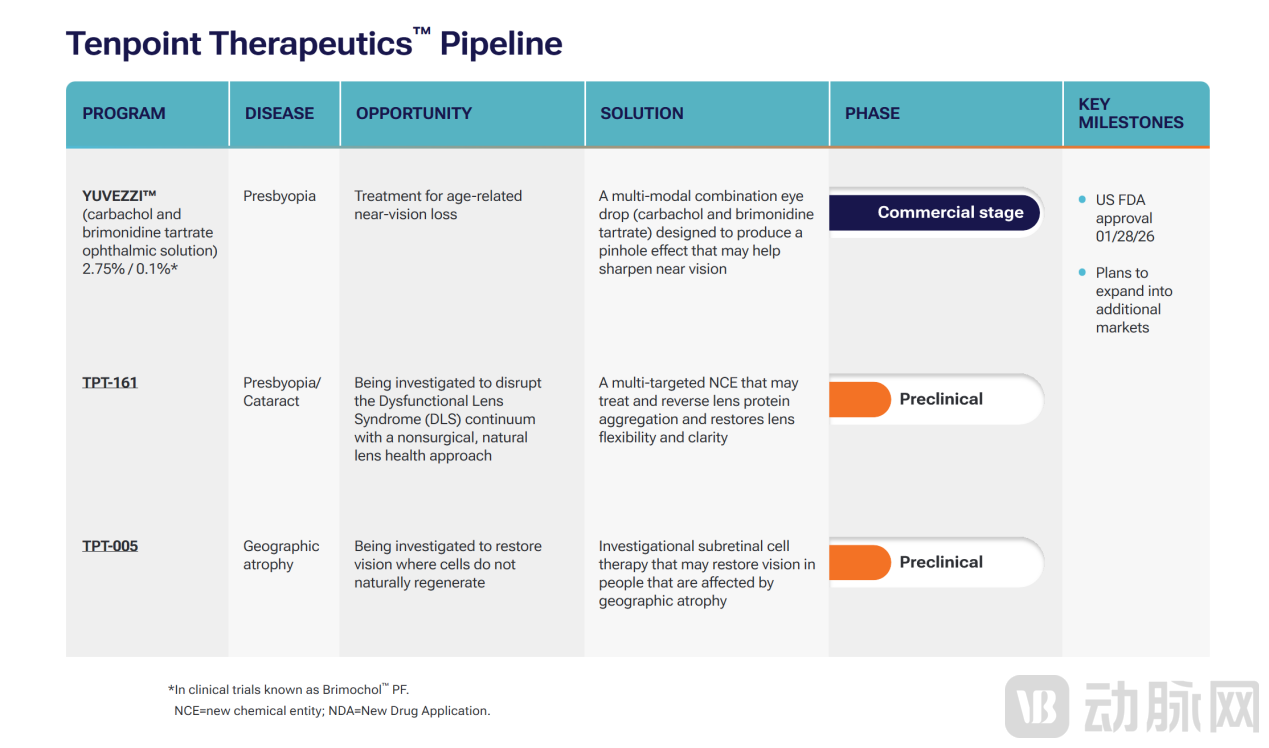
Currently, the company also announced that it has raised $235 million in debt and equity financing to support the official launch of Yuvezzi in the second quarter of 2026.