

NuoGene Biologics Files IPO Prospectus: Pioneering In Vivo Transdifferentiation Therapy for Glioblastoma and Beyond
NEUREGEN
Novel Gene Therapy Drug Developer
(Source: Hello Zhangjiang)
Currently, the global biopharmaceutical market continues to recover, with cell and gene therapy (CGT) as the core segment of precision medicine, reconstructing the fundamental logic of drug development. With its unique advantage of "one-time cure," CGT is gradually covering multiple difficult-to-treat disease areas such as cancer, autoimmune diseases, and neurological disorders, becoming one of the most growth-potential sectors in the biopharmaceutical industry.
Since 2026, China's CGT field has seen frequent breakthroughs, from advancements in AAV vector delivery technology to new applications of CAR-T therapy. The industry is entering a critical phase of transitioning from lab innovation to clinical implementation.
Recently, Zhangjiang EnterpriseNEUREGEN Biomedical Technology Co., Ltd.(Hereinafter referred to as "NEUREGEN") has achieved another significant milestone — its self-developed innovative drug NRG-103 Injection, the world's first based on in-situ transdifferentiation technology, has received the implied permission for a new drug clinical trial (IND) from the CDE. It is about to officially commence registration clinical research targeting high-grade gliomas. This follows the approval of the U.S. FDA IND in July 2025, marking another major breakthrough for NRG-103. NEUREGEN's continuous progress serves as a vivid example of China's CGT companies leading globally.
CGT Welcomes Development Opportunities,China's Innovation Leads the World
The core of gene therapy is to treat diseases at their root by "repairing" or "replacing" defective genes. This requires the use of a "vector" to deliver therapeutic genes into the patient’s cells, and the choice of vector directly determines the safety and efficacy of the treatment. Adeno-associated virus vectors (AAV), with their low pathogenicity, broad tissue targeting, and long-term gene expression capabilities, have become the "main force" in the current field of gene therapy.
Despite the high technical barriers, prominent safety and accessibility challenges, and numerous bottlenecks such as delivery efficiency and production costs in the CGT industry, it remains a "game for the brave." However, global competition has now shifted from technological breakthroughs to the stages of clinical validation and commercialization.
Globally, there are approximately 2,000 CGT clinical trials, with China accounting for over 50% of the share, and more than 60% in the cell therapy field. In 2024, the number of CGT clinical trials in China surged by 42%, reaching 115 trials, continuing to lead the global wave of innovation. Currently, multinational pharmaceutical companies such as Novartis and Gilead dominate the industry due to their first-mover advantages, while Chinese companies are rapidly rising through differentiated innovation and international cooperation. Zhangjiang enterprises, supported by a comprehensive industrial ecosystem, have become the core hub of CGT innovation in China.
On the CGT innovation track,NEUREGEN focuses on the emerging field of in situ transdifferentiation, becoming one of the earliest research teams globally to enter this area. It has also set an industry record as the first company worldwide to achieve formal clinical approval for in situ transdifferentiation-based tumor gene therapy.
Deep Cultivation in the "No-Man's Land",Create a Global First Technology Benchmark
For years, as the "information messengers" of the brain, the non-renewability of neurons has been the biggest obstacle to curing central nervous system diseases. In the view of Zhu Chao, co-founder of NEUREGEN, an emerging technology called in-situ transdifferentiation may achieve functional neuronal regeneration by converting other cells into neurons, bringing hope for major neurological diseases such as stroke, Parkinson's disease, Alzheimer's disease, ALS, retinitis pigmentosa, and age-related macular degeneration.New Hope。
Zhu Chao said,The core technology of NEUREGEN—In Situ Transdifferentiation Technology—originated from the Nobel Prize-winning research of Japanese scientist Shinya Yamanaka in 2012. It is a next-generation in vivo somatic cell reprogramming technology developed based on the iterative advancement of induced pluripotent stem cell (iPSC) technology.
"In situ transdifferentiation technology provides new insights for neuronal regeneration," said Zhu Chao. Generally speaking, this technology is a 'direct rewriting' of cell fate: using viral or non-viral vectors to deliver a gene sequence into target cells, expressing transdifferentiation factors within these cells and promoting the differentiation of mature somatic cells into neurons. In other words, through transdifferentiation, other cells (astrocytes) are converted and supplemented as new neurons, enabling the 'regeneration' of dead neurons in the brain.
"At present, in-situ transdifferentiation is still a relatively new field, and NEUREGEN is one of the earliest research teams to enter this area," said Zhu Chao. Currently, there are a few companies worldwide dedicated to advancing this technology, most of which are in the stages of either about to enter or have just begun clinical trials.
"I've worked in the industry for many years before, but this is my first time starting a business," Zhu Chao admitted. The scientific founder of NEUREGEN has long worked at the Institute of Neuroscience of the Chinese Academy of Sciences, while Zhu Chao himself also has experience working at the Institute of Physiology of the Chinese Academy of Sciences (the predecessor of the Institute of Neuroscience) and extensive industrial experience in both China and the United States.
"As a startup, besides theoretical breakthroughs and scientific value, we also need to consider its social value and practical benefits for patients. Currently, we don't have much energy and resources to cover all aspects. Instead, focusing on drug feasibility and commercial landing feasibility, we will prioritize selecting some clinically urgent indications for pipeline layout," explained Zhu Chao.
NEUREGEN has chosen to develop First-in-Class original innovative drugs, with the initial focus on two major areas: hard-to-treat nervous system tumors and blinding retinal degenerative diseases.
Taking central nervous system (CNS) diseases as an example, the difficulty in penetrating the blood-brain barrier and delivering drugs into the brain to take effect is a major barrier in CNS drug development; low delivery efficiency is also a significant pain point in the development of CNS gene therapies. Additionally, exorbitant treatment costs have always been a label that gene therapies struggle to shake off. Industry "players" need to upgrade their strategies to overcome these challenges, requiring a more prudent, rational approach supported by cutting-edge technology and financial backing.
The production cost of commonly used AAV vectors in gene therapy is relatively high, so NEUREGEN carefully considered vector selection when initially building its pipeline, exploring both safety and cost reduction.
"Compared with current traditional gene therapy or stem cell therapy, our cost is controllable, solving the problem of prohibitively high prices," said Zhu Chao.
“The biggest difference between NEUREGEN's in situ transdifferentiation technology and other treatment methods lies in "replacing without repairing." Instead of attempting to repair cell damage caused by a specific reason, we create an entirely new system for replacement."The therapeutic approach we have developed is versatile, capable of delivering efficacy for a certain type of disease caused by different target mutations as well as for patients at various stages of the disease. The population suitable for this treatment is much larger than that of conventional gene therapies," explained Zhu Chao.
According to the introduction,In terms of improving treatment efficiency, NEUREGEN focuses on the universal technology of in-situ transdifferentiation, breaking free from the limitations of "personalized customization" for rare diseases, greatly expanding the range of indications. In terms of reducing costs, NEUREGEN has modified drug carriers to improve carrier delivery efficiency, significantly compressing production costs and enhancing market competitiveness.
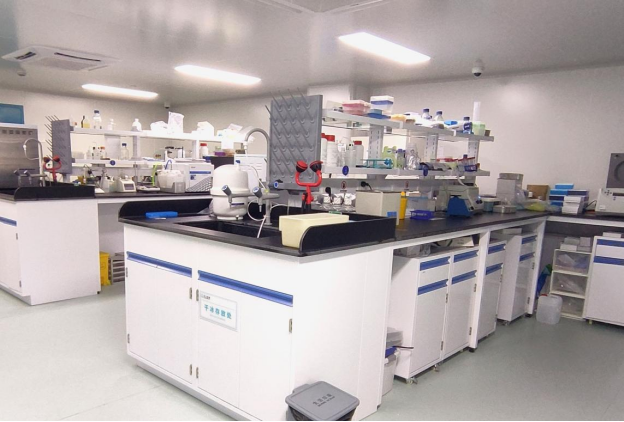
Screening and optimization of transdifferentiation factors, design of viral and non-viral vectors, development of in vivo and in vitro pharmacodynamic methods… Focusing on cell transdifferentiation technology, NEUREGEN has built a novel gene therapy drug research and development platform that integrates numerous key technologies, and has applied for several critical patents domestically and internationally.
In July 2025, NEUREGEN's self-developed innovative drug NRG-103 Injection for tumor in-situ transdifferentiation therapy received approval from the U.S. Food and Drug Administration (FDA) for a new drug clinical trial (IND), officially launching clinical research targeting high-grade gliomas. This is the world’s first and only approved product for tumor in-situ transdifferentiation therapy, setting a good example for followers in China and globally who are still in the early stages.
In the "uncharted territory" of technology, there are no ready-made experiences to refer to, and every step is extraordinarily difficult. OnceFosun PharmaZhu Chao, who has been working for a long time, told the reporter: "When we filed an IND application in the United States, we had several rounds of communication with the FDA reviewers and organized online meetings to exchange ideas, so that they could understand and recognize the scientificity, importance, and feasibility of our drug. The difficulty of applying for an original new drug cannot be compared with that of a non-original drug."
CGT Commercialization on the Horizon, China's Innovation Advances to the Global Frontier
Despite the rapid development momentum of the CGT industry, transitioning from laboratories to clinical applications and achieving commercialization still faces numerous challenges. Difficulties in financing and slow innovation conversion remain common issues in the industry, especially for startups focusing on original technologies, making it a marathon requiring endurance and perseverance.
"Being one step ahead makes you a pioneer, but being two steps ahead makes you a martyr." In the biopharmaceutical industry, this "joke" vividly reflects the severe challenges that technology entrepreneurs must face: technological advancement does not equate to commercial success.
Currently, no allogeneic universal CAR-T product has been approved for marketing globally. Moreover, due to the significant challenges in developing allogeneic CAR-T therapies, numerous pipelines under research have unfortunately been terminated over the years. Meanwhile, the commercialization of innovative gene and cell therapies in China is still a long way off.
The primary challenge lies in financing. Although the secondary market has shown a "tentatively warming" bustling scene, for innovative pharmaceutical companies, it seems that the "severe cold" has yet to fully warm up. Surprisingly, many pharmaceutical companies told reporters that what hinders their investment and financing is precisely their "overly innovative" nature, which can be seen as a "trailblazer's curse."
In the capital winter and industry downturn cycle, cultivating internal strength is a required course for BioTech."The company's first round of startup capital was invested by the founding team themselves." In the early stages of entrepreneurship, when investors were still observing the company, NEUREGEN quietly refined its technology, reducing costs and increasing efficiency simultaneously, allowing investors to see the commercialization potential of the product. Through persistent efforts,NEUREGEN Completes Two Rounds of Financing in Two Years.
"Attracting a large number of CDMO and CRO companies to join, using new technologies to drive industrial collaborative development," said Zhu Chao. The core technology is independently developed by the company, and then externally commissioned expert teams are involved in jointly developing the product. "This is a more efficient choice." According to his disclosure, the safety evaluation part of NEUREGEN's pipeline is currently handled by...InnoventCompleted. For clinical sample production and pharmaceutical research, they collaborate with Heyuan Intelligent Manufacturing, both of which are leading companies in these fields in Shanghai. In addition, as a platform technology developer, NEUREGEN will also co-develop some promising pipelines with interested companies to build an ecosystem.
Entrepreneurship is a lonely marathon that requires both speed and endurance, and the biopharmaceutical industry, with its high investment and high risk of "ten years and ten billion dollars," makes this marathon require an even more determined heart compared to other industries."For disruptive technologies, the government needs to provide sufficient guidance and support, especially during the early project stages."Zhu Chao bared his heart.
It is worth looking forward to that, since 2026, China's CGT field has seen a continuous emergence of innovative achievements. Apart from NEUREGEN, domestic research teams have successfully overcome the challenge of efficient AAV vector delivery of long genes and achieved new breakthroughs in CAR-T therapy within the field of autoimmune diseases, injecting strong momentum into industrial development.
Next, NEUREGEN will continue to expand multiple pipelines in the fields of neurological and ophthalmic diseases, explore innovative therapies for Parkinson's disease, other solid tumors, and further improve the technology transfer system."We have expertise in this field and also hope to blaze a new trail in uncharted territory."Zhu Chao said that he hopes that in another ten years, China's scientific research entrepreneurs can more firmly move towards internationalization.