

Life Biosciences Submits IPO Prospectus Following FDA Approval of ER-100, the First-in-Class Partial Epigenetic Reprogramming Therapy for Age-Related Optic Neuropathies

Life Biosciences
Drug Developer
About two decades ago, Shinya Yamanaka discovered that mature cells could be reset to an embryo-like state through a combination of specific transcription factors. This groundbreaking discovery later earned him the Nobel Prize in Physiology or Medicine and laid the foundation for induced pluripotent stem cell (iPSC) technology. Since then, the scientific community has continued to explore how to use this mechanism to achieve safer tissue regeneration and functional recovery without complete "dedifferentiation," thereby achieving anti-aging effects.
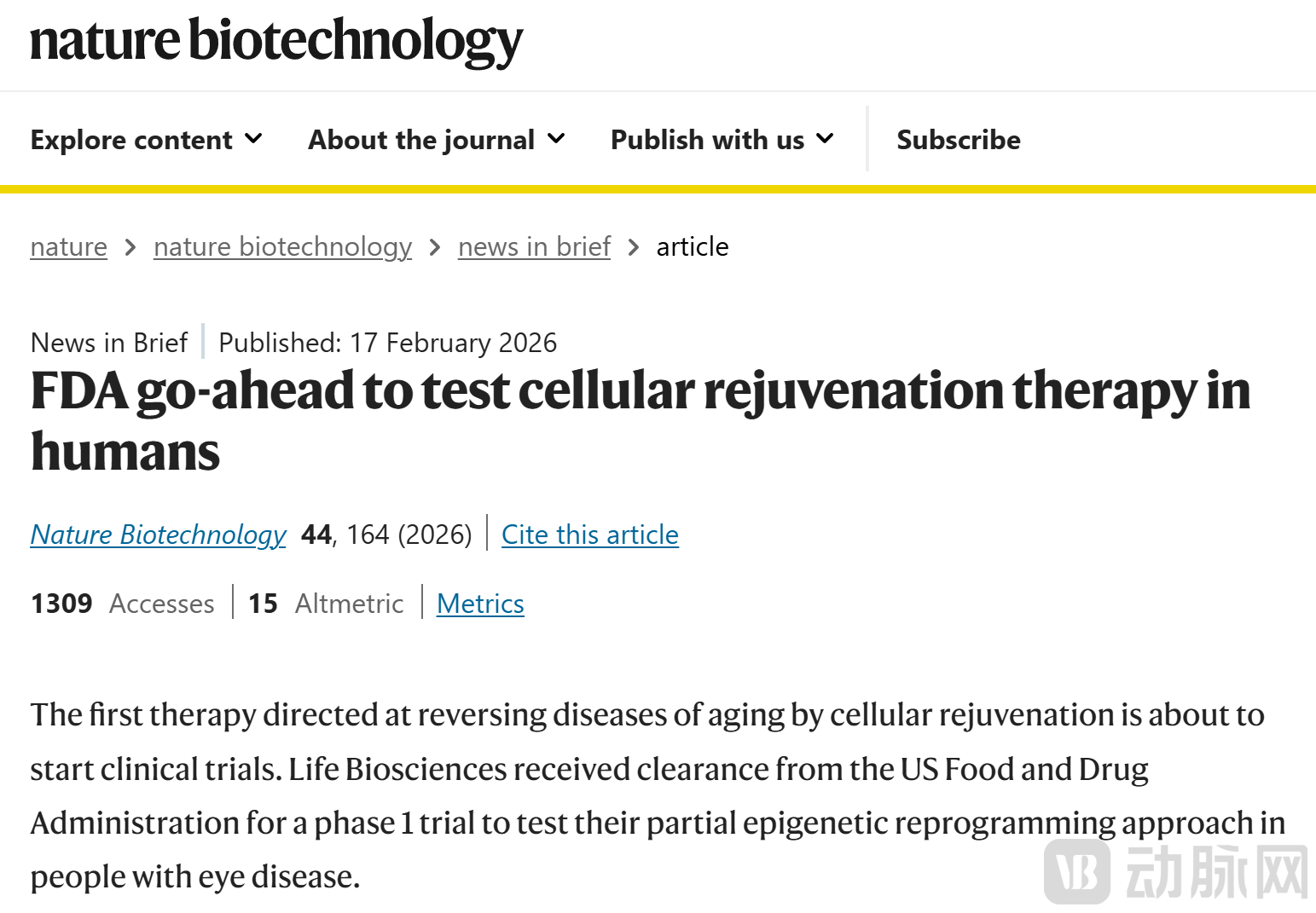
Recently, the FDA approved the Investigational New Drug (IND) application for ER-100, a core pipeline product of Life Biosciences. This marks the first time that partial epigenetic reprogramming therapy has been authorized to enter human clinical trials. This advancement is considered a critical step in the clinical translation of anti-aging biology.
ER-100: From "Full Reprogramming" to "Partial Reset"
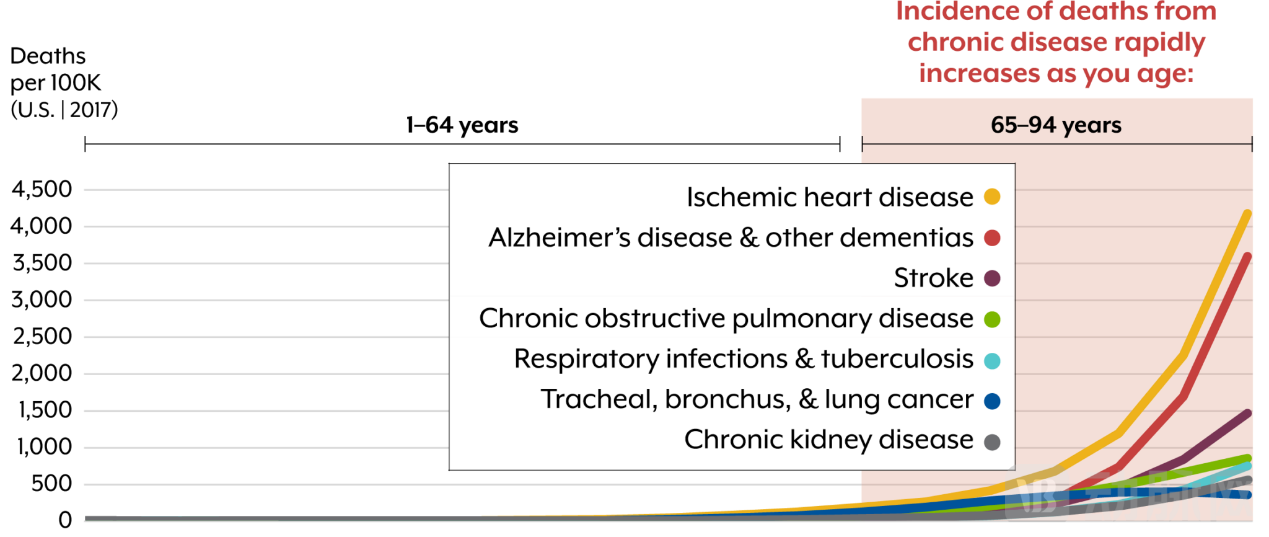
As age increases, epigenetic markers such as DNA methylation gradually accumulate, altering gene expression profiles and subsequently affecting cellular function. These changes are closely associated with aging and various age-related diseases, including neurodegenerative disorders, metabolic abnormalities, and optic nerve degenerative damage.
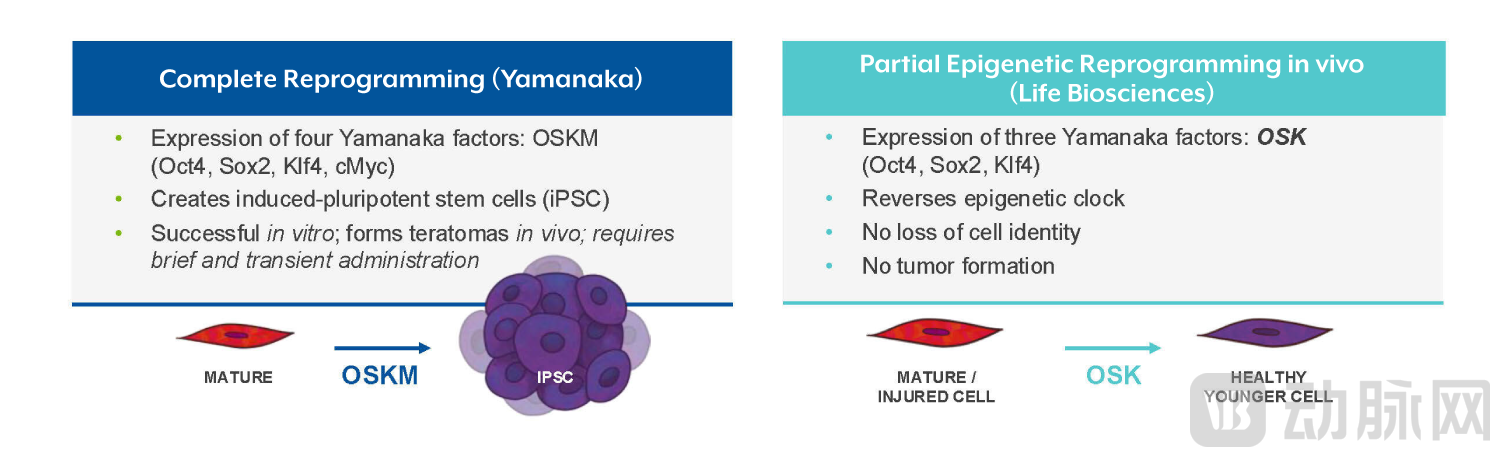
The core concept of Life Biosciences is not to completely reset cells to a pluripotent state, but to reset age-related epigenetic abnormalities by partial epigenetic reprogramming, restoring function while maintaining the original identity of the cells.
This scientific theoretical foundation stems from the Information Theory of Aging, proposed by Harvard geneticist David Sinclair, who believes that aging is partly due to the gradual disorder of epigenetic information. Sinclair is also a co-founder of Life Biosciences. The company's team believes that by controlled expression of OSK factors, it is possible to restore part of the gene expression program without dedifferentiation, thereby improving tissue function. However, the "four factors" (Oct4, Sox2, Klf4, c-Myc) originally discovered by Shinya Yamanaka can achieve complete cell dedifferentiation, but c-Myc is associated with abnormal cell proliferation and tumor risks.

Thus, the R&D concept of ER-100 is clear: Based on the partial epigenetic reprogramming platform independently developed by Life Biosciences, it uses adeno-associated virus (AAV) as a gene delivery vector. Only the coding sequences of three factors—OCT4, SOX2, and KLF4 (collectively referred to as OSK, excluding c-Myc)—are injected into the vitreous cavity, allowing them to enter damaged retinal ganglion cells. The aim is to restore cellular youthful phenotypes while reducing potential tumorigenic risks.
Phase-wise advancement in clinical trials, multi-model validation of optic nerve regeneration potential
Notably, in order to achieve the implementation of ER-100, Life Biosciences did not choose systemic anti-aging as the first clinical target but adopted a "phased advancement" strategy, initially focusing on optic nerve degenerative diseases.
According to data disclosed by Life Biosciences at the 12th Annual Aging Research and Drug Discovery Meeting, ER-100 has completed intravitreal injection studies in various ophthalmology-related animal models, with consistent neuroprotective and functional improvement signals observed.
In a mouse model of optic nerve crush injury, ER-100 significantly promoted the regeneration of damaged optic nerve axons and improved the survival rate of ganglion cells. This model is commonly used to evaluate nerve regeneration capacity and serves as one of the standard experimental systems in optic nerve injury research.
In a model of chronic intraocular pressure elevation, mice treated with ER-100 showed better protection of retinal ganglion cells and a trend toward improved visual function.
In aged mice, researchers observed improvements in vision-related metrics, suggesting that this strategy may have potential for intervening in age-related degenerative conditions.
In a non-arteritic anterior ischemic optic neuropathy (NAION) model, ER-100 increased the survival rate of neural axons and showed positive signals in functional tests, including retinal electrophysiological assessments.
Focusing on Optic Nerve Diseases, Human Clinical Trial Design Centers on Safety
Currently, all animal experiments for ER-100 have been administered through intravitreal injection, with no serious safety signals related to the vector observed. However, further clinical-stage validation is still required for long-term safety and dose-escalation data.
As the first-in-human study, the Phase I trial (NCT07290244) of ER-100 primarily aims to evaluate safety and tolerability while exploring signals of visual function improvement.
The clinical study recently approved will enroll patients with open-angle glaucoma (OAG) and non-arteritic anterior ischemic optic neuropathy (NAION). Both conditions are characterized by optic nerve damage as the core pathological mechanism, which can lead to irreversible vision loss. According to data from the U.S. Centers for Disease Control and Prevention, glaucoma is the second leading cause of blindness globally; NAION is considered one of the most common acute optic neuropathies in individuals over 50 years old.
Life Biosciences chose the aforementioned indications primarily due to factors such as a clear disease burden and significant unmet needs, controllable localized drug delivery pathways, and the ability to evaluate visual function through multidimensional quantitative metrics. The endpoints of the Phase I study include assessments of adverse events and immune responses, changes in visual field tests, evaluations of visual acuity and contrast sensitivity, and imaging changes in the optic nerve structure.
Notably, to enhance safety, this therapy incorporates a regulatable gene expression system, where the introduced gene is only activated when the patient orally takes a low dose of doxycycline; expression ceases upon discontinuation of the drug. This "inducible switch" mechanism aims to avoid potential risks associated with continuous expression, rendering the treatment process more controllable.
From an industry perspective, the significance of ER-100's IND approval lies in the regulatory cautious openness towards the "partial reprogramming" pathway.
Over the past decade, the field of aging intervention has mostly focused on metabolic regulation, inflammation suppression, or small-molecule interventions, while epigenetic reprogramming represents a more fundamental biological intervention pathway. The core challenges behind this revolve around how to avoid the cancer risks associated with complete dedifferentiation and how to precisely control the expression intensity and duration. The "three-factor + controllable expression system" approach adopted by ER-100 precisely reflects the technical evolution trend in this field towards safer boundaries.
Phase I studies primarily address safety issues. The actual extent and duration of functional recovery still require validation through subsequent clinical data. Before real human data is released, the technology represented by ER-100 remains in the early verification stage. Clinical results over the next two to three years will determine whether partial epigenetic reprogramming can transition from conceptual innovation to a replicable and scalable therapeutic pathway.
Life Biosciences is a clinical-stage biotechnology company co-founded in 2017 by David Sinclair, a professor of genetics at Harvard University, and Tristan Edwards.
The company is committed to developing cell regeneration therapies to reverse and prevent a variety of aging-related diseases. The company's proprietary Partial Epigenetic Reprogramming (PER) platform utilizes three transcription factors—OCT4, SOX2, and KLF4—to restore aged and damaged cells to a younger and healthier state. This innovative approach addresses the root causes of aging at the epigenetic level, offering the potential to treat a range of serious aging-related conditions.
Currently, Life Biosciences' flagship pipeline is ER-100, primarily targeting the treatment of optic neuropathy, including open-angle glaucoma (OAG) and non-arteritic anterior ischemic optic neuropathy (NAION). Phase I clinical trials for these two indications were initiated in early 2026.
In addition to ER-100, Life Biosciences is also expanding its therapeutic pipeline to address more aging-related diseases. In a mouse model of metabolic dysfunction-associated steatohepatitis (MASH), the candidate drug ER-300 significantly improved multiple liver function indicators. According to the company, ER-300 markedly reduced the levels of liver injury markers ALT and AST, optimized total cholesterol metrics, and decreased overall liver fat accumulation. These preclinical research findings suggest that ER-300 may effectively improve MASH conditions associated with aging.