Chinese-Developed Hypoxia-Responsive CEA-Targeted CAR-T Therapy PC13 Achieves 57.1% Response Rate in Late-Stage Solid Tumors

Precision Biotech
Gene and Cell Therapy Developer


In the "darkest moment" of cancer treatment, new hope is always quietly growing. Recently, a breakthrough in an innovative therapy developed in China has excited the global oncology community:Another Innovative Target Solid TumorCEA CAR-TSuccessful Development! New "Smart Killer"PC13Let57.1%Advanced Cancer Saved!ThisResearch findings officially published in top international journals《Nature Cancer》, for the first time, validated the feasibility of "tumor microenvironment-responsive CAR" in humans, bringing a new possibility to rewrite the fate of patients with CEA-positive solid tumors such as colorectal cancer, gastric cancer, and lung cancer?
For patients with solid tumors, which account for over 85% of all cancer cases, CAR-T therapy was once a "distant hope" — this treatment, which has created "miraculous cures" in the field of hematological malignancies, has consistently faced the dilemma of being unable to exert its full potential against the complex microenvironment of solid tumors.
Until February 27, 2026, the Chinese research team broke the global deadlock! Chongqing Precision Biotech Co., Ltd. independently developedWorld's first hypoxia-responsive CEA-targeted CAR-T product (PC13)Phase I clinical research findings were officially published in the prestigious international journal *Nature Cancer*. This study, led by Professor Fang Weijia's team from the First Affiliated Hospital of Zhejiang University School of Medicine and developed by Chongqing Precision Biotech Co., Ltd. (ClinicalTrials.gov Identifier: NCT05396300), not only represents a significant breakthrough for China-developed CAR-T technology in the field of solid tumors but also establishes a replicable and scalable solid tumor CAR-T technology platform, placing Chinese cell therapy at the global forefront.
A total of 43 subjects were enrolled in this Phase I clinical trial.Patients with MSS-type advanced solid tumors who have failed multiple lines of treatmentAmong them, 46.5% of the patients had received four or more lines of treatment, falling into the "end-stage" category with no standard treatment options available. The study innovatively adoptedIntraperitoneal and Intravenous Dual-Path AdministrationStrategy: Grouping patients based on their primary metastatic sites to provide personalized treatment options for different conditions, with core data that can be described as "Solid Tumor CAR-T Milestone”:
✅ Intraperitoneal Infusion Group:A "Lifeline" for Patients with Peritoneal Metastasis, Disease Control Rate 82.4%
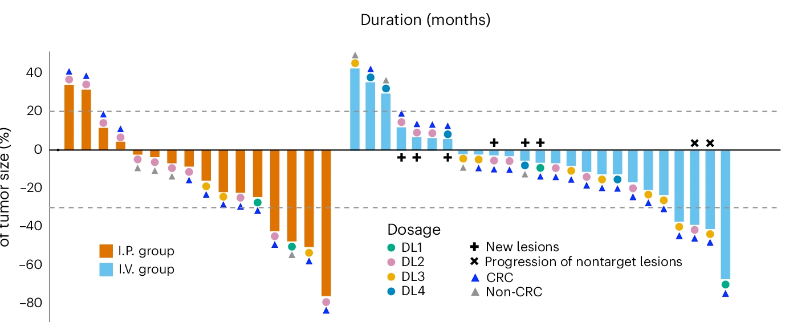
Targeting the clinical challenge of peritoneal metastasis (Colorectal Cancer, Ovarian CancerCommon metastasis pattern), the intraperitoneal infusion group demonstrated breakthrough efficacy:
Disease Control Rate (DCR) as high as82.4%, which means that the tumors of more than 80% of patients are effectively controlled (shrunk or stabilized), avoiding rapid deterioration of the condition;
Median Overall Survival (mOS) reached16.2 months, far exceeding the survival expectations of traditional later-line treatments (usually less than 6 months);
In patients with measurable peritoneal lesions, achieve100% Lesion ReductionAmong them, the maximum reduction in target lesions of one patient reached 75.98%, with a progression-free survival period lasting up to 9.2 months;
The median progression-free survival (mPFS) for PR (partial response) patients reached 6.3 months., and the liver and lung metastases in some patients also improved synchronously;
Key Subgroups Shine: InHigh CEA ExpressionIn patients with (immunohistochemistry ≥90%) and peritoneal metastasis, the objective response rate (ORR) soared to57.1%(4/7), nearly 60% of patients experienced significant tumor shrinkage, achieving a "remarkable turnaround".
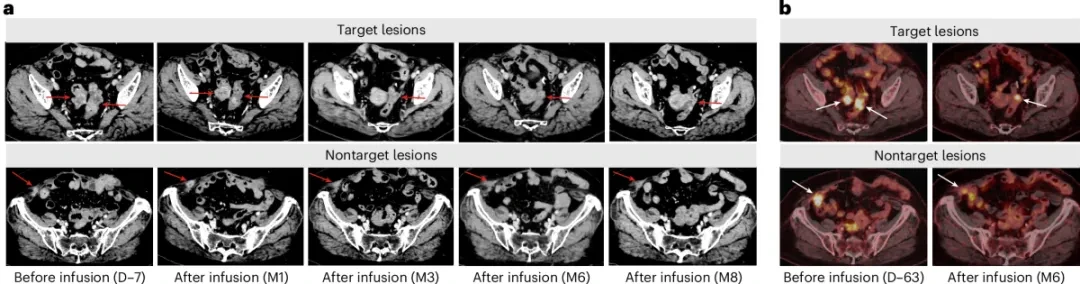
✅ Intravenous Infusion Group:"New Option" for Patients with Systemic Metastasis`, Maximum Safety`
For patients with systemic metastasis, the intravenous infusion group demonstrated promising potential for systemic disease control:
The overall objective response rate (ORR) was 8.0%, with a median overall survival (mOS) of 9.1 months, providing a new treatment window for patients who failed multiple lines of therapy;
Key Subgroup Breakthrough: In patients with high CEA expression and no liver metastasis, the ORR reached40.0%(2/5), bringing new hope to such patients;
Controllable safety: No serious immune toxicity events were observed, and there were no treatment-related deaths throughout the process.
"Our dual-pathway strategy is not simply a comparison of two drug delivery methods, but rather aims to provide more precise options for patients with different metastatic characteristics," said Professor Fang Weijia from the First Affiliated Hospital of Zhejiang University. The intraperitoneal pathway specifically addresses the challenge of peritoneal metastasis, while the intravenous pathway is suitable for patients with systemic metastases. This stratified delivery strategy allows more patients with solid tumors to benefit from CAR-T therapy.
CAR-T therapy has long been a breakthrough in hematological malignancies."Healing Miracle", but has been long hindered in the field of solid tumors ——The tumor microenvironment is complex, CAR-T cells "cannot find" tumors, and they are prone to mistakenly harm normal cells., becoming the three major challenges. The key to the breakthrough lies in a target called "CEA".
CEA (Carcinoembryonic Antigen) is a special glycoprotein that is briefly expressed during embryonic development and is present at low levels in gastrointestinal epithelial cells in adults. However, it becomes "abnormally active" in various solid tumors:Colorectal cancer, 70% of non-small cell lung cancer, 50% of breast cancer, as well as gastric cancer, pancreatic cancer and other cancer cells all show "high expression" of CEA on their surface.This "cancer cell-specific" expression pattern makes CEA a "golden target" for precise tumor attacks—CAR-T cells can accurately identify CEA, locking onto cancer cells like a missile while avoiding damage to normal cells.
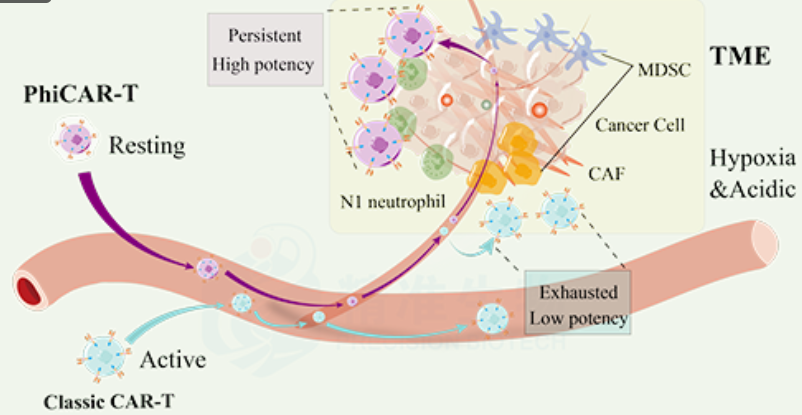
Based on this characteristic, the CEA CAR-T therapy developed by Chinese scientists overcomes the challenges of solid tumors through three major technological innovations:
PhiCAR® helps CAR-T cells penetrate the physical barriers of tumors, and RESCAR® reverses immunosuppressive signals, allowing the "cancer-killing troops" to reach the battlefield successfully.
Tumors are often in a hypoxic environment, where this CAR-T exhibits stronger activity and precisely targets metastatic lesions.
Direct intraperitoneal injection allows CAR-T cells to rapidly infiltrate peritoneal metastases of colon cancer, with local concentration 10 times higher than intravenous infusion, providing "more focused firepower".
For patients with CEA-positive solid tumors, the breakthrough of PC13 means:
When multiple lines of treatment fail and no drugs are available, there is no longer only waiting – PC13 may become your "last life-saving straw";
Patients with peritoneal metastasis and high CEA expression have nearly a 60% chance of achieving tumor remission, with the potential for significantly extended survival.
No need to fear the fatal side effects of CAR-T anymore; intelligent design makes treatment safer, more precise, and better tolerated.
The rise of China's national research technology is making CAR-T no longer synonymous with "astronomically expensive therapy" — Chongqing Precision Biotech Co., Ltd.'s technology platform is continuously reducing costs, and in the future, it will make the treatment more accessible and affordable for patients.
From hematological tumors to solid tumors, from "catching up" to "leading the way," Chinese research teams are rewriting the global landscape of solid tumor immunotherapy with a series of breakthroughs. The publication of Chongqing Precision Biotech Co., Ltd.'s PC13 in a top journal marks not only the success of a single product but also a victory for China's original CAR-T technology. It demonstrates that China's research capabilities can solve world-class medical challenges and provide a "Chinese solution" for patients with solid tumors worldwide.
Currently, multiple cancer centers in China are conducting CEA CAR-T clinical trials, and patients with advanced drug resistance, high postoperative risk, etc., can submit their medical records for evaluation of eligibility.Patients who wish to seek help from cell therapies such as CAR-T, TCR-T, TIL, or other new treatment technologies available in China and abroad, and have the economic means, can submit their medical records to the Medical Department of Global Oncology Doctors Network (4006667998) for application.This precise "cancer-killing tool" is opening the window of survival for an increasing number of patients with solid tumors.
Currently, the Phase II clinical trial of PC13 is in preparation, which will further expand the sample size, optimize the dosing regimen, and cover more patients with CEA-positive solid tumors. We firmly believe that in the near future, with the iterative upgrading of technology, CAR-T will no longer be exclusive to hematological malignancies but become a "shared hope" for all solid tumor patients, and China's domestically developed technology will be at the core of this anti-cancer revolution.
Scan to add patient group
Cancer Fighting News|New Technologies|New Drug Development|Leading Experts
Join the group to receive free anti-cancer resources