Ophthalmic Consumables Included in China's Provincial Volume-Based Procurement for the First Time, with 31% Win Rate

【Perspective · Ophthalmology Industry Navigation】
Major Events Monthly Report | Editor's Recommended Article
Winning Atlas· Volume Increase in Centralized Procurement | Ophthalmic Optometry Column
Hebei Province Medical Drug and Device Centralized Procurement CenterAnnouncement of the Proposed Winning Results for the Centralized Volume-based Procurement of 25 Types of Medical Consumables,110 companies with 150 products proposed for selection, 486 products declared,Approximately 31% success rate, showing that the competition in centralized procurement is becoming increasingly fierce, while also providing a window for import substitution by domestically produced enterprises.
This centralized procurementFor the first time, ophthalmic silicone oil and ophthalmic heavy water have been included in the provincial bulk procurement scope.`, marking`Vitreoretinal Surgery ConsumablesThe comprehensive centralized procurement extends from core equipment to ancillary products.
Ocular silicone oil and ocular heavy water are key consumables in vitreoretinal surgery. The former is used for postoperative intraocular filling to maintain retinal repositioning, while the latter is used intraoperatively to assist in flattening the retina. For a long time, these two products have been dominated by imported brands such as Bausch + Lomb and Alcon, with a low rate of domestic production. After being included in bulk procurement, their pricing mechanism will shift from market bidding to a volume-based procurement model, and the market landscape is expected to undergo adjustments.
# Chinese manufacturers achieve a breakthrough from zero
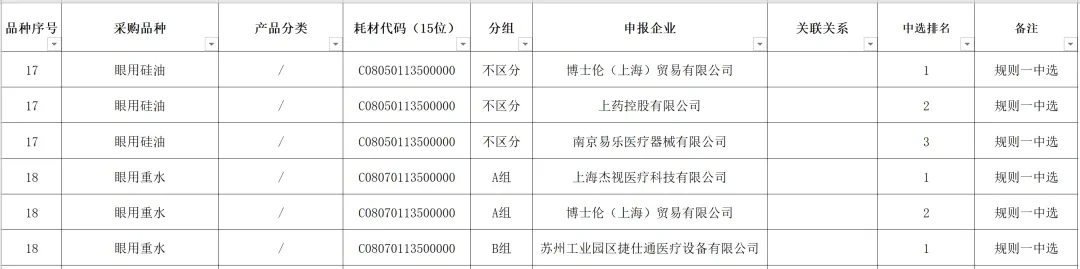
According to the tentative selection results of Hebei Province's centralized procurement, a total of 6 companies with 7 products have been selected for the two categories of ophthalmic silicone oil and ophthalmic heavy water:
Ophthalmic Silicone Oil (3 Selected Manufacturers):
Bausch + Lomb (Shanghai) Trading Co., Ltd. (1st position)
Shanghai Pharmaceutical Holdings Co., Ltd. (2nd position)
Nanjing Yile Medical Device Co., Ltd. (3rd in order)
Ophthalmic Heavy Water (4 Selected, Divided into Groups A and B):
Group A: Shanghai Jieshi Medical Technology Co., Ltd. (1st position), Bausch & Lomb (Shanghai) Trading Co., Ltd. (2nd position)
Group B: Suzhou Industrial Park Jieshitong Medical Equipment Co., Ltd. (1st position)
This result presents two significant characteristics:
Chinese manufacturers gain selection qualification for the first timeShanghai Jieshi Medical Technology Co., Ltd. was selected as the top choice in Group A for ophthalmic heavy water, marking the first breakthrough by a Chinese manufacturer in the ophthalmic heavy water field. Previously, this market had long been dominated by imported brands such as Bausch + Lomb and Alcon, making it difficult for Chinese-produced products to enter the public hospital procurement system.
Coexistence of Dealers and ManufacturersShanghai Pharma, Nanjing Yile, Suzhou Jieshitong, and other selected enterprises are medical device distributors, while Bausch + Lomb and Shanghai Jieshi Medical Technology Co., Ltd. are manufacturers. This structure reflects the current channel characteristics of the ophthalmic silicone oil and heavy water market: imported brands primarily adopt a distribution model, while Chinese-produced brands attempt either direct supply or a combination of direct supply and distribution.
# Price Competition and Quality Balance
Hebei's recent centralized procurement adopts a bidding unit model for ophthalmic silicone oil and ophthalmic heavy water, with rule designs seeking a balance between price competition and quality thresholds.
Quotation Rules: The product quotation shall not exceed the lowest winning bid price of all products that meet the declaration conditions in the centralized bulk procurement at the provincial level (including provincial alliances) in China. This rule requires companies to offer the lowest price in China, reducing the room for price manipulation.
Winning Bid Rate Control: The selection rate for each bidding unit is 70%, and the highest proposed winning price within the same bidding unit must not exceed 1.5 times the lowest proposed winning price. This means that 30% of the submitted products will be eliminated, indicating relatively sufficient price competition.
Grouping Strategy: Ophthalmic heavy water is divided into Group A and Group B, potentially based on technical parameters of the product (such as molecular type, purity level) or company qualifications (manufacturing enterprise/distributor). The grouping for bidding avoids direct price competition among products with different market positions, providing differentiated competitive space for innovative and conventional products.
From the results, Shanghai Jieshi Medical Technology Co., Ltd. was selected as the top choice in Group A, indicating its competitive pricing advantage in this group; Bausch + Lomb ranked second in Group A and was not selected in Group B, reflecting the pricing pressure faced by imported brands.
# From Import Monopoly to Diversified Competition:
The market for ophthalmic silicone oil and ophthalmic heavy water exhibits clear characteristics of import monopolization.
In terms of imported brands,Bausch + LombThe silicone oil, heavy water, and heavy silicone oil products enter the Chinese market through agents and are widely used in vitreoretinal surgeries at public hospitals.AlconAlso boasts a complete line of vitrectomy surgical consumables, including silicone oil, heavy water, and配套 instruments. In the 2024 selection of ophthalmic consumables at Shenzhen Longgang Central Hospital, the winning supplier for silicone oil and heavy water products was the Bausch + Lomb brand.
In terms of domestic brands, there have been technical breakthroughs in recent years.Jieshi MedicalShanghai Jieshi Medical Technology Co., Ltd.'s second-generation heavy water for ophthalmology (perfluorooctane), perfluoropropane gas for ophthalmic use, and other products have been approved for marketing. Ophthalmic silicone oil is currently in the clinical trial stage. The company adopts a "dual-driven" strategy, using ophthalmic gases as an entry point to gradually improve the product matrix for vitrectomy surgery consumables.Shanghai Tianshi Medical, Hebei Shibang Medical DeviceDealers also act as agents for domestically produced silicone oil and heavy water products, but their market share is relatively limited.
From the perspective of the industrial chain, The upstream raw materials and manufacturing processes for ophthalmic silicone oil and heavy water are highly dependent on imports, mainly beingBausch + Lomb, PureVisionMonopolized by large foreign-funded enterprises. Domestic companies mainly focus on the distribution环节, with relatively weak autonomous production capabilities.
# Differentiated Response to the Changing Landscape of Centralized Procurement
In response to the trend of including ophthalmic silicone oil and heavy water in centralized procurement, different companies adopt differentiated coping strategies.
In terms of imported brandsCompanies such as Bausch + Lomb and Alcon, relying on their brand advantages and comprehensive product lines, actively participate in the centralized procurement bidding. Meanwhile, they seek differentiated competition through innovative products (such as heavy silicone oil). Heavy silicone oil combines the advantages of silicone oil and heavy water, with a density higher than water but lower than traditional heavy water, making it suitable for more complex retinal cases. It is currently not included in the centralized procurement scope.
Chinese manufacturersCompanies like Shanghai Jieshi Medical Technology Co., Ltd. adopt a "price-for-volume" strategy, rapidly entering the mainstream market through winning bids in centralized procurement while also developing innovative products such as artificial corneal endothelium to build long-term competitiveness. The core challenge for Chinese manufacturers lies in maintaining R&D investment and improving product quality despite price restrictions.
On the distributor sideTraditional ophthalmic consumables distributors in China are facing transformation pressures. After the centralized procurement of silicone oil and heavy water, their profit margins have been significantly compressed. They need to transition towards value-added services (such as surgical assistance, technical training, and equipment maintenance) or expand into non-centralized procurement product categories (such as vitrectomy heads, laser fibers, etc.) to maintain business scale.
# OphthalmologyDeepening of the Centralized Procurement of Surgical Consumables
The inclusion of ophthalmic silicone oil and heavy water in centralized procurement marks the beginning of the deepening of centralized procurement for vitreoretinal surgery consumables.
Trend of Category ExpansionAs the centralized procurement becomes常态化 (regularized), other vitreoretinal surgical consumables such as vitrectomy heads, laser fibers, and intraocular illumination may also be included in the procurement scope. These products are currently dominated by imported brands, with a lower rate of domestic production.
Technology Upgrade PressureUnder the pressure of centralized procurement prices, companies will accelerate technological innovation and seek products with higher added value. Pre-filled silicone oil syringes are gradually replacing traditional non-pre-filled products due to their convenience, sterility, and reduced preparation time. The formulation of perfluorocarbon liquids is also continuously being optimized to improve intraoperative retinal stability and safety.
China Production Substitution WindowAgainst the backdrop of policies such as medical insurance cost control, domestic substitution, and tiered diagnosis and treatment, China's vitrectomy consumables enterprises are presented with market opportunities. However, domestic substitution is not merely simple price competition but requires the establishment of a complete system in terms of product quality, clinical validation, and doctor training.

Ophthalmology Solutions Case