Has China Caught Up with the Latest Advances in U.S. Digital Therapeutics for Amblyopia?

Luminopia
Developer of Amblyopia Therapy for Children

DOBOSO
Intelligent Medical Platform Provider

【Viewpoint · Ophthalmology Industry Navigation】
Major Events Monthly Report | Editor's Recommended Article
Winning Atlas· Centralized Procurement Scaling | Ophthalmic Optometry Column
American Digital Therapeutics EnterprisesLuminopiaThree Clinical Study Results Released at the 51st Annual Meeting of AAPOS (American Association for Pediatric Ophthalmology and Strabismus).
Its FDA-approved digital therapy for amblyopia has a recurrence rate of approximately3%,Significantly lower than the 20%-25% recurrence rate of traditional occlusion therapy;Vision improvement in pediatric patients aged 7-12 exceeds levels reported in standard clinical care; 46% of patients with severe amblyopia (20/100 or worse) achieved a gain of two lines or more on the visual acuity chart.。
Incubated by Harvard University's VentureWorks accelerator, the company was founded in 2015, and its productLuminopia OneApproved by the FDA in October 2021, it isThe First VR-Based Digital Therapy for Pediatric Amblyopia。
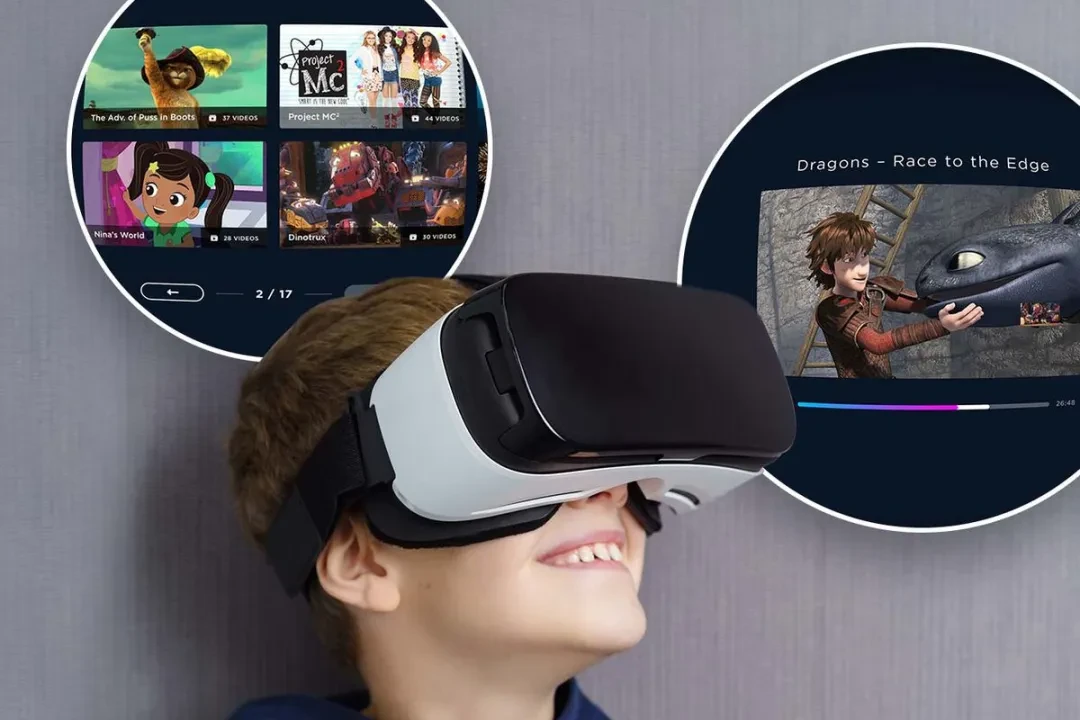
# VR Headset and Binocular Vision
Luminopia One adopts virtual reality technology,The patient watches self-selected videos at home for 6 days a week, 1 hour each day (by prescription).The software reduces the contrast of images in the non-amblyopic eye, encouraging the brain to fuse binocular images. Its content library includes over 700 hours of videos, enhancing patient compliance through entertaining content.Applicable to amblyopic children aged 4-7 with anisometropia and/or mild strabismus.
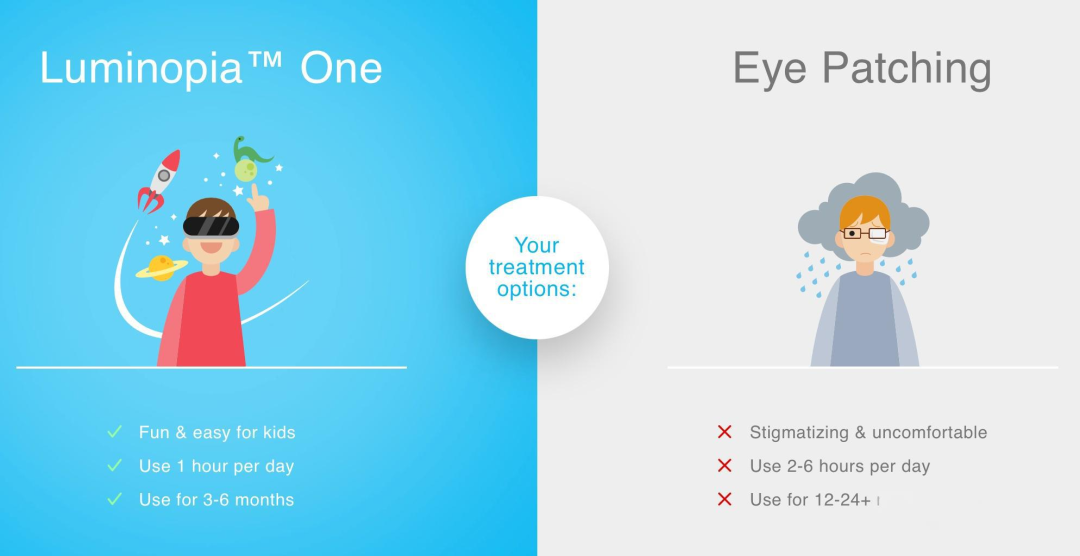
Usage: The child wears a VR headset (weighing less than 500 grams) to watch specially processed popular children's TV shows and movies.Treatment cycle: 3-6 months, 1 hour per day, significantly shorter than the traditional eye mask treatment of 1-2 years, 2-6 hours a day.
Principle:Two lenses show pictures of different intensity levels.The dominant eye sees a low-contrast image, while the amblyopic eye sees a normal-contrast image, forcing the brain to use both eyes simultaneously and rebuild binocular visual function. This "dichoptic training" technology differs from the complete occlusion of the dominant eye in traditional patching therapy, reducing feelings of shame and social barriers.
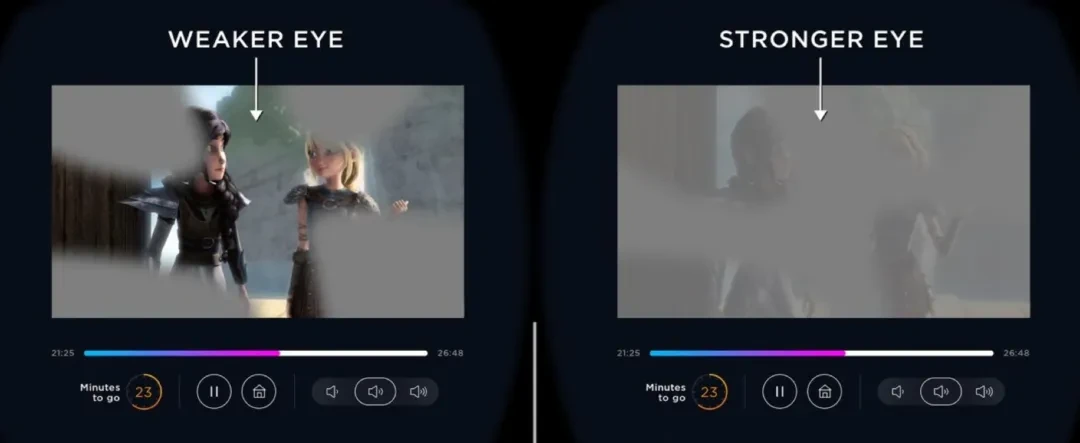
Compliance: Replace boring eye mask treatments with vivid and interesting films.Compliance Rate Approaches 94%, significantly higher than the 83.9% of traditional occlusion therapy. The software can track patients' usage, generate daily, weekly, monthly, and full-cycle records, facilitating remote monitoring by doctors.
# Pioneer of Digital Therapeutics in China
China's Amblyopia Digital Therapeutics MarketDOBOSO "Multibao"As a pioneer. The product obtained the NMPA Class II Medical Device Registration Certificate in 2012, which isThe First Digital Therapeutic Product for Strabismus and Amblyopia Treatment Approved in China。
Technical RouteDOBOSO adopts the "binocular vision patent technology" and perceptual learning theory, improving vision through visual bio-information stimulation and perceptual learning training programs, utilizing the plasticity of the nervous system. Product formats include CDs, USB drives, online versions, web versions, mobile versions, and VR versions, covering various application scenarios.
Clinical Data: DOBOSO disclosed, Doboso treats children's amblyopia, binocular vision function, and post-strabismus surgeryThe total effective rate of visual function recovery can reach 88%.In a randomized controlled trial of 214 children aged 3-12 with amblyopia, the total effective rate was 88.75% in the experimental group (DOBOSO) and 55.88% in the control group (traditional comprehensive treatment).
Market Coverage: As of October 2025, DOBOSO's medical services have covered 30 provinces, municipalities, and autonomous regions in China, established cooperation with more than 2,800 hospitals, accumulated over 500,000 users, and visual training programs have been utilized more than 60 million times.
Although "DOBOSO" has been clinically applied in China for more than ten years, there is still a lack of large-scale, multi-center, randomized controlled long-term follow-up data. DOBOSO stated that it has conducted multiple RCT studies and RWS studies to accumulate abundant clinical evidence across China.
# Global Growth and China Opportunities
The global amblyopia treatment market size is estimated to be approximately USD 40.7 billion in 2025 and is projected to reach USD 59.1 billion by 2035, with an average annual growth rate of 3.8%.Digital Therapeutics is the Fastest Growing Segment, with a projected compound annual growth rate of 6.08% from 2025 to 2031.
The prevalence of amblyopia in Chinese children is about 3%-5%, with a patient base of approximately 15 million, and the market size can reach hundreds of billions. HoweverThe penetration rate of digital therapeutics remains low.Traditional occlusion therapy and vision training still dominate.
In China, the market is dominated by DOBOSO's "Multisensory Vision," with companies such as Juehua Medical, Hunan Shuangqi Shijia, and Guangdong Gailun participating in the competition. International brands like Luminopia and CureSight have not yet entered the Chinese market, mainly due to restrictions from NMPA registration approval and localization adaptation.
Moreover, China's "14th Five-Year Plan" for national eye health has listed myopia prevention and control in children and adolescents, as well as amblyopia treatment, as key priorities. The inclusion of digital therapeutics into the medical insurance payment system is still under exploration, with out-of-pocket payments being the main option currently.
# Paradigm Shift from Treatment to Prevention and Control
The progress of ophthalmic digital therapeutics varies between China and abroad, with the deep-rooted reasons lying in differing understandings of the nature of diseases and divergent choices in commercial pathways.
Cognitive Essence of Disease: Although amblyopia manifests as decreased vision, it is actually a neurological disorder of the brain's visual cortex and visual center, rather than a simple organic eye disease. This explains why digital therapeutics—stimulating neural plasticity through digital signals—has become a suitable intervention. Companies in and outside of China are focusing on this mechanism, butChina Recognized Earlier That Amblyopia Treatment Needs to Utilize Brain Neuroplasticity, through shape, light, color, and psychological perception training to restore function, andForeign countries focus more on VR technology and gamification carriers.。
Reflections on Gamification Design: Gamification is a means to improve compliance, but not the core of efficacy. Early products in China (CDs, online versions) have proven that an overly flashy interface may reduce training efficiency due to visual clutter. Companies like DOBOSO have even abandoned pure gamification, emphasizing "scientifically engaging" rather than "entertainment gaming," because the brain regions activated by games are not the same as those involved in the repair of the amblyopic visual system. This provides an important reminder to the industry:The core of digital therapeutics is medical mechanisms, with digital technology being merely the carrier.。
The Inversion of Capital Logic: The commercialization of domestic digital therapies for amblyopia was premature (entering hospital charges before 2010). Companies relied on software sales for self-sustaining growth but lacked awareness of leveraging capital to accelerate development. In contrast, foreign companies like Luminopia and NovaSight, due to their novel concepts (VR + gaming), gained multiple rounds of financing despite lagging in commercialization."The Paradox of 'Maturity Means Neglect' in Investment", is changing as the concept of digital therapeutics becomes more widespread, and related companies in China have already started financing plans.
The track is also extending from单一疾病治疗 to visual health全生命周期管理.DOBOSOFrom amblyopia to myopia prevention and control ("Beibei Le" red light nourishment + VR training), dry eye syndrome, and presbyopia vision rehabilitation;Juehua MedicalVisual Field Defects, Low Vision, and Refractive Surgery Rehabilitation.
This shift signifies the business model permeating from in-hospital serious medical care to out-of-hospital consumer medical care, but the core competitive elements remain unchanged——The effectiveness of clinical evidence, the scientific utilization of neuroplasticity, and the accumulation of long-term follow-up data。

Ophthalmology Solutions Case