

Science Corp Secures $230M Series C to Advance PRIMA Retinal BCI and Files for IPO

Science
Medical Device Developer

Khosla Ventures
Venture Capital Firms

On March 5, brain-computer interface company Science Corporation announced the completion of a $230 million Series C financing round, led by Khosla Ventures and Lightspeed, with existing shareholders such as Y Combinator also participating. The company’s valuation reached $1.5 billion post-investment, positioning it as one of the world's leading brain-computer interface startups alongside Neuralink.The funds will be mainly used forPRIMARetinaBCICommercialization of implants and expansion of clinical trials, with enhanced capabilities in neural interfaces, organ perfusion, and proprietary manufacturing platforms.

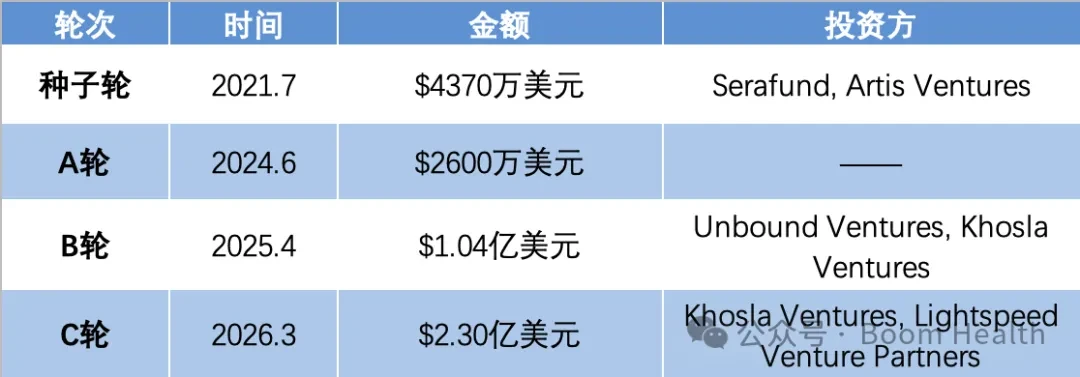
Science Corporation(AbbreviationScience) byNeuralinkCo-founder, Former PresidentMax HodakIn2021Founded in the year, headquartered in Alameda, California, USA, it is a clinical-stage brain-computer interface and neuroengineering medical technology company. The company focuses on utilizing neurotechnology to restore vision, cognition, and motor functions lost due to severe diseases, and has conducted multiple clinical trials in six countries, enrolling dozens of patients cumulatively. Its core products include those for treating advanced macular degeneration.PRIMABrain-computer interface retinal implant system, and brain implant system,SciFiNeural probes and other neural interface devices, and throughScience FoundryProvide the industry with an integrated platform from chips, probes to manufacturing infrastructure. As of now,ScienceTotal financing reached4.9Billion USD:
01Core Products and Business Model
ScienceThe current core product is centered aroundPRIMAConstruction of Visual RecoveryBCISystem, and superimpose industry-oriented neural interface platform services.
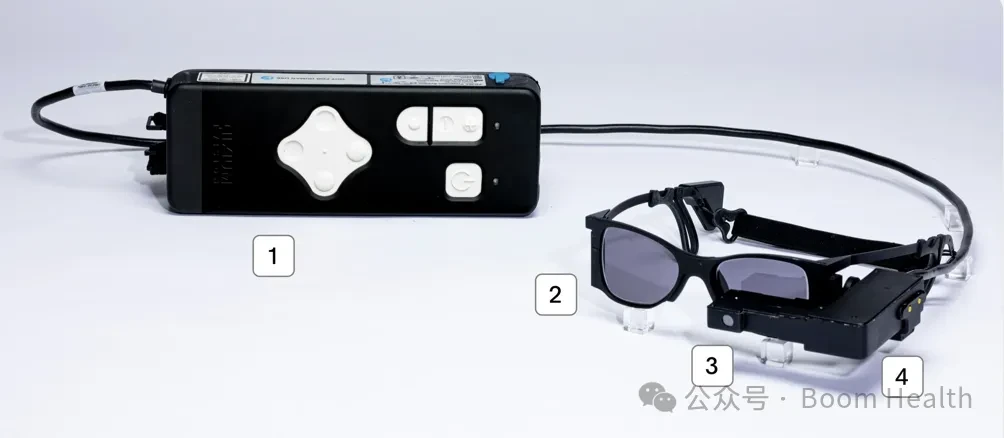
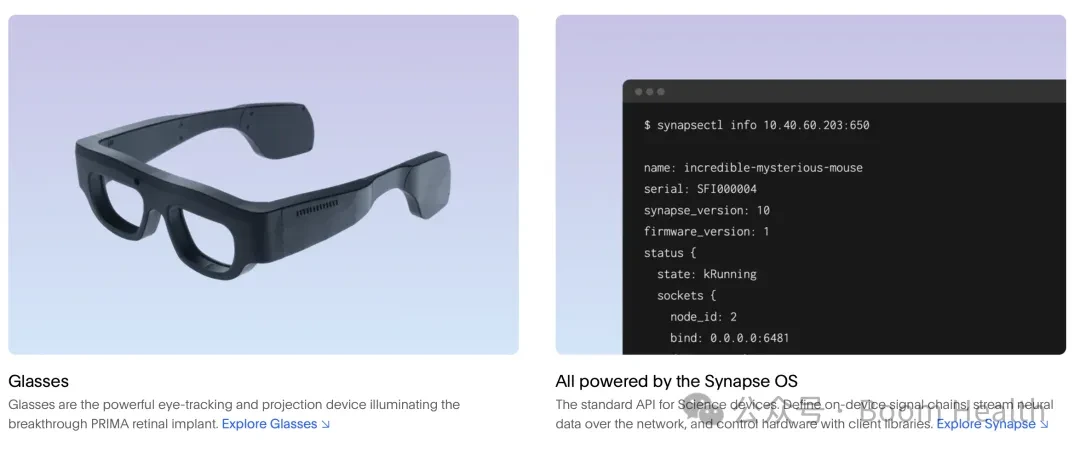
PRIMAIs a set“Photovoltaic Retinal Prosthesis+ Smart Glasses”The closed-loop brain-computer interface system is used to replace photoreceptor cells that have lost function in advanced degenerative retinal diseases. The area of the implanted chip is approximately2×2Millimeters, approximately thick30Micrometer, including378An independent photovoltaic pixel is implanted beneath the retina in the macular region of the eye; externally, a specially designed pair of glasses with an embedded camera and infrared projection module converts environmental images into infrared patterns, projecting them onto the chip. Each pixel acts as a miniature solar panel, converting light energy into electrical stimulation to directly activate still-viable bipolar cells and the retinal neural network, which then transmits signals via the optic nerve to the brain's visual cortex. This allowsPRIMACan“Bypass”Rod and cone cells that have already necrotized, restoring the central field of vision“Morphological Vision”(form vision), rather than just scattered dots of light as with traditional retinal prosthetics. Compared to other brain-computer interface approaches of the same era (such as directly stimulating the visual cortex of the brain),PRIMABy leveraging the retina's own bio-circuitry, a wireless visual neural prosthesis that does not require an in-body battery has been achieved, constituting a key difference in its technical approach.
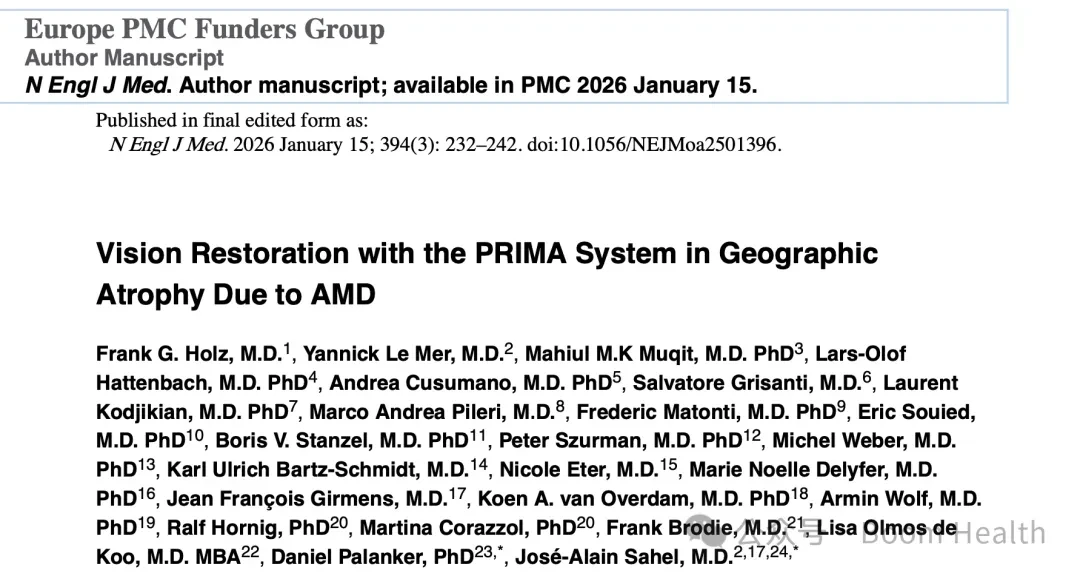
In terms of clinical evidence,PRIMAThe core data comes from a source namedPRIMAveraThepivotalClinical Trial: Study Includes Multiple European Countries38Name: Advanced Dry Age-Related Macular Degeneration“Geographic Atrophy”(GA) and lost central vision, the results were published in2025Year10The New England Journal of Medicine (NEJM). After receiving the implant and wearingPRIMAGlasses one year later,80% The patients who received the evaluation obtained on the standard eye chart“Clinically Significant”The improvement in vision allowed most people to read at least two additional lines of letters; among them27/32Patients regained the ability to read, and some were able to read books, subway signs, and even complete crossword puzzles.NEJMWillPRIMAReferred to as the first in patients with geographic atrophy“True Vision Restoration”Treatment options; the device has currently been approved by the United StatesFDAThe breakthrough device designation, while the company has submitted to the European UnionCELogo application, with parallel registration pathways in the U.S. and Europe, is expected to first achieve commercial launch in Europe.
From the perspective of indications and market,PRIMAThe first phase focuses on dry age-related macular degeneration caused byGA——This is one of the most common causes of irreversible blindness in the elderly, with patients worldwide exceeding500Ten thousand, and there are currently no effective means to restore vision.ScienceClinical projects are being expanded to include hereditary retinal diseases, includingStargardtDisease and Retinitis Pigmentosa (RP), which respectively affect approximately1/10,000And1/4,000Humans are the primary cause of hereditary vision loss in young adults. It is estimated that once access is granted in Europe and the United States and a medical insurance payment pathway is established, just for the late stage alone,AMDMarket,PRIMAis expected to generate hundreds of millions of dollars in annual revenue within a few years and may become one of the first truly commercializedBCIOne of the medical devices.
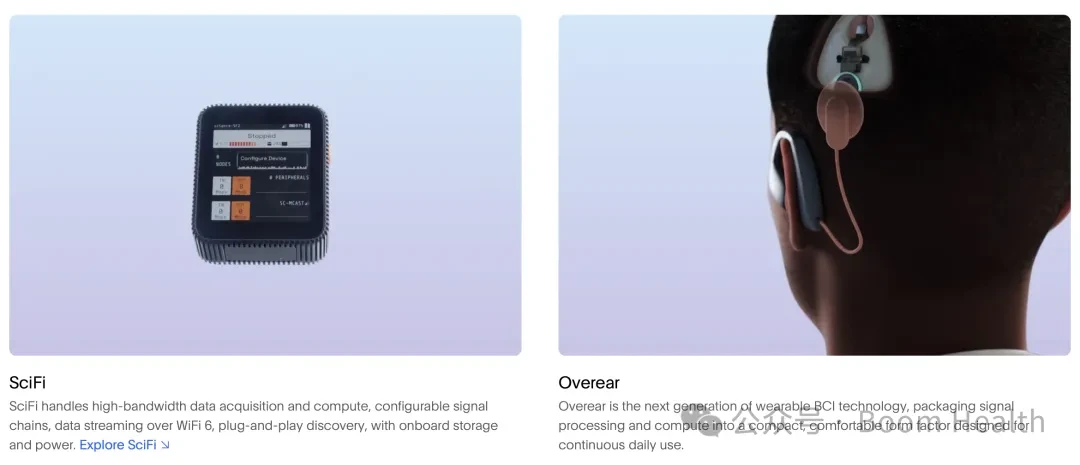
Moreover, unlike most medical device companies that focus on a single indication, Science is also building a platform around PRIMA and various future neural implant devices.Full-Stack Neural Interface Platform —— Science Ecosystem. The platform consists of three parts: "probes — adapters — headstages." It is built on the company's self-developed NYX recording chip and LUX stimulation chip, and provides standardized API and SDK through Synapse OS, allowing laboratories and other companies to use it likeComputerOperating systems can quickly build high-throughput brain-computer interfaces in the same way.Its business model is to sell hardware and software to research institutions and startups, thereby lowering the barriers and costs of neural interface development, and reinforcing it in return.ScienceOneself inPRIMAAnd other implant projects' engineering and supply chain capabilities.
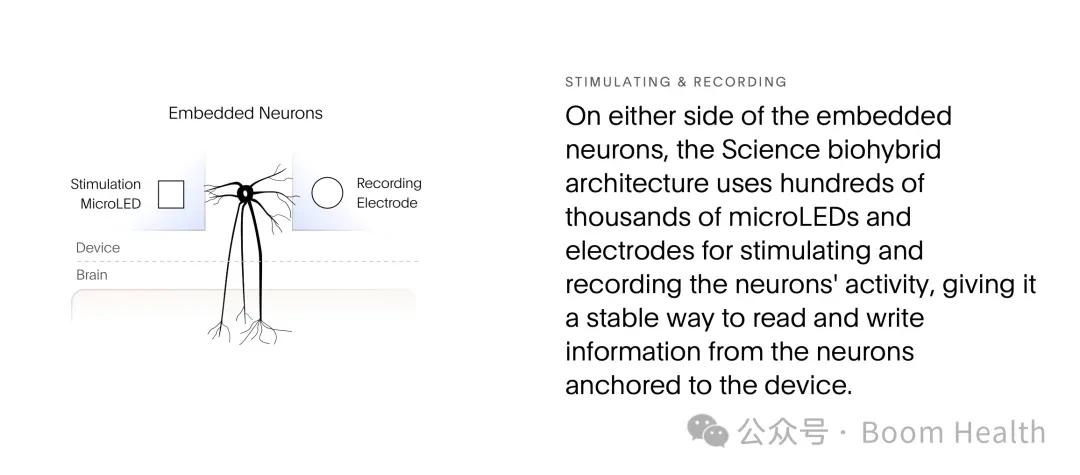
In the longer-term route planning,ScienceWill“BiohybridBiohybrid Brain-Computer Interface”Deemed SuccessorPRIMAThe next-generation core platform technology afterwards. Compared with traditional“Metal Electrodes Inserted into the Brain”Different,BiohybridThe basic idea is: to pre-cultivate highly engineered stem cell-derived neurons on a chip, which will be used as“Live Electrode Array”Implanted on the brain surface, and then utilizing the natural ability of neurons to extend long axons and dendrites, allowing them to grow extensively into the host brain and form a large number of synaptic connections. At the device level,BiohybridUsing hundreds of thousands of micro-LEDWith recording electrodes clamped on both sides of the embedded neurons, using optical signals with optogenetic methods.
2026Year4Month, the company has invited the chairman of the Department of Neurosurgery at Yale UniversityMurat GünelLeading the First Case in the United StatesBiohybridRelevant human clinical trials will first implant a version of the sensor without live cells into the human brain, paving the way for subsequent true bio-hybrid interfaces. Once this technical route matures, it will have an impact on language./Opening up new possibilities in the reconstruction of central functions such as communication, motor control, learning, and memory.PRIMAA larger performance space, namely“Millions of Implanted Neurons, Billions of Synapses”As the goal, its information bandwidth theoretically far exceeds that of contemporary metal electrode arrays.
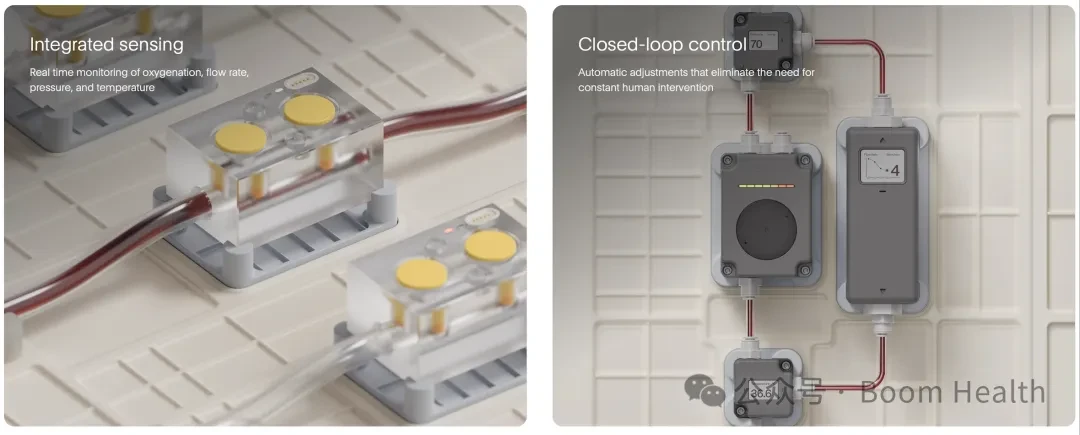
In addition to the direct brain-computer interface product line,“Organ Perfusion and Life Support”Is the company's second product line, its representative product isVesselPerfusion System。VesselAimed at reconstructing the current expensive, highly labor-dependentECMO(Extracorporeal Membrane Oxygenation) and organ perfusion devices, through the integration of various sensors (oxygenation, flow, pressure, temperature) with closed-loop control algorithms, which originally relied onICUHighly manual large-scale life support equipment is compressed into a modular long-term perfusion platform. The system revolves around“Lung, Heart, Kidney”Three major modules allow for the configuration of corresponding gas exchange, dual-pump, and solute exchange components for different organs; closed-loop control can automatically adjust flow and perfusion parameters to reduce manual intervention costs.ScienceThe rabbit kidney has been maintained in vitro using the prototype system.48Survival for hours, with a plan to gradually extend the ex vivo organ survival time from traditional ice preservation.24–36Hours push into days, even weeks or more.
Overall, the core products and businesses of Science Corporation can be summarized in two layers: The first layer is the PRIMA retinal prosthesis, which has entered pivotal clinical trials and is about to be commercialized. This serves as the company’s short-to-medium term revenue pillar and is also one of the most feasible BCI medical products currently available. The second layer consists of the neural interface platform (Science Ecosystem, Foundry) and technology pipeline (Biohybrid, Vessel) extended around this core. By providing tools and services externally and offering R&D infrastructure internally, the company establishes a three-dimensional layout of "Product + Platform + Pipeline."
02Market and Competitive Landscape
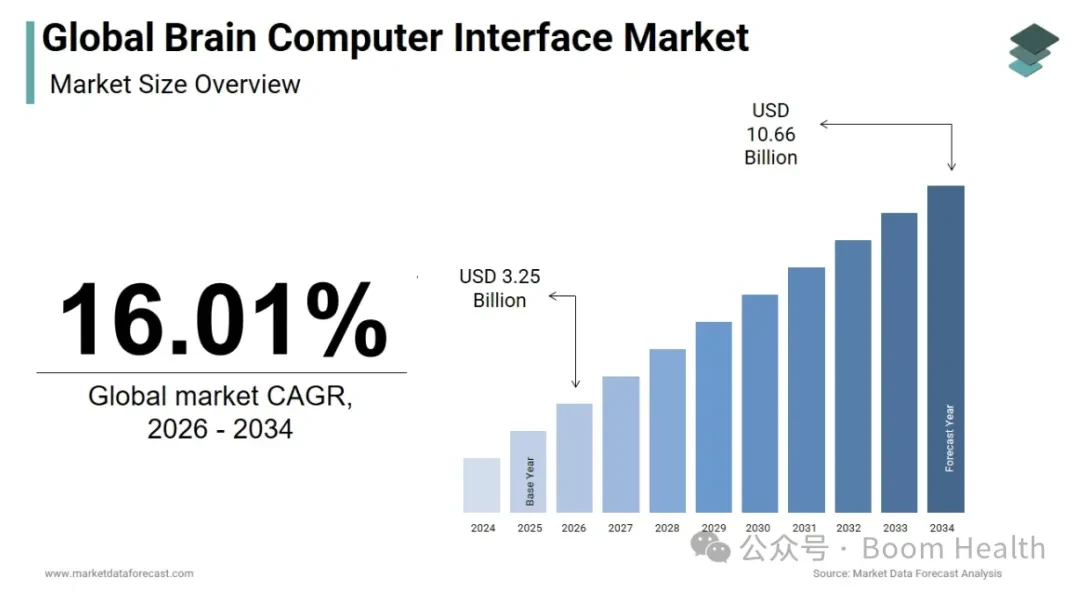
From Brain-Computer Interface (BCI) Overall market view,ScienceThe technology threshold is extremely high, but it is still in the early stage of clinical transformation.Implantable Sub-Segments. Globally, truly engaged in implant-gradeBCIThe company currently has only a dozen or so, with an overall financing scale of approximately40Hundreds of millions of US dollars, but as of2026In the year, the number of patients receiving implant trials remained only in the hundreds, with a significant gap still existing between scientific breakthroughs and large-scale applications. According to estimates by multiple research institutions, the global market, including both invasive and non-invasive technologies,BCIThe market will be in2020Maintain a compound annual growth rate in the mid-to-late years16% The rapid growth on both sides, from the current approximately30Billion-dollar scale expansion to2034Before and After the Year100billion-dollar range, with medical applications remaining the largest and most stable source of demand. Within this landscape,NeuralinkExceeding13USD billion financing tops the funding list, whileScienceUpon completion2.3Billion US dollarsCAfter the round, cumulative financing is approximately4.9Billion USD, has entered the implantableBCIThe first tier of the company's financial strength.
ScienceThe current main battlefield is“Visual Neural Prosthesis”This relatively focused but sizable patient sub-market.The field of visual prosthetics itself is highly competitive but has experienced numerous setbacks.Earlier PlayersSecond SightLaunchedArgusRetinal prostheses have been awardedFDAApproved, but due to commercial and funding issues in2020Production ceased at the end of the year, after which the company was renamed.Cortigent, and instead mainly promote vision cortex stimulation-basedOrionCortical visual prostheses are still in the clinical trial stage.PRIMAInitially by a French companyPixium VisionDeveloped, it has demonstrated safety and some degree of vision recovery in small-scale trials, butPixiumSubsequently fell into financial difficulties.2024Year,ScienceAcquired through an asset purchasePRIMAThe intellectual property rights and the three ongoing clinical trials will continue with the existing patients and pipeline, and further expand the sample size and improve the process. Therefore,ScienceOn the one hand, it inherits the previous generation of technology and long-term clinical accumulation, and on the other hand, it possesses stronger financing capabilities, vertical integration capabilities, andBCIPlatform-based positioning reorganizes this market.
In a broader sense“Artificial VisionBCI”To see,ScienceThe key competitors faced are not limited to retinal implants.NeuralinkIn progressBlindsightProject, which creates vision for the blind with severe optic nerve or eyeball damage by directly stimulating the visual cortex through high-density cortical electrodes.“Phosphorescence Image”; The project has been approvedFDAThe breakthrough device designation, and plans to in2025To2026The first human trial was conducted in the year, but there is still a long way to go before regulatory approval and affordable clinical pathways.Blackrock NeurotechAnd many academic institutions are also utilizingUtah Array...cortical electrodes for visual cortex stimulation research, but currently, it remains more at the scientific research and functional verification level.
At the same time,Sciencemust also face challenges from traditional pharmaceuticals and gene therapy.“Bypass Competition”. In recent years, targetingAMDComplement pathway inhibitors and anti-VEGFTherapies have gradually established standard treatment pathways in the earlier stages of the disease, which to some extent delays the progression of patients to irreversible blindness, thereby reducing the potential pool of indications for visual prosthetics. However, once the lesion progresses to geographic atrophy and leads to extensive loss of photoreceptors, current drugs and gene therapies still struggle to restore functional vision. Therefore,PRIMAThis typeBCIThe role of prostheses in the disease spectrum is“Functional Recovery in the Terminal Stage”The unique role. Precisely because of this,ScienceThe commercialization challenges will also focus on aspects such as the construction of surgical networks, patient screening, post-operative rehabilitation training, and long-term follow-up services. PreviouslyArgusSetbacks in the project's reimbursement and service system have already indicated that this product is onlyOnly by running through both clinical and commercial ends can a truly sustainable market be achieved.
Placing the entire implantable BCI track in perspective, *Science* alongside Neuralink, Synchron, Paradromics, Precision Neuroscience, and Blackrock Neurotech form the most closely watched first-tier group at present, but their entry points and strategic paths differ significantly. Neuralink emphasizes high-channel cortical electrodes and automated surgical robots, aiming to build a universal high-bandwidth interface platform for patients with motor/communication disorders; Paradromics targets "brain-to-voice" communication and high-throughput data channels through its Connexus BCI; Synchron focuses on achieving Stentrode via intravascular stent electrodes without the need for craniotomy; Precision seeks a compromise between safety and resolution using ultra-thin ECoG films.In contrast,ScienceFocus resources on the single-disease cluster of visual neural prosthetics in the short term, and leverage strong engineering capabilities and self-built production lines to...PRIMAMade Relatively“Convergence”The first commercial landing point; In the medium and long term, then withBiohybridCortical Interface andVesselLife support technology extends to broader cognitive and motor function recovery.
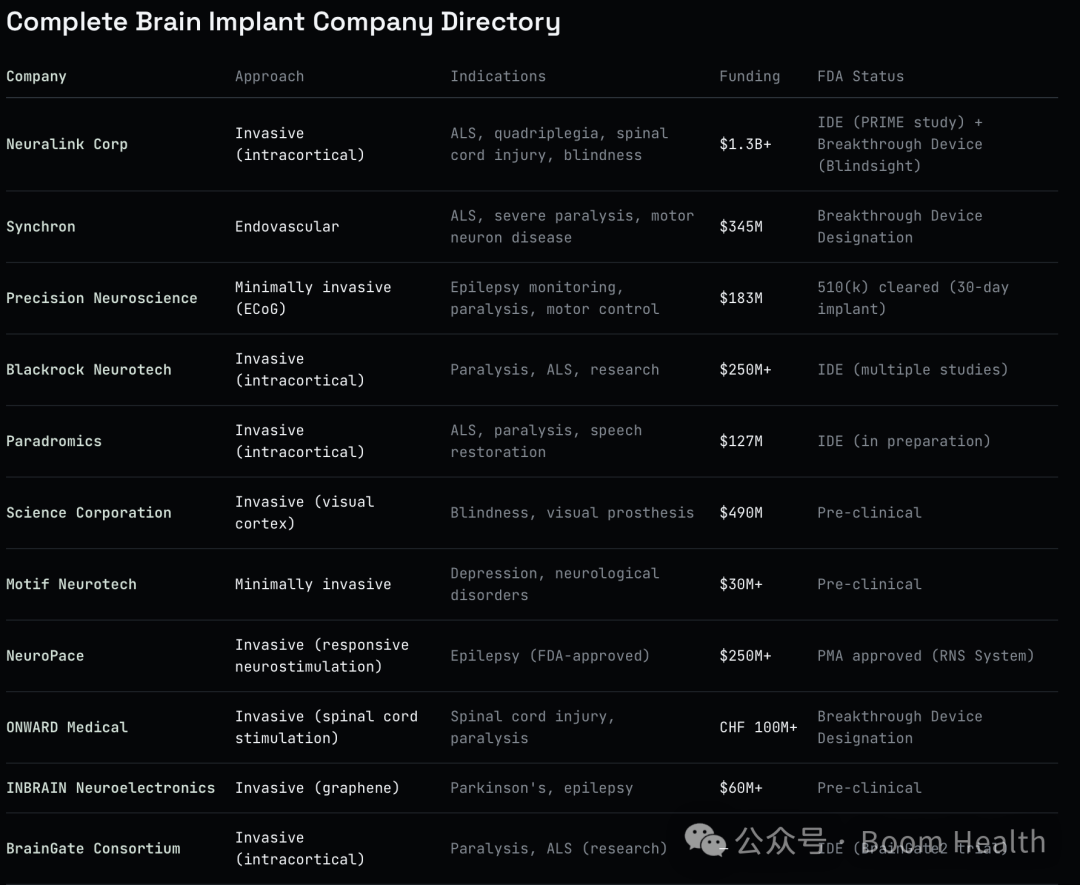
Finally, in the short term,ScienceThe competitive advantage mainly comes from three dimensions:First,PRIMAHas established rare high-quality clinical evidence and authoritative endorsements within the industry, with the potential to be the first to generate real revenue and payment pathways; secondly, vertical integration supported by financing and engineering capabilities gives it advantages in cost control, supply chain security, and product iteration speed; thirdly, throughFoundryAndEcosystemExporting infrastructure to peers, to a certain extent“Making Money While Standing Behind More Competitors”. Accordingly,The main uncertainties of the company are concentrated in:Can the commercialization of visual prosthetics move beyond the previous...ArgusSuch as“Technical Success, Commercial Failure”Trajectory; High ComplexityBiohybridWhether the solution can prove its safety and scalability in the long term, and inNeuralinkAs players with stronger financial resources and greater brand influence continue to advance,ScienceWhether it can be done in the next round of platform-levelBCIMaintain Technical Discourse Power in Competition.These factors, may determineScienceWhether it can truly evolve intoBCIA leading company with long-term dominance in the field.
 Author: Li YangBut Yule

Share

Like

Click to Watch