Medtronic Bets $650M on Removable Neuromodulation: Acquiring a 60-Day Therapy for Chronic Pain

Medtronic
Medical Device Manufacturer

SPR Therapeutics
Peripheral Nerve Stimulation (PNS) Product Developer
Nalu Medical
Medical Device Developer
Is a "use-and-remove" medical device still worth $650 million?
On May 20, 2026, Medtronic announced the acquisition of SPR Therapeutics, a Cleveland-based medical device company, for approximately $650 million (equivalent to about 4.4 billion yuan) in cash. The core product of SPR Therapeutics is a 60-day temporary peripheral nerve stimulation (PNS) system.
# What Real Clinical Problems Does Sprint PNS Solve?
Chronic pain management has long been plagued by a structural contradiction: drug therapy (represented by opioids) carries the risk of addiction, while implantable neuromodulation devices (such as spinal cord stimulators, SCS) are effective but involve invasive surgery and lifelong carrying. Both doctors and patients tend to "hold off on using them until the last possible moment." This results in a large number of patients in intermediate stages—whose pain has severely impacted their quality of life but has not yet reached the point of requiring permanent implants—being left in a prolonged state of undertreatment.
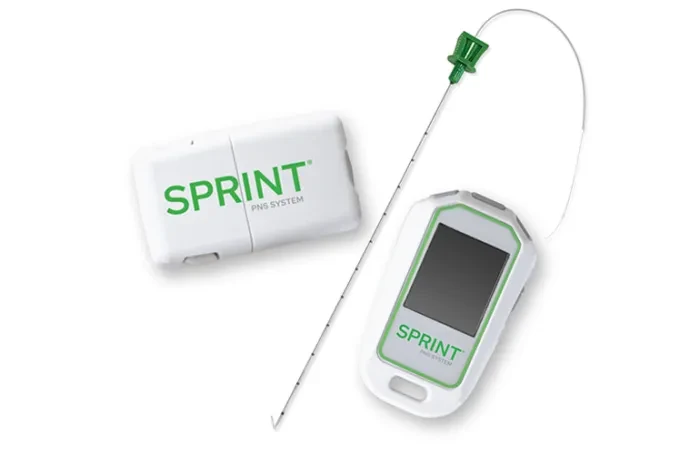
SPR Therapeutics' Sprint PNS System Targets This Gap. At Its Core Is A Percutaneously Implanted Ultra-Thin Electrode (MicroLead, With A Diameter Only 25% Of Traditional Electrodes), Connected To An External Pulse Generator.Directly targets and stimulates peripheral nerves near the pain source, without spinal cord manipulation, and with surgical trauma much lower than SCS treatment.
According to the company, in terms of efficacy, it exceeds6,100 casesRetrospective data shows that more than71%Patients achieved clinically significant pain relief; an independent four-year follow-up study showed that the efficacy for some patients could last long-term. The hypothesis of "central plasticity remodeling" mechanism achieving long-term relief through 60-day treatment is still under discussion in academia regarding the sufficiency of the evidence chain.
In terms of indications, the FDA has approved its use for various scenarios such as chronic refractory pain, postoperative pain, and post-traumatic pain, covering areas like the back, shoulder and knee joints, and the head and neck (including the occipital nerve). The broad range of indications allows it to reach a much larger patient pool compared to single-condition devices.
In short, the acquisition value of Sprint PNS lies in its redefinition of "when to intervene" — shifting neuromodulation from the end of the treatment pathway to the middle stage of the treatment process.
# Why is Medtronic Buying Now? —— Track Landscape and Industry Window
To understand the timing of this deal, we need to look at three backgrounds:
First, direct competitors have already taken the lead.In October 2025, Boston Scientific acquired another representative company in the PNS field, Nalu Medical, for approximately $600 million (including previous shareholding, with a total consideration of about $600 million). Nalu's approach differs from that of SPR Therapeutics—it utilizes miniaturized, battery-free, permanently implantable pulse generators powered wirelessly by external wearable devices. Boston Scientific has been a strategic investor in Nalu since 2017. By 2025, Nalu’s revenue had exceeded $60 million, with a growth rate of over 25%.
Second, Medtronic's neuromodulation business is on the rise and in need of a new growth engine.Medtronic's Neuromodulation division achieved low double-digit organic growth in fiscal year 2025 (ending April 2025), primarily driven by the launch of the Inceptiv closed-loop spinal cord stimulator. However, SCS is a mature and highly competitive market (with Medtronic, Boston Scientific, and Abbott as the three major players), leaving limited room for incremental growth. PNS, on the other hand, offers a relatively early-stage, faster-growing incremental track.
Third, the strategic window brought by the management reshuffle.On the same day the acquisition news was released, Medtronic announced that Brett Wall, the long-time head of its neuroscience division, would step down, and Kweli Thompson would take over on June 1. Completing a strategic acquisition during the leadership transition not only demonstrates business continuity but also provides the new leader with a clear integration task and growth story.
From a comparable M&A perspective, within half a year, two giants respectively acquired two leading companies in the PNS sector at prices of 500-650 million US dollars (one following a temporary route and the other a permanent implant route). This itself sends a clear industry signal:PNS is upgrading from a niche therapy to a standard component in the field of neuromodulation.
# China Perspective: What Stage Is This Field At In China?
The Development Stage of Neuromodulation in China.China's neuromodulation market has progressed rapidly over the past decade, but it is concentrated in two areas: DBS (deep brain stimulation) and SCS (spinal cord stimulation). In the DBS field, PINS Medical (Beijing, Tsinghua background) and SceneRay Medical (Suzhou) have achieved domestic substitution, and both companies are advancing in their IPO processes.
PNS is almost a blank slate in China.The clinical application of percutaneous peripheral nerve electrical stimulation in China is currently dominated by academic research and traditional technologies such as pulsed radiofrequency. Commercially dedicated devices similar to Sprint PNS or Nalu have not yet obtained NMPA registration. Although the 2024 edition of the "Chinese Guidelines for the Diagnosis and Treatment of Neuropathic Pain" includes PNS as a minimally invasive interventional treatment option, the level of supporting evidence is relatively low. In clinical practice, SCS and pulsed radiofrequency remain the primary treatment modalities.
Suggestions for further research directions for different readers:
CorrectInstrument R&D Team: Focus on the MicroLead electrode design of SPR (helical structure, ultra-fine diameter, percutaneous removal safety) and the mechanism research of temporary neuromodulation, evaluating whether there is a "third route" for technical approaches—such as biodegradable electrodes or non-invasive transcutaneous stimulation solutions.
CorrectClinical and Regulatory Teams:Study the NMPA's classification of temporary implantable electrostimulation devices – whether they are registered as active implantable devices or as short-term active devices will directly impact the registration pathway and clinical trial design. Also, monitor whether China's pain management specialty is evolving towards a "stepwise treatment" approach.
CorrectStrategic Planning Team:The broader implication of this transaction lies in the rise of "temporary treatment" as a product philosophy — rather than pursuing permanent implants, it focuses on achieving long-term outcomes through short-term interventions. This logic has precedents in orthopedics (resorbable implants) and cardiovascular fields (drug-coated balloons vs. permanent stents), and has now been formally validated through M&A in the neuromodulation sector. It is worth considering whether similar "temporary treatment" opportunities exist in your field.
Key Enterprises and Institutions
▌Well-known Medical Technology Innovation Enterprises:Medtronic | Boston Scientific | Kaili Medical | Alcon | Minimally Invasive Robot | Rosbot | Kesmingde | Medprin Medical | Sinowei Sheng
▌Well-known Medical Technology Innovation Service Agency:Bajachu Aesthetic Medicine Concept Validation Center | Tonghe Litai