High-Definition Dialogue with the Human Brain Begins: Zhiran Medical Launches China's First Ultra-High-Channel Invasive BCI GCP Trial

BCIFlex
Invasive High-Throughput Ultra-Thin Flexible Brain-Computer Interface System Developer

Recently, the LEAP study, China's first prospective, multi-center clinical trial of an over 100-channel invasive brain-computer interface system, officially kicked off at Beijing Tiantan Hospital, Capital Medical University. As the creator of this groundbreaking technology,Beijing Bciflex Medical Technology Co., Ltd.It is precisely the portfolio company of Danlu Capital. At this moment, we are not only witnesses but also fellow travelers.

From Lab to Clinic, Opening the "Fast Track"
This is not an ordinary launch ceremony.

Zhang Long, Director of the Pharmaceutical and Device Department of Beijing Municipal Health Commission; Zhao Na, Deputy Director of the Device Registration Department of Beijing Municipal Drug Administration; Yue Xiaolin, Party Secretary of Beijing Tiantan Hospital; Wang Yongjun, Academician of the Chinese Academy of Sciences and President of Beijing Tiantan Hospital; and relevant officials from the Beijing Municipal Science and Technology Commission were all present. The convergence of government regulatory bodies, top clinical institutions, and cutting-edge scientific research represents a strong signal in itself:China's independently developed high-throughput invasive brain-computer interface technology has officially entered the fast lane for clinical transformation.
Beijing Tiantan Hospital, as the lead unit of the LEAP study this time, joins hands with BCIFlex, gathering 11 top medical institutions across China, with a prospective, multi-center clinical trial design, toSpinal Cord Injury Leads to QuadriplegiaThis is the most serious clinical challenge. It is called "breakthrough" because this system fundamentally resolves several core contradictions in the clinical application of invasive brain-computer interfaces.
What does "over a hundred channels" of high throughput mean?
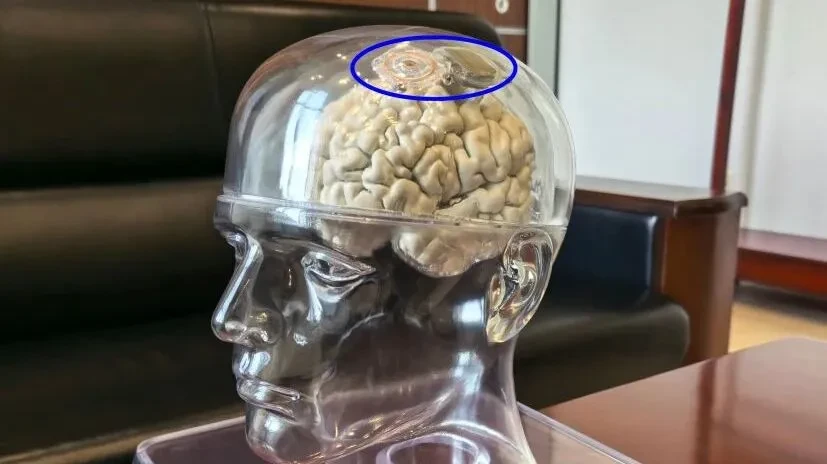
BCIFlex's system consists of two core modules: intracortical implantable flexible electrodes and a highly integrated fully implantable signal acquisition device. The flexible electrodes, made from ultra-thin biocompatible materials, not only minimize the immune response post-implantation but also precisely capture single-neuron action potentials with high spatiotemporal resolution.
Generally speaking, it achieves "high-definition and no-delay" interpretation of the brain's fine intentions, enabling an order-of-magnitude leap in the information transmission rate of human-computer interaction. The "fully implanted wireless design" truly brings technology back to humanistic care.The accompanying signal collector adopts a wireless fully-embedded design, with a built-in medical-grade rechargeable battery and supports wireless charging. This means that patients are no longer tethered by cables and can receive treatment and rehabilitation training in a more natural and comfortable environment. The cutting-edge technology ultimately comes down to"Allow patients to live with dignity"——This is precisely the most touching aspect of medical technology.
Redefining the Possibilities of Paralysis Rehabilitation

Professor Jia Wang, Party Committee Deputy Secretary of Beijing Tiantan Hospital and a neurosurgery expert, as the coordinating investigator of the LEAP study, highlighted the core mission of this research: Quadriplegia caused by spinal cord injury has extremely limited recovery effects on motor function with existing rehabilitation methods. This represents a significant unmet clinical need.
The launch of the LEAP study aims to validate the safety and efficacy of this "implantable wireless brain-computer interface system" for patients with quadriplegia through rigorous clinical evaluation. This is not only a technical verification but also an opening of a new window of hope for these lives trapped within their bodies.
Brain-computer interface (BCI) is widely recognized as the ultimate form of next-generation human-computer interaction, and invasive BCIs, due to their extremely high technical barriers, represent the peak of global competition. The BCIFlex team has independently developed everything from flexible electrode materials and chip design to system integration, advancing directly to the clinical validation stage with over a hundred channels, demonstrating China's strong independent innovation capabilities in cutting-edge technology fields.
All 11 participating centers have been assembled, and the LEAP study, conducted under high-standard clinical protocols, is proceeding steadily. We look forward to this cutting-edge technology reaching clinical application soon, bringing the joy of renewed mobility to millions of patients.
About BCIFlex

Note: Some content and images in the article are from the Internet. If there is any infringement, please inform us to delete.
Source of information and images: Official WeChat Account @Beijing Tiantan Hospital
Danlu Capital