Alzheimer's Diagnostics: Automated Platforms Outperform Manual Assays – Fujirebio Highlights Lumipulse G Superiority in PUMCH Cohort Study

Fujirebio
In Vitro Diagnostics Product Developer

Roche
Oncology Drug Research, Development, and Manufacturing

Reprint#IVD Tool Person
Source of the article:Fujirebio
Document Name:Comparison of diagnostic accuracy of Alzheimer’s disease cerebrospinal fluid core biomarkers using INNOTEST, Lumipulse G, and Elecsys assays: Insights from the PUMCH dementia cohort study
Comparison of the Diagnostic Accuracy of Lumipulse G, Elecsys, and Innotest for Alzheimer's Disease Markers in Cerebrospinal Fluid: Dementia Study at Peking Union Medical College Hospital
Author:Chenhui Mao, Yutong Zou, Tianyi Wang, et al.
Journal:J Alzheimers Dis. 2025 Nov;108(2):746-756

Cerebrospinal Fluid (CSF) Core Biomarkers Play a Key Role in the Biological Diagnosis of Alzheimer's Disease (AD). Although Various Commercial Test Kits Are Available for Quantifying These Biomarkers, Their Performance in Different Clinical Settings Remains Incompletely Assessed.

Purpose
Method
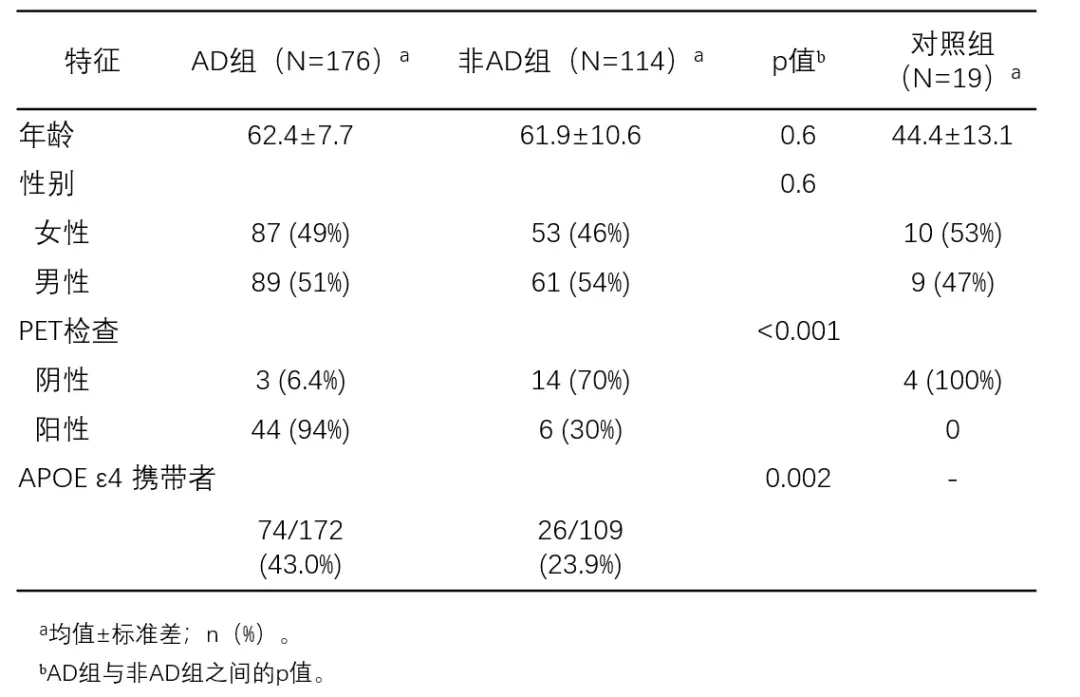
The study included a total of 309 participants from the dementia cohort at Peking Union Medical College Hospital, including 176 patients with Alzheimer's disease (AD), 114 patients with non-AD dementia, and 19 cognitively normal controls (CN). For biomarker quantification, two fully automated immunoassay platforms (Fujirebio Lumipulse G and Roche Elecsys) and one manual immunoassay method (Fujirebio INNOTEST, conducted in two independent laboratories, thus referred to as INNOTEST 1 and INNOTEST 2) were used.
These methods are used to detect CSF Aβ1–40, Aβ1–42, t-tau, and p-tau181, and calculate three biomarker ratios (Aβ1–42/Aβ1–40, t-tau/Aβ1–42, and p-tau181/Aβ1–42).
Table 1 Detection Platforms and Biomarkers
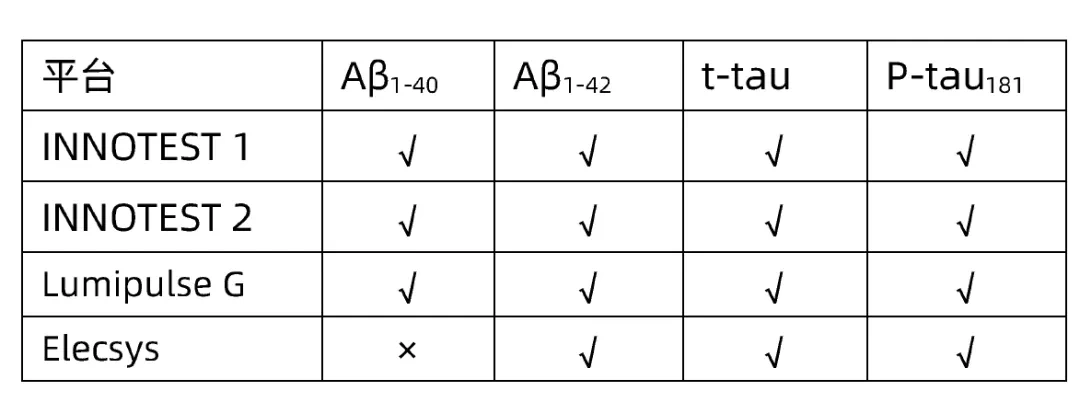
INNOTEST 1: INNOTEST test conducted in Lab 1;INNOTEST 2: Conducted in Lab 2
Table 2 Baseline Characteristics of the Study Population and Subgroups
Results
Our research provides method-specific and clinically optimized thresholds for different application scenarios, including amyloid PET-positive versus PET-negative dementia, differentiation between AD and CN, clinical diagnosis, and AD versus non-AD dementia. The diagnostic accuracy using biomarker ratios (Aβ1–42/Aβ1–40, t-tau/Aβ1–42, p-tau181/Aβ1–42) is higher than that of individual absolute values.Most of the high accuracy is achieved through fully automated detection methods (especially Fujirebio Lumipulse G).Rather than being achieved through manual testing methods.
Accuracy Calculation Method:

Accuracy of Differentiating PET+ vs. PET-:
o p-tau₁₈₁ and 3 ratios:Lumipulse G Best(Aβ₁₋₄₂/Aβ₁₋₄₀ accuracy 0.958, t-tau/Aβ₁₋₄₂ 0.944, p-tau₁₈₁/Aβ₁₋₄₂ 0.944)
o Aβ₁₋₄₂ and t-tau: INNOTEST optimal (0.942 and 0.783)
Accuracy of PET+ vs. CN Differentiation:
o Two ratios, Aβ₁₋₄₂/Aβ₁₋₄₀, t-tau/Aβ₁₋₄₂Lumipulse G Performs Best(0.986And 0.942)
o p-tau₁₈₁/Aβ₁₋₄₂ Elecsys Optimal (0.956)
Accuracy of Differentiating AD-Induced Dementia vs. Non-AD-Induced Dementia:
o t-tau, p-tau₁₈₁ and 3 ratios:Lumipulse G Best(t-tau 0.776,p-tau₁₈₁ 0.821,Aβ₁₋₄₂/Aβ₁₋₄₀ 0.881,t-tau/ Aβ₁₋₄₂ 0.866,p-tau₁₈₁/Aβ₁₋₄₂ 0.836)
o Aβ₁₋₄₂: Elecsys Optimal (0.909)
Summary
This study is the first to systematically compare the diagnostic performance of three mainstream CSF immunoassays in a Chinese AD cohort.Automated detection methods, especially Lumipulse G, perform better in most cases.,Biomarker ratios have more diagnostic value than absolute values.The study provides an important basis for establishing population-specific cutoff values in the Chinese population, and it is recommended that clinical laboratories participate in standardized quality control programs to ensure result reliability.
Source of the article:Fujirebio
Add WeChat for consultation