

Mingji Bio Inks $1.71B Global Licensing Deal with AbbVie for Preclinical TL1A Antibody FG-M701

AbbVie
Innovative Drug Developer
On June 13, 2024, international pharmaceutical giant AbbVie Inc. reached a cooperation agreement worth 12.356 billion yuan (1.71 billion US dollars) with Beijing Mingji Bio:AbbVie will obtain the exclusive global rights for the development, manufacturing, and commercialization of MabGenesis' preclinical-stage TL1A antibody drug pipeline FG-M701.。
Since the first half of 2023, significant progress has been made in the research and development targeting the TL1A pathway. Many multinational corporations (MNCs) have increased their investment in the TL1A target through acquisitions, collaborations, and licensing agreements, making it an important research focus in the fields of autoimmune diseases and inflammatory bowel disease (IBD).

2023 Global Market TL1A Development Pipeline Acquisition Status
In 2023, four major deals occurred in the global autoimmune disease field, three of which were related to the TL1A target, highlighting its importance in the autoimmune sector. Currently, there are relatively few TL1A pipeline projects globally; according to PharmaDJ data, there are only 13 TL1A development programs. This indicates that the target has significant potential in the future market and is expected to become a new "breakthrough point" in the autoimmune and inflammatory bowel disease markets.
TL1A (TNFSF15)And its functional receptorDR3It is a member of the TNF/TNFR superfamily and is expressed in various immune cells, including antigen-presenting cells (APC, such as dendritic cells and macrophages), lymphocytes, plasma cells, and fibroblasts. As a type II transmembrane protein, TL1A exists in two forms: membrane-bound (mTL1A) or soluble (sTL1A). Among them,mTL1A can form a trimeric stable structure through the TNF homology domain (THD) interaction., while sTL1A can be generated through the cleavage by TNF-α converting enzyme (TACE) or alternative splicing.
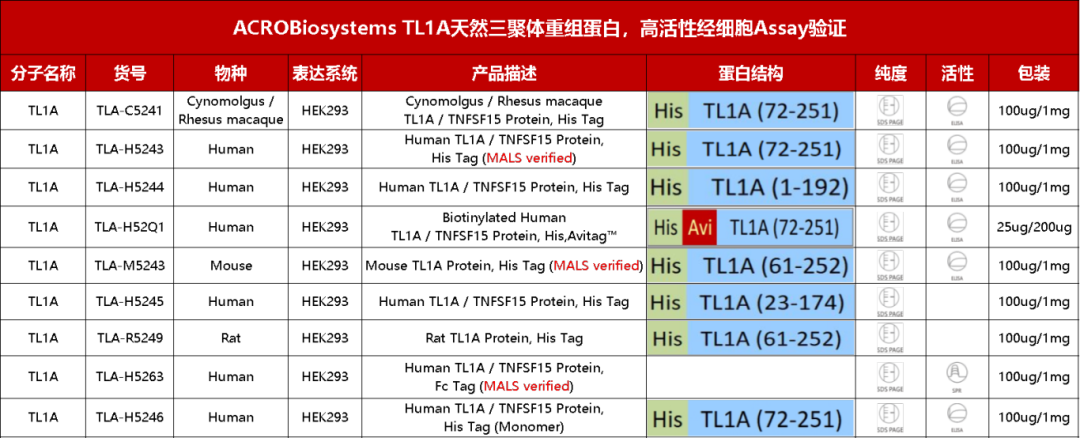
Click the list to view TL1A Natural Trimer Recombinant Protein Products

Click the list to view TL1A report strains, overexpression strains products

Click the list to learn about the TL1A Inhibitor Screening Kit (Pre-launch) information.
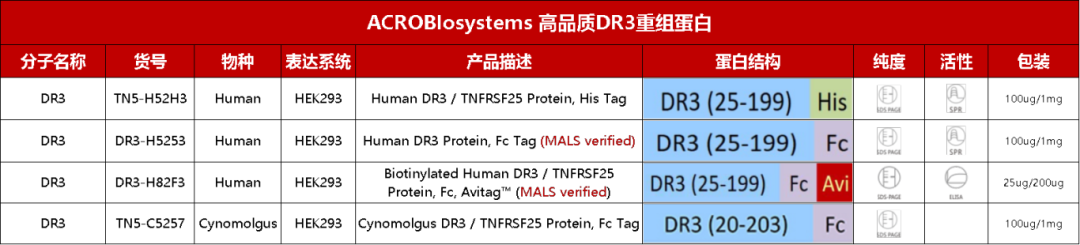
Click the list to view DR3 recombinant protein products
TL1A/DR3The pathway can produce a variety of key pro-inflammatory cytokines.
As shown in the figure below, after TL1A binds to lymphocytes expressing DR3, it induces the production of stimulatory signals. These stimulatory signals can amplify the responses of all major effector T cells, including Th1, Th2, Th9, and Th17. Lymphocytes at mucosal sites are particularly sensitive to TL1A stimulation, and specific subsets marked by CCR9, CD161, and IL-18Rα are involved in the pathogenesis of IBD-like chronic colitis.
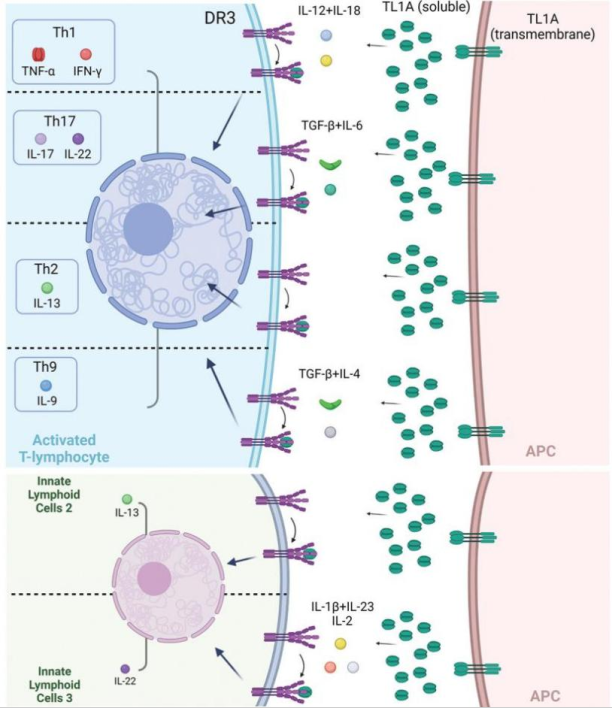
The interaction between TL1A and DR3 influences intestinal mucosal immunity under steady-state conditions and various inflammatory states.1
The downstream effects of TL1A/DR3 signaling include the production of several key pro-inflammatory cytokines, such as IFN-γ, TNF-α, IL-6, and IL-17, as well as IL-2, IL-4, and IL-13, which are upregulated in some IBD patient populations and may play a pathogenic role. DR3 is also highly expressed in innate lymphoid cells (ILCs), particularly ILC2 and ILC3, and stimulation by TL1A can lead to abnormal cytokine secretion in these cells. Therefore, overexpression of TL1A/DR3 can cause intestinal mucosal inflammation, while inhibition of its signaling can alleviate colitis symptoms, demonstrating significant anti-inflammatory effects.
Autoimmune diseases are often referred to as "the cancer that doesn’t kill" due to their persistent and difficult-to-treat nature. With the limited number of indications covered by existing drugs and a large patient population, autoimmune diseases have become a key focus for pharmaceutical companies in their research and development efforts. Additionally, the widespread impact of the autoimmune system on the body suggests that various diseases may share similar pathogenic mechanisms, including targeted...PD-L1, TNF-alpha, and TL1A inWithinBoth new and old autoimmune drugs have the potential for multi-indication development, and from a commercialization perspective, they are more likely to become blockbuster drugs with multiple indications.。
TL1A is a key mediator of inflammation, capable of mediating both inflammation and fibrosis. In T cell-mediated inflammatory autoimmune diseases, such as inflammatory bowel disease (IBD), rheumatoid arthritis (RA), and psoriasis, sTL1A can be detected in the serum and bodily fluids of patients. In terms of drug development,TL1A, as a therapeutic target with significant potential for IBD and autoimmune diseases, has attracted numerous pharmaceutical companies to invest in research and development, leading to increasingly fierce competition. With broad prospects for the development of multiple indications, TL1A-targeted drugs are expected to become highly impactful autoimmune blockbuster products.
(Recommended Reading:[Autoimmune Diseases] "Green Cancer" Inflammatory Bowel Disease Treatment and Drug Development)

Development Pipeline of TL1A-Targeted Drugs
To meet the development needs of targeted TL1A/DR3 antibody drugs and TL1A agonists, ACROBiosystems has developed, including:
TL1ARecombinant Protein (Native Trimer Verified by Cell Assay)AndDR3 Recombinant Protein: All are expressed by human-derived cells, validated by SEC-MALS, ELISA, SPR, and BLI, featuring high purity, high activity, and high batch-to-batch consistency, suitable for applications such as immunization, antibody screening, and functional validation of candidate drugs.
TL1AReporter Gene Cell Line: Through receptor expression and functional activity validation, it can be applied to the study of signaling function of targeted agonist drugs, drug activity measurement and screening at the cellular level, and drug CMC quality control release, among other applications.
TL1AOverexpression Cell Line: Antigens are stably expressed on the surface of host cell membranes over the long term, meeting the needs for gene function research, immune/killing/proliferation validation, antibody drug activity screening (cell-level binding and blocking), and evaluation of CAR molecule cytotoxic activity.
TL1AInhibitor Screening Kit (Pre-launch):A competitive ELISA method was adopted to establish an inhibitor screening platform, utilizing unique biotinylated proteins to develop high-quality inhibitor screening kits, which can be used for preliminary screening and QC release.
ACROBiosystems conducts batch-by-batch quality inspection for all products, verifying performance such as purity and binding activity, and documenting the experimental operations and parameters of the R&D personnel accordingly.Protocol provided free of charge, helping you save on the R&D cycle.
TL1A High Biological Activity: Validated by ELISA
Bioactivity: ELISA
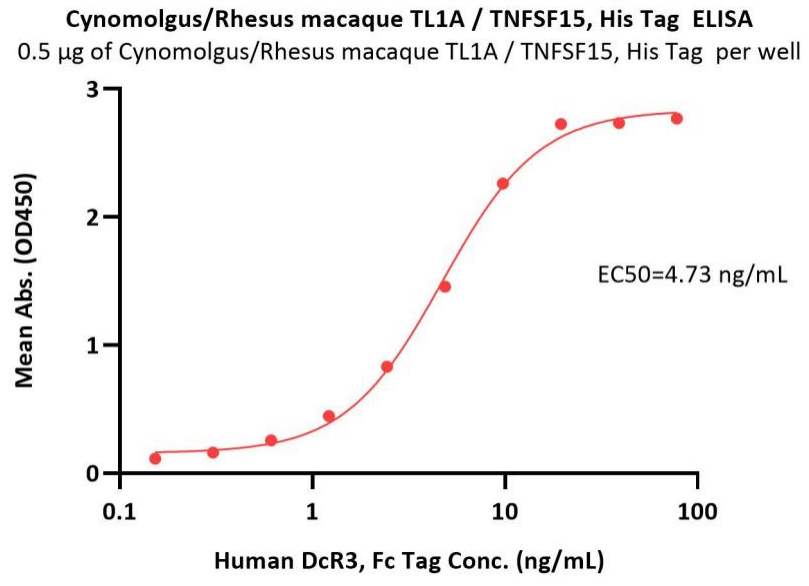
Immobilized Cynomolgus/Rhesus macaque TL1A / TNFSF15, His Tag (Cat. No. TLA-C5241) at 5 μg/mL (100 μL/well) can bind Human DcR3, Fc Tag (Cat. No. TNB-H5255) with a linear range of 0.2-10 ng/mL (QC tested)

TL1A High Purity: Validated by SDS-PAGE, SEC-MALS
Purity: Greater than 90% as verified by SDS-PAGE, and greater than 90% as verified by SEC-MALS
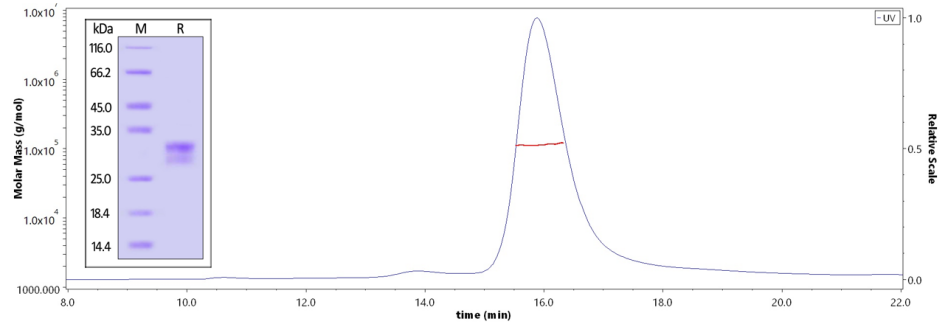
The purity of Human DLL3, His Tag (Cat. No. TLA-M5243) is greater than 90% verified by SDS-PAGE and more than 90% verified by SEC-MALS
TL1AProtein Activation Activity Validation - FOLD
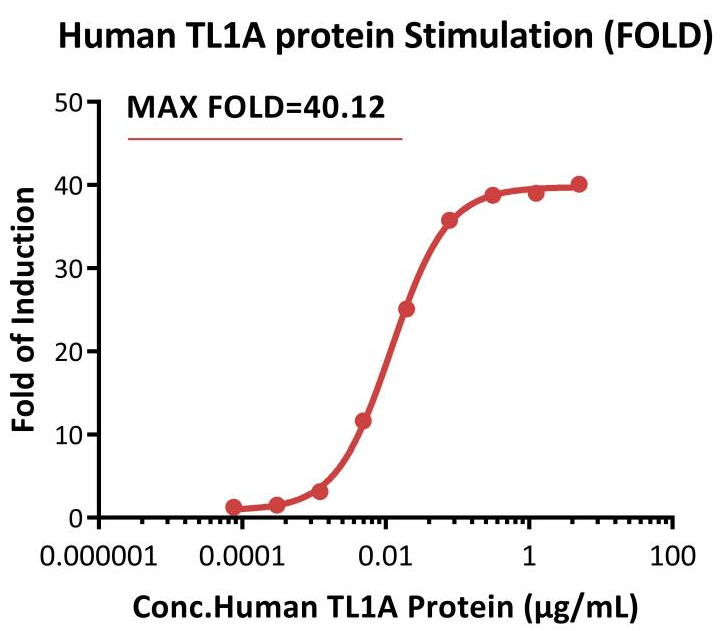
Response to human TL1A protein (FOLD).
This reporter cell (Cat. No. SCJUR-STF178)was incubated with serial dilutions of human TL1A protein (Cat. No. TLA-H5243). The max induction fold was approximately 40.12.

DR3 High Bioactivity: Validated by SPR
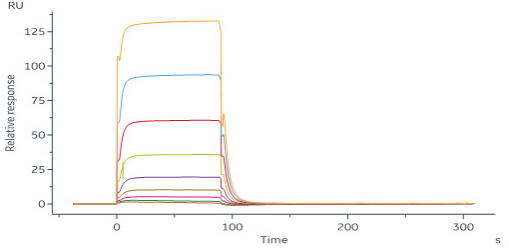
Biotinylated Human TL1A Protein, His,Avitag (Cat. No. TLA-H52Q1) immobilized on SA Chip can bind Human DR3 Protein, His Tag (Cat. No. TN5-H52H3) with an affinity constant of 2.59 μM as determined in a SPR assay (Biacore 8K) (Routinely tested)

>>Click to learn more about inflammatory bowel disease drug development product information

>> Click to learn more about rheumatoid arthritis drug development product information

>> Click to learn more about Type I diabetes drug development product information
>> Click to learn more about autoimmune diseases and related product information



Scan to download:
Cell and Gene Therapy Drug Development and Evaluation Solutions

Scan to download:

Scan to download:


ACROBiosystems
inquiry@acrobiosystems.com
15117918562
(Note: Name + Company)