FDA Approves Six Novel Biologics in H1 2024: Oncology, Cardiovascular, Hematology, and Aesthetic Innovations

Roche
Oncology Drug Research, Development, and Manufacturing

▲August 15-16NDC2024Biopharmaceutical Innovators Summit
Scan to register
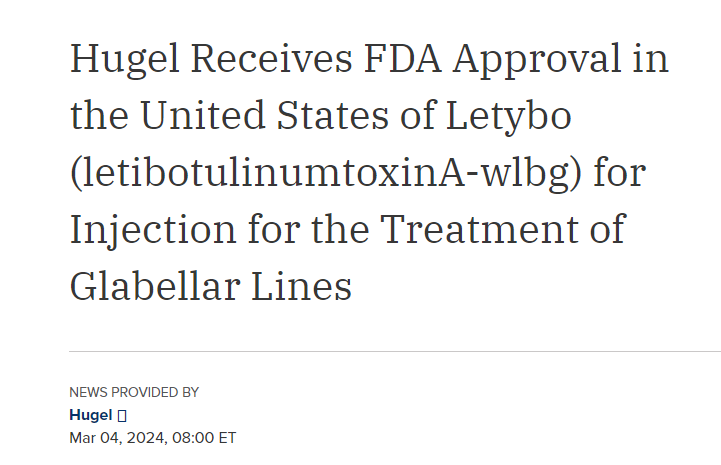
According to the FDA official website, as of todayThe Center for Drug Evaluation and Research (CDER) under the U.S. FDACDER) approved a total of 21 new drugs,Including 6 new biologic drugs。Three cancer treatment products among these biologic new drugs have been launched, namely Imdelltra,Anktiva and Tevimbra; A product in the field of cardiovascular diseaseWinrevair, a product in the field of hematological disorders Piasky, and a medical aesthetics product Letybo have been launched.The editor summarizes as follows:

On June 20, the U.S. FDA website showed that Roche's newly developed C5 cyclic antibody Piasky (crovalimab) was approved for marketing, used toTreatment for paroxysmal nocturnal hemoglobinuria in patients weighing at least 40 kgProteinuria (PNH) in adults and pediatric patients aged 13 years and above.
Covarimab is a recyclable humanized monoclonal antibody targeting the complement protein C5, designed to block the complement system in the human immune system. Engineered through continuous monoclonal antibody recycling technology, its binding with C5 induces the degradation of the C5 protein. Subsequently, this antibody can be released back into the extracellular space by binding to the FcRn receptor, allowing it to bind with other C5 proteins. As a result, Covarimab can achieve rapid and sustained complement pathway inhibition at a lower dosage.
This approval is based on data from the Phase 3 COMMODORE 2 study (NCT04434092), which compared the efficacy of crovalimab with eculizumab in PNH patients who had not previously received complement inhibitor treatment.The study results show that Piasky, administered subcutaneously every four weeks, can control the condition and is well-tolerated. Compared with the existing standard C5 inhibitor eculizumab, which is administered intravenously every two weeks, PiaSky's efficacy is not inferior, and its safety profile is comparable. The incidence of adverse reactions in patients treated with PiaSky was similar to that in patients treated with eculizumab (78% vs. 80%, respectively).
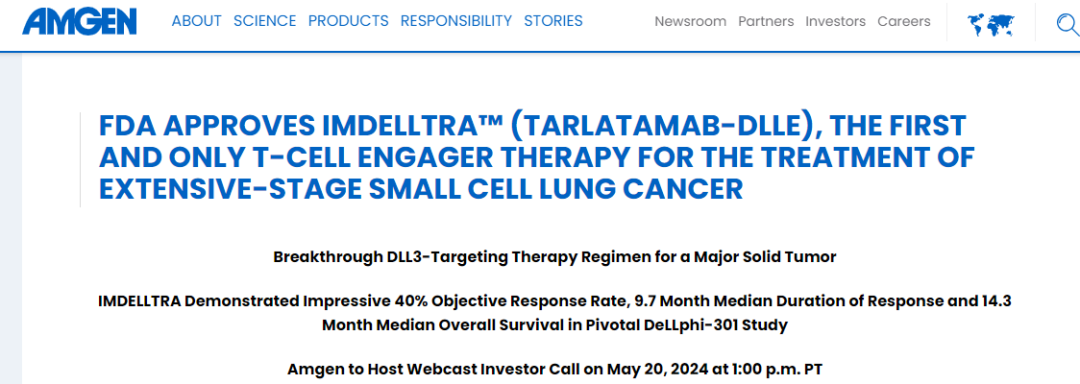
On May 16, Amgen announced that the FDA had granted accelerated approval to IMDELLTRA™ (tarlatamab-dlle) for the treatment of adult patients with extensive-stage small cell lung cancer (ES-SCLC) whose disease has progressed during or after platinum-based chemotherapy.Full FDA approval will depend on the clinical benefit demonstrated in the confirmatory Phase III study.ImdelltraYesThe first and only bispecific T-cell engager (BiTE) antibody targeting DLL3.
Tarlatamab is a bispecific antibody (bsAbs) that targets both CD3 on T cells and DLL3 on SCLC cells, bringing the patient's own T cells into close proximity with SCLC cells. This results in the formation of an immune synapse and the lysis of cancer cells.
FDA Accelerated Approval of IMDELLTRA Based on Phase 2 DeLLphi-301 Clinical Trial Results Evaluating IMDELLTRA in SCLC Patients. Study results showed that IMDELLTRA at a dose of 10 mg Q2W (N=99) demonstrated a robust objective response rate (ORR) of 40% (95% Confidence Interval [CI]: 31, 51), with a median DoR of 9.7 months (CI: 2.7, 20.7+). The median overall survival (mOS) was 14.3 months, with final complete survival data yet to mature.
On April 22, 2024, N-803, an IL-15 superagonist developed by ImmunityBio, was approved by the FDA for marketing. It will be used in combination with BCG to treat non-muscle invasive bladder cancer (NMIBC) that is unresponsive to BCG and associated with carcinoma in situ, under the trade name Anktiva.
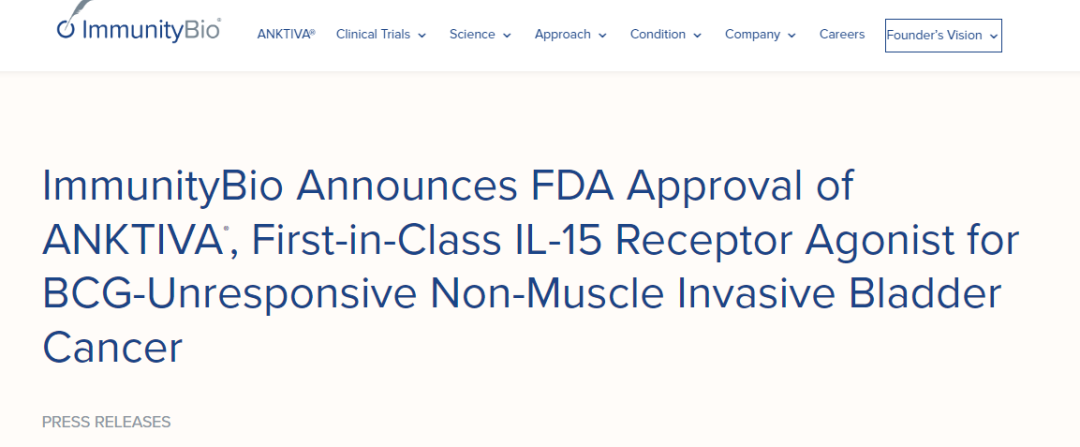
ANKTIVA is the first IL-15 agonist immunotherapy for the treatment of NMIBC.Safety and Efficacy Results Based on Complete Response (CR) and Duration of Complete Response (DOR), receiving Breakthrough Therapy Designation and approval from the FDA. In this single-arm, multi-center trial, 77 evaluable patients received ANKTIVA and BCG maintenance therapy for up to 37 months.Tumor status will be assessed via cystoscopy and urine cytology and will continue for up to five years after each patient begins participation in the trial.
The CR rate for 77 evaluable patients was 62%, with an upper confidence interval of 73%. As of the cutoff date in November 2023, the DOR exceeded 47 months and is still ongoing. The duration of complete response for ANKTIVA and BCG surpassed 24 months, exceeding the benchmark for meaningful clinical outcomes proposed by the IBCG expert panel.
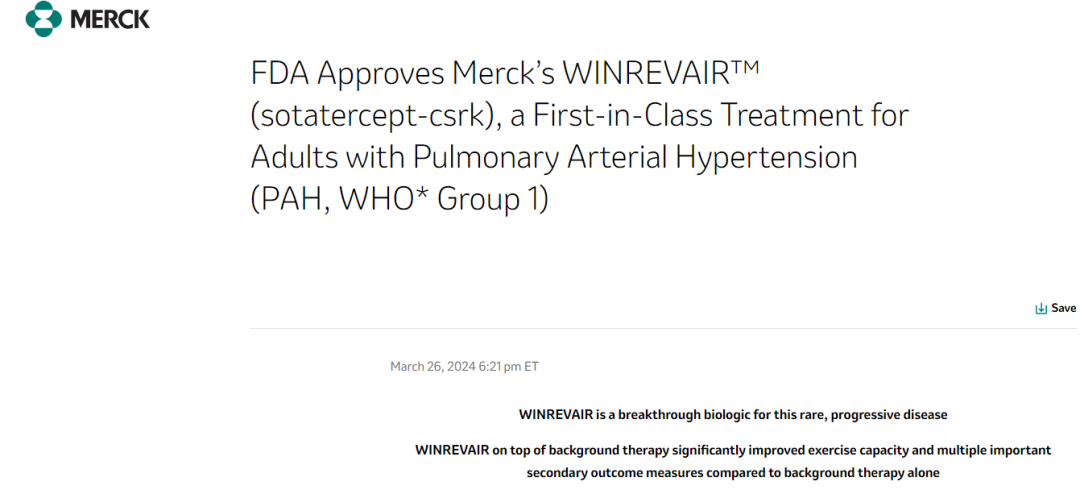
On March 26, Merck announced that the U.S. FDA had approved itsType IIA Activin Receptor (ActRIIA) Fusion ProteinWinrevair(sotatercept)For the treatment of adult patients with pulmonary arterial hypertension (PAH) to improve exercise capacity, enhance WHO functional class (FC), and reduce the risk of clinical worsening events.
WinrevairPreviously received Breakthrough Therapy Designation from the U.S. Food and Drug Administration.WinrevairIs the first activin signal inhibitor approved by the US FDA for the treatment of PAH, represents a new type of therapy that modulates the underlying vascular cell proliferation in PAH by improving the balance between pro-proliferative and anti-proliferative signaling.
This approval is based on the results of the STELLAR pivotal Phase 3 clinical trial, which was randomized, double-blind, and placebo-controlled. After 24 weeks of treatment, sotatercept, in combination with stable background therapy, demonstrated a statistically significant and clinically meaningful improvement in patients' 6-minute walking distance (6MWD) compared to placebo.
In PAH patients, sotatercept increased the 6MWD by 40.8 meters (95% CI, 27.5-54.1; p<0.001) from baseline after 24 weeks of treatment. Additionally, sotatercept provided statistically significant and clinically meaningful improvements in 8 of the 9 secondary endpoints. Compared with placebo, it reduced the risk of clinical worsening or death of the disease by 84% at a median follow-up time of 32.7 weeks. In terms of safety, the overall safety profile of sotatercept was similar to that observed in Phase 2 clinical trials.
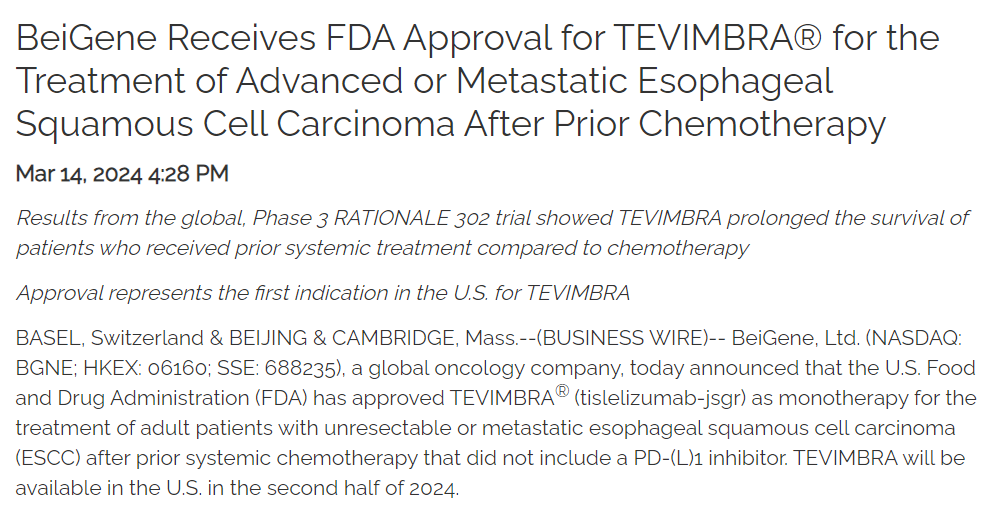
On March 14, BeiGene announced that its PD-1 antibody tislelizumab (trade name: Tevimbra) received FDA approval for marketing to treat patients with advanced or metastatic esophageal squamous cell carcinoma (ESCC) who have progressed after prior chemotherapy.This approval marks the first time tislelizumab has been approved in the United States.
Notably, the FDA is also reviewing tislelizumab as a first-line treatment for regulatory applications involving patients with unresectable, recurrent, locally advanced or metastatic ESCC, as well as those with locally advanced unresectable or metastatic gastric or gastroesophageal junction (G/GEJ) adenocarcinoma.The PDUFA dates are July and December 2024, respectively.。
As of now, the FDA Center for Biologics Evaluation and Research (CBER) has approved a total of 10 new products, including 2 gene therapies, 1 cell therapy, 1 RSV vaccine, andA variety of disease diagnostic technologies and blood products.

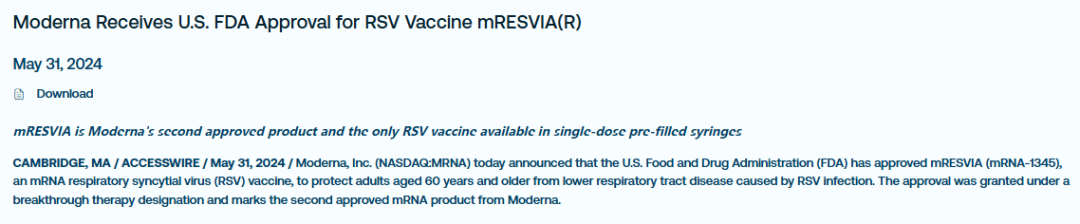
This approval is based on the positive data from the Phase 3 clinical trial ConquerRSV, a global study conducted among approximately 37,000 adults aged 60 years or older across 22 countries. The primary analysis with a median follow-up of 3.7 months found that the vaccine was 83.7% (95.88% CI 66.0%, 92.2%) effective in preventing RSV lower respiratory tract disease (LRTD). These results were published in the New England Journal of Medicine. A follow-up analysis of the primary endpoint was conducted during the FDA review, including cases confirmed after the cutoff date for the primary analysis but occurring before it. The results were consistent with the primary analysis [VE 78.7% (CI 62.9%, 87.8%)] and are included in the U.S. prescribing information. Another long-term analysis indicated continued protection against RSV LRTD over a median follow-up period of 8.6 months. No serious safety concerns were identified in the Phase 3 trial. The most common adverse reactions were injection site pain, fatigue, headache, myalgia, and arthralgia.
On April 26, 2024, Pfizer announced that the U.S. FDA had approved its AAV-based gene therapy BEQVEZ (fidanacogene elaparvovec-DZKT) for marketing, intended to treat adult patients (18 years and older) with moderate to severe hemophilia B who test negative for neutralizing antibodies against AAV serotype Rh74. It is reported that,BEQVEZ is priced at $3.5 million, compared with the previously approved and marketed byUniQureThe price of Hemgenix, a gene therapy for hemophilia B developed by the company, remains consistent.

This approval is mainly based on the positive data from the Phase III BENEGENE-2 study (n=45).The results showed that, within 12 months of receiving a single dose of BEQVEZ, the annualized bleeding rate (ABR) in patients was significantly reduced compared to the standard prophylactic treatment group (receiving FIX drugs as preventive replacement therapy) (1.3 vs. 4.43, P<0.0001), meeting both non-inferiority and superiority criteria.
BEQVEZ is currently under review by the European Medicines Agency (EMA) and has recently received approval from Canadian regulatory authorities. Apart from BEQVEZ,Pfizer currently has two Phase III projects studying gene therapy., Both projects target populations with high unmet needs:Hemophilia A and Duchenne muscular dystrophy. In addition, a phase 3 trial is investigating marstacimab, a novel anti-tissue factor pathway inhibitor, for the treatment of hemophilia A or hemophilia B without factor VIII (FVIII) or factor IX (FIX) inhibitors. Currently, the FDA and EMA are reviewing the biologics license application and the European marketing authorization application for marstacimab, respectively.
Copyright statement: This article is reproduced from the Biopharmaceutical Era,Media or individuals who do not wish to be reprinted can contact us, and we will delete it immediately.
August 16th Suzhou International Expo Center Hall B, Booth B102
Frontiers in Nucleic Acid Drug Development Forum
Agenda
Scan the QR code to register for the conference

[About PharmaCircle]
PharmCube PRHub aims to assist biopharmaceutical technology enterprises in brand promotion and business development services. It provides systematic solutions based on customers' real needs, making brand information easily understandable to the public through "translation-simplification-contextualization." At the same time, with access to over 1 million vertical users across various channels, it achieves cooperation goals, helping partners complete a closed-loop marketing service from branding to business development. We have successfully organized dozens of offline biopharmaceutical R&D conferences with 1,000 attendees, covering areas such as small-molecule new drugs, large-molecule new drugs, improved new drugs, and cross-border BD transactions, serving more than a hundred listed/unicorn/biotech/pharmaceutical companies.