Merck Launches Third Phase III Trial of Lurbinectedin Combined with Pembrolizumab for Maintenance Therapy in Metastatic Squamous NSCLC

MSD
Pharmaceutical R&D and Manufacturer

On July 15, according to the CDE official website, MSD initiated Lutetium (177Lu) lutetium-tetrazole antibody (MK-2870) in combination with pembrolizumab for first-line treatment of metastatic squamous non-small cell lung cancer (NSCLC) Maintenance Therapy in Phase III Study (Registration Number:CTR20242541)。
 Screenshot from: CDE official website
Reportedly, this is the third clinical trial initiated this year for the combination of Lumakras and Pembrolizumab, with the first two trials commencing in March and April respectively. These three studies cover different treatment stages for NSCLC patients, including first-line treatment, neoadjuvant therapy, and maintenance therapy, providing a comprehensive evaluation of the efficacy and safety of this combination therapy. The results of these trials will also help optimize treatment strategies, extend patients' PFS and OS, thereby improving the long-term prognosis of NSCLC patients.
 Screenshot source: Insight Database official website
Lukang Satuzumab, jointly developed by MSD and Kelun Biotech, is a TROP2 ADC. It consists of a humanized anti-TROP2 monoclonal antibody with high affinity and specificity, linked via an optimized CL2A linker using next-generation conjugation technology at the antibody end (Methanesulfonylpyrimidine Linker) irreversibly conjugated, and at the toxin end with the self-developed small molecule toxin T030 (Topoisomerase Ⅰ Inhibitor). This design aims to achieve precise killing of TROP2-expressing tumor cells by targeted delivery of highly potent toxins.
The synergistic mechanism between Lukuangsatumab and PD-1/PD-L1 inhibitors suggests that, for NSCLC, combination therapy provides stronger antitumor activity compared to monotherapy. This combination treatment strategy enhances tumor cell killing efficiency through multi-targeting, improves overall therapeutic efficacy, and may delay or prevent the development of resistance.
At the 2024 ASCO Annual Meeting, the OptiTROP-Lung01 study of lurkamsabtagliptin combined with PD-1 antibody tagolimumab further confirmed the significant efficacy of this synergistic effect. The study results showed that this combination treatment strategy has obvious advantages in improving treatment outcomes. In addition, no new safety signals were observed during the study, further supporting the clinical feasibility and safety of this combination therapy.
The "highlight moment" of Lutikizumab in this annual meeting was not limited to the field of lung cancer. The announcement of the OptiTROP-Breast01 study results for its breast cancer indication has further elevated the application of ADC drugs in breast cancer treatment to new heights. The study data demonstrated the efficacy of Lutikizumab in breast cancer treatment, further solidifying its significant position in the field of oncology.
Currently, Lunsumio (Lutetium Lu 177 somatostatin analog) is undergoing Phase II and Phase III clinical trials for various solid tumors, including endometrial cancer, cervical cancer, and nasopharyngeal cancer. These studies are progressing rapidly, and preliminary results have shown its potential efficacy across multiple tumor types. Looking ahead, as clinical research on Lunsumio in a broad range of solid tumors continues to advance, it is hoped that it will bring new treatment hope and improved survival benefits to more cancer patients.
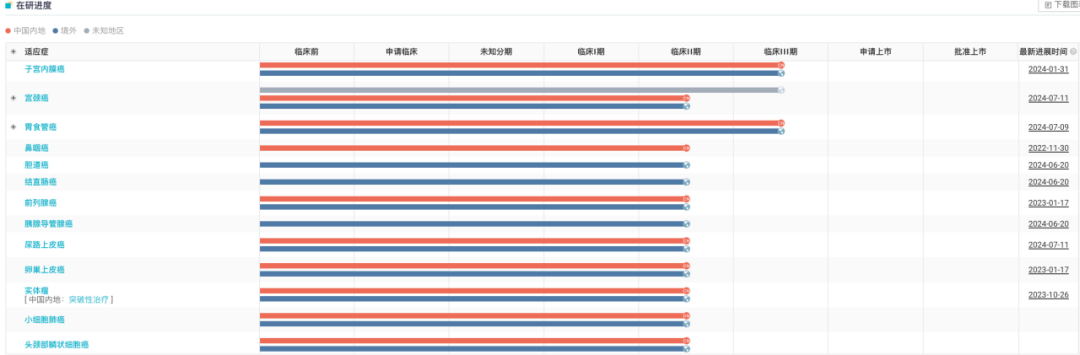 Screenshot source: Insight Database official website