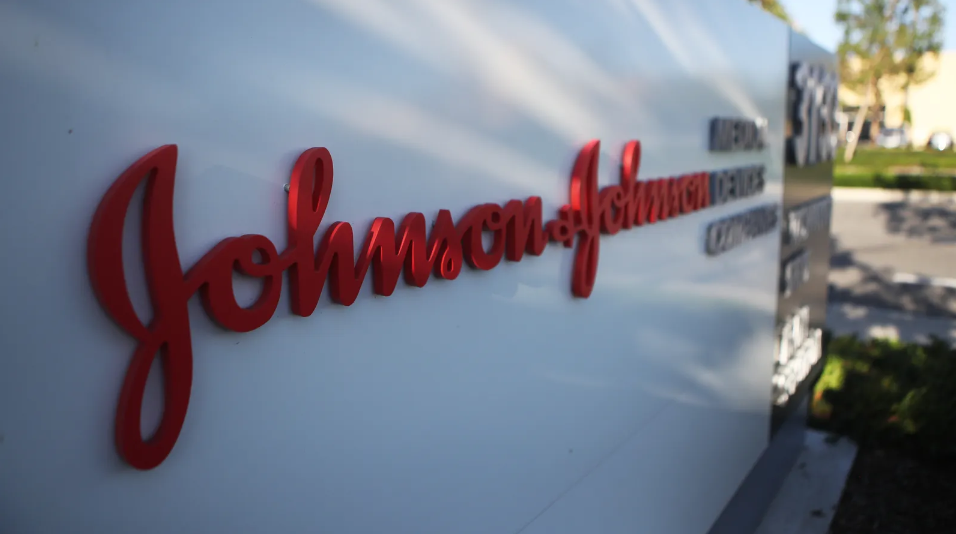
Johnson & Johnson CFO Joe Wolk told investors on a Wednesday call that the company's medical device business fell short of its 5%-7% growth expectations in the second quarter.
On July 17, Johnson & Johnson announced its second-quarter financial report, with quarterly revenue of $22.447 billion, a year-on-year increase of 4.3%. Among this, the medical device business Q2 revenue was $7.957 billion, a year-on-year increase of 2.2%.
Medical Device Segment Revenue: $79.57 Billion, Up 2.2% Year-over-Year
Chief Financial Officer Joe Wolk stated,Johnson & Johnson Medical Technology Department's Revenue in the Second Quarter was $7.96 Billion, Below Analysts' Expectations for the Department,Compared with the second quarter of last year, the reported increase was 2.2%. The medical technology group failed to achieve the target of 5%-7% annual growth rate set in the company's sales forecast for 2022 to 2027, which represents the upper limit of its market growth range and was also the target set by Johnson & Johnson in December.
ItsCardiovascular BusinessSales reached $1.87 billion, increasing by 15.6% year-over-year. Abiomed Group's sales amounted to $379 million, marking a 14.5% year-over-year increase. From an operational perspective, considering international currency exchange rates, the growth rate rose to 4.4% — the company stated that 0.4% of this figure can be attributed to its recent $13.1 billion acquisition of Shockwave and its devices for clearing arterial blockages.
At the same time,Orthopedics DepartmentSales reached $2.31 billion, growing by 3.3%; partly driven by revenue from knee replacement implants associated with its Velys robotic assistant.
Surgical OperationRevenue fell 1.2% to $2.49 billion, partly due to China's volume-based procurement and the ongoing anti-corruption campaign in the country, as well as the shrinking bariatric surgery market following the rise of GLP-1 drugs.
Vision Care BusinessIn terms of sales, revenue reached $1.29 billion. The report shows a 1.7% decrease in sales, but operating profit increased by 0.8%. This was due to the benefits from the recently launched Acuvue OASYS MAX daily disposable contact lenses being offset by the sale of some eye drops to Bausch + Lomb last year. Additionally, ophthalmic surgery sales faced the same pressures as Johnson & Johnson's broader surgical product portfolio. Meanwhile, the company stated that distributors are reducing overall inventory purchases of contact lenses.
Volker said, "We originally expected that sales in 2024 would reach the upper limit of this range... Now we expect the sales growth rate in 2024 to be close to 6%." For the business falling short of expectations, as data feedback shows, Volker attributed it to the impact of the Chinese market and the direction of the vision business.
Falling Short of Expectations: Is Vision Care and the China Market to Blame?
Johnson & Johnson Executives Tell Investors Medical Device Unit Missed Internal Sales Growth Expectations in Q2 Due to Competitive Pressures Weighing on Certain Segments and Ongoing Challenges in the China MarketThroughout the conference call, Johnson & Johnson emphasized that it has been addressing challenges from China’s anti-corruption campaign and Volume-Based Procurement (VBP), which Schmeid described as "government-driven cost containment measures." As a result, economic pressures from China have persisted. Schmeid reiterated Johnson & Johnson’s commitment to the market, viewing these two challenges as short-term pressures but believing they will ultimately benefit the company.Stifel analysts noted in a report to investors that due to the competitive challenges and loss of market share faced by Johnson & Johnson, the company's performance does not provide a clear indication for forecasting the future performance of other medical technology companies."However, we believe that any company with operations in China may face increasing scrutiny and concerns today," the analysts wrote. "As we enter the typically weaker/seasonally slower third quarter, these (Johnson & Johnson) performance uncertainties could heighten investor anxiety."JPMorgan analysts said that the challenges brought by the centralized procurement are not unique to Johnson & Johnson, which is one of the companies with the largest exposure to the Chinese market in the industry. "We do not expect to see an impact from China's centralized procurement on other companies."They added that although some people may think this result is negative for the entire medical technology industry, it is too early to infer that other companies will experience the same situation. They also believe that companies such as Boston Scientific, Stryker, Zimmer, and Cooper may benefit from this.Two Major Cardiovascular Acquisitions Expected to Become New Growth Points in the Future
Johnson & Johnson's cardiovascular division has been a major highlight in the performance of medical technology. Since the end of 2022, the company has built up this division through several acquisitions, including the $16.6 billion acquisition of Abiomed and the $13.1 billion acquisition of Shockwave Medical.These deals are starting to show signs of strength in the cardiac division.Abiomed's sales this quarter increased by 14.5% year-over-year, reaching $379 million, the highest growth rate in the sector. Meanwhile, despite Johnson & Johnson completing the acquisition at the end of May, Shockwave’s sales have already increased by $77 million.Johnson & Johnson MedTech Global Chairman Tim Schmid highly praised the addition of Shockwave as a driving force behind the company's strong growth in the second half of the year, stating that this acquisition will ultimately become "the 13th business with annual sales exceeding $1 billion."More broadly, Johnson & Johnson Medical Tech's cardiovascular sales — including its electrophysiology portfolio and the previous significant acquisition, heart pump manufacturer Abiomed, which both achieved double-digit growth — saw an overall operational growth of 18% for the division, with revenue reaching $1.87 billion. This includes gains from the commercial launch of the Varipulse pulsed field ablation system in the EU and Japan this year.Schmid said: "Our business has two areas that performed below expectations: the first is vision, and the second is our performance in China, which is currently a very volatile market."He said, "In terms of outlook, we initially announced some challenges in the dynamics of U.S. distributor inventory and some macroeconomic challenges in Japan in the first quarter.""What gives me confidence in the improvement of this business is that we indeed saw continuous improvement in the second quarter. Some inventory dynamics extended into April, but on a month-over-month basis, we witnessed a strong rebound in the business. In fact, by the end of this quarter, it had returned to historical levels."Johnson & Johnson Raises Full-Year Total Operational Sales Forecast to $89.4 Billion from Approximately $88.9 Billion, but Lowers Earnings Per Share Forecast to $10.05 from About $10.68.▲Source: Medical Device Innovation Network▲Reproduction without permission is prohibited.And can be reprinted after 24 hours.!Disclaimer: This article is intended solely for the purpose of information transmission and is for reference only. It does not constitute any advice on investment or treatment; please exercise caution. If it involves issues related to the content, copyright, or other aspects of the work, to protect the rights and interests of both parties, please contact us and we will handle it immediately. If this article is reprinted by other platforms, they must take responsibility for the content themselves. The Medical Device Innovation Network is not responsible for any secondary dissemination caused by reprints.