

Hansoh Pharma's Innovative Drug Furmar® Publishes First Clinical Evidence for Diabetic Kidney Disease Treatment
Hansoh Pharma
Pharmaceutical Research, Production, and Sales
Recently, the results of a randomized clinical study on the treatment of diabetic kidney disease (DKD) patients with Hansoh Pharma's Frulie (pegloprasin injection) were published in the journal Frontiers in Endocrinology. The data showed that Frulie’s efficacy is comparable to dapagliflozin, with a more significant advantage in improving lipid levels.
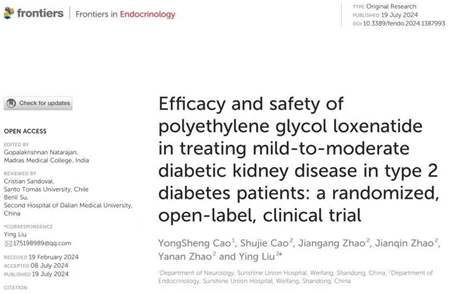
This single-center, randomized, open-label clinical trial enrolled 106 patients with mild to moderate DKD and poor glycemic control, who were randomly assigned to receive either Peglosetron or Dapagliflozin, aiming to compare the efficacy and safety of the two drugs in such patients. The primary endpoint was the change in the urinary albumin-to-creatinine ratio (UACR) from baseline at 24 weeks.
Clinical study results showed that after 24 weeks of treatment, the UACR in the peglozinatide group and the dapagliflozin group decreased by an average of 29.3% and 31.8%, respectively, from baseline, with no statistically significant difference (p = 0.336), indicating similar efficacy in improving urinary protein. In addition, the two groups demonstrated comparable efficacy in lowering blood glucose and reducing weight, although the peglozinatide group showed a slightly better trend in reducing fasting plasma glucose (FPG) levels. Notably, the reduction in triglycerides (TG) was more significant in the peglozinatide group. The two groups were similar in other lipid indicators and blood pressure metrics. Safety outcomes were consistent with previous studies, with peglozinatide being generally well-tolerated and no new safety events identified.
DKD is a microvascular complication of diabetes. Approximately 10%-40% of diabetes patients will develop DKD, with clinical manifestations including persistent proteinuria and/or a gradual decline in glomerular filtration rate (GFR), which can ultimately lead to end-stage renal disease (ESRD). Moreover, DKD significantly increases the risk of cardiovascular events and all-cause mortality in patients with type 2 diabetes.
SGLT2 inhibitors, such as dapagliflozin, have renal protective effects beyond glucose lowering and have been recommended by guidelines in China as first-line hypoglycemic agents for the treatment of DKD. GLP-1 receptor agonists also help improve renal outcomes in DKD; however, the efficacy and safety of peglosetron in DKD patients have not been reported.
The research data published this time provide important evidence-based support for the use of Peglostinatide in DKD patients, offering a new preferred treatment option for patients with mild to moderate DKD.