

Edwards Lifesciences Acquires JenaValve Technology and Endotronix for $1.2 Billion to Expand Structural Heart Portfolio

Endotronix
Digital Medical Technology Solutions

JenaValve
Developer of Transcatheter Heart Valve Solutions

Edwards Lifesciences
Cardiovascular Surgical Equipment Provider
On July 24 local time, Edwards Lifesciences (NYSE: EW) announced a $1.2 billion (approximately RMB 8.6 billion) acquisition of JenaValve Technology and Endotronix to expand its structural heart product portfolio.
It is worth noting that Edwards Lifesciences completed four deals within a month, previously acquiring mitral valve company Innoval for $300 million and reaching a series of agreements with Affluent Medical to obtain the licensing and development rights for the Kalios adjustable mitral annuloplasty ring and mitral valve technology.
JenaValve Technology is a global leader in the field of Transcatheter Aortic Valve Replacement (TAVR) treatment. In March 2024, data from its pivotal ALIGN-AR trial were published in The Lancet, providing preliminary evidence that the Trilogy Transcatheter Heart Valve (THV) System can improve severe symptomatic Aortic Regurgitation (AR).
In the official press release by Edwards Lifesciences, it mentioned, "As a pioneer in the field of valve innovation for more than 60 years, Edwards Lifesciences believes it has a unique advantage to lead the next frontier in the treatment of aortic valve disease. Edwards Lifesciences anticipates that the FDA will approve the JenaValve Trilogy Heart Valve System by the end of 2025, which will be the first approved treatment for patients with AR."
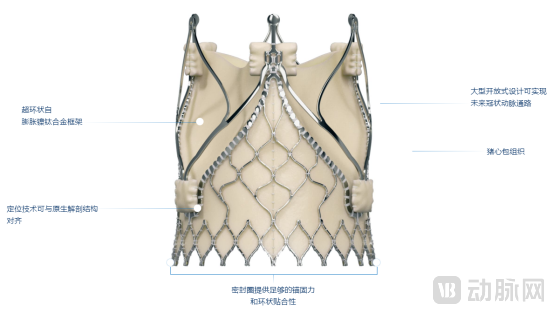
Trilogy is the world's first and only TAVR system approved (CE) for the treatment of aortic regurgitation.
Image source: JenaValve Trilogy official website
Trilogy is the world's first and currently the only CE-approved TAVR for treating severe symptomatic aortic regurgitation or aortic stenosis via the femoral artery. Trilogy consists of a valve, delivery system, and sheath, and its implantation can be completed in three steps: valve positioning, clamping occlusion, and stable release.
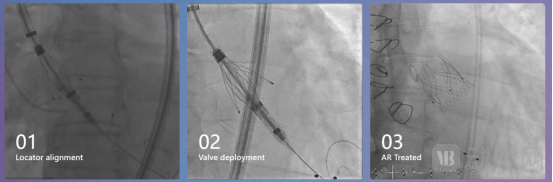
Image source: JenaValve Trilogy official website
Trilogy's proprietary positioning device not only enables anchoring in the absence of calcification but also ensures commissural alignment with the native valve leaflets. Additionally, its supra-annular valve design and extra-large outflow mesh design facilitate long-term hemodynamic performance and subsequent PCI interventions. The valve is made from porcine pericardial leaflets, with a 24-high-density mesh design at the inflow end to provide annular compliance and sealing effects.
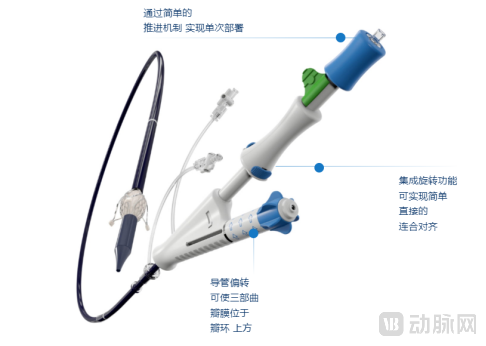
The delivery system of Trilogy, with an outer diameter equivalent to 18F, enables intraoperative bending adjustment and rotational positioning. Image source: JenaValve Trilogy official website.
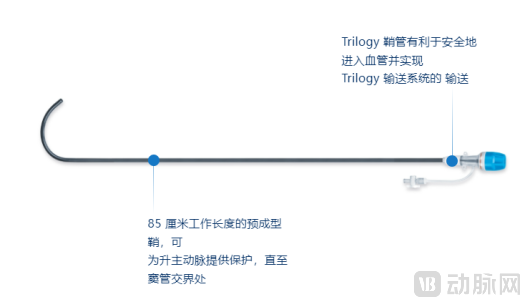
Trilogy Sheath, with a length of 85 cm, can protect the valve and patient anatomy within the ascending aorta until valve alignment and positioning, image courtesy of JenaValve Trilogy official website.
Aortic Regurgitation (AR) is a common valvular disease characterized by the backflow of blood from the aorta to the left ventricle during diastole, increasing the diastolic volume load on the left ventricle. This can lead to symptoms such as palpitations, dyspnea, and angina, and in severe cases, may result in heart failure, syncope, or even sudden death. The 5-year survival rate for patients with severe aortic regurgitation is only 30%.
According to Frost & Sullivan statistics, the number of global patients with aortic regurgitation increased from 25.5 million in 2017 to 27.5 million in 2021, and is expected to reach 31.6 million by 2030. Among them, the number of patients in China with moderate to severe aortic regurgitation grew from 3.7 million in 2017 to 4 million in 2021, and is projected to reach 4.6 million by 2030.
Currently, the treatment methods for aortic regurgitation mainly include medication, traditional surgical procedures, and interventional therapies. Among these, medications can only help alleviate symptoms; Surgical Aortic Valve Replacement (SAVR) is the primary curative approach, but it involves significant trauma and higher surgical risks. Some elderly patients with severe aortic regurgitation, who may also suffer from other underlying conditions, physical frailty, or disabilities, are not suitable candidates for surgery and thus can only receive conservative treatment. With its advantages of minimal invasiveness and shorter operation time, Transcatheter Aortic Valve Replacement (TAVR) has become one of the key treatment options for aortic regurgitation, and relevant recommendations have been included in guidelines both in China and internationally.
Peijia Medical
At the end of 2021, Peijia Medical and JenaValve signed an exclusive license for the Trilogy™ Heart Valve System in the Greater China region and became a minority shareholder of JenaValve. Subsequently, Peijia Medical rebranded the technology as the TaurusTrio™ Transcatheter Aortic Valve System, initiated registration clinical trials in China, and successfully completed full patient enrollment in January 2024, entering the one-year follow-up phase.
According to the acquisition agreement, after the completion of the transaction, Peijia Medical will continue to hold the exclusive rights to the JenaValve Trilogy THV system in the Greater China region.
As a leading enterprise in China for interventional treatment of structural heart diseases, Peijia Medical has also proactively and comprehensively laid out the following hotspots: transcatheter tricuspid valve replacement MonarQ, transseptal mitral valve replacement HighLife, mitral/tricuspid edge-to-edge repair GeminiOne, long-lasting dry valve TaurusNXT, polymer valve, and aortic regurgitation solution TaurusTrio, continuously meeting the significant clinical demands of doctors and patients at home and abroad for transcatheter valve treatment products.
Minimally Invasive Medical
As China’s first and the world’s only electrically retrievable transcatheter aortic valve system, VitaFlow Liberty® inherits the advantages of the VitaFlow® transcatheter aortic valve system in valve design. It adopts a hybrid-density self-expanding stent, bovine pericardial leaflets, and a high double-layer PET skirt design, offering excellent performance such as high radial support force, better coaxial deployment, and effectively reducing the incidence of postoperative paravalvular leakage and regurgitation. Additionally, its breakthrough upgraded delivery system features a unique dual-reinforced spiral innovative structure, ensuring rapid, stable, and precise deployment and retrieval while achieving the flexibility of the delivery system and 360° bending functionality of the valve segment.
VitaFlow Liberty®Approved for marketing by the NMPA in 2021 (Registration No.: Z20213130655), it has since been launched in multiple overseas countries and received EU CE-MDR certification this year, becoming China's first self-developed transcatheter aortic valve system to obtain CE certification. To date, VitaFlow®The series and its balloon series accessories have successfully entered nearly 700 core hospitals in 10 countries and regions, treating more than 10,000 patients with aortic valve disease worldwide.
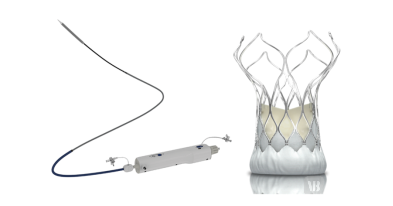
VitaFlow Liberty® Transcatheter Aortic Valve and Retrievable Delivery System
Jian Shi Technology
The Ken-Valve Transcatheter Aortic Valve System, independently developed by Jianshi Technology, is indicated for both aortic regurgitation and aortic stenosis.
Ken-Valve Transcatheter Aortic Valve Replacement System adopts an innovative integrated valve clamping component design, which provides additional anchoring force while reducing operational difficulty. The unique sinus contact surface structure not only increases clamping force but also avoids damage to native tissues. The clamping component includes radiopaque markers for easier identification under DSA when positioning the component into the sinus, and its self-adaptive anti-leakage ring design significantly reduces the risk of paravalvular leakage. For patients with horizontal hearts, the adjustable bending delivery system allows operators to better adjust the valve orientation, making TAVR procedures safer and more efficient.
In addition, the Ken-Valve adopts JeniGal technology for anti-calcification treatment of bovine pericardial material, resulting in more durable leaflets, and has successfully produced larger-sized (31-33mm) valves, offering more options and clinical benefits for a wide range of high-risk aortic regurgitation patients in China.

Ken-Valve Transcatheter Artificial Aortic Valve System
JieCheng Medical
Jiecheng Medical was founded in 2009 and joined the Jian Shi Medical Technology Group in 2022. It is one of the pioneers in the field of Transcatheter Aortic Valve Replacement (TAVR) in China. In 2017, Jiecheng Medical's independently developed J-Valve TA Transapical Interventional Heart Valve Replacement System received NMPA certification. It is currently the approved interventional valve product that can simultaneously treat severe aortic stenosis and regurgitation with dual indications. The product consists of a self-expanding interventional valve and a transapical interventional device, featuring ——
The positioning wings with movable connections can fully extend and function independently of the valve frame.
The fully expanded positioning wings can locate the aortic sinus and self-adjust to align with the valve implantation site (JenaValve refers to this process as the "Autonomous Navigation Positioning System");
The replacement valve is deployed within the positioning wings, clamping the native valve leaflets in between. It does not rely on radial tension for fixation and avoids the differentiated advantage of native valve leaflets obstructing the coronary ostium.
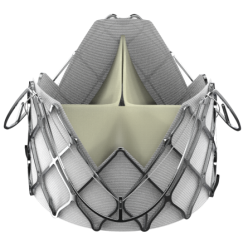
J-Valve Valve
In 2023, its "Transcatheter Bioengineered Aortic Valve" received FDA Breakthrough Device Designation for the treatment of severe primary aortic regurgitation (AR) and mixed aortic valve disease predominantly involving aortic regurgitation.
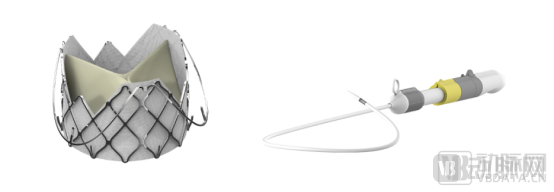
Jiecheng Transcatheter Valve
Weico Medical
Weico Medical DOCS VALVE®The transcatheter aortic valve replacement system was collaboratively developed by the cardiology expert team from Union Hospital, Tongji Medical College, Huazhong University of Science and Technology, and engineering technicians. Its core clinical value lies in breaking through the application contraindications of large annulus and pure regurgitation, meeting the dual indication requirements of both stenosis and regurgitation.
In addition, DOCS VALVE®Pioneered the strategy for adjusting aortic root coaxiality, which eliminates the need for rapid pacing, general anesthesia, or sedation, and carries no risk of circulatory collapse. This approach avoids the risk of circulatory collapse, making the surgical process safer and simpler, enabling the safe and stable deployment of the valve without rapid pacing.
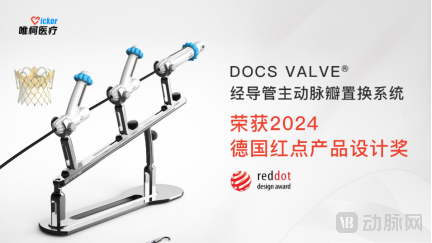
Weike Medical DOCS VALVE® Transcatheter Aortic Valve Replacement System
Hanling Medical
Hanling Medical was founded in 2019 as a subsidiary of Shanghai Kangdelai Medical Devices Co., Ltd. (Stock Code: HK1501). The company focuses on the research and development of innovative surgical solutions in the field of structural heart disease.
Hanchor Valve is a Transcatheter Aortic Valve Replacement (TAVR) product with independent intellectual property rights developed by the company. It is also the first balloon-expandable, transfemoral approach valve product specifically designed for pure aortic regurgitation. The product's excellent bend-adjusting performance allows for easy passage through the aortic arch and maintains coaxial alignment, while its positioning key facilitates accurate placement at the sinus base. Its unique and innovative design effectively secures the native valve leaflets, preventing valve displacement and paravalvular leakage. In the field of pure aortic regurgitation treatment, Hanchor Valve holds broad application prospects.
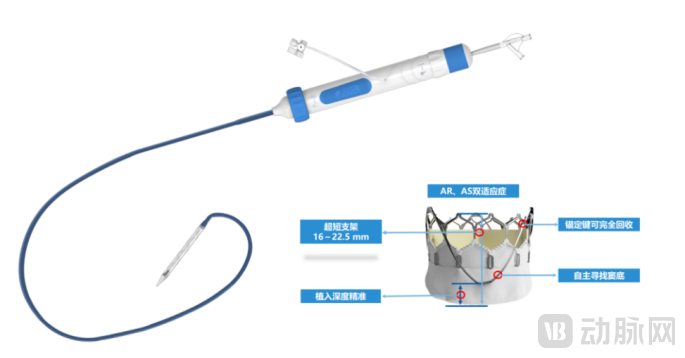
Hanchor Valve by Hanchor Medical
Endotronix is an innovative company in the field of heart failure (HF) management solutions. Its product Cordella received FDA approval for market release in June, for the treatment of NYHA Class III heart failure patients.
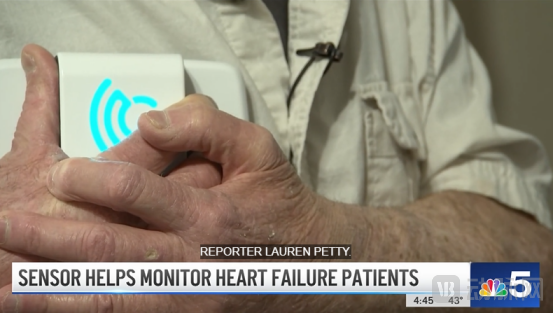
Cordella is an implantable pulmonary artery pressure sensor that enables early and targeted therapeutic interventions. It is the first pulmonary artery (PA) pressure-guided platform, providing comprehensive patient management through daily PA pressure and vital signs monitoring at home to guide treatment management and improve patient outcomes.
Studies show that Cordella significantly reduces hospitalization rates, markedly improves quality of life, increases patients' physical activity, and improves NYHA functional classification. The national coverage by the U.S. Centers for Medicare & Medicaid Services (CMS) is expected to be determined in early 2025.
According to Edwards' official website, it exercised its option to acquire Endotronix based on its 2016 investment. Many structural heart disease patients served by Edwards also suffer from HF, with limited treatment options. This acquisition will expand Edwards' structural heart product portfolio into new therapeutic areas to address the significant unmet needs of HF patients.
Notably, this product is in direct competition with Abbott's implantable remote heart failure monitoring product, CardioMEMS HF. The two products are highly similar, as both monitor changes in pulmonary artery pressure to reflect the condition of heart failure patients. Patients can track parameter changes through an app on a tablet provided with the system, while doctors can use the software to stay informed about the patient’s condition and interact with the patient.
In March 2023, Abbott announced the latest clinical data on CardioMEMS HF, confirming a significant reduction (25%) in two-year mortality for HFrEF patients implanted with CardioMEMS HF. Due to the excellent clinical data of CardioMEMS HF, multiple innovative companies have been attracted to enter this field. The main challengers in this area currently include Vectorious' V-LAP and FIRE1's FIRE1 IVC.
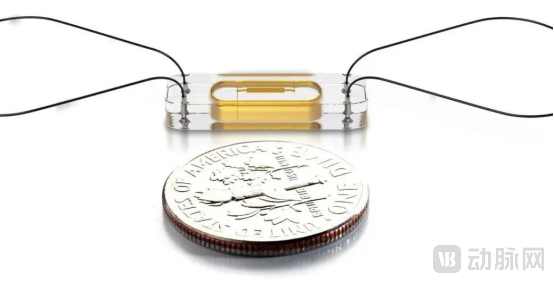
Abbott CardioMEMS HF
According to data from the "Chinese Guidelines for the Diagnosis and Treatment of Heart Failure 2024" and the "China Heart Failure Center Annual Report (2021)," there are currently 13.7 million heart failure patients aged 35 and above in China, with 2.97 million new cases each year. Due to the limited availability of heart failure treatment drugs in the past, coupled with poor prognosis and high readmission rates, the 5-year survival rate of heart failure patients is comparable to that of malignant tumors.
Many innovative companies have thrown themselves into the fray, battling in this last "frontier" of cardiovascular diseases. However, VCBeat has found that most heart failure companies focus more on the treatment stage in the middle to late phases. Currently, there are no domestically developed implantable heart failure monitoring products in clinical use in China, leaving the heart failure monitoring market almost blank.
According to Wu Yongjian, Chief Physician of the Coronary Heart Disease Center at Fuwai Hospital, Chinese Academy of Medical Sciences, the reason lies in the fact that monitoring instruments are different from therapeutic instruments. "Treating diseases when they occur" is a rigid demand, so the clinical application of therapeutic devices such as cardiac stents is relatively mature. However, our current medical practice still mainly focuses on the treatment stage, and thus medical products for early prevention and post-treatment rehabilitation have not yet been widely and maturely applied.
Currently, China-produced heart failure monitoring devices, according to publicly available information, include DARMA (DARMA) Technology's non-invasive cardiac filling pressure (NIFP) monitoring and management device. In March 2022, it received the Breakthrough Device Designation (BDD) from the U.S. Food and Drug Administration (FDA). It is designed to provide convenient, accurate, and non-invasive cardiac filling pressure readings, thereby helping heart failure patients both in hospitals and at home better manage their condition, reduce the risk of heart failure hospitalization, and improve survival rates.
This product does not require implantation of a device, as it measures the patient's cardiac filling pressure through its unique technology from the body surface. In this way, patients will not need to undergo the trauma of implant surgery or bear the risks and side effects of implanted device malfunctions, while still obtaining filling pressure data to monitor their condition.
NIFP Device Achieves Convenience in Operation While Being Non-Invasive and Accurate. It can be operated by nurses, patients, and their families, with a single test taking only 2 minutes. It can be used in emergency rooms, outpatient clinics, ICUs, inpatient wards, nursing homes, and home monitoring. Compared to invasive catheter measurements, the NIFP device achieves an accuracy rate of 89%.
References:
1. "Peijia Medical's Partner JenaValve Acquired by Edwards Lifesciences Corporation: A New Chapter in Transcatheter Treatment of Aortic Regurgitation", Peijia Medical
2. "The King of Valves | $8.7 Billion to Complete Two Structural Heart Acquisitions, Strengthening TAVR and Heart Failure," MedTF
3. "Latest Progress! The World's First 'Nemesis' of Aortic Valve Regurgitation", Heart Future
4. "Jensense Technology Ken-Valve Transcatheter Aortic Valve Replacement Confirmatory Clinical Study Enrollment Successfully Completed!", Yanda Medical Voice Network
5. "The First in China! HeartFlow Medical's VitaFlow Liberty® Receives EU CE Certification, Accelerating Global Strategic Layout," Shanghai Biomedical Science and Technology Development Center
6. "Inquiry | Why Hasn't China Seen the Clinical Application of Implantable Heart Failure Monitoring Products Yet?", The Paper