

Domestic Auto-injector Pens Poised for Breakout Amid Surge in GLP-1 Therapies and Overseas Orders

Gan&Lee Pharmaceuticals
Biological Synthetic Human Insulin Pharmaceutical R&D Manufacturer

Hybio Pharmaceutical
Peptide Drug Developer
Novo Nordisk
Insulin Developer and Manufacturer
Eli Lilly
Global Pharmaceutical R&D and Production Company

National Resilience
Biopharmaceutical R&D and Manufacturing Outsourcing Service Provider
BSP Pharmaceuticals
A biopharmaceutical company
The Market for Injection Pens in China is About to Boom!
In the past two years, as GLP-1 has taken center stage in the capital market, GLP-1-compatible injection pens (pen-type injectors) have quietly secured several major orders in an unnoticed corner.
In 2023, Gan&Lee Pharmaceuticals' insulin aspart injection andReusable Pen-type Insulin InjectorGan&Lee Pharmaceuticals has successively secured major orders in Brazil and Kazakhstan. In April, it won a bid in Brazil for 1.34 million units of insulin aspart injection and 67,000 insulin reusable injection pens. In October, the same two products also won bids in Kazakhstan, with the winning quantity expected to meet the country's entire demand for insulin aspart for the next year.
Hybio Pharmaceutical Secures Over 100 Million Yuan Order in 2023: In November, Its U.S. Partner Purchased Liraglutide Worth $14.0832 Million (Approximately 103 Million Yuan)Pre-filled Injection Pen FormulationIt is reported that this amount only represents the upfront purchase price for the initial batch of orders, and the cooperating party will also receive a 50% share of the product's net sales revenue.
In addition, Hansoh Medical has signed injection pen supply and marketing cooperation agreements with multiple well-known listed pharmaceutical companies in China, with a total contract value of nearly 1 billion yuan, which will be gradually delivered over the next five years.
Not only insulin pen companies, but also Ningbo Pia Automation Holding Corp., a smart manufacturing equipment supplier, successfully delivered pre-filled large-capacity wearable insulin devices to a Swiss diabetes company and a Danish pharmaceutical company in 2023.Injection Pen、GLP-1 Receptor AgonistAuto-Inject Electric PenIntelligent manufacturing equipment projects. Previously, Ningbo Pia Automation Holding Corp. also delivered an intelligent disposable insulin auto-injector pen production line to pharmaceutical giant Sanofi, capable of producing 4 million units annually.
In fact, China-produced GLP-1 drugs have not yet seen large-scale adoption, and China-produced injection pens are still on the verge of a boom. However, the overseas injection pen market has been experiencing massive sales due to the explosive popularity of injectables like semaglutide and dulaglutide. Both Novo Nordisk and Eli Lilly are aggressively ramping up their supply of injection pens.
In February 2023, Novo Nordisk invested approximately 1.18 billion yuan in Tianjin, China.ConstructionPre-filledInjection Pen Production Lineand finished product workshop; In August, Novo Nordisk reached a cooperation with Thermo Fisher, and Thermo Fisher's subsidiary will provide Novo Nordisk with Semaglutide.Production of Filling Injection PensService; In November, Novo Nordisk invested approximately $2.3 billion to expand its production in France, aiming to enhance GLP-1 drug manufacturing.Injection PenTheOutputIn February 2024, Novo Nordisk's controlling shareholder acquired Catalent, the leading CDMO, for $16.5 billion. Two of Catalent's production bases will be used by Novo Nordisk to fill weight-loss drug injection pens...
Eli LillyAlso announced in the second half of 2023: capacity will be increased through investment in factory expansion, and multi-dose rapid injection pens will be provided starting from 2024.
In March 2024, Eli Lilly and Company reached a cooperation agreement with National Resilience and BSP Pharmaceuticals, an Italian pharmaceutical company, under which National Resilience and BSP Pharmaceuticals will provide formulation filling services for Eli Lilly's injection pens. Eli Lilly also stated that it would accelerate production by utilizing a wide range of external contract manufacturers. In April 2024, Eli Lilly announced plans to invest $2.5 billion in building a factory for the production of injectable drugs and injection pens.
Billions of dollars invested in building factories, over a hundred billion dollars spent on M&A in CDMO—for the expansion of injection pens and injectable drugs, Novo Nordisk and Eli Lilly are nothing short of "aggressive."
The explosive popularity of GLP-1 was expected, but the quiet signing of injection pens has eluded most people. From an industry perspective, why has the injection pen become such a massive hit? How long can its high growth rate be sustained? With more companies entering the market, what’s next for the injection pen industry?
There is no doubt that one of the important factors in the surge of injection pens is GLP-1.
GLP-1 is a new class of drugs, and the currently approved indications are mainly for the treatment of type 2 diabetes and obesity. Representative drugs include semaglutide, dulaglutide, and liraglutide.
Since the approval of major GLP-1 drugs such as semaglutide and dulaglutide, the GLP-1 market has entered a period of hypergrowth. According to the annual reports of listed companies, the global sales of GLP-1 drugs reached 22.5 billion US dollars in 2022. In 2023, the global sales of GLP-1 drugs exceeded 35 billion US dollars. Among them, the sales of the semaglutide injection Ozempic alone reached 13.89 billion US dollars.
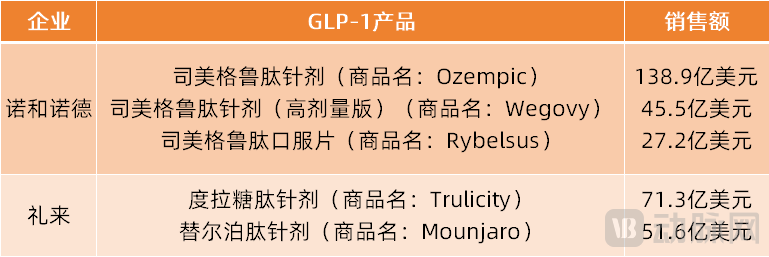
(2023 GLP-1 Representative Drug Sales Situation)
Previously, the application scenarios of GLP-1 drugs such as Semaglutide and Dulaglutide were mainly for weight loss and blood sugar reduction, requiring consumers to manage themselves and self-administer the drugs over the long term. The previous methods of administration for these drugs were all...Injection Administration。
Among various injection methods, traditional injection devices such as glass syringes and disposable syringes require skilled operators, typically professional medical staff, and often result in lower patient compliance with long-term use.
The injection pen combines the drug with the injection device, allowing patients to self-administer treatment without professional operational knowledge. It is simple and convenient to use, resulting in higher compliance.Therefore, GLP-1 drugs such as semaglutide injection are all equipped with injection pens.. And semaglutide injection, dulaglutide injection, tirzepatide injection, etc.The strong sales of GLP-1 products have also driven a significant increase in the sales of injection pens.。
It is worth mentioning that in the past two years, domestically produced GLP-1 drugs have finally been approved for marketing in China, and more domestically produced GLP-1 drugs are about to be approved. For example, in 2023, Huadong Medicine's Liraglutide Injection was approved by the National Medical Products Administration (NMPA) for treating adult Type 2 diabetes, obesity, or overweight conditions; BenePharm's Benaglutide received approval for a new indication to treat obesity or being overweight. In 2024, the Liraglutide Injection developed by Zhengda Tianqing was approved by the NMPA for marketing to control blood glucose levels in adult patients with Type 2 diabetes...
With the approval and market launch of more GLP-1 products manufactured in China, GLP-1 drugs will further penetrate the market. This will also drive the further expansion of the domestic injection pen market.
Recently,Many pharmaceutical companies have started to expand production of GLP-1 products. However, the production volume of injection pens has received little attention.According to statistics, the current annual production of injection pens in China does not exceed 100 million units, which is far from meeting the market demand in China after June 2025. This meansAfter the increase in production of domestically produced GLP-1, there may likely be a shortage due to insufficient production of injection pens.The expansion of injection pen production requires nearly 10 months of preparation. Therefore, pharmaceutical companies in China are advised to finalize their injection pen partners by September 2024 to ensure sufficient production capacity in the future.
Although GLP-1 is an important factor in the strong sales of injection pens, it is not the only one. Beyond GLP-1, the increased penetration of injectable drugs such as insulin, recombinant human growth hormone (used for dwarfism), teriparatide (used for osteoporosis), and recombinant human follicle-stimulating hormone (used for infertility) has also stimulated the injection pen market.。
Taking insulin drugs as an exampleSince the national special procurement of insulin was gradually implemented in various provinces and cities in May 2022, the price of insulin products in the Chinese market has significantly decreased, and its penetration rate has also rapidly increased.Tonghua DongbaoGan&Lee Pharmaceuticals' insulin analog products achieved sales growth of over 60% in 2023. The sales volume of Gan&Lee Pharmaceuticals' basal insulin products increased by 32.47% year-on-year in 2023, while the sales volume of rapid-acting and premixed insulin products increased by 112.38% year-on-year.
In March 2024, the National Joint Procurement Office for Medicines once again launched the continuous procurement of insulin-specific projects. The first-year procurement demand for the six types of insulin in this follow-up procurement exceeded 240 million vials/pens, with products in cartridge or cartridge/pre-filled specifications accounting for over 95% of the total procurement volume. As the penetration rate of insulin continues to increase, the market size for insulin injection pens is also rapidly expanding.
In addition, relevant companies have also expanded the application fields of injection pen products to new drugs such as apomorphine, liraglutide, teriparatide, adalimumab, bevacizumab, nivolumab, and etanercept, further opening up the market space for injection pens and increasing the market growth rate of injection pens.
In addition to the expansion of application scenarios and the increase in penetration rate, domestically produced injection pens are also being sold overseas alongside the wave of pharmaceutical companies going global.For example, when international insulin manufacturers encountered supply issues in the global market, Gan&Lee Pharmaceuticals seized the opportunity to expand its customer base and increase overseas orders. In 2023, the order volume for Gan&Lee Pharmaceuticals' insulin products in overseas markets increased, leading to a doubling of international revenue compared to the same period last year. Meanwhile, with the successful expansion of insulin products abroad, Gan&Lee Pharmaceuticals' insulin pens also frequently won bids in overseas markets, resulting in a significant surge in sales.
Driven by multiple factors, the injection pen market is experiencing rapid growth and accelerated expansion. According to a research report released by market research firm ReportLinker, the global injection pen market size is estimated at $37.6 billion in 2021 and is expected to reach $53.3 billion by 2026, with a compound annual growth rate (CAGR) of 7.2%.
The injection pen industry, which has grown in size and accelerated in growth rate, has quickly attracted more participants. Meanwhile, the entry of speculators and non-professionals has also led to some industry chaos.
First, there is chaos in the procurement and selection of materials by injection pen companies.An industry veteran in the injector pen field stated: "After the centralized procurement of many injectable drugs, related pharmaceutical companies have put forward higher requirements for cost reduction. This pressure is passed on to the injector pen side, where pharmaceutical companies demand that injector pen products continuously reduce costs and lower expenses. In order to secure orders and make profits,Some injection pen companies reduce costs by using industrial-grade materials or inferior modified plastics (improved materials made from recycled waste).。”
Injection pens produced using low-end or inferior materials often experience issues such as component failure, poor lubrication, severe plunger sticking, reduced product lifespan, inability to inject, or difficulty in use after being stored for a period of time.
At the same time, high-quality injection pens can achieve transmission injection by relying on the self-lubricating properties of advanced materials; inferior injection pen products, due to the use of substandard materials, require additional chemical agents such as lubricating oil to compensate for the lubrication performance of core components. However, this introduces a new issue: it does not meet biocompatibility requirements.
In China, as injection pens are still considered innovative products and there are no corresponding standards for the time being, such products can still be approved for marketing. However, in mature markets like Europe, regulatory authorities have clear requirements for the biocompatibility and materials of injection pens. Products that use low-end materials or additional lubricants and other chemical agents cannot obtain the EU CE certification.
Second, there is also chaos in the production of injection pen products.At the current stage, some companies do not use fully automated production lines or fully automated testing processes but rely on manual production. This results in poor consistency of their injection pen products. Meanwhile, some enterprises fail to implement process control during the production of injection pens, leading to unstable product quality. Consumers may end up purchasing substandard or defective products from these companies.
In response to the above-mentioned chaos, relevant national departments and industry associations should play a role in taking the lead to formulate relevant production standards and strengthen production supervision to ensure that injection pen products meet market requirements and industry standards; injection pen companies should also hold themselves to high standards and produce high-quality products.
Third, some injection pen companies adhere to the "customer-centric" approach.Only"Order Theory: Only Want to Make Quick Money", without considering the long term. Specifically, when customers make requests that do not meet industry standards, some companies choose to cater to these demands in order to secure orders.
For example, injection pens need to have a blind operation function, allowing patients to easily know and set the injection dose. However, some clients have proposed the requirement of "smooth injection," which means actively weakening the force feedback and sound feedback during injection so that patients can complete the injection more smoothly. However, this will cause patients to be unaware of the injection dose and lose the blind operation function. Clearly, this does not meet patient needs nor industry standards.
For example, some clients may require that the tactile feel of the injection pen they need matches that of imported injection pens. The tactile feel is influenced by every transmission structure and core component of the injection pen. To achieve a consistent tactile feel, it would be necessary to completely replicate the structure and materials of the imported injection pen. However, this will inevitably lead to patent issues.
For these requirements, some injection pen companies do not adhere to principles or explain patent issues to clients. Instead, they meet all client demands in order to secure orders. The resulting harm includes: pharmaceutical companies may subsequently face patent lawsuits, pay compensation fees to overseas enterprises, delay product launches, and damage the corporate brand.
An industry insider stated: "The relevant person in charge of overseas giants once revealed that the sales volume of domestically produced products is still relatively low at present. Engaging in patent litigation after the product gains significant market traction will yield greater benefits."
Fourth, the domestic injection pen market is caught in a price war, with an obsession over "lowest price."In fact, most markets distinguish between high-end, mid-end, and low-end. However, in the injectable pen market, many companies currently focus on price and do not consider other product performance aspects. This has led some injectable pen companies to cut costs and secure orders by using low-quality materials, inferior production methods, and copying overseas products (without innovation or patents).
On the one hand, this causes the insulin pen industry to lose its innovation drive; on the other hand, the market may see the phenomenon of inferior products driving out superior ones, with mid-to-high-end insulin pens losing their competitiveness altogether.
In response to the two types of chaos mentioned above, pharmaceutical companies should independently choose high-end, mid-range, or low-end injection pen products based on their own product positioning, rather than solely focusing on low prices. At the same time, in order to promote products in markets such as Europe and the United States, pharmaceutical companies should select injection pen products with independent intellectual property rights to avoid patent litigation issues. Injection pen companies should also focus on product innovation, competing in the market based on product quality and performance, rather than just price.
Fifth, there is also a certain amount of chaos in the market access for injection pens.Injection pens can be divided into disposable injection pens and reusable injection pens based on the number of uses. Disposable injection pens are supplied to pharmaceutical companies, while reusable injection pens are supplied to the C-end market. The differences in the access systems for these two types of products have caused much confusion for regulatory authorities, injection pen companies, and pharmaceutical clients.
According to national regulations, reusable injection pens are classified as Class II medical devices and require approval from the National Medical Products Administration (NMPA) for market release. Disposable injection pens, on the other hand, are categorized as pharmaceutical packaging materials and only need to be registered.
However, a small number of local authorities have not deeply understood the policy and have issued registration certificates for some companies' disposable injection pens; whereas most local authorities have not issued registration certificates for related companies' disposable injection pens, but instead required them to register according to the packaging material filing system.
This leads to unfair competition in the market. Because some pharmaceutical clients lack sufficient understanding of the injection pen industry, they only choose products with registration certificates when purchasing, without considering registered products.
In response to this chaos, relevant national departments need to rectify the situation promptly and strictly enforce the access system for related products. For certificates of registration already issued, they should be declared invalid to reduce the impact of unfair competition.
It is hoped that with the joint efforts of pharmaceutical enterprises, injection pen companies, regulatory authorities, industry associations and other parties, the injection pen industry can quickly calm down the chaos and achieve positive high-speed development.