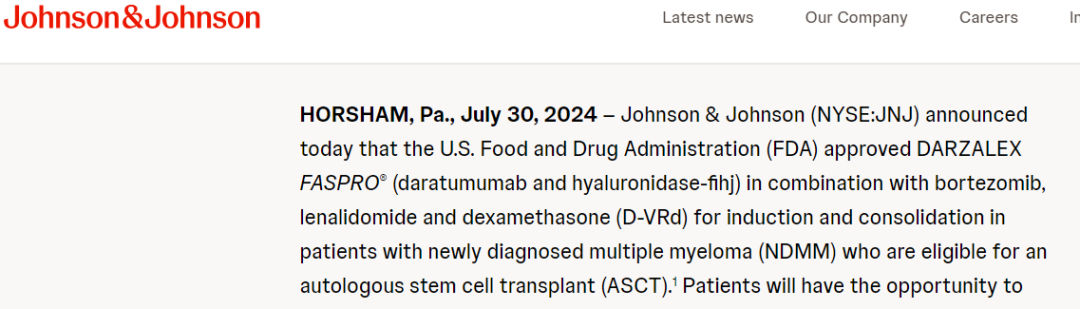
On July 30, Johnson & Johnson announced that the U.S. FDA approved DARZALEX FASPRO® (Daratumumab and Hyaluronidase-fihj) with bortezomib, lenalidomide, and dexamethasone (D-VRd) Combined use for newly diagnosed multiple myeloma (NDMM)Induction and Consolidation Therapy for Patients, these patients are suitable for receiving autologous stem cell transplantation (ASCT). Patients will have the opportunity to receive this DARZALEX FASPRO-based treatment at the time of initial diagnosis.®The quadruple therapy offers them a new treatment option that may significantly improve outcomes. Screenshot from: Johnson & Johnson official websiteDARZALEX FASPRO® was approved by the U.S. FDA in May 2020 for the treatment of nine multiple myeloma indications, four of which are for frontline treatment of newly diagnosed patients eligible or ineligible for transplant.It is the only approved subcutaneous CD38-targeted antibody for the treatment of patients with multiple myeloma.。The approval of the new indication this time was supported by data from the Phase III PERSEUS study, which evaluated the efficacy of DARZALEX FASPRO® in a regimen including D-VRd induction and consolidation therapy, and its use in combination with bortezomib, lenalidomide, and dexamethasone during induction and consolidation in NDMM patients suitable for ASCT.VRd) were compared. After consolidation therapy, patients received an investigational maintenance treatment regimen, including DARZALEX FASPRO in combination with lenalidomide or lenalidomide alone.PERSEUS study results show that the primary endpoint, progression-free survival (PFS) Significantly improved. Compared with VRd,D-VRd Reduced the Risk of Disease Progression or Death by 60%Compared with VRd, induction and consolidation therapy using D-VRd can produce a deeper response at the end of the consolidation period:Minimal Residual Disease (MRD) The negative rate was 57.5% vs. 32.5%, complete remission (CR) or better, the MRD-negative rate was 76.6% vs. 58.5%。The overall safety of D-VRd is consistent with the known safety profiles of DARZALEX FASPRO® and VRd. The most common adverse reactions in multiple myeloma patients treated with D-VRd (≥20%) are peripheral neuropathy, fatigue, edema, fever, upper respiratory tract infection, constipation, diarrhea, musculoskeletal pain, insomnia, and rash.Scan the WeChat QR code to add the editor of the Antibody Circle.Those who meet the requirements can join the Antibody Circle WeChat group!Please indicate: Name + Research Direction! All reproduced articles in this official account are intended to convey more information, with the source and author clearly stated. Media or individuals who do not wish to be reproduced can contact us (cbplib@163.com), and we will immediately delete the content. All articles represent the views of the author and do not represent the position of this website.