

Domestic Breakthrough Achieved: Xinmai Medical and Meiliview’s Renal Denervation Systems Approved by NMPA

SyMap
Innovative Device R&D Manufacturer in Cardiovascular and Respiratory Fields

Brattea
Developer of Interventional Devices for Hypertension

Source: Smart Medical Device, reproduction without authorization is prohibited.
Following the approval of Medtronic's RDN product in April this year, China's market has welcomed two domestically produced RDN products. Both domestic and imported devices in the RDN sector will compete on the same stage, jointly exploring a new market for hypertension treatment devices.
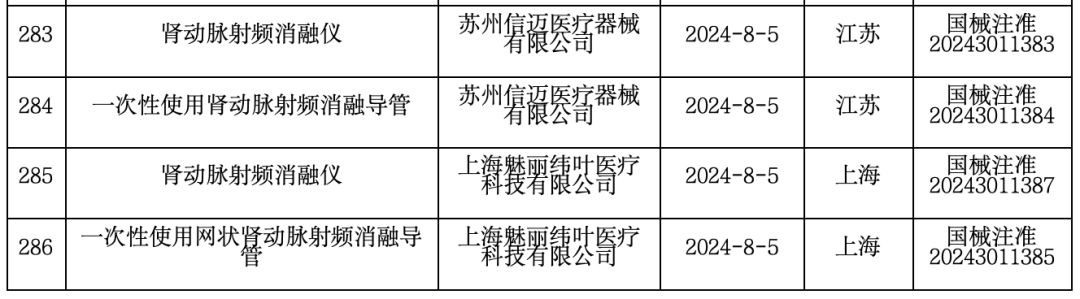
On August 6, the official website of the National Medical Products Administration (NMPA) announced the approval of the registration application for the innovative product, renal artery radiofrequency ablation device, from SyMap and BRATTEA. The approval of the renal artery radiofrequency ablation devices from SyMap and BRATTEA has achieved a breakthrough in the field with the first China-produced devices.
Due to factors such as government support for innovative medical devices, an urgent market need for effective therapies that can free hypertension patients from long-term daily medication, and the potential applications of RDN for other diseases, the market prospects for RDN have significant room for imagination. It is expected that more companies will invest greater resources into the research and development of renal denervation (RDN) related technologies, driving the market to flourish.
01
Two Major Products Approved Simultaneously
RDN: The Rise of China's Innovative Power in Production
It is reported that SyMap, founded in 2012 by Professor Wang Jie, a top expert in the global cardiovascular field, and Jin Kewen, a veteran of the medical industry, focuses on the research, development, and application of breakthrough innovative minimally invasive interventional technologies to treat major diseases related to cardiovascular and respiratory fields. Its product portfolio covers critical conditions such as hypertension, heart failure, severe asthma, and arrhythmia. Among the company's various product lines, the RDN (Renal Denervation) pipeline has drawn the most attention from investors and industry insiders.
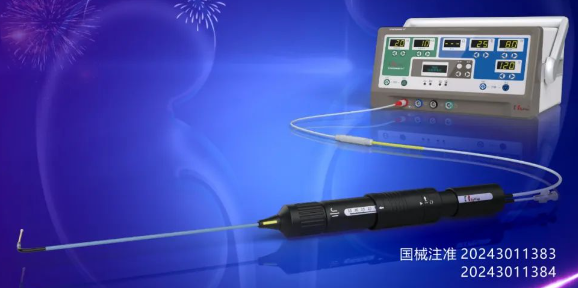
SyMap's newly approved "Renal Artery Radiofrequency Ablation System" can deliver radiofrequency energy through a single channel, transmitting it via a catheter electrode to the intima of the renal artery. Using thermal effects generated by the electric current, it deactivates the surrounding sympathetic nerves of the renal artery and blocks the transmission of sympathetic nerve excitation. Additionally, the accompanying "Single-Use Renal Artery Radiofrequency Ablation Catheter" has electrodes that can output electrical stimulation signals to map the renal artery, identifying the sympathetic nerves through blood pressure changes to achieve selective ablation. This product is the world’s first renal artery radiofrequency ablation system capable of mapping renal nerves, providing precise ablation locations for renal denervation procedures.
Notably, SyMap's Bronchoscopic Radiofrequency Ablation System and the Bronchoscopic Zedan System have both been approved by relevant medical regulatory authorities to enter the clinical trial stage: (1) The Elation® Bronchoscopic Radiofrequency Ablation System for treating severe asthma is the only product in its field to have received NMPA approval to enter the Innovative Medical Device Special Review Process. It is expected to be approved for marketing in 2024. (2) The world’s first Precisely Controlled, Hypertonic Solution Assisted RF System ("Zedan" System), developed by SyMap for treating early-stage lung cancer via bronchoscopy, has completed its First in Human (FIH) clinical study in Australia.
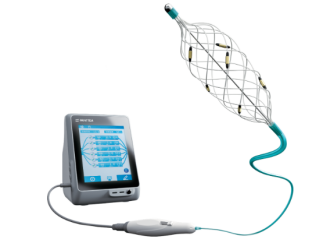
BRATTEANetrod® StarBand™ System
In addition, another product approved for marketing by the NMPA this time comes from Shanghai.BRATTEABRATTEA. Founded in 2013, BRATTEA is a high-tech innovative medical device company with independent intellectual property rights, integrating R&D, production, and sales. It focuses on the field of minimally invasive interventional treatment, starting in the cardiovascular sector and continuously expanding into multiple chronic disease areas such as hypertension, diabetes, COPD, and heart failure. BRATTEA's founder and chairman, Cao Hongguang, is a serial entrepreneur in China's medical device industry, having previously established several medical companies including Shanghai Iray Technology Co., Ltd. and Beijing Weimai Medical Equipment Co., Ltd.
It is reported that the "Renal Artery Radiofrequency Ablation Instrument" developed by BRATTEA employs temperature and impedance measurement along with feedback control algorithms, which simplifies surgical procedures. After the product's market launch, it will facilitate the clinical application of radiofrequency ablation technology, further reduce clinical treatment costs, and benefit more patients with refractory hypertension and those who are intolerant to medication. The accompanying "Single-Use Mesh Renal Artery Radiofrequency Ablation Catheter" features six electrodes arranged in a spiral pattern, effectively improving ablation efficiency. Its basket-like design ensures uninterrupted blood flow during ablation, making it an original innovation both in China and internationally.
It was reported that in March this year, BRATTEA announced the completion of a D-round financing worth hundreds of millions of yuan, led by CPE Fund, with participation from Shanghai BioPharmaceutical Fund, Toplink Capital, and XiaoChi Capital. The funds will be used for commercial promotion after the approval of the percutaneous renal artery denervation (RDN) product for treating hypertension, global multi-center registration clinical trials of RDN, global multi-center clinical trials of endovascular denervation (EDN) for treating type II diabetes, as well as further research and development, registration applications, and market expansion of other core products.
In 2017, BRATTEA's self-developed Netrod® system was approved to enter the NMPA Innovative Medical Device Special Review Channel, and in 2021, the Netrod® system received FDA Breakthrough Device Designation. According to the results of the Netrod-HTN clinical study, the Netrod® system demonstrated safety and efficacy in treating uncontrolled hypertension, showing characteristics such as potent blood pressure reduction, high target achievement rate, high response rate, and excellent safety, marking a milestone progress in China in the RDN field.
02
RDN Track Heats Up
Diverse Technical Pathways, Full of Possibilities
Hypertension is the most common cardiovascular disease and one of the most important risk factors for the development of stroke and coronary heart disease. A meta-analysis published in the LANCET magazine in 2016 found that for every 10 mmHg drop in blood pressure, the risk of major cardiovascular diseases decreased by 20%, the risk of coronary heart disease decreased by 17%, the risk of stroke decreased by 27%, the risk of heart failure decreased by 28%, and all-cause mortality decreased by 13%.
According to Frost & Sullivan data, the number of people suffering from hypertension in China has exceeded 300 million, and the affected population is gradually becoming younger. Treating hypertension is urgent. Clinically, traditional methods for treating hypertension mainly involve taking antihypertensive drugs, which effectively control blood pressure in over 80% of patients. However, 10%-20% of patients still cannot control their blood pressure and are considered to have resistant hypertension.
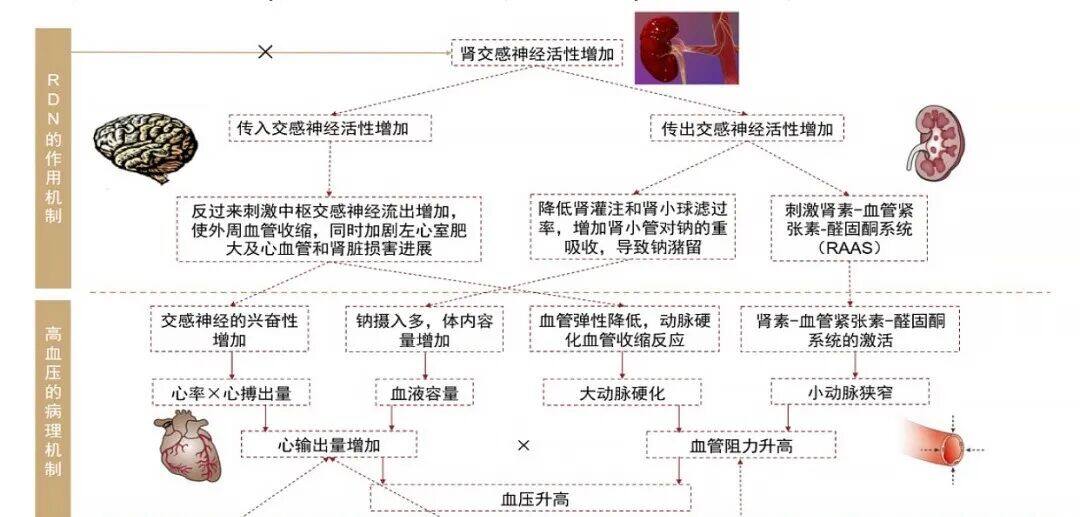
Relevant studies show that enhanced and persistent sympathetic nerve activity is one of the important pathogenic mechanisms of refractory hypertension. Therefore, the method of treating refractory hypertension by ablating renal sympathetic nerves has become an innovative direction in the industry—specifically, RDN is a minimally invasive therapy that modulates the overactivated sympathetic nerve signals between the kidneys and the central nervous system through vascular intervention to ablate renal sympathetic nerves, thereby reducing renal and systemic sympathetic nerve activity, ultimately achieving the goal of controlling hypertension.
Previously, the mainstream treatments for hypertension included medication and lifestyle interventions (such as weight loss, exercise, low-salt diet, etc.). Renal Denervation (RDN) is a revolutionary innovative therapy that treats hypertension through minimally invasive catheter-based procedures. The advent of RDN (Percutaneous Renal Denervation) has provided a solution for resistant hypertension.
It is understood that RDN technology can be based on various methods such as radiofrequency ablation, ultrasound ablation, cryoablation, and chemical ablation, with innovative enterprises actively deploying each technical route. Currently, the two mainstream routes are radiofrequency ablation and ultrasound ablation. The innovative products approved this year from Medtronic, SyMap, and BRATTEA all belong to the radiofrequency ablation direction—catheter-based radiofrequency ablation technology was the first among the four technologies to be applied in the RDN field, and it has now accumulated a large amount of clinical data and foundational scientific research theory. Based on the current progress in the industry, different technical pathways have their own advantages and barriers. For example, the challenge for radiofrequency ablation lies in the production of the radiofrequency ablation device and control of the energy source, while the difficulty for ultrasound ablation is in the product’s structure and complex manufacturing process. The diversity of technical routes has brought more possibilities to the RDN market and opened up significant commercial potential for the RDN track.
According to the analysis in the "Renal Denervation (RDN) Industry Analysis Report," the prevalence of hypertension in China is on the rise, with the total number of hypertensive patients expected to increase from 317 million in 2019 to 388 million by 2030. In 2021, the number of patients with resistant hypertension in China reached 49.7 million, accounting for 15.0% of the total. Estimates suggest that the long-term market potential for RDN in treating hypertension could exceed 10 billion yuan.
According to predictions by the Deutsche Bank Research Institute, assuming that the number of hypertension patients in China grows at an annual rate of 2%, under pessimistic/neutral/optimistic scenarios, the penetration rates of RDN for drug-resistant and other types of hypertension would reach 1/2/3% and 0.4/0.5/0.6%, respectively, corresponding to long-term market sizes in China of 5.3/10.2/16.7 billion yuan.It can be foreseen that several new RDN products are expected to be approved soon, and the golden age of the RDN market is approaching.
——【END】——
Latest Review
Review of previous periods