Hansoh Pharma Inks Three BD Deals in 2024 Worth Over RMB 6.8 Billion to Expand Pipeline
Hansoh Pharma
Pharmaceutical Research, Production, and Sales
Lupeng Pharmaceutical
Developer of New Anticancer Drugs

Qyuns
Developer of Biologics for Autoimmune and Allergic Diseases

On the evening of August 8, news spread in the industry that Hansoh Pharma acquired Lupeng Pharmaceutical.New Generation BTK Inhibitor LP-168 All Non-Oncology IndicationsThe rights for R&D, registration, production, and commercialization in China. The total amount of this transaction is up to 729 million RMB.
In fact, the introduction of products from external sources has become one of the important ways for Hansoh Pharma to expand its product pipeline. According to the Insight database, just in 2024 alone, Hansoh Pharma has successively reached licensing agreements with three Chinese companies.The total amount of disclosed transactions is as high as 6.836 billion yuanLet's take a look at what products Hansoh Pharma has purchased this year in this article?
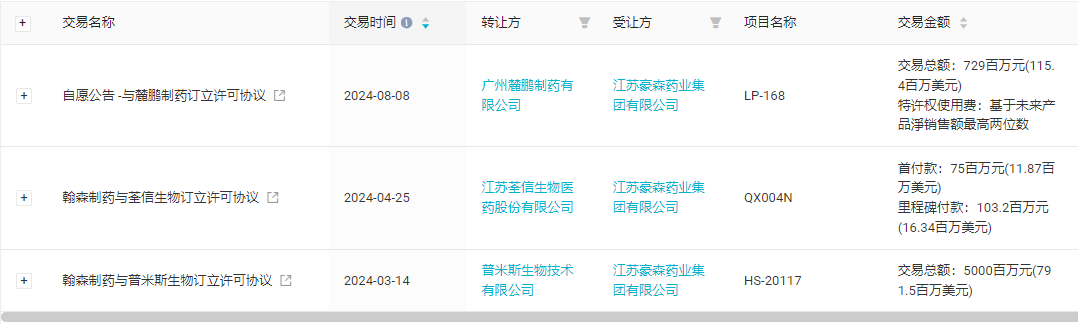
Screenshot from: Insight Database Web Version
Hansoh Pharma and Lupeng Pharmaceutical
Introduced Product: BTK Inhibitor
On August 8, Hansoh Pharma and Lupeng Pharmaceutical jointly announced the reaching of a licensing collaboration. According to the cooperation agreement,Hansoh Pharma Obtains All Non-Oncology Indications of LP-168 Developed by Lupeng PharmaceuticalIn China (Including Hong Kong, Macao and Taiwan) for the research, development, registration, production, and commercialization rights. Lupeng Pharmaceutical is eligible to receive up to 729 million RMB in upfront and potential milestone payments and will be entitled to receive tiered royalties in the high double digits based on future net product sales.
LP-168 is a small molecule BTK inhibitor independently developed by Lupeng Pharmaceutical., and is currently conducting clinical research for the treatment of cancer and non-cancer indications.Hansoh Pharma Obtains All Non-Oncology Indication Rights for LP-168. In non-oncology fields,LP-168 is currently undergoing clinical research in China for the treatment of multiple sclerosis and neuromyelitis optica.Study。
Insight database shows:
BTK Inhibitors in ChinaMultiple Sclerosis AdaptationSymptomIn terms of progress, Novartis' Remibrutinib, Roche's Fenebrutinib, and Sanofi's Tolebrutinib are in the first tier, currently conducting Phase III clinical trials; Hansoh Pharma's Orelabrutinib is in the second tier, having entered Phase II clinical trials; thereafter is Lupeng Pharmaceutical's LP-168, which is conducting Phase I clinical trials.
BTK Inhibitors in ChinaNeuromyelitis OpticaIn terms of indications progress: Hengrui Medicine's Edralbrutinib is the farthest along, having entered Phase II clinical trials; next is Lupeng Pharmaceutical's LP-168, which is currently conducting Phase I clinical trials.
R&D Progress of New BTK Drug Projects in China
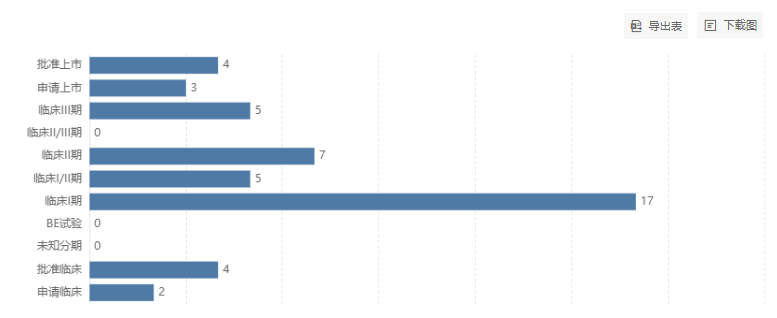
Screenshot from:Insight Database Web Version
Hansoh Pharma and Quanxin Biotech
Introduced Products:IL-23Monoclonal Antibody
On April 25, Hansoh Pharma announced that it has obtainedQX004N Monoclonal Antibody in China (Including mainland China, Hong Kong, Macao and Taiwan regions) Exclusive rights to research, develop, produce, and commercialize all developable dosage forms and indicationsQuanxin Bio will retain the rights to the QX004N monoclonal antibody outside the合作区域. According to the agreement, Quanxin Bio will receiveRMB 75 million upfront payment, up to RMB 1.032 billionDevelopment, regulatory and sales-based commercial milestones potential payments, as well as tiered royalties based on future product sales.
QX004N is a recombinant humanized IgG1 monoclonal antibody independently developed by Quanxin Biotech that specifically binds to human IL-23.Intended for the treatment of psoriasis and Crohn's diseaseCurrently, QX004N is undergoing Phase I clinical trials for Crohn's disease and Phase II clinical trials for psoriasis in China.
Insight database shows:
In IL-23 antibodyCrohn's Disease IndicationsIn terms of domestic R&D: Janssen's Guselkumab has been approved for marketing, AbbVie’s Risankizumab has submitted for marketing approval; Eli Lilly's Mirikizumab and Innovent’s Picankibart have entered Phase III clinical trials; next is Janssen’s JNJ-78934804, which is currently in Phase II; Quanxin’s QX004N is in Phase I.
IL-23 AntibodyPsoriasis AdaptationSymptomIn terms of R&D progress in China: Johnson & Johnson's Guselkumab and Kangzhe Pharma's Tiragolumab have been approved; followed by Johnson & Johnson's JNJ-2113 and Innovent's Pikomab, which are in Phase III; closely followed by Quanxin’s QX004N, which is currently in Phase II.
R&D Progress of IL-23 New Drug Projects in China
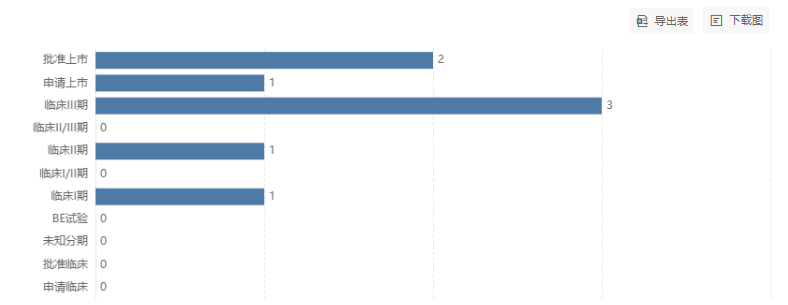
Screenshot from:Insight Database Web Version
Hansoh Pharma and Primoris
Introduced Product: EGFR/cMet Bispecific Antibody
On March 14, Hansoh Pharma announced that it had obtained an exclusive license from Primus.Prometheus Biosciences' self-developed EGFR/cMet Bispecific AntibodyHS-20117(PM1080) for the development, production, and commercialization of ADC products, and has the right to further sublicense. According to the terms of the agreement, Primus will receive an upfront payment from Hansoh Pharma and potential milestone payments based on the development, registration, and sales-based commercialization of ADC products.Total not exceeding 5 billion yuan RMB, and will be entitled to receive tiered royalties based on global net sales.
PM1080 is a 1+1 heterodimeric EGFR/cMet bispecific antibodyBody, which can inhibit tumor growth and survival by specifically targeting tumor antigens EGFR and cMet. Currently, the drug is in Phase I clinical trials. Hansoh Pharma aims to combine EGFR/cMet bispecific antibodies with ADC technology to enhance clinical benefits for patients with non-small cell lung cancer and other cancers.
Insight database shows that in the domestic development of EGFR/cMet bispecific antibodies in China:
Johnson & Johnson's Amivantamab is the furthest along, having been submitted for marketing approval in October last year for the treatment of non-small cell lung cancer.IInsight database speculates that this application is expected to be approved in the first quarter of 2025.
Next is HS-20117, developed by Hansoh Pharma and Pumis, which is currently in Phase II/III clinical trials for the treatment of non-squamous non-small cell lung cancer.
In addition, other similar drugs entering clinical trials include Hansoh's SHR-9839, Betta's MCLA-129, and EpimAb's EMB-01, which are in Phase I/II.
In ChinaEGFR/cMet Bispecific AntibodyProject Development Progress
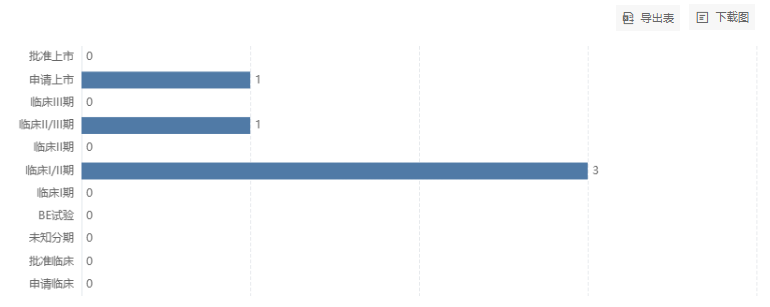
Screenshot from:Insight Database Web Version
Summary
From the above three transactions, it can be seen that non-oncology has become a highly valued field for Hansoh Pharma.Collaborations with Lupeng Pharmaceutical and Quanxin Biotech aim to expand its product pipeline in the field of autoimmune diseases.. And the cooperation with Primus,Aiming to strengthen its layout in the ADC field and consolidate its oncology product pipeline.In terms of R&D progress, the引进的几款产品have entered clinical trials and their R&D progress in China is relatively advanced.
Cover Source:Corporate Logo
Disclaimer:This article is for information sharing only and does not represent the position or viewpoint of Insight. It does not recommend or introduce any treatment plans. If you have any needs, please consult and contact正规医疗机构.
Editor: Xinyao
PR Article Collaboration: WeChat insightxb
SubmissionWeChat: insightxb; Email: insight@dxy.cn