

Hansoh Pharma Inks $1.02B Deal for Lupeng Pharma's Next-Gen BTK Inhibitor LP-168
Hansoh Pharma
Pharmaceutical Research, Production, and Sales
Lupeng Pharmaceutical
Developer of New Anticancer Drugs
On August 8, 2024, it was reported that Hansoh Pharmaceutical Group Company Limited (hereinafter referred to as "Hansoh Pharma," 03692.HK) and Guangzhou Lupeng Pharmaceutical Company Limited (hereinafter referred to as "Lupeng Pharmaceutical"), an innovative drug company focusing on malignant tumors and autoimmune diseases, jointly announced that they had signed a cooperation agreement regarding Lupeng Pharmaceutical's self-developed next-generation BTK inhibitor, LP-168 (Lobutinib).
According to the agreement, Hansoh Pharma has obtained the rights for the development, registration, production, and commercialization of all non-oncology indications of LP-168 in China. Meanwhile, Hansoh Pharma will pay Lupeng Pharmaceutical an upfront payment and potential milestone payments for development, registration, and sales-based commercialization totaling no more than 729 million RMB, as well as tiered royalties of up to double digits based on future net product sales.
Notably, on May 9, 2024, Hansoh Pharma's Class 1 innovative drug, Lobutinib (LP-168 tablets), was officially included in the list of breakthrough therapies after being reviewed and publicly announced by the Center for Drug Evaluation (CDE) of the NMPA. It is intended for the treatment of adult patients with relapsed or refractory (R/R) non-germinal center B-cell-like (non-GCB) diffuse large B-cell lymphoma (DLBCL) who have received at least two prior lines of therapy.
Thus, Lobutinib has become the first BTK inhibitor in China to be designated as a breakthrough therapy for DLBCL. This marks another significant milestone for Lobutinib following the approval by the CDE in September 2023 to conduct the pivotal registrational Phase II clinical trial (ROCK-1 study) for relapsed or refractory mantle cell lymphoma (R/R MCL).
Former Senior Executive of Betta Pharmaceuticals Embarks on Second Venture, Multiple Pipelines Rank Among the World's Top Tier
Lupeng Pharmaceutical was co-founded by Dr. Tan Fenlai and Dr. Chen Yi in June 2018 in the Guangzhou Development Zone, with Tan Fenlai serving as Chairman and Chief Executive Officer, and Chen Yi as Chief Scientist. The company focuses on designing and developing small-molecule anti-tumor drugs, with its core strengths lying in groundbreaking drug design and professionally efficient clinical development. Throughout the drug design process, novelty and creativity are consistently emphasized to achieve significant differentiation.
Tan Fenlai graduated from Hunan Medical College (now Xiangya School of Medicine, Central South University) in July 1986; over the next eight years, he served as a lecturer at Guangzhou University of Chinese Medicine, after which he went to the United States for further studies; in March 2000, he graduated from the University of Arkansas for Medical Sciences with a Ph.D. in Biomedical Science; from April 2000 to April 2003, he conducted postdoctoral research at the Cleveland Clinic Foundation in the United States; from May 2003 to May 2007, he worked in the Life Sciences Institute at the University of Michigan Medical School.
In 2007, Tan Fenlai was invited by his classmate Dr. Ding Lieming, who had returned to China a few years earlier to establish Betta Pharmaceuticals, to join him in entrepreneurship. Tan Fenlai subsequently joined Betta Pharmaceuticals and devoted himself to the company's self-developed first small-molecule targeted anti-cancer drug in China—Erlotinib Hydrochloride (Conmana). At Betta Pharmaceuticals, Tan Fenlai was mainly responsible for clinical research work. He presided over the trial design, implementation, and NDA submission of the Phase I, II, and III clinical trials of Erlotinib Hydrochloride conducted among patients with advanced lung cancer.
Tan Fenlai later led the full publication of the Phase III clinical trial results of Icotinib in LANCET ONCOLOGY and the registration application of Amgen's VECTIBIX in China. He has filed more than 20 invention patents, three of which have been granted international patents in China, the United States, and other countries. As the Principal Investigator (PI), he has received support from multiple projects by the US NIH, the US KAUFMAN Foundation, and China’s Ministry of Science and Technology. Among them, the "Clinical Study on the Expansion of Indications for Icotinib" received key project support from the National Key New Drug Creation Special Program during the 12th Five-Year Plan.
Nowadays, Beta Pharma has grown into a leading company in China for targeted lung cancer drugs. Several new drug projects that Tan Fenlai was responsible for, which were introduced from the United States and led in development, have successively entered the approval and launch phase. Subsequently, citing the reason of "not wanting to miss the historical opportunity of the pharmaceutical industry's development in the next 10 years," he co-founded Lupeng Pharmaceutical with Chen Yi.
Chen Yi led the design and preclinical development of five innovative drugs at Lupeng Pharmaceutical, all of which have now entered clinical research: EDO-S101, an innovative drug targeting both HDAC and DNA; LP-108, a potent and highly selective first-generation BCL-2 inhibitor; LP-128, a potent HBsAg inhibitor; LP-118, the industry-leading second-generation selective BCL-2 inhibitor; and LP-168, the latest-generation ultra-selective and highly potent kinase inhibitor currently at the forefront of the industry.
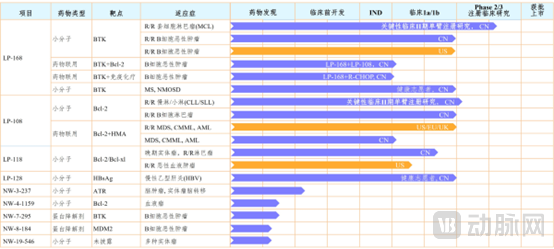
Lupeng Pharmaceutical's R&D pipeline, image sourced from Lupeng Pharmaceutical's official website
Lupeng Pharmaceutical currently has a pipeline of over 10 varieties under development, with core projects LP-108, LP-118, and LP-168 possessing world-class competitiveness, targeting the global market. Clinical trials are currently underway in the United States, Europe, and China. LP-108 (Lacutoclax, Letoclax) has been approved by the National Medical Products Administration for pivotal registration studies. Lobutinib, Letoclax, and LP-118 exhibit strong industry competitiveness and are expected to become best-in-class products.
Currently, the fastest progressing pipeline is LP-168, also known as Lobutinib. The targeted indication, DLBCL (Diffuse Large B-Cell Lymphoma), is the most common histological subtype of Non-Hodgkin Lymphoma (NHL). In Europe and the U.S., DLBCL accounts for 30%-40% of adult NHL cases, while in China it makes up approximately 35%-50%. Among these, non-GCB type DLBCL constitutes about 60%. The median age of onset for DLBCL is between 50 to 70 years. This disease is highly aggressive, progresses rapidly, and exhibits significant tumor heterogeneity. Once diagnosed, treatment must be initiated promptly. Current therapeutic approaches include immunochemotherapy or sequential stem cell transplantation. However, for the majority of patients with R/R (relapsed/refractory) DLBCL, the disease remains incurable, especially for those who have undergone multiple lines of treatment. Even with the use of novel drugs, the prognosis remains extremely poor, making it a life-threatening condition. Notably, the prognosis for non-GCB type DLBCL patients is significantly worse than that for GCB type.
The characteristic of LP-168 lies in its ability to bind with wild-type BTK inhibitors through covalent bonds, irreversibly inhibiting BTK activity. When a mutation occurs at the BTK C481 site, it can reversibly bind with BTK in a non-covalent manner to inhibit its activity. Clinical studies conducted in China and the United States have shown that Lobutinib has demonstrated excellent efficacy, safety, and pharmacokinetics (PK) in the treatment of CLL/SLL and NHL (including MCL, DLBCL, MZL, WM, etc.), supporting once-daily oral administration. This makes it exhibit superior clinical efficacy and breakthrough clinical value in B-cell lymphoma patients who are either untreated with BTK inhibitors or have developed resistance to covalent or non-covalent BTK inhibitors, setting a new benchmark for BTKi efficacy.
According to publicly disclosed information, Lupeng Pharmaceutical has completed three rounds of financing in total.
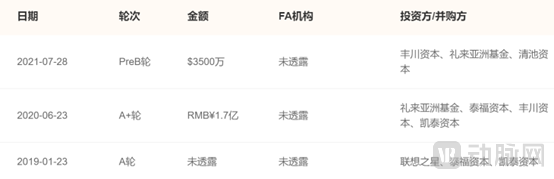
VCBeat New Medicine Chart
Hansoh Pharma Accelerates "Generic to Innovative" Transition, Continues to Lead in Anticancer Drugs
Since 2018, under the combined influence of a series of policies such as the reform of the drug and medical device review and approval system, the consistency evaluation and bulk procurement of generic drugs, and the medical insurance negotiation for innovative drugs, the prices of generic drugs have shrunk and profits have been squeezed. The survival rules of China's pharmaceutical industry have gradually changed, with the advantages of innovative drugs becoming increasingly prominent, greatly enhancing the enthusiasm of pharmaceutical companies to focus on innovative drugs. Some pharmaceutical companies have begun to assess the situation and shift from generic drugs to the innovative drug track.
Hansoh Pharma is precisely one of them.
In 2022, Hansoh Pharma released its annual performance announcement, which showed that the company achieved a total revenue of approximately RMB 9.382 billion for the whole year of 2022, representing a year-on-year decrease of 5.6%. Among this, the revenue from innovative drugs was about RMB 5.006 billion, and the proportion of total revenue increased significantly from 18% in 2020 to 53.4%, steadily accounting for half of the total revenue and reaching a new high.
Hansoh Pharma, which started with generic drugs, has first-to-market generics such as Olanzapine Tablets and Pemetrexed Disodium for Injection, each with annual sales exceeding 1 billion yuan. However, to offset the impact of centralized procurement, Hansoh Pharma began adjusting its business structure from the source, shifting its strategic focus towards innovative drug development. This shift was quickly reflected in its performance: In 2020, total revenue reached 8.69 billion yuan, of which innovative drug revenue was 1.56 billion yuan, accounting for only 18% of total revenue; but by 2021, total revenue reached 9.9 billion yuan, with innovative drug revenue at 4.2 billion yuan, accounting for 42.4% of total revenue, achieving a doubling of growth.
The revenue from innovative drugs is mainly attributed to its meticulous layout over the years in the four major fields of oncology, anti-infectives, central nervous system, and metabolic diseases.
According to the annual report, Hansoh Pharma's oncology drug portfolio achieved a total revenue of 5.522 billion yuan in 2022, accounting for 58.9% of the total revenue, making it a significant source of income. The central nervous system has long been an area of strength for Hansoh Pharma, generating 1.494 billion yuan in revenue in 2022, representing 15.9% of total revenue. In the anti-infective field, revenue reached 1.249 billion yuan in 2022, accounting for 13.3% of total revenue. The metabolic and other therapeutic areas portfolio generated a total revenue of 1.117 billion yuan in 2022, representing 11.9% of total revenue. From the perspective of revenue share, Hansoh Pharma has been strengthening its position in the oncology field in recent years. Currently, Hansoh Pharma has two marketed products: Almonertinib Mesylate Tablets (Ameile) and Flumatinib Mesylate Tablets (Haosen Xinfu).
Not only that, but in 2023, Hansoh Pharma achieved a revenue of 10.1 billion yuan, representing a year-on-year increase of 7.7%; the net profit attributable to shareholders reached 3.28 billion yuan, marking a year-on-year growth of 27%. Breaking down by segment, the oncology product portfolio once again made the largest contribution to Hansoh Pharma's performance, generating an income of 6.169 billion yuan, accounting for 61% of total revenue.
Moreover, Hansoh Pharma has been making enormous investments in R&D. By the end of 2023, the company had over 50 ongoing clinical trials for innovative drugs, which belong to more than 30 innovative drug products, with 8 new innovative drugs entering the clinical stage for the first time. At the same time, Hansoh Pharma remains open to business development (BD), and the acquisition of LP-168, a potential future Best-in-Class (BIC) anti-cancer drug, is expected to strengthen its leading position in the oncology field, which could even double its value.