Simmap Medical's Global First msRDN System with Renal Nerve Mapping Receives NMPA Approval, Pioneering China's RDN Innovation

SyMap
Innovative Device R&D Manufacturer in Cardiovascular and Respiratory Fields

Recently, the world's first renal nerve mapping/selective ablation (msRDN) system independently developed by SyMap has successfully obtained NMPA approval for marketing. This achievement marks the rise of innovative technology in the RDN field produced in China, indicating a technological breakthrough and market potential in this area in China. SyMap’s innovative product will provide a new option for the treatment of hypertension and add momentum to the competitiveness of medical devices produced in China in the international market!
Since Medtronic's renal artery radiofrequency ablation system received NMPA approval in April, a total of three RDN devices have successfully entered the market in China.
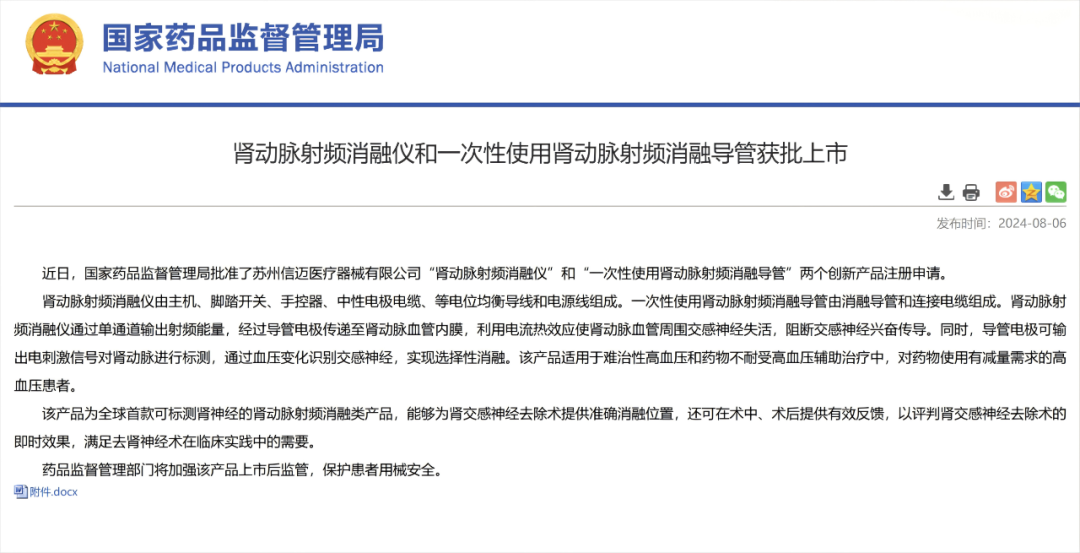
With the approval of SyMap this time, China has achieved a zero breakthrough in domestically produced technology in the RDN field, successfully competing on the same stage with international brands and even taking the lead in technology, offering Chinese hypertension patients more precise and effective treatment options. This milestone event signifies the continuous progress in China's medical technology innovation and the enhancement of its international influence.
The world's first,
Renal Artery RF Ablation Products with Renal Nerve Mapping Capability
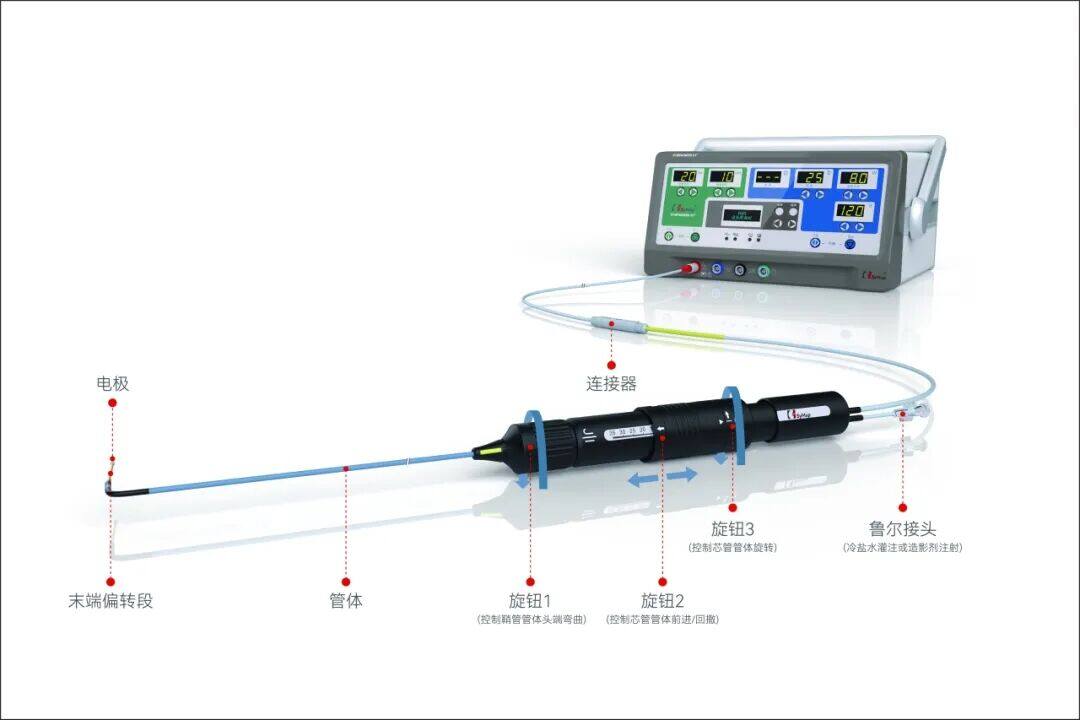
SyMap's Renal Nerve Mapping/Selective Ablation (msRDN) System has passed the "Innovative Medical Device Special Review Procedure." It is the first msRDN device approved for marketing by the National Medical Products Administration (NMPA) and the world’s first renal artery radiofrequency ablation product capable of mapping renal nerves. It provides precise ablation locations for renal denervation procedures and offers effective feedback during and after the procedure to evaluate the immediate outcomes of renal denervation, meeting clinical needs in renal nerve ablation. This product is suitable for patients with resistant hypertension or drug-intolerant hypertension who require medication reduction as part of their treatment.
Professor Wang Jie, Founder of SyMap and Renowned Global Expert in the Cardiovascular FieldIn a recent interview with the Medical Device Innovation Network, it was mentioned that traditional RDN technology cannot precisely map renal sympathetic and parasympathetic nerves during the ablation process. However, msRDN enables the selective removal of renal sympathetic nerves, avoiding the drawbacks of blind ablation. Ablation at an average of four sites per renal artery can lead to reduced antihypertensive medication load and achievement of target office systolic blood pressure (<140 mmHg) for patients.

Results of the Chinese Original SMART Trial,
Published in Top International Medical Journals
The SMART trial is a landmark study in the field of global hypertension treatment. It utilizes the msRDN system independently developed by the Chinese company SyMap, led by leading figures in China’s cardiovascular field—Professor Yong Huo, Academician Junbo Ge, and Professor Ningling Sun—and was conducted by top cardiologists and medical statisticians in China. It is the first prospective, multicenter, randomized, single-blind, sham-controlled (RCT) original RDN clinical study in China, and also the first RCT trial on treating hypertension from China published in a top journal by Chinese scholars in the RDN field. In May this year, the 6-month follow-up results of the SMART trial were published in a high-impact subsidiary journal of the prestigious international medical journal, The Lancet!
Zhang Jingjing, Deputy General Manager of SyMap and Head of Clinical Medicine DepartmentIt was reported that from July 2016 to February 2022, more than 2,000 patients were screened, of which 611 met the preliminary criteria, and ultimately 220 completed enrollment. In the SMART trial, 42.6% of patients achieved office systolic blood pressure <140 mmHg with reduced or no medication six months after a single msRDN procedure. In this subset of patients, the observed blood pressure-lowering effect of the msRDN procedure was 25.8 mmHg, meaning a single procedure could control office systolic blood pressure to target levels. In contrast, among patients not undergoing the msRDN procedure but taking 4-5 antihypertensive drugs, the percentage achieving target blood pressure increased significantly from 23.6% at baseline to 38.9% (P=0.015) at six months post-procedure.
The SMART trial is currently the only study in the RDN field that simultaneously addresses two key clinical questions: whether RDN surgery can help hypertensive patients achieve target office systolic blood pressure (<140 mmHg) while reducing or even eliminating medication.The achievement rate of blood pressure control determines the overall risk of cardiovascular disease incidence and cardiovascular event mortality. Therefore, reducing the antihypertensive medication burden in patients and achieving target office systolic blood pressure serves as a clinically significant endpoint for the effectiveness of RDN therapy. This aligns with the blood pressure reduction goal for hypertensive patients outlined in the "Chinese Guidelines for the Prevention and Treatment of Hypertension" (2018 Revised Edition): office systolic blood pressure <140 mmHg. In real-world clinical practice, reducing the antihypertensive medication burden significantly improves patient adherence to medication, thereby appropriately controlling blood pressure and decreasing the occurrence of cardiovascular incidents.The SMART trial demonstrated that msRDN can reduce patients' medication burden and, in synergy with medications, help achieve blood pressure control targets. Its significant clinical and social implications are self-evident.
Innovation Leads,
SyMap's Robust Patent System
SyMap's msRDN, as the first marketed RDN device produced in China with renal nerve mapping/selective ablation, is currently the world's only renal nerve mapping/selective ablation product under strict intellectual property protection.
SyMap has established a solid intellectual property system based on renal nerve mapping/selective ablation technology, covering multi-level and multi-grade patents from core concepts to specific device designs: 1. Basic concepts and implementation methods of renal nerve mapping/selective ablation; 2. Parameters and algorithms for mapping renal nerves; 3. Instrument design for mapping renal nerves; 4. Mapping renal nerves using two-dimensional and three-dimensional imaging methods + electrophysiological methods + other methods + physiological parameter mapping; 5. Unique clinical trial methods for treating hypertension and other cardiovascular diseases through renal nerve mapping/selective ablation. This patent system covers 11 countries including China, the United States, the European Union, South Korea, Russia, Australia, Singapore, Israel, South Africa, Japan, and Canada. To date, the company owns 63 authorized domestic and foreign invention patents, including 8 Chinese invention patents, 21 U.S. invention patents, and 6 EU invention patents.
Twelve years of dedicated research,
After a Long Journey of Original Exploration
When mentioning the success of the product, Professor Wang Jie modestly stated that we have simply caught up with the best era for venture capital and innovation in China's medical device industry. As one of the initial team members involved in the development of RDN technology, Professor Wang has witnessed the ups and downs of RDN’s progress and early on recognized its shortcomings in locating renal nerves. He profoundly understands that the continuous optimization and innovation of technology are crucial to advancing scientific development. However, the real challenge lies in overcoming unknown obstacles within original technologies. These obstacles stem from uncertainties about whether the technology can be successfully implemented and whether it is truly feasible.
"The first person to eat crab" often faces more unknown challenges. The first is whether the concept is scientifically feasible, followed by Freedom to Operate (FTO) issues related to patent intellectual property. The third challenge is the implementation of engineering technology, the fourth is funding, and the fifth is the test of clinical trials/regulatory registration and various technical standards. Additionally, commercial promotion will present further obstacles in the future. Every step of an innovative company’s development is full of challenges, but it is precisely these challenges that have shaped SyMap's spirit of innovation and corporate growth. After twelve years of dedicated research, SyMap successfully launched the world's first renal nerve mapping/selective ablation product. Behind this achievement lies the comprehensive strength that has continuously driven SyMap forward.
Professor Wang Jie expressed, "We are very grateful to our team for their unwavering commitment to growing alongside the company. Their professional capabilities have been fully demonstrated through overcoming challenges time and again. Additionally, our growth would not have been possible without the support of many local and international venture capital firms. It is the recognition from numerous renowned investors that has enabled SyMap to reach where it is today."
CFO of SyMap, Dai JingIt was also mentioned that RDN treatment for hypertension is supported by a vast and solid foundation of basic research results. In recent years, with the firm and continuous investment of international medical giants such as Medtronic, Philips, Abbott, and Otsuka in the RDN field, several large RDN clinical trials have obtained convincing and excellent data. We see that the establishment of hypertension intervention centers using RDN as a treatment method is entering the clinical practice stage and is expected to change the overall landscape of the cardiovascular discipline in the coming years. SyMap has always focused on addressing significant unmet clinical needs. With a management team possessing global vision and operational capabilities, the strong support of top global experts in the medical field, internationally leading pipeline development capabilities, and solid clinical trial data, it has attracted recognition and investment from many first-tier funds and well-known investors.
SyMap Chief Marketing Officer Heng LiangGlobally, RDN products have been launched in the European Union and some Southeast Asian countries, accumulating a certain amount of successful experience. Clinical data from these regions reveal that hypertension patients are already receiving higher quality and more comprehensive treatment. Based on this international experience, we will take practical actions to actively promote the standardization and orderly development of China’s RDN market. As the third pillar in hypertension treatment, RDN has broad development prospects. The advent of RDN is revolutionary for both patients and doctors, and msRDN differs significantly from traditional RDN. msRDN can precisely map renal sympathetic nerves (hotspots), enabling intelligent ablation, helping doctors quickly locate targets, reducing potential harm from excessive ablation, and improving patients' quality of life. Meanwhile, the product is planned for overseas R&D to further promote the global application of msRDN.
As a domestically produced product, msRDN is more attuned to the Chinese market. SyMap is conducting a series of training sessions for doctors based on the product's features and clinical applications, while also regularly hosting specialized academic conferences. These efforts aim to help doctors learn surgical procedures and patient management clearly, quickly, and accurately from various dimensions, benefiting more hypertensive patients. We are committed to promoting the appropriate application and adoption of msRDN therapy in clinical practice to improve treatment outcomes and quality of life for hypertensive patients in China.
We look forward to more application scenarios for this product, such as expanding to other diseases with high sympathetic tone as the pathological basis, like heart failure and arrhythmia. We believe that, with continuous technological advancements and in-depth clinical applications, msRDN will bring good news to more patients!
Currently, SyMap has established a rich pipeline of products at different stages in the cardiovascular and respiratory fields. In addition to the recently approved msRDN system, SyMap has also developed the Elation® bronchoscopic radiofrequency ablation system for treating severe asthma, which is expected to enter the market for sale next year. The company’s bronchoscopic hypertonic saline-assisted virtual electrode radiofrequency precision ablation system (“Zedan” system) for treating pulmonary nodules and early-stage lung tumors has completed the First-in-Human (FIH) study and is currently undergoing clinical trials in several countries. SyMap has upgraded and iterated the msRDN system, and the multi-electrode, intelligent G2 system will soon enter clinical validation, benefiting more patients!
Innovative Medical Device Policy Support,
Accelerate Clinical Implementation
A series of favorable policies for clinical registration and approval in the field of innovative medical devices in China have accelerated the approval and market entry of these innovative medical devices.Yu Lei, Vice General Manager of SyMap and Head of Quality Regulations DepartmentIt was mentioned that the msRDN system, as the first Renal Denervation (RDN) device in China to pass through the "Special Review Procedure for Innovative Medical Devices," not only received in-depth guidance from experts at the National Medical Products Administration/Center for Medical Device Evaluation during the clinical trial process, but also effectively resolved issues related to clinical trials, technical research, and standard compliance through active consultation and communication. Due to its priority review rights in the registration process, the efficiency of innovative work has been significantly improved.
According to Frost & Sullivan data, the global population of patients with hypertension has exceeded 1.4 billion, with over 300 million people in China suffering from the condition. The prevalence of hypertension among Chinese adults aged 35-75 is close to 50%. Awareness, treatment, and control rates are extremely low, and there is a trend toward younger populations being affected, indicating significant unmet clinical needs. Traditional treatments for hypertension primarily involve lifestyle improvements and antihypertensive medications. However, 10%-20% of patients cannot control their blood pressure even when taking three or more drugs. Additionally, many patients experience poor medication adherence, leading to low blood pressure control rates. Medication adherence decreases as the number of medications increases, resulting in a substantial population of hypertensive patients seeking reduced drug regimens. RDN offers these patients a new treatment option.
A large patient base and policy support have enabled China-produced medical device companies to make continuous efforts, and the emergence of innovative technologies will benefit more patients. Professor Wang Jie stated regarding the future prospects of this innovative technology: "The application of innovative medical technologies should be rigorous. In China's cardiovascular field, RDN technology has already undergone extensive doctor education and training before its approval, forming corresponding expert consensus. As an auxiliary treatment for patients with refractory hypertension, drug-intolerant hypertension, and those with a need to reduce medication dosage, RDN must strictly adhere to patient indications and follow all standard operating procedures to ensure the therapy is appropriately applied for patient benefit."Therefore, I do not want to make any predictions about the commercial prospects of this innovative product. Everything awaits validation through clinical practice and the market.”




Medtronic "Recalls One" Factory Closure: The Magic Behind the 40 Billion Industry of the Global Orthopedic Capital