

Lecanemab Sales Surge Over 30-Fold in China Amid Soaring Demand and Domestic Shortages
Eisai
Pharmaceutical Product R&D and Manufacturer
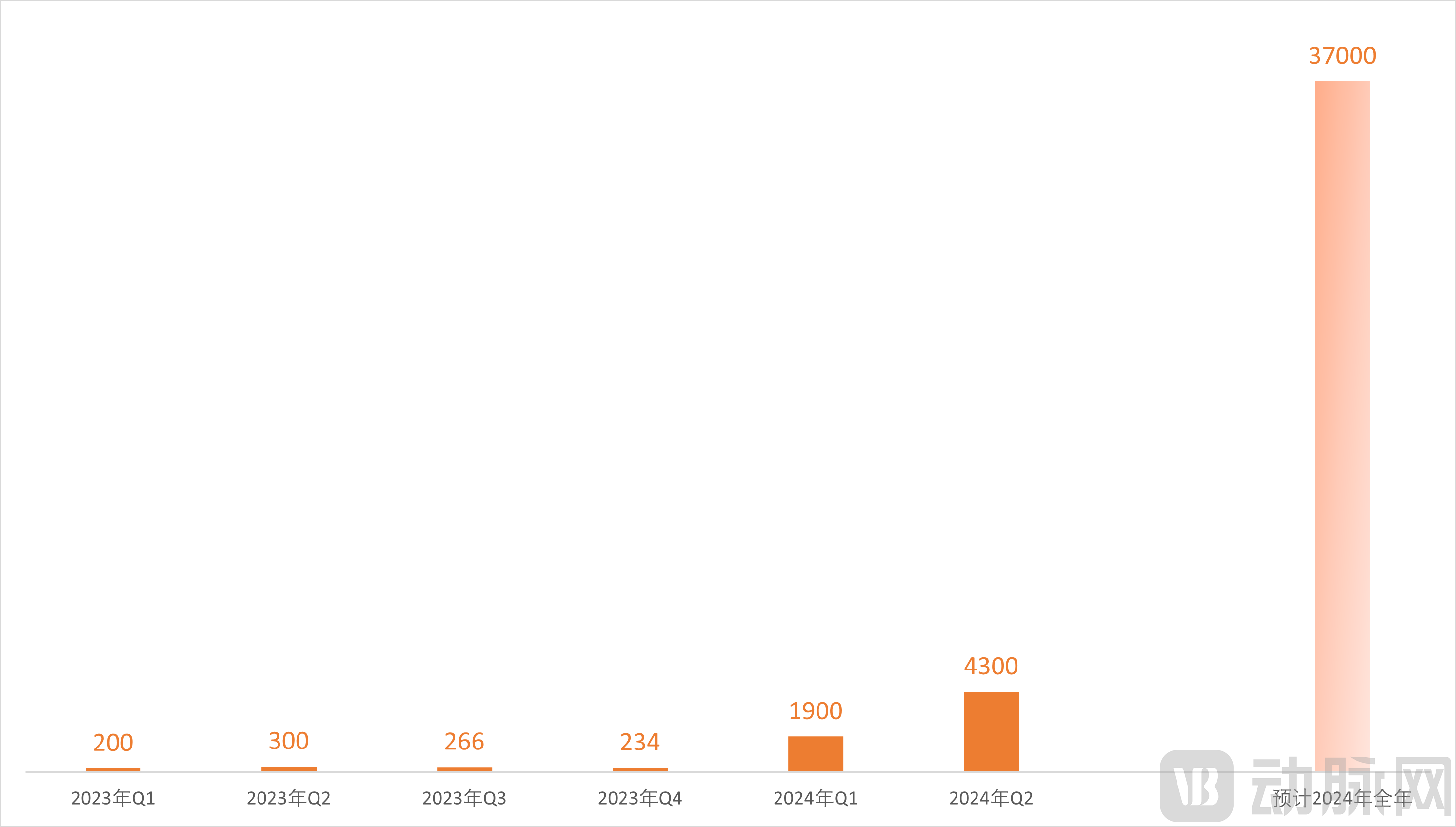
Just one week after being rejected by the European Medicines Agency for its marketing application, Eisai expressed strong confidence in its new Alzheimer's drug, lecanemab, in its earnings report. Eisai forecasts that global sales of lecanemab will reach $370 million for the entire fiscal year 2024, compared to just $10 million in fiscal year 2023. This confidence undoubtedly brings some optimism to the industry.
Regardless of its ultimate commercial value, lecanemab is a groundbreaking presence in the global history of Alzheimer's disease treatment. It provides a highly feasible approach to solving the most mainstream hypothesis about Alzheimer's disease and validates the possibility of developing a specific drug for Alzheimer's disease, making it easier for more new drug concepts to be realized.
In China, lecanemab is becoming a highly sought-after drug, with a box being hard to come by.
The Inflection Point of Lecanemab
As the second targeted drug globally for treating Alzheimer's disease, Lecanemab has drawn significant attention from its development to market launch. However, in its first year on the market, this highly anticipated drug only achieved $10 million in sales. In a market with millions of potential patients and an annual medication cost as high as $26,500, this sales figure is rather disappointing.
Lecanemab is a humanized monoclonal antibody originally invented by Bioarctic AB, and later the rights were transferred to two major neurology drug giants, Biogen and Eisai, for co-development. It is an upgraded version of the now-withdrawn Aducanumab.
Since its approval for marketing in early 2023, Leqembi has rapidly entered multiple markets worldwide.In January 2023, the FDA approved lecanemab for the treatment of AD under the accelerated approval pathway, applicable to patients with mild cognitive impairment or mild dementia stage and confirmed presence of Aβ pathologically. In July of the same year, the accelerated approval was converted to full approval, making lecanemab the world's first approved drug for treating Alzheimer's disease. In September 2023, Japan's Ministry of Health, Labour and Welfare approved the use of lecanemab in Japan. On January 5, 2024, the injection of lecanemab was approved for marketing in China under the trade name Leqibao.
Unlike traditional symptomatic treatment drugs, the logic of Lecanemab is to target the root cause of Alzheimer's disease and change the course of the disease itself. Theoretically, Lecanemab can alter the pathological state and slow disease progression by binding to oligomers of beta-amyloid (Aβ) protein, which abnormally accumulate in the brains of Alzheimer’s patients, thereby clearing Aβ protein.
According to data from a Phase III clinical trial studying the treatment of early Alzheimer's disease published in The New England Journal of Medicine, among nearly 2000 enrolled participants, lecanemab slowed the rate of cognitive and functional decline in early Alzheimer's patients by 27%. All key secondary endpoints of the treatment also showed statistical significance. After 18 months of lecanemab treatment, PET scans and related scale measurements indicated a statistically significant reduction in amyloid plaque accumulation in the brains of early Alzheimer's participants. Additionally, research has shown that lecanemab can also reduce the accumulation of tau protein, a major component of neurofibrillary tangles, which are responsible for the cognitive deficits observed in patients.
The sales of Lecanemab showed a turning point just as time entered 2024.According to Biogen's financial report, in the first quarter of 2024, the global sales of Lecanemab reached 19 million US dollars. Since the end of 2023, the number of AD patients receiving treatment has increased nearly 2.5 times, with a significant rise in new patients in March, accounting for more than 20% of the total accumulated patients.
Previously, Eisai stated that it would increase its neurology customer specialist team by approximately 30% in the first quarter of the fiscal year 2024. Due to the complex diagnostic requirements before and during the use of lecanemab, the threshold for patients using the drug has been significantly raised. Eisai is also attempting to identify simpler diagnostic tools. At the beginning of 2024, Eisai invested an additional $15 million in C2N Diagnostics, a developer of blood tests for Alzheimer's disease (AD). C2N’s Precivity blood test aims to detect tau and β-amyloid proteins that enter the bloodstream through brain plaques. C2N has demonstrated that its method can compare favorably with expensive brain imaging scans and uncomfortable spinal tap biopsy procedures.
In early August, Eisai announced its Q1 financial report for the fiscal year 2024. Between April and June 2024, the total revenue of three key products—Lenvima, Leqembi, and Dayvigo—reached 101.9 billion yen, approximately $695 million, marking a 27% year-over-year increase. Among these, the sales of Leqembi were 6.3 billion yen, approximately $43 million, including revenue from the U.S. market at 4.6 billion yen, around $31 million, accounting for 73%; revenue from the Japanese market was 1.5 billion yen, approximately $10 million, while revenue from China was 0.2 billion yen, around $1 million.
Moreover, in ongoing post-marketing studies, the side effects caused by lecanemab have been shown to be less severe and widespread than expected. Previously, concerns about side effects such as brain edema and cerebral hemorrhage in clinical settings were the Damocles' sword hanging over lecanemab.
At the end of July, the latest Phase III Clarity AD study results of lecanemab were presented at the Alzheimer's Association International Conference (AAIC). The data showed that, compared to placebo, the Clinical Dementia Rating-Sum of Boxes (CDR-SB) score of patients treated with lecanemab for three years decreased by 0.95, demonstrating sustained clinical benefits for early AD patients. Among early AD patients with no or low levels of tau protein, after three years of treatment with lecanemab, 51% (21/41) showed improvement in CDR-SB scores from baseline.
Over the three-year treatment period in the core study and OLE, compared with similar patient data from the Alzheimer's Disease Neuroimaging Initiative (ADNI) group, lecanemab reduced the average cognitive decline based on CDR-SB by 0.95 points. No new safety issues were observed with three years of continuous lecanemab treatment. Most amyloid-related imaging abnormalities (ARIA) occurred within the first six months of treatment. After six months, the incidence of ARIA was low and similar to that in the placebo group.
It is amidst the positive market and product outlook that Eisai has re-established quite optimistic expectations for Leqembi. For the fiscal year 2024, Leqembi is projected to generate global revenue of 56.5 billion yen, approximately 370 million U.S. dollars. By 2026, 2030, and 2032, the global revenue of Leqembi is expected to reach 290 billion yen (approximately 2 billion U.S. dollars), 1 trillion yen (approximately 6.8 billion U.S. dollars), and 1.3 trillion yen (approximately 8.8 billion U.S. dollars) respectively.
Lecanemab, which has crawled out of the new drug death valley, seems to have finally gained a foothold in the market.
The potential of the world's second-largest market is bursting out
China, which also faces the pressure of an aging population, is considered by Eisai as the second-largest market globally for lecanemab in the future.
By the end of June 2024, Leqembi (Lecanemab) was prescribed for the first time in Shanghai, Beijing, and other places. Currently, Leqembi is not covered by medical insurance. At a price of 2,508 yuan per vial, the annual treatment cost for patients is approximately 180,000 yuan, with no clear end date for the treatment.
Before the official approval of Lecanemab in China, it was piloted in Boao Lecheng. A total of 89 patients received treatment, accumulating some data on efficacy and safety. According to clinical experts involved in the pilot program, several patients completed six months of treatment, with examination results showing a significant reduction in Aβ protein. In terms of cognition, which is the most concerning aspect for people, feedback from patients and their families indicates that after using the drug, patients are less likely to get lost and their emotions are much more stable. Additionally, during the entire course of drug administration, no severe adverse events occurred; clinical monitoring only found a few cases of asymptomatic brain edema and micro-hemorrhages. In other words, Lecanemab provides what may be the best treatment option currently available for Alzheimer's patients in China.
In fact, the acceptance of lecanemab among Alzheimer's patients in China may be higher than expected. Before the domestic launch of lecanemab, some family members of patients had already attempted to access the drug through cross-border channels. Previous media reports quoted a neurologist from Shanghai Donglei Brain Hospital as saying that they sometimes received numerous patient inquiries about the drug in a single afternoon. The report also noted that discussions about lecanemab were ongoing in some Alzheimer’s support groups, with people showing great concern about who has used it, where they obtained it, and its effectiveness. Desperate for new hope for their families and themselves, these individuals are actively seeking options.
On the supply side, Eisai had made arrangements well in advance. At the initial stage of its launch in China, Eisai focused on deploying lecanemab in off-hospital channels. In addition to the highly popular internet healthcare platforms in recent years, Eisai has also reached out to innovative commercial health insurance, private health examination institutions, and other dimensions that could potentially reach Alzheimer's patients.
Eisai's commercialization strategy starts with early screening and diagnosis of Alzheimer's disease. In collaboration with JD Health, Eisai established Jingyi Weixiang, which launched the Yinfatong platform. This platform connects Alzheimer's experts, Aβ testing sites, and infusion centers across various regions. It also provides online follow-up consultations for medication management and MRI testing, forming a "Memory Map" and offering vertical, one-stop information and services.
In addition, Eisai has also opened up the reservation channels and injection process for Leqembi through online and offline medical service platforms such as Magnifly and iKang Guobin. In February 2024, Magnifly Health and Eisai China launched the Brain Health Memory Protection Program, creating a one-stop medical service system for early screening, diagnosis, treatment, medication, and insurance for Alzheimer's disease. Within 12 hours of receiving user requests, Magnifly Cloud Pharmacy delivers the medication to users’ hands using a full cold-chain process. On July 1, users served by Magnifly Cloud Pharmacy received injections at a hospital in Nanjing. iKang Guobin also introduced an in-depth screening channel for Alzheimer's disease, which can facilitate the injection of Leqembi.
Media reports indicate that due to the limited initial quota of Lecanemab and high demand, most pharmacies are out of stock. Patients need to wait 2-3 business days for stock replenishment after making a reservation.
In Eisai's Q1 financial report for the fiscal year 2024, the contribution of the Chinese market was mentioned. Before officially entering the end-user channels, lecanemab generated $1 million in sales. Eisai expects that with the intensification of population aging, by the fiscal year 2032, China may become the second-largest market after the United States. Specifically, by the fiscal year 2026, it is estimated that approximately 398,000 people globally will be eligible for lecanemab treatment. With the acceleration of diagnoses and the simplification of lecanemab treatment pathways, this number will surge to 3.32 million by the fiscal year 2032. The proportion of Chinese patients will increase sharply from 6% to 28%. Eisai forecasts that China’s sales contribution will be 4% in the fiscal year 2026, reaching 13% by the fiscal year 2032, with sales amounting to approximately RMB 500 million and RMB 8.2 billion, respectively.
How Far is Lecanemab from Becoming a Wonder Drug?
An unavoidable fact is that lecanemab currently does not possess the value for a full-scale breakthrough. To a certain extent, market enthusiasm has outpaced the actual performance of the product.
On the one hand, Lecanemab is very selective for patients. Previously, experts have stated that only 10% of all Alzheimer's patients can benefit from Lecanemab.
Specifically, in addition to specifying that it can only be used for patients with early-stage Alzheimer's disease, there are three groups of people clinically advised against using lecanemab: those using anticoagulant drugs, individuals with significant cerebral hemorrhage, brain swelling, aneurysms, vascular malformations, or brain tumors, and patients suffering from uncontrollable bleeding disorders.
The process of selecting patients undoubtedly raises the application threshold for lecanemab. Before receiving lecanemab treatment, patients need to undergo numerous examinations. First, doctors must conduct a diagnostic assessment to confirm that the patient's cognitive impairment is caused by Alzheimer's disease and not other conditions. This evaluation can generally be performed by a family doctor, geriatric specialist, neurologist, or psychiatrist. Second, biological evidence needs to be obtained to confirm the presence of amyloid proteins in the patient’s brain that need to be cleared. This can typically be achieved through a spinal tap or brain MRI. Additionally, necessary genetic testing is often required to rule out the risk of brain bleeding and swelling: for example, patients carrying one or two copies of the APOE4 gene face a higher risk of brain bleeding and swelling.
On the other hand, during the treatment with Lecanemab, patients need to undergo regular and complex head imaging examinations. Due to the previously mentioned side effects such as brain edema and cerebral hemorrhage, the entire medication process is under strict monitoring.
According to previous clinical trial data, nearly 13% of patients receiving lecanemab experienced brain swelling, compared to about 2% in untreated patients; approximately 17% of patients receiving lecanemab had brain bleeding, versus 9% in untreated patients. Per FDA guidelines, patients are required to undergo brain MRI scans before the 5th, 7th, and 14th intravenous infusions so that doctors can monitor for signs of brain swelling or bleeding. Additionally, doctors and nurses will monitor for potential infusion reactions during the intravenous process, such as difficulty breathing and low blood pressure.
In a sense, after entering a stable commercialization cycle, drug-related testing, medical services, and other supporting facilities will be the key constraining factors for the sales growth of lecanemab.
Of course, the biggest issue with using Lecanemab to treat Alzheimer's disease lies in the drug's efficacy. Lecanemab is based on one hypothesis of Alzheimer's disease—the amyloid cascade hypothesis—which is a prominent theory in Alzheimer's research but has not been fully proven. Past experimental studies have shown that even if brain Aβ is cleared, the already formed neural damage cannot be repaired, and the progression of the disease cannot be controlled. In other words, at this stage, the pathogenesis of AD is still not fully understood, and any changes are possible.
Perhaps before meeting Eisai's expectations, lecanemab may be replaced by newer drugs. But the underlying value of new drug development is not just about creating blockbuster drugs. More importantly, patients truly benefit, and more new drug developers are motivated to commit to this once new drug graveyard, to find better solutions.
Writing Reference:
Biogen 2023 Financial Report: Alzheimer's New Drug Revenue of $10 Million --PharmaCube
Eisai's View of the Chinese AD Market--Smurf One
Is it worth spending 200,000 yuan annually to delay the onset of Alzheimer's for my mother?36Kr Pro
Lecanemab Brings Treatment Hope, but Also Sparks Intense Controversy--Know Heaven, Live Long and Be Happy