Medtronic Receives FDA Approval for First and Only Asleep Deep Brain Stimulation Surgery for Parkinson’s and Essential Tremor

Medtronic
Medical Device Manufacturer


On August 12, 2024, Medtronic announced that it had received FDA approval in the United States for deep brain stimulation (DBS) surgery performed on patients with Parkinson's disease and essential tremor while they are asleep.
Medtronic isThe First and OnlyA company approved by the FDA to provide DBS surgery whether the patient is asleep (under general anesthesia) or awake.
Medtronic offers its latest generation of the Percept™ RC, a sensing and rechargeable deep brain stimulator, for the treatment of Parkinson's disease, essential tremor, dystonia, and epilepsy.
"Medtronic's medical devices offer patients a safe, comfortable, and less stressful experience, and surgeries performed under any conditions have proven to alleviate symptoms in patients with movement disorders such as Parkinson's disease," said Dr. Francisco Ponce, neurosurgeon at Barrow Neurological Institute and director of Stereotactic and Functional Neurosurgery.
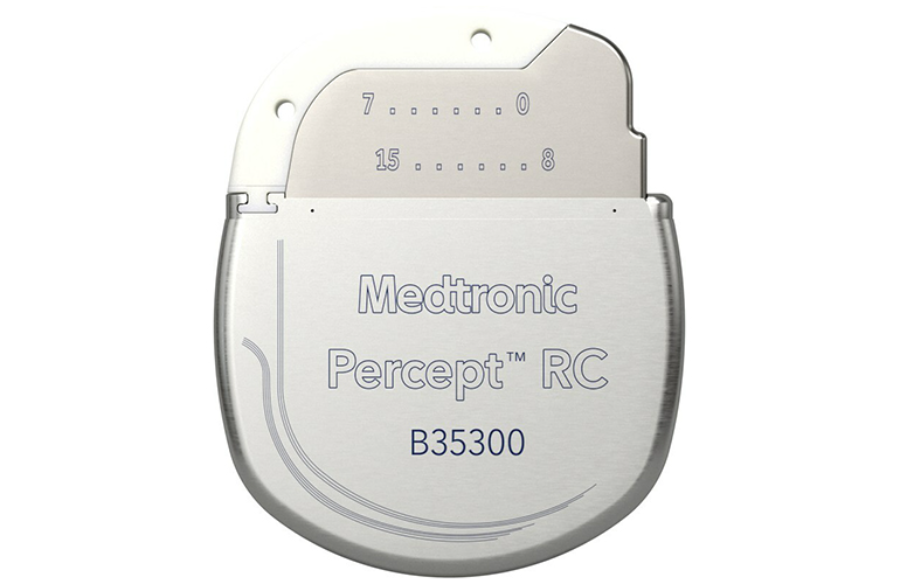
▲ Medtronic Percept RC Deep Brain Stimulator
Typically, standard DBS surgery is based on awake surgery, combining intraoperative microelectrode recording with clinical testing to ensure accurate lead placement. However, for patients who cannot tolerate prolonged withdrawal from medication during awake surgery, this may result in discomfort. This time, the FDA approval of Medtronic's DBS technology for use while patients are asleep will provide more treatment opportunities for a significant number of potential patients.
Many studies have evaluated the positive effects of DBS under sleep conditions, including a Phase 2 trial in 2021 using Medtronic's intraoperative imaging guidance (O-arm). In the study, leads were implanted into the subthalamic nucleus (STN) under O-arm imaging guidance based on the probabilistic stereotactic coordinates provided by the surgical robot. The surgical methods included general anesthesia (without microelectrode recording [MER]) (sleep group; n=20) or local anesthesia (with MER and clinical testing) (awake group; n=9).
Since the study used a randomized design, it supported the following hypothesis: Motor outcomes in PD patients after STN-DBS under sleep may not be inferior to standard awake surgery. In summary, at 6 months post-surgery, the mean motor improvement in the sleep group without medication was 52.3% (95% CI, 45.4%-59.2%) on the Unified Parkinson's Disease Rating Scale Part III between OFF and ON stimulation states, compared to 47.0% (95% CI, 23.8%-70.2%) in the awake group. Overall, three patients (33%) in the awake group and eight patients (40%) in the sleep group experienced at least one adverse event potentially related to neurostimulation.
Literature analysis, including retrospective, prospective non-randomized studies, meta-analyses, and literature reviews, indicates that there is no significant difference in motor outcomes between asleep and awake STN-DBS. Asleep surgery may reduce the overall incidence of surgical complications, while awake surgery might decrease stimulation-induced adverse events. Moreover, compared to the 1-2 millimeters of traditional DBS, asleep DBS can shorten operation time and place electrodes within 1 millimeter of the target with greater precision.
Earlier this year, Medtronic announced that its Percept RC DBS system received FDA approval, joining Medtronic's Percept portfolio, which includes the Percept PC neurostimulator, BrainSense technology, and SenSight directional leads.
Percept RC is the smallest and thinnest dual-channel neurostimulator available for DBS. Equipped with BrainSense technology, it captures and records brain signals, providing insights that allow doctors to adjust treatment based on the evolving needs of patients for personalized care. Unlike other rechargeable devices, the Percept RC battery has a lifespan of at least 15 years and offers stable, fast charging performance.
In 1987, Medtronic, in collaboration with Professor Benabid, a French neurosurgeon and physicist, successfully performed the world's first deep brain stimulation (DBS) surgery, marking the beginning of DBS therapy's clinical application worldwide.
In 1993, Medtronic's brain pacemaker received CE certification for the treatment of essential tremor.
In 1997, Medtronic's brain pacemaker received FDA approval for the treatment of essential tremor and Parkinson's disease.
In 1998, Europe, Canada, and Australia successively approved Medtronic's brain pacemaker for the treatment of Parkinson's disease.
In 1999, Medtronic's brain pacemaker officially entered China, opening a new chapter in the surgical treatment of Parkinson's disease in China.
In 2003, the U.S. Humanitarian Device Exemption (HDE) approval and EU approval were granted for Medtronic's deep brain stimulation (DBS) therapy to treat primary dystonia.
In 2009, Medtronic launched the world's first rechargeable brain pacemaker, ACTIVA RC. In the same year, it received Humanitarian Device Exemption approval and EU approval for the treatment of obsessive-compulsive disorder using Medtronic's brain pacemaker.
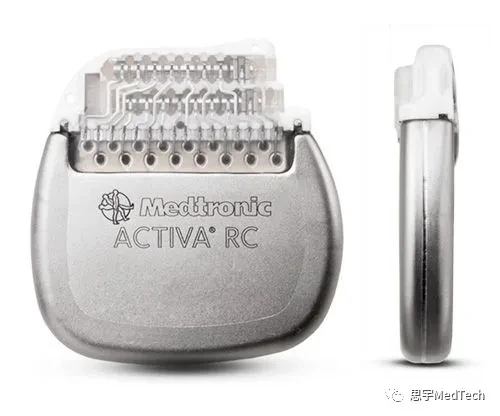
In 2010, Medtronic's brain pacemaker received CE certification for the treatment of drug-resistant epilepsy.
In 2013, Medtronic's ACTIVA PC+S received CE certification, enabling deep brain stimulation treatment while recording local field potentials.
In 2015, Medtronic's ACTIVA series of brain pacemakers successively obtained CE certification and FDA approval, making it the world's first brain pacemaker manufacturer to receive official approval for full-body MRI compatibility.
In 2016, Medtronic's brain pacemaker received approval from China's National Medical Products Administration for the treatment of dystonia and drug-resistant epilepsy.
In 2019, Medtronic's intelligent and perceptible brain pacemaker Percept™ PC successively obtained CE certification and FDA approval for market release.
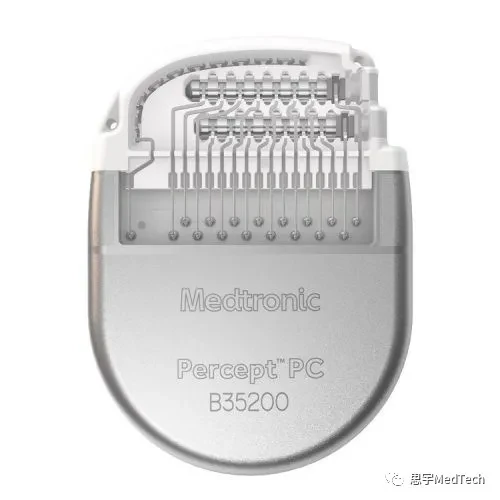
In 2022, Medtronic's intelligent and perceptible brain pacemaker Percept™ PC received approval from China's National Medical Products Administration (NMPA) for the treatment of Parkinson's disease, tremor, epilepsy, and dystonia.
In 2023, China's National Medical Products Administration approved Medtronic's Percept™ PC full implantable system for deep brain stimulation, which is compatible with both 3.0T and 1.5T full-body MRI scans.
On January 8, 2024, Medtronic announced that its rechargeable brain stimulator, Percept RC, received FDA approval.
1. Percept RC Deep Brain Neurostimulator
Deep Brain Stimulation (DBS), commonly known as a "brain pacemaker," involves electrodes implanted in the brain that emit electrical pulses to stimulate specific nuclei deep in the brain, thereby alleviating patients' symptoms. It is currently the internationally recognized preferred surgical treatment for Parkinson's disease.
In 1987, Medtronic, in collaboration with Professor Benabid, a French neurosurgeon, successfully performed the world's first deep brain stimulation surgery. This therapy officially entered China in 1999, and to date, it has been clinically applied globally for over 35 years.
Product Features
BrainSense™ Brain Sensing Technology: The Percept RC Deep Brain Stimulator is equipped with BrainSense™ brain sensing technology, which can capture brain signals associated with specific disease symptoms during treatment and analyze them using intelligent algorithms, providing objective data to support doctors' treatment strategies.
Directional Electrode System SenSight™: Enables directional stimulation through a unique 1-3-3-1 rounded segmented eight-contact design, allowing for free adjustment of stimulation direction and independent control of contact currents, thereby precisely targeting therapeutic nuclei while avoiding unnecessary brain areas.
Adopting NASA aerospace material technology, it achieves directional stimulation, equipped with BrainSense™ brain sensing technology and richer, more efficient programming functions, allowing patients to undergo clinical 3.0T and 1.5T MRI scans.
Convenient Charging: Simply place the portable wireless charging device on the chest, and it can wirelessly charge the implanted device via Bluetooth. It takes only about 1 hour to charge from 10% to full capacity.
Relevant Dynamics
This year marks the 75th anniversary of Medtronic's global establishment, the 35th year of its deep involvement in China, and the 25th anniversary of Medtronic Neurostimulation's journey with China.
At this year's CIIE, Medtronic will showcase nearly a hundred innovative products and technologies, among which the Percept™ RC, the world's new generation of implantable rechargeable deep brain neurostimulator, will make a heavyweight appearance as an "Asia-Pacific premiere" product on the CIIE booth.
2. Percept™ PC Neurostimulator
Percept PC is 20% smaller and 20% thinner than Medtronic's previous generation brain stimulator Activa PC, weighing only 61g. It is designed with better ergonomics, significantly improving patient comfort.
Despite its compact size, the Percept PC has a battery life of up to 15 years and offers stable and rapid charging performance.
Compared with other rechargeable brain stimulators, the battery technology with unique patented by Medtronic has less battery fading, providing a more reliable and longer-lasting battery; the charging speed is also very fast, reaching 90% charge within 1 hour.
3. SenSight™ has been clinically applied
The electrode is an important component of the deep brain stimulation (DBS) implant system, responsible for accurately and stably transmitting electrical stimulation to the target nuclei in the patient's brain. Its implantation is one of the key factors in the efficacy of DBS and postoperative management.
SenSight™ Directional Lead System Debuts at the 6th China International Import Expo in 2023.
Officially approved by the National Medical Products Administration (NMPA) in March 2024 for use with implantable neurostimulators in the treatment of Parkinson's disease, essential tremor, drug-resistant epilepsy, and dystonia.
In June 2024, SenSight™, the world's first directional lead system with brain sensing capabilities, officially began clinical application in hospitals in China.
Reportedly, the product is the world's first directional electrode system for brain pacemakers that has received full approval from China's National Medical Products Administration (NMPA), the U.S. FDA, and the EU CE for being both sensing and compatible with 3.0T and 1.5T whole-body MRI scans.
On July 20, 2024, Professor Chang Ying from the Department of Neurology and Professor Zhang Jinnan from the Department of Neurosurgery at Jida Third Hospital successfully implanted the world's first directional electrode system with brain sensing capabilities, SenSight™, in a 70-year-old patient who had suffered from Parkinson's disease for 15 years.
China has more than 4 million Parkinson's disease patients, over 10 million tremor patients, more than 400,000 dystonia patients, and over 9 million epilepsy patients. As China's population aging deepens further and the proportion of people with chronic diseases increases, the medical and health needs of the Chinese people are also growing day by day.
Rooted in China for 35 years, Medtronic has continuously brought cutting-edge medical innovation solutions to Chinese patients, jointly contributing to the construction of "Healthy China 2030." The introduction and standardized application of Deep Brain Stimulation therapy is a microcosm of this commitment.
We have reason to believe that in the near future, these advanced medical devices will benefit more patients in China, bringing them hope and a new lease on life, heralding the arrival of a new era of more precise and personalized healthcare.
This article is reprinted. AllAll views belong to the original platform.(Siyu Medtech), Medical Device ManufacturerIndustry ReviewDisclaimer: All viewpoints in the article are neutral and intended solely for sharing and discussion.
*Advertisement
To ensure you don't miss any content, everyone remember toMedical Device Business ReviewSet as starred? Oh,
Looking forward to meeting you at the first moment every time