China's First Domestically Developed Balloon-Expandable Transcatheter Aortic Valve System Prizvalve® Approved for Market Launch by NMPA

NewMed
Artificial Heart Valve System Developer
Source of the article: Siyu MedTech; Editor: Seven Kite
Reprint Requirements: Can be reprinted 24 hours after the first publication, with the source cited.


Early Bird Registration Open: The 2nd Global Surgical Robotics Conference
Endoscopic Surgical Robot Products Course |Registration for the Medical Aesthetics Competition Begins

Recently,Shanghai NewMed Medical Co., Ltd. ("NewMed")Independently DevelopedPrizvalve Transcatheter Aortic Valve System (“Prizvalve”)Approved for marketing by the National Medical Products Administration (NMPA) of China。
This product, asThe First Self-Developed Balloon-Expandable Valve in China to Hit the Market, applicable to patients with symptomatic, calcified, severe degenerative native aortic valve stenosis who, after assessment by the cardiac team in conjunction with a scoring system, are considered unsuitable for conventional surgical valve replacement.
# Prizvalve® Valve System
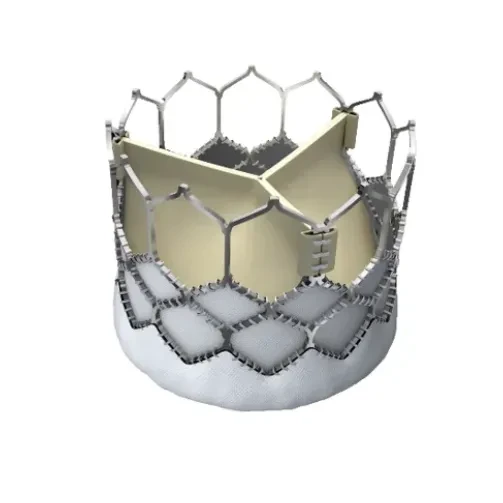
Prizvalve®The system isChina's First Balloon-Expandable Transcatheter Aortic Valve with Independent Intellectual Property Rights, is a product successfully developed after years of joint technical efforts by Shanghai NewMed Medical, the team of Academician Xingdong Zhang from the National Engineering Research Center for Biomaterials, Huaxi Hospital, Xijing Hospital, and other medical teams.
Using cobalt-chromium alloy with good biocompatibility as the valve frame material, the inner and outer edges of the frame are sewn with PET fabric skirts.Effectively reduce the occurrence of paravalvular leakage. The bioprosthetic leaflets are made from bovine pericardial material, processed through a uniqueAnti-calcification Treatment,Durable usability。 Short stent design with strong radial support, the delivery system is via transapical or transfemoral artery, femoral vein access with atrial septal puncture. The steerable delivery system can adjust coaxiality during valve deployment., which can effectively solve the problem of valve coaxiality. Prizvalve® can be used not only for aortic and mitral stenosis but also for the degeneration of bioprosthetic valves in the aortic, mitral, and tricuspid positions.Treatment of Related Heart Valve Diseases。
# Clinical Research
Patient Details
The patient is a 62-year-old male who reports bilateral lower limb edema and shortness of breath for 40 days, following tricuspid valve bioprosthetic replacement surgery 8 years ago.
Echocardiography Indicates: Reduced concentric motion of the biventricular walls, enlarged biatrial and left ventricular chambers, severe tricuspid regurgitation, EF 30%.
The diagnosis result is: Valvular heart disease, moderate to severe tricuspid regurgitation, postoperative tricuspid valve replacement, degeneration of tricuspid bioprosthetic valve, mild mitral regurgitation, arrhythmia, atrial fibrillation, heart failure (NYHA Class IV).
Surgical Plan and Implementation
Due to the patient's advanced age, both the patient and their family refused another surgical operation.Hope to solve the problem through interventional surgery.The patient had a Perimount 29-size bovine pericardial surgical bioprosthetic valve implanted 8 years ago. After an extensive discussion by Professor Sun Yingxian and Professor Guo Liang's team, combined with CT evaluation,Decision to use Prizvalve China-made balloon-expandable valve, planning to implant 29mm valve., Implementation of Transcatheter Tricuspid Valve Replacement (TTVR) After Surgical Bioprosthetic Valve Degeneration.
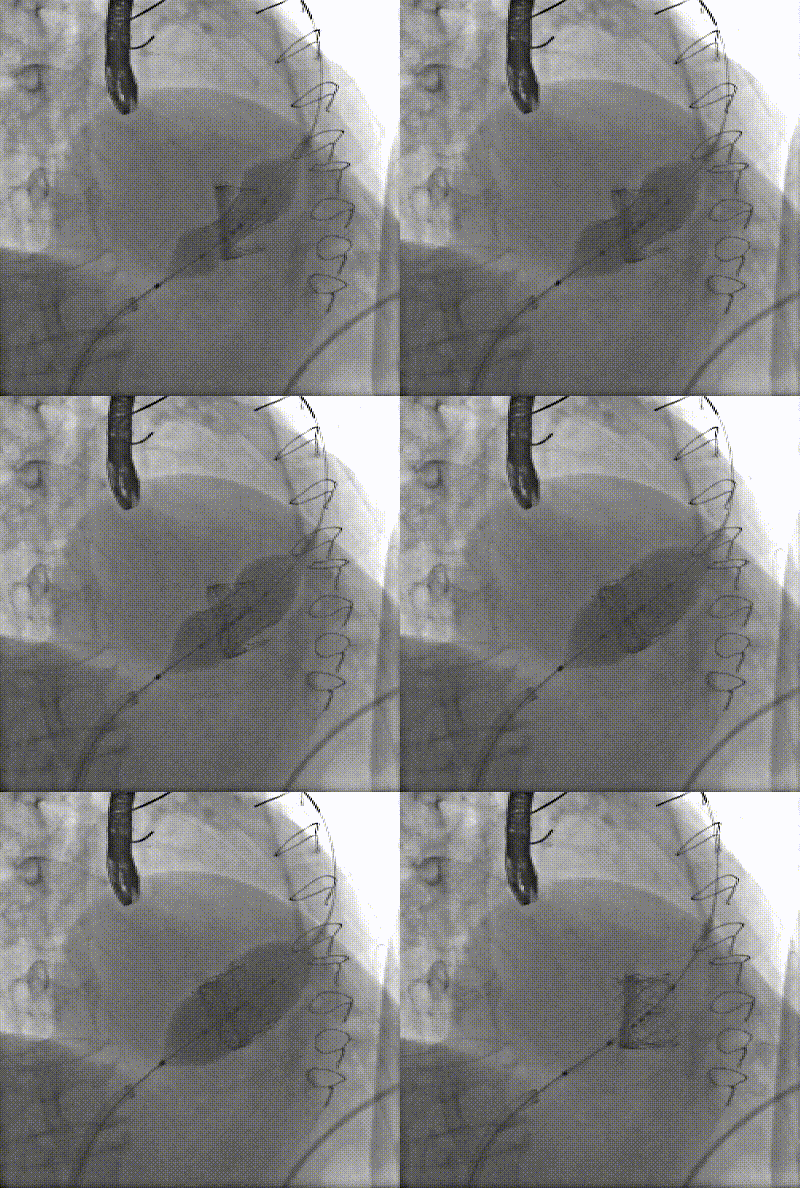
After deployment, the valve position can be further expanded by re-inflating the balloon. Intraoperative ultrasound showed,No regurgitation in the perivalvular and intravalvular areas.After the surgery, the catheter and guidewire were removed, the sheath was pulled out, and the right femoral vein was sutured with pressure applied to stop bleeding. The patient returned to the CCU after waking up from general anesthesia, and postoperative vital signs were stable.
# Overview of the Balloon-Expandable Valve Track
In terms of the expansion mechanism of heart valves, the mainstream TAVR products currently approved globally are mainly self-expanding (self-expandable valves) and balloon-expandable (balloon-expandable valves).Compared with self-expanding valves, balloon-expandable valves generally have higher radial force.。
Balloon-expandable TAVR has become one of the main treatment methods in the field of interventional treatment for heart valve diseases internationally.China's First Balloon-Expandable Valve System——Edwards Lifesciences SAPIEN 3 was approved for registration by the National Medical Products Administration (NMPA) in June 2020.With its "advanced balloon-expandable technology" and "low frame, outer skirt design," the SAPIEN 3 valve significantly enhances surgical safety and long-term prognosis for patients.
On December 14, 2022, Shanghai NewMed Medical Co., Ltd. ("NewMed") independently developedPrizballoon® Aortic Valve Balloon Dilation Catheter Approved for Marketing by the National Medical Products Administration (NMPA), this isNewMed Obtains the First Class III Medical Device Product Registration Certificate。It is expected to provide clinicians with a more reliable, integrated solution synchronized with international standards in the near future, combined with the Prizvalve® valve system.
AboutNewMed