

S&P Global Ranks Johnson & Johnson and Roche Top in Pharmaceutical Industry Strength Rating
Johnson & Johnson
Medical Device R&D and Manufacturer
According to the Zhitong Finance APP, Johnson & Johnson (JNJ.US) and Roche (ADR) (RHHBY.US) ranked at the top in the S&P Global Pharmaceuticals Industry Power Rankings, which comprehensively evaluated the world's top 17 leading pharmaceutical companies.
During the rating process, S&P used a variety of measurement tools, including competitive advantage, prospects for sustained revenue growth, operational efficiency, scale, scope, and diversification. These considerations are meticulously divided into two major categories: business risk and financial risk, to precisely determine the comprehensive strength rating of each company.
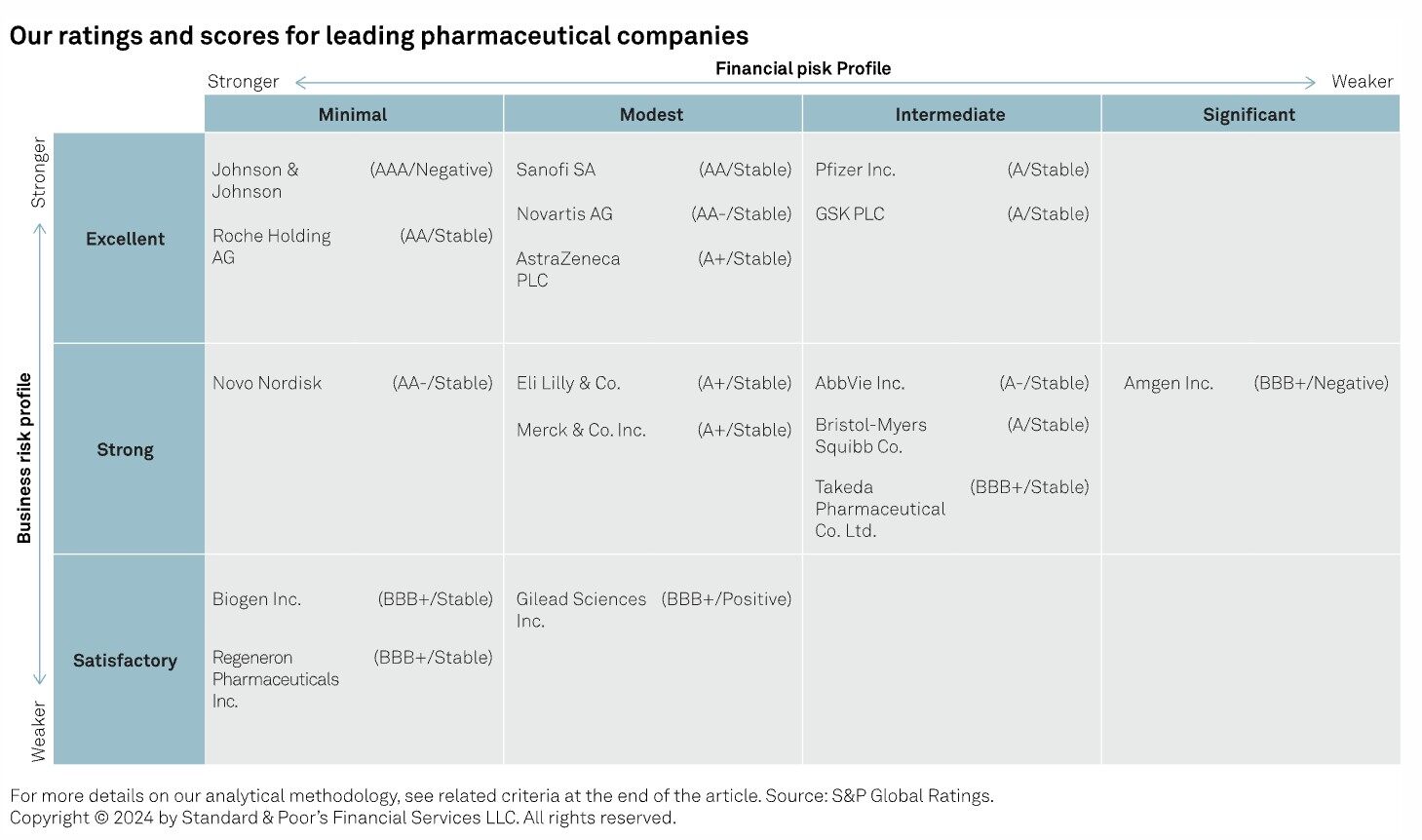
Figure 1
Business risk focuses on measuring a company's long-term profitability, while financial risk pays attention to the company's credit ratios, assessing its debt repayment ability through leverage. In its report, S&P noted that although leading brand pharmaceutical companies generally possess strong competitive advantages and differentiated products, significant differences in business strength still exist across the industry.
Johnson & Johnson and Roche stand out not only because of their excellence in the pharmaceutical field, but also because they each have independent medical technology businesses, which add highlights to their overall strength. It is worth mentioning that these two companies also rank among the top in financial risk ratings, being classified as "the lowest", demonstrating their outstanding performance in financial stability.
Meanwhile, companies such as Sanofi (SNY.US), Novartis (NVS.US), AstraZeneca (AZN.US), Pfizer (PFE.US), and GlaxoSmithKline (GSK.US) received the highest ratings in the business risk category. However, their financial risk status ranked slightly lower, placing them in the "moderate" tier. Novo Nordisk (NVO.US) and Eli Lilly (LLY.US) saw their stock prices soar due to the popularity of their diabetes and obesity products. They were ranked in the "strong" category for business risk, with Novo Nordisk further rated as having "minimal" financial risk.
S&P also pointed out that although Novo Nordisk and Eli Lilly are industry leaders in terms of market value, their business diversification is not as extensive as that of several other pharmaceutical giants. Both Eli Lilly and Novo Nordisk have a high focus on the diabetes treatment field, but with the strong revenue growth of GLP-1 products used for treating obesity, this focus is expected to decrease somewhat.
Companies rated as "Strong" in the business risk category also include Merck, AbbVie, Bristol-Myers Squibb, Takeda, and Amgen. In terms of financial risk, Amgen, due to several acquisitions in recent years, is the only company in the study rated as having "Significant" financial risk.
Biogen (BIIB.US), Regeneron Pharmaceuticals (REGN.US), and Gilead Sciences (GILD.US), which rank lower, have "satisfactory" performance in terms of business risk but face higher financial risks. In particular, the financial risk ratings for Biogen and Regeneron Pharmaceuticals are "the lowest," while that of Gilead Sciences is "moderate."
S&P emphasized that Johnson & Johnson's main advantage lies in its scale, with revenue reaching $85 billion in 2023, far surpassing other companies. S&P believes that economies of scale, negotiating power, and market leadership are the main competitive advantages of larger companies.
Notably, despite the standout performance of some pharmaceutical companies' stock returns so far this year, they do not appear on the list of top overall return companies. For instance, Eli Lilly's stock price has surged an impressive 58%, driven primarily by the robust sales performance of its GLP-1 class drugs Mounjaro (tirzepatide) and Zepbound (tirzepatide) in the type 2 diabetes and weight loss markets.
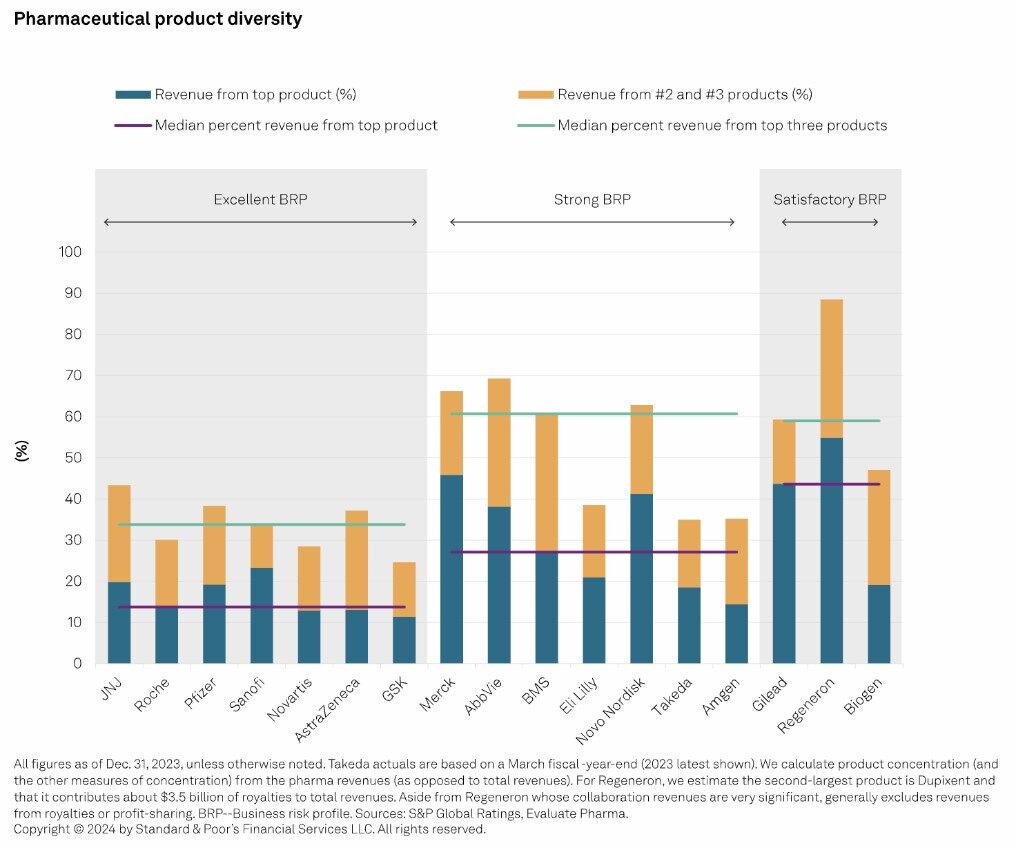
Figure 2
Similarly, Regeneron Pharmaceuticals' stock has also performed well, rising about 34% year-to-date, driven by the continued strong sales of its VEGF inhibitor Eylea and Eylea HD (aflibercept), as well as Dupixent (dupilumab), a biologic for allergic conditions co-marketed with Sanofi. This remarkable growth not only highlights these companies' expertise in specific therapeutic areas but also reflects the market's high recognition and demand for their innovative drugs.
Finally, the report pointed out that due to industry and regulatory developments, the overall business strength of the pharmaceutical industry has declined in the past few years. At the same time, the report also predicted the fastest-growing therapeutic areas in the next seven years, including gastrointestinal (16.6%), dermatology (13.5%), oncology (9.8%), and cardiovascular (9.4%).