

Boston Scientific's Farapulse PFA System Accelerates Global Launch with Regulatory Approvals in Key Markets

Boston Scientific
Medical Device Manufacturer
Following the FDA's "Breakthrough Device Designation" in 2019 and EU CE approval in 2021, two cardiac pulsed field ablation products from Boston Scientific's Farapulse platform received approval for registration from China's National Medical Products Administration (NMPA) in July 2024.
The products approved this time are a disposable cardiac pulsed field ablation catheter and a cardiac pulsed field ablation system. The two products are used together for the treatment of patients with drug-refractory, recurrent, symptomatic paroxysmal atrial fibrillation.
Atrial fibrillation is an arrhythmia that affects 50 million people worldwide. Currently, the main ablation procedures used in clinical treatments for rapid arrhythmia include radiofrequency ablation and cryoablation. However, the ablation energy from these methods lacks tissue selectivity, which can easily lead to potential complications such as blood clots, esophageal injuries, and phrenic nerve damage.
Compared with the former two technologies, pulsed electric field ablation is considered a revolutionary new ablation technology. It features tissue selectivity, non-thermal effects, and instantaneous action, allowing it to ablate target myocardial tissue while avoiding damage to surrounding tissues. With advantages such as enhanced safety, rapidity, and fewer complications, it effectively addresses the pain points of existing surgical methods and demonstrates significant clinical application potential.
The competition between ablation device companies is also escalating in sync with advancements in ablation technology. To date, Johnson & Johnson, Boston Scientific, Abbott, and Medtronic have taken the global lead in the cardiac pulsed field ablation sector. Additionally, China's capabilities are developing in parallel, showing potential to rival overseas giants.
VCBeat has compiled the process of how four companies established their pulsed field ablation technologies; at the same time, we also attempt to look into the future trends of China's pulsed field ablation device and technology market by analyzing the commercial progress of these four companies in China.
In 1998, Johnson & Johnson acquired Biosense Webster for $400 million, launching the world's first cardiac electrophysiology radiofrequency catheter ablation product, which pioneered a new branch in the electrophysiology field—ablation.
Over the past two decades, radiofrequency and cryoablation have become the mainstream in the field of ablation, known as the "Song of Ice and Fire" in the atrial fibrillation ablation arena. Once PFA emerged, it became "the dominant cardiac ablation technology for the next decade." A complete PFA product includes an energy device (generator/equipment), an ablation catheter, and a mapping platform.
Boston Scientific is the pioneer of PFA, and its Farapulse was the earliest to obtain CE certification as a PFA owner. In June 2021, Boston Scientific completed the acquisition of Farapulse, which was highly complementary to its own electrophysiology product line. At that time, Farapulse's PFA product had received approval for marketing in January of the same year, becoming the world’s first commercially available PFA product. This gave Boston Scientific a competitive edge against strong rivals such as Johnson & Johnson and Medtronic.
Farapulse was founded by Dr. Steven Mickelsen in 2012. While studying at the University of New Mexico School of Medicine, Steven Mickelsen was introduced to PFA technology and continued to learn and research its development. In 2012, while serving as an assistant professor at the University of Iowa, he filed a patent application with the U.S. Patent Office and established Farapulse.
The drawbacks of traditional catheter ablation technology have made the market eagerly anticipate transformative innovations. Farapulse, which owns this innovative technology, has become a darling of capital, completing multiple rounds of financing before being fully acquired by Boston Scientific. Currently, founder Dr. Steven has exited the management team and founded Field Medical, which is developing the second-generation PFA catheter ablation technology and has completed a $14 million seed round of financing.
Farapulse PFA products include the Farawave catheter, Farastar generator, and Faradrive steerable sheath. The catheter is designed in two configurations: a planar flower-like shape and a three-dimensional basket shape, meeting various clinical ablation needs.
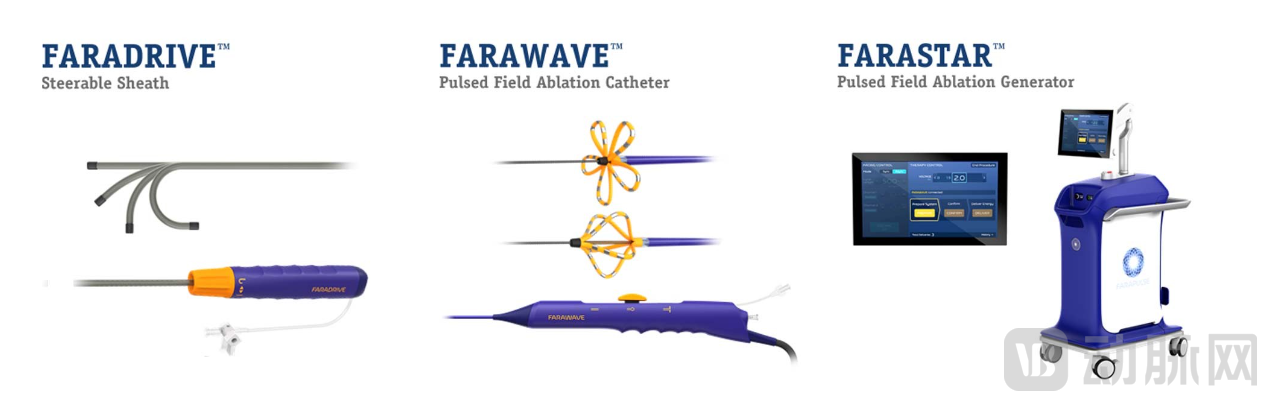
Farapulse PFA Product (Image from official website)
FarapulsThe e-catheter is designed to handle a range of PV anatomies using guidewire catheters with variable distal shapes (basket and flower forms). Its adaptable shape and diameter allow stable contact with different pulmonary vein morphologies, enabling the device to conform to each patient's anatomy. Additionally, this innovative catheter design enhances both physician operational efficiency and procedural efficiency, shortens the learning curve for operators, and improves the accessibility of atrial fibrillation treatment.。
Currently, the indication for the Farapulse PFA product is drug-resistant, recurrent, symptomatic, paroxysmal atrial fibrillation. To expand its indications, Boston Scientific has initiated patient recruitment for the AVANT GUARD clinical trial to study the safety and efficacy of PFA therapy as a first-line treatment for persistent atrial fibrillation. This trial will evaluate the safety and effectiveness of Farapulse PFA as a first-line treatment for persistent atrial fibrillation compared to antiarrhythmic drug therapy.
In addition, Boston Scientific plans to approve the Farapoint catheter in 2025, and launch the new Farawave Nav catheter and Faraview software integrated with the Rhythmia mapping system by the end of 2024.
It is a bit regrettable that Farapulse's PFA product received the FDA "Breakthrough Device" designation in 2019, but only successfully obtained FDA approval in January 2024. During this period, Medtronic caught up and surpassed, receiving FDA approval in December 2023, becoming the world’s first FDA-approved PFA product for the treatment of paroxysmal and persistent atrial fibrillation.
Medtronic Holds Three Pulse Ablation Catheters, No Worries with Ample Resources
Medtronic's PFA products include the self-developed PulSelect and the Sphere-9 cardiac ablation catheter acquired from Affera.
Medtronic's PulSelect delivers bipolar, biphasic pulse electric fields through a circular multi-electrode array catheter and has received FDA and CE approval. However, its circular design has some shortcomings in terms of pulmonary vein conformity, single circular size (25mm), and large sheath size (10Fr), which also puts Medtronic at a disadvantage in its competition with Boston Scientific and Johnson & Johnson.
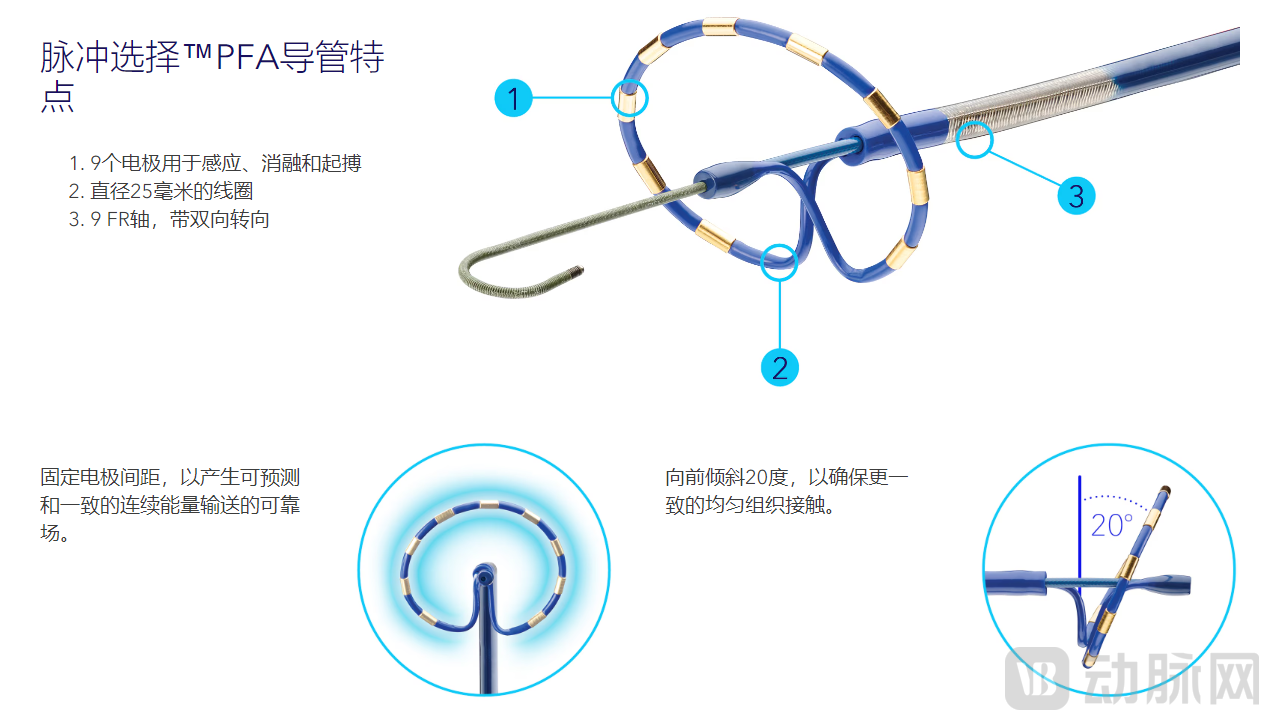
Medtronic's PFA Product (Image from official website)
The Sphere-9 cardiac ablation catheter makes up for the shortcomings of the aforementioned products. In August 2022, Medtronic acquired Affera for nearly $1 billion, incorporating the latter's electrophysiology treatment solutions into its portfolio.
Affera, founded in 2015, primarily designs and manufactures cardiac mapping and navigation systems, as well as catheter-based cardiac ablation technologies, including differentiated focal pulse field ablation solutions for the treatment of arrhythmias. Its comprehensive electrophysiology treatment solution includes the Sphere-9 cardiac ablation catheter, an energy generator, and the Prism-1 3D mapping system. In March 2023, Affera's Sphere-9 cardiac ablation catheter and Prism-1 3D mapping system received CE certification.
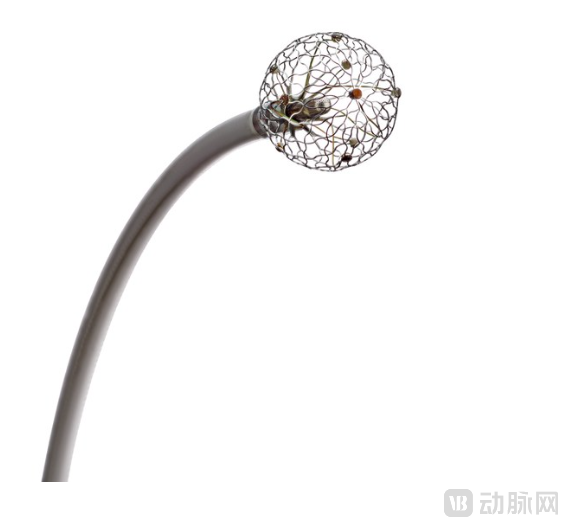
Medtronic's PFA Product (Image from official website)
The Sphere-9 cardiac ablation catheter is the core of the solution, a 7.5Fr bidirectional steerable catheter with an inflatable conductive lattice electrode. The catheter is inserted into the sheath in a folded form, but once inside the heart, the lattice expands into a spherical structure with a diameter of 9 millimeters. Nine miniature electrodes/temperature sensors, each with a diameter of 0.7 millimeters, are evenly distributed across the lattice surface. Prism-1 allows for six degrees of freedom in position tracking by using multiple position sensors at the tip, enabling the tracking and creation of a three-dimensional map of the chamber.
Sphere-9 combines mapping, navigation, and therapeutic functions, and is currently the only catheter capable of delivering both radiofrequency and electropulse energy for ablation, allowing physicians to tailor treatment plans according to patient needs during the ablation procedure.
In addition, Medtronic also has a PFA catheter called Sphere360, which is considered to truly achieve one-time complete ablation. Sphere360 is a new type of 7F multi-segment lattice spherical catheter with a 34-lattice spherical electrode at the distal end of the catheter, capable of delivering electrical pulses uniformly and efficiently. It can adjust the electrode shape according to the patient's physiological structure, perfectly fitting various pulmonary vein anatomical structures. It integrates seamlessly with the Affera mapping and ablation system, achieving minimal to zero fluoroscopy. Medtronic announced clinical study results about this catheter at the 2024 European Heart Rhythm Association meeting, showing positive safety and efficacy.
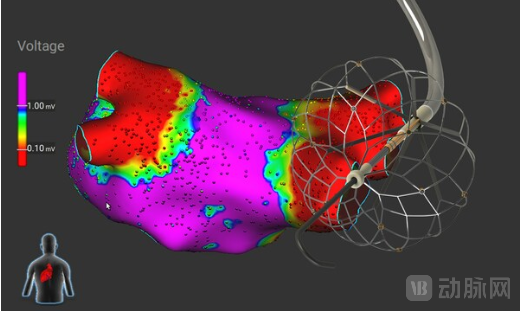
Medtronic's PFA Product (Image from official website)
Johnson & Johnson's PFA Product Launches in Japan, Officially Available
Johnson & Johnson, the pioneer in cardiac ablation, finally received the PFA approval in 2024. Its VARIPULSE was successively approved by Japanese regulators in January and received CE mark in February for the treatment of symptomatic, refractory, recurrent paroxysmal atrial fibrillation.
Johnson & Johnson's PFA product VARIPULSE includes the VARIPULSE catheter, trupulse generator, and CARTO 3D cardiac mapping system.
The VARIPULSE ablation catheter is developed based on Johnson & Johnson's previous mapping catheter, the Lasso catheter, and represents a continuation of the Lasso catheter technology. This ablation catheter features 10 electrodes on its circular tip, with an adjustable circular tip size ranging from 25 to 35mm. Additionally, the catheter allows for bidirectional deflection, with one side deflecting up to 180° and the other side up to 90°, making it suitable for use in all four pulmonary veins, including the right inferior pulmonary vein.
TruPulse Generator is a device used for cardiac ablation therapy, providing reliable energy delivery and control during the treatment of cardiac arrhythmias to achieve precise ablation outcomes. This generator is typically used in conjunction with other ablation devices and catheters to create pulsed fields within the heart for accurate ablation of cardiac tissue. It features highly precise energy control and modulation capabilities, allowing customized treatment based on the physician’s requirements, thereby enhancing treatment efficacy and safety.
Johnson & Johnson Executive Evaluation,VARIPULSE stands out due to its integration with the CARTO 3D cardiac mapping system. VARIPULSE features real-time visualization and a feedback mechanism, enabling an intuitive and repeatable workflow. CARTO represents Johnson & Johnson's greatest competitive advantage in the PFA field for the future.
Biosense Webster, a Johnson & Johnson company focused on electrophysiology, submitted the VARIPULSE application for FDA approval in March.
Abbott PFA has entered CE clinical enrollment, followed closely.
Compared with the aforementioned three, Abbott's progress in PFA has been slower. In March 2024, Abbott just initiated the IDE clinical study for its PFA product, Volt.Abbott considers Volt as a second-generation PFA product, which can achieve pulmonary vein isolation with only one ablation, compared to other products.
The biggest difference between Volt PFA and the first generation lies in its ablation catheter, which has a balloon at the distal end instead of various irregular shapes (such as circular or flower shapes), with eight ablative band electrodes attached to the balloon. The balloon and electrode design of Volt PFA allows for a tight fit with the pulmonary vein vestibule, enabling more precise ablation.
Abbott has also designed unique positioning, manipulation, and steering for the Volt PFA catheter. This provides doctors with clearer guidance and further improves contact with the target cardiac tissue. Its balloon functionality can effectively transfer energy to the tissue, thereby improving the way the catheter creates lesions and blocking unstable signals in the heart.
Volt PFA can be used in conjunction with Abbott's EnSite X EP 3D mapping system. The clear visualization provided by EnSite X EP allows physicians to precisely identify areas of the heart that require ablation, enabling the Volt PFA catheter to target tissues more accurately for treatment. The benefit of this level of specificity is a more efficient workflow and reduced radiation exposure for both patients and physicians.
Factors Affecting the Efficacy of PFA Catheter Ablation
Global Giants Race to Expand, China's Strength Rises
According to Frost & Sullivan's forecast, the market size of China's cardiac electrophysiology devices will reach 41.973 billion yuan by 2032, with a compound annual growth rate of 15.06% from 2025 to 2032.
The vast market space and development potential in China have attracted the attention of industry giants. The successful launch of Boston Scientific's PFA product in the Chinese market marks its first-mover advantage in the competition among giants. Previously, Boston Scientific had leveraged policy support such as the "Innovation Channel," "Pilot Programs," and the "Greater Bay Area Medical Device Access" to introduce the PFA system for clinical use in Hainan Lecheng and the Greater Bay Area.
But this does not mean it can rest easy, as Medtronic and Johnson & Johnson's PFA products have also entered the NMPA Innovative Medical Device Special Review Process, and their approval is just around the corner.
Moreover, these electrophysiology giants are also facing pressure from China's local innovative forces. The PFA products of Jinjiang Electronics and Denovo Electrophysiology have been approved for marketing. The PFA product of Beixing Medical has entered the NMPA review process, and there are also XuanYu Medical, Aikema Medical, XinLvTong, ZhouLing Medical, and YuanShan Medical. Among them, the PFA products of Huitai Medical, MicroElectroPhysiology, and Maiwei Medical have entered various clinical stages.
It can be foreseen that China's PFA market will witness fierce market competition in the future. However, under the balance of power among various forces, the biggest beneficiaries will still be the patients.