Source of the article: HeartFuture; Editor: Jessi
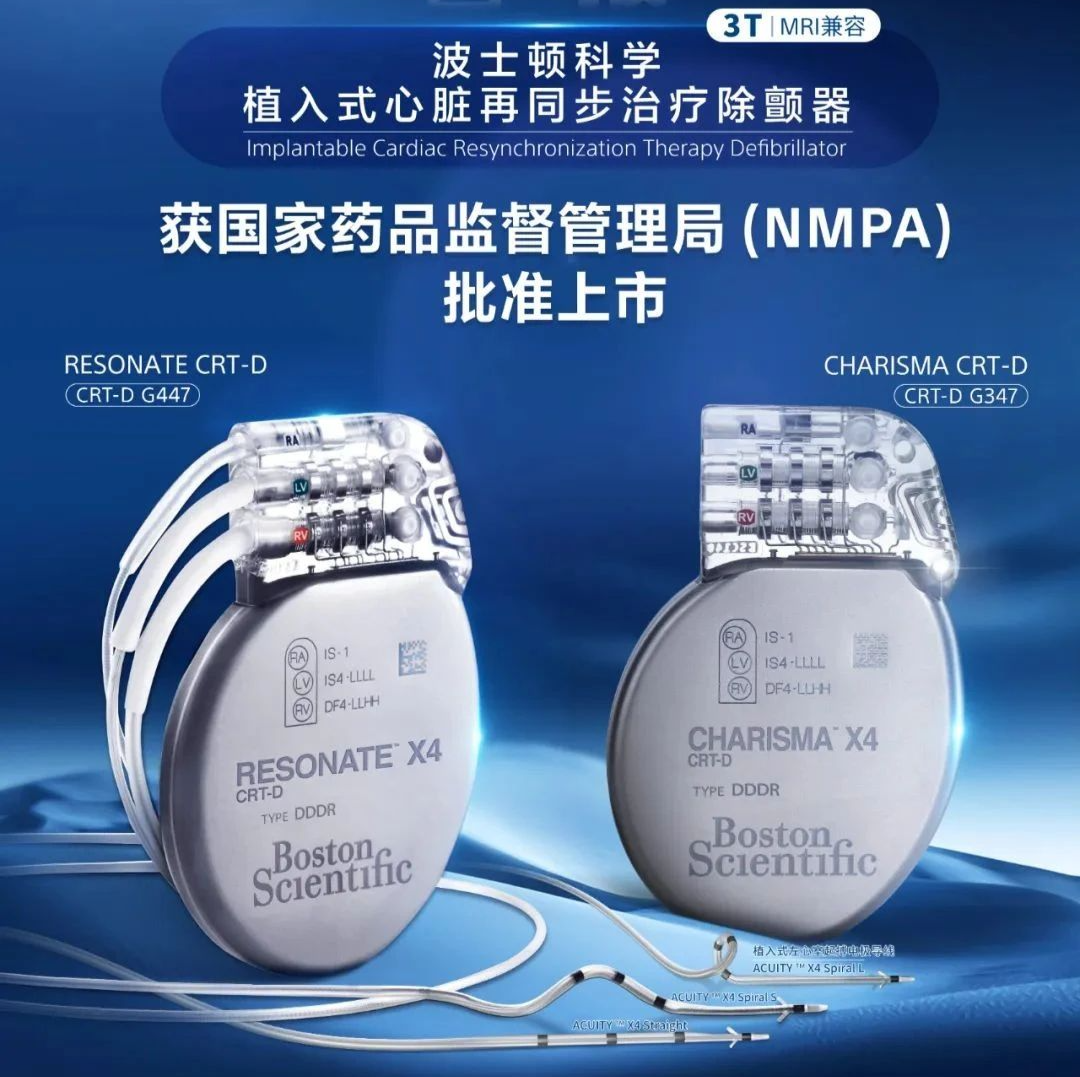
Reprint Requirements: If the source of the article is indicated at the beginning of the text, it can be reprinted directly.Recently,Boston ScientificThe company announced that its3T MRI-Compatible Implantable Cardiac Resynchronization Therapy DefibrillatorObtained the approval from the National Medical Products Administration (NMPA)Approved for marketing,Will provide broader and more "inclusive" protection for a large number of patients with arrhythmia in China:Taking into Account MRI Examination, broaden the disease diagnosis and treatment methods for patients, and comprehensively enhance health management.
The following focuses on introducing the development by Boston Scientific Corporation. HeartLogic Algorithm, this is the latest implantable cardioverter defibrillator Resonate CRT-D from Boston ScientificFunctions for Heart Failure Management。The R&D team made a significant discovery in the early research that changes in heart sounds are highly correlated with the worsening of heart failure. Data from 500 individuals were collected and processed using multiple sensors on the device. Focusing on heart sounds as the core parameter, several other parameters related to heart failure were also analyzed, including heart rate, respiration, transthoracic impedance, and activity levels.Develop an algorithm to integrate and output a composite index closely related to left atrial pressure, indicating the progression of heart failure deterioration., and then use a 400-case enrollment trial to validate the effectiveness of this algorithm,The results showed a 70% sensitivity in warning of acute heart failure deterioration.,The number of false alarms per person per year is 1.4, and it can provide early warning of acute heart failure deterioration events 34 days in advance.。Based on these clinical results, the product received FDA approval, but it also requires patients to have this implantable cardioverter defibrillator to use the HeartLogic feature.Heartlogic also won the prestigious "Nobel Prize of the pharmaceutical industry," the Prix Galien USA Award.2019 "Best Medical Technology Award"Nomination.
# Product Development Background
Currently, cardiovascular disease has become the leading cause of death among residents in China. According to the "Report on Cardiovascular Health and Diseases in China 2020",The number of people with cardiovascular disease in China is about 330 million, and the mortality rate is on the rise.. Among them,The Number of Patients with Heart Failure Reaches 8.9 Million, while the trend of sudden cardiac death is becoming younger.
Cardiac Implantable Electronic Devices (CIED) include pacemakers,Implantable Cardioverter Defibrillator (ICD)Cardiac resynchronization therapy (CRT) and implantable cardioverter-defibrillators (ICD) are effective and common interventional methods for preventing sudden cardiac death. For high-risk patients with heart failure combined with the risk of sudden death,Implantable Cardiac Resynchronization Therapy Defibrillator (CRT-D)Can significantly improve patients' symptoms, enhance their quality of life, and reduce heart failure hospitalization rates and all-cause mortality.。MRI is a major innovation in the history of medical imaging.: Zero radiation, superior soft tissue resolution, true three-dimensional imaging, and many other advantages such as functional imaging have made magnetic resonance irreplaceable in the fields of tumor diagnosis, neurological examinations, and cartilage joints.Considered the "Gold Standard" for Soft Tissue Imaging。However, metal components cannot be brought into the strong magnetic field environment of an MRI examination room.,The powerful magnetic field environment during MRI scans can severely affect traditional CRT-D/ICD devices., such as: electrode tip heating, threshold increase, and device casing vibration, etc. The high-energy radiofrequency magnetic field of MRI can cause the lead tip temperature to rise, leading to an increase in local tissue temperature, myocardial damage, and threshold elevation. The combined effect of the radiofrequency and gradient magnetic fields may result in abnormal electrical stimulation, potentially causing arrhythmias. For a long time,MRI is an absolute contraindication following traditional CRT-D/ICD implantation.And becauseLimitations of ICD and CRT-D Device Implantation in Diagnosis and TreatmentHas also become a major难题困扰 clinical practice。Through the joint efforts of materials scientists, clinical medical engineers, and physicians, improvements have been made to the materials used in CRT-D/ICD implant products. Special anti-magnetic devices have been designed for the product's electrodes and pulse generators respectively.Enabling the entire system to operate normally in magnetic resonance with a specific field strength.Some companies have also designed quick programmable buttons or remote controls specifically for MRI examinations to meet the clinical need for rapid MRI scanning.Based on the actual needs of patients in China, Boston Scientific's recent approvalMRI-Compatible CRT-D ProductsWill provide patients with solutions that can adapt to more medical scenarios.。While providing protection for patients with arrhythmia, it can also meet the clinical needs of MRI examinations.`, creating conditions for patients to receive timely and precise treatment.`
# Product Market Overview
Implantable Cardiac Resynchronization Therapy Defibrillator (CRT-D) MarketDeveloped rapidly in recent years, itsThe main driving factors include the increasing prevalence of cardiovascular diseases.、Sedentary LifestyleAndObesityThe rise of risk factors such as...CRT-DNot only can it improve the cardiac function of patients, but it can also effectively prevent sudden cardiac death (SCD)., thus becoming a common choice for high-risk heart failure patients.According to the statistics and forecast by QY Research,In 2023, the global market sales of implantable cardioverter defibrillators reached 3.3 billion US dollars.,It is expected to reach 4.7 billion US dollars by 2030,Compound Annual Growth Rate (CAGR) is 5.3%。
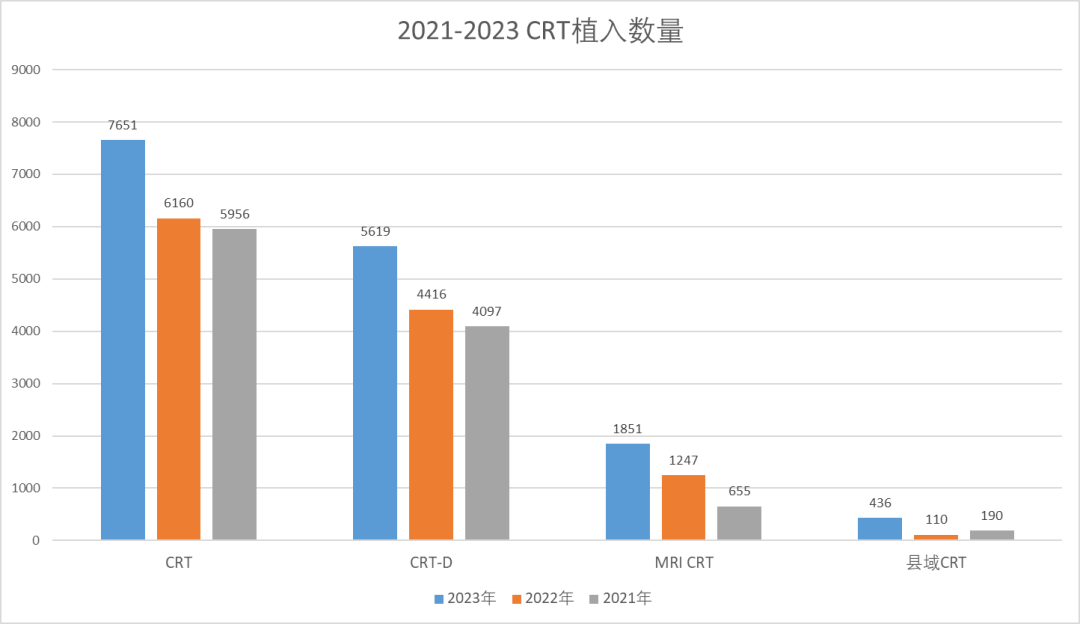
According to the relevant data published by the National Arrhythmia Center and the data provided by various domestic and international enterprises related to clinical applications in China, the application of cardiac implantable electronic devices in China showed steady growth in 2023.The usage proportion of MRI-compatible cardiac implantable electronic devices continues to increase.。
A total of 7,651 CRTs were implanted in 2023, increasing by 19% compared to 2022, with a significant rise in the proportion of CRT-D.Up to 73%,MRI-compatible CRT reaches 1,851 cases, accounting for 24%.In 2023, the total CRT implant volume in county-level regions was 436 cases, increasing by 65% compared to 2022. The CRT implant volume in county-level regions accounted for 6% of China's total CRT.
Thanks to China's Healthy China strategy, socio-economic progress, the promotion by industry associations, and the strengthening of public health awareness, the number of various surgeries performed has been increasing year by year. However,The implantation volume of various CIEDs, especially ICDs and CRTs, still lags far behind developed countries.。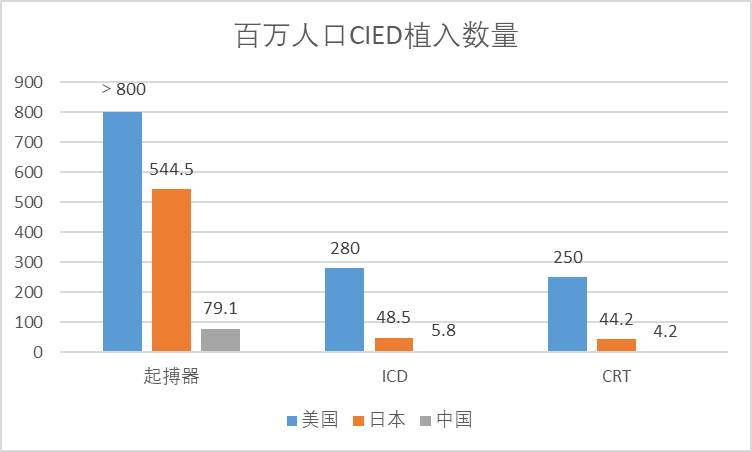
The major companies in the global Implantable Cardiac Resynchronization Therapy Defibrillator (CRT-D) market includeMedtronic, Philips Healthcare, Boston ScientificAndAbbottetc.Medtronic is one of the key players in this field, but its products were once classified as a Class I recall by the FDA due to the potential reduction in shock energy during high-pressure treatment.In addition, Medtronic has also experienced recalls due to battery issues.Due to the high R&D barriers,CRT Field in China Still Monopolized by Foreign Enterprises. Currently,OnlyMinimally Invasive MedicalImported PLATINIUMTM CRT-D Series Products Obtain Import Registration Certificate。
As early as 2014, MicroPort Medical partnered with Sorin (the cardiac rhythm management business under LivaNova) to establish the joint venture "MicroPort Cardiac Rhythm Management", collaboratively developing, manufacturing, and marketing cardiac rhythm management devices (including pacemakers, ICDs, and CRTs). In 2015,Created by Leading Heart Rhythm Management, the PLATINIUMTM series of implantable defibrillatorsThe product hasThe World's Longest 14.3-Year Service Life,It can reduce the potential risks associated with frequent ICD replacements, and has received positive feedback in overseas markets. This shows that,The Localization of CRT in China is Worth Attention。

Boston Scientific (NYSE: BSX) was founded in 1979, with its headquarters in Natick, Massachusetts, USA. It is a global leading medical technology company. In 1997, Boston Scientific entered China, establishing branch offices and research centers in Beijing, Shanghai, and Guangzhou, with its China headquarters located in Shanghai. In May 1992, Boston Scientific was successfully listed on the New York Stock Exchange.The company ownsMore than 17,000 products that improve the quality of life, covering areas such as cardiac intervention, structural heart disease, peripheral and tumor intervention, cardiac rhythm management and electrophysiology, endoscopic intervention, respiratory intervention, urology, otolaryngology, and neuromodulation.The company is currently inWith approximately 41,000 employees globally and manufacturing facilities at 16 locations, products are sold to nearly 115 countries and regions.。In the second quarter of 2024, Boston Scientific's single-quarter revenue was $4.21 billion, of whichCardiovascular devices account for 64%, a year-on-year increase of 18%.; Medical surgical instruments account for 36% of revenue, up 8% year-over-year.- Electrophysiology: Global net sales increased by 121.9%, operational/organic growth by 124.6%.
Following its approval in the U.S., FARAPULSE sales surged, driven by excellent commercial execution, robust supply, and positive real-world outcomes.International sales benefited from the continued advancement and adoption of FARAPULSE in Europe and the newly launched Asia-Pacific markets.- Interventional Cardiology Treatment: Global net sales increased by 5.7%, with operational/organic growth of 8.7%.
- WATCHMAN (Left Atrial Appendage Closure Business): Global net sales increased by 19.6%, with operational/organic growth of 20.0%.The continued rollout of WATCHMAN FLX Pro in the United States and Japan contributed to strong growth.
- Cardiac Rhythm Management: Global net sales increased by 1.9%, with operational/organic growth of 2.9%.
- Peripheral Intervention Business: Global net sales increased by 10.2%, operational growth by 12.3%, and organic growth by 9.4%.