On August 15, 2024, the U.S. FDA approvedAstraZenecaTheImfinzi (durvalumab, durvalumab)For adult patients with non-small cell lung cancer (NSCLC) as adjuvant treatment after surgery, these patients have no known epidermal growth factor receptor (EGFR) mutations or anaplastic lymphoma kinase (ALK) rearrangements.
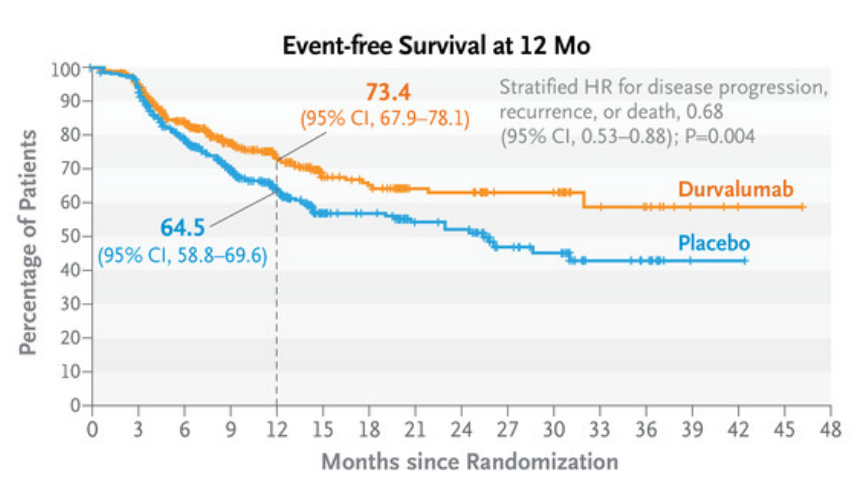
According to the results of the AEGEAN III clinical trial, the treatment regimen based on Imfinzi (durvalumab) canThe risk of recurrence, progression, or death was reduced by 32%.
Original link:
https://www.fda.gov/drugs/resources-information-approved-drugs/fda-approves-neoadjuvantadjuvant-durvalumab-resectable-non-small-cell-lung-cancer
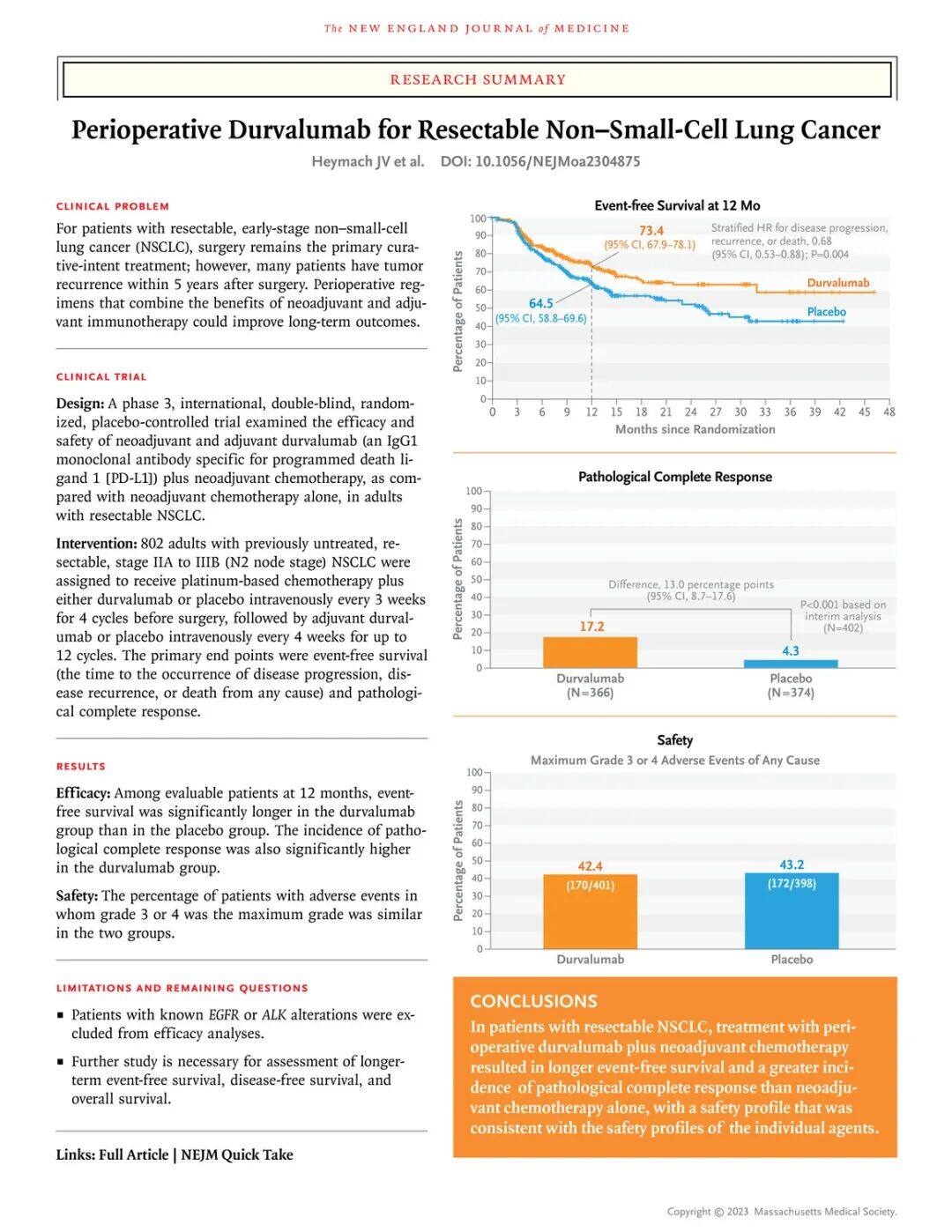
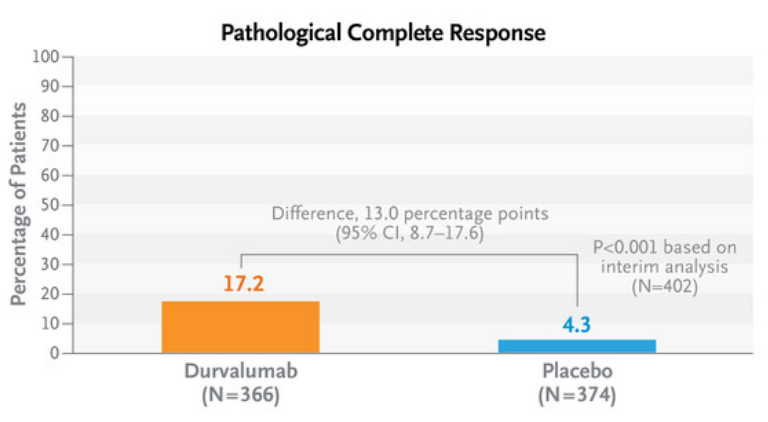
The approval by the U.S. FDA this time is based onAEGEAN TrialThe positive results were published in October 2023 in The New England Journal of Medicine.AEGEAN is a randomized, double-blind, multi-center, placebo-controlled global Phase III trial designed to evaluate Imfinzi as a perioperative treatment for patients with resectable Stage IIA-IIIB NSCLC (regardless of PD-L1 expression levels).https://www.nejm.org/doi/full/10.1056/NEJMoa2304875The interim analysis results of Event-Free Survival (EFS) showed that, compared with chemotherapy alone, the Imfinzi-based treatment regimen demonstrated benefits when administered before and after surgery.Can lead to recurrence, progression, or deathRisk significantly reduced by 32%。EFS Results of the AEGEAN TrialIn the final analysis of pathological complete response rate (pCR), patients who received Imfinzi combined with neoadjuvant chemotherapy before surgerypCR rate was 17.2%, while the rate was 4.3% for patients who received neoadjuvant chemotherapy alone.The pathological complete response (pCR) rate in patients treated with the Imfinzi regimen was 4 times that of the control group!pCR Results of the AEGEAN TrialImfinzi(durvalumab)It is a humanized monoclonal antibody that binds to the PD-L1 protein, blocking the interaction between PD-L1 and PD-1 and CD80 proteins, countering the tumor's immune escape strategy, and relieving the suppression of immune responses.Imfinzi is the first approved immunotherapy for unresectable Stage III NSCLC patients whose disease has not progressed after chemoradiation. Additionally, Imfinzi in combination with chemotherapy (etoposide and carboplatin or cisplatin) is approved for the treatment of extensive-stage small cell lung cancer, and in combination with Imjudo (tremelimumab) and chemotherapy for the treatment of metastatic NSCLC.In limited-stage small cell lung cancer, Imfinzi demonstrated a statistically significant and clinically meaningful improvement in overall survival (OS) and progression-free survival compared to placebo in the ADRIATIC Phase III trial.In addition to the lung cancer indication, Imfinzi has also been approved in combination with chemotherapy (gemcitabine plus cisplatin) for locally advanced or metastatic biliary tract cancer, and in combination with Imjudo for unresectable hepatocellular carcinoma (HCC). After being approved in the United States for use in combination with chemotherapy (carboplatin plus paclitaxel), it is used to treat primary advanced or recurrent endometrial cancer with mismatch repair.Since its first approval in May 2017, Imfinzi has been used as a single treatment or in combination with other anti-cancer therapies for patients with SCLC, NSCLC, breast cancer, bladder cancer, various gastrointestinal and gynecological cancers, and other solid tumors.