Recently, pharmaceutical giants have successively announced their financial results for the first half of 2024, while also disclosing the progress of their pipeline projects under development, including drugs they have decided to discontinue. This article will review the projects abandoned by Roche, Sanofi, Novartis, AstraZeneca, BMS, GSK, Pfizer, Eli Lilly, MSD, and Novo Nordisk in H1 2024.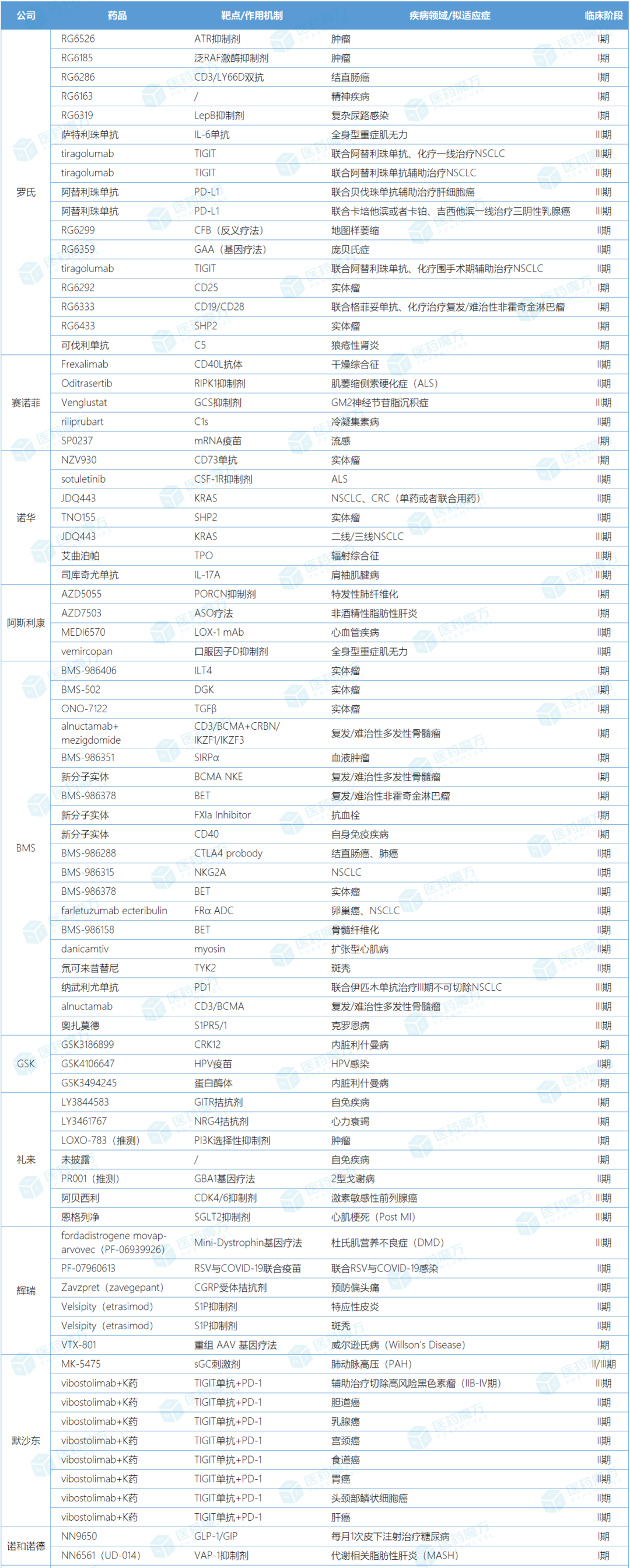
Note:Data from financial reports and updated pipeline information of various companies
RocheContinuedOptimizationPipeline, 25% of New Molecular Entity (NME) drugs have been terminated since the second quarter of 2023.In the first half of 2024, Roche removed a total of 17 clinical research projects from its pipeline (9 NMEs, 8 new indications), with over 60% coming from the oncology field. Among these, early clinical studies of NMEs such as CD19/CD28 bispecific antibodies and SHP2 inhibitors were terminated, while Phase III trials for expanding new indications of marketed drugs like atezolizumab faced setbacks and were also discontinued.
Roche Terminates a Phase III Clinical Trial of Atezolizumab Combined with Bevacizumab (“T+A”) as Adjuvant Therapy for Liver Cancer. Previously, the “T+A” regimen had shown positive results in two Phase III studies for adjuvant treatment of liver cancer, IMbrave050 and TALENTop.The exploration of Atezolizumab in triple-negative breast cancer (TNBC) has been "a rollercoaster ride." The Phase III IMpassion132 study, which evaluated the drug in combination with capecitabine/carboplatin or gemcitabine as a first-line treatment for TNBC, did not yield positive results and has thus come to an end. However, one failure cannot stop the expansion of Atezolizumab’s indications. Roche is still exploring its application in other cancers, with four related Phase III clinical trials currently underway.Roche has also terminated two Phase III clinical trials of the immune checkpoint TIGIT inhibitor G6058 (tiragolumab): one involving tiragolumab in combination with atezolizumab and chemotherapy as a first-line treatment for NSCLC, and the other involving tiragolumab in combination with atezolizumab as an adjuvant therapy for NSCLC. However, Roche has not abandoned the development of tiragolumab, as eight related clinical trials are currently ongoing. No new drugs targeting this site have been approved yet, and globally, there are over 80 TIGIT-related projects under research. In addition to Roche, several pharmaceutical giants such as MSD, AstraZeneca, GSK, and Gilead are also involved.In addition, Roche discontinued the development of nine NMEs, including: the small molecule Ataxia Telangiectasia Mutated and Rad3-related protein kinase (ATR) inhibitor RG6526 (Camonsertib), the oral pan-RAF kinase inhibitor RG6185 (Belvarafenib), the CD3/LY66D bispecific antibody RG6286, the neuroscience candidate drug RG6163, the CD25 monoclonal antibody RG6292 (vopikitug), the CD19/CD28 bispecific antibody RG6333, the SHP2 allosteric inhibitor RG6433 (migoprotafib), the Pompe disease gene therapy RG6359 (SPK-3006), and the LepB inhibitor RG6319. Most of these NMEs were in Phase I clinical trials, with four of them being products that Roche had in-licensed from other companies. The LepB inhibitor (formerly RG6319) will continue Phase I clinical research on complicated urinary tract infections under the new designation RG6436.
In the first half of 2024, Sanofi terminated the development of five clinical research projects, including:A Phase I clinical study of the mRNA vaccine SP0273, a Phase II clinical study of the CD40L antibody frexalimab, the Phase II HIMALAYA study of the RIPK1 inhibitor oditrasertib (DNL788), the Phase III AMETHIST study of the GCS inhibitor venglustat, and a Phase III study of the C1s monoclonal antibody riliprubart.
Frexalimab, an autoimmune disease drug that Sanofi acquired from ImmuNext in 2017, demonstrated good pharmacological activity and safety but failed to show significant efficacy in a Phase II clinical trial for Sjögren's syndrome, leading to the termination of that study. However, Phase III trials for the treatment of relapsing multiple sclerosis (RMS) and secondary progressive multiple sclerosis (SPMS), as well as Phase II trials for Type 1 diabetes and systemic lupus erythematosus, will continue.Due to the lack of a positive trend in reaching clinical endpoints in the Phase III AMETHIST study of venglustat for the treatment of GM2 gangliosidosis, Sanofi has also put an end to the development of venglustat for this indication. However, other indications under development for venglustat remain unaffected.Venglustat was one of the most promising assets identified by Paul Hudson when he took over as CEO of Sanofi in 2019. However, the drug has continuously faced setbacks in its development. In 2021, Sanofi halted its Phase II/III trial for the treatment of autosomal dominant polycystic kidney disease. The Phase II study of venglustat for Parkinson's disease also failed to meet its primary endpoint. After the elimination of the GM2 gangliosidosis indication, the only remaining indications still under development for venglustat are Type III Gaucher disease and Fabry disease.DNL788 is a neurological therapeutic drug that Sanofi introduced from Denali Therapeutics in 2018. It holds promise for application in Alzheimer's disease (AD), amyotrophic lateral sclerosis (ALS), and multiple sclerosis (MS). In February this year, the Phase II HIMALAYA study of this drug for treating ALS did not meet its primary endpoint, and Sanofi will continue its Phase II clinical research in MS.Due to prioritizing other projects, Sanofi will not proceed with the Phase III study of riliprubart for the treatment of the rare disease Cold Agglutinin Disease. Additionally, Sanofi has removed the mRNA influenza vaccine SP0273, which was in Phase I clinical stage, from its pipeline. Currently, the mRNA vaccines under Phase I clinical development include: influenza vaccine SP0237, respiratory syncytial virus (RSV) vaccine SP0256, and acne vaccine SP0268.
Novartis Terminated 7 Clinical Research Programs in the First Half of 2024, Including: A Phase II and A Phase III Clinical Trial of KRAS G12C Inhibitor JDQ443 (Opnurasib), A Phase III Clinical Trial of Secukinumab for Expanded Indication in Rotator Cuff Tendinopathy, A Phase III Clinical Trial of TPO Receptor Agonist Eltrombopag for Expanded Indication, A Phase II Clinical Trial of SHP2 Allosteric Inhibitor TNO155 (Batoprotafib), A Phase II Clinical Trial of CSF-1R Inhibitor Sotuletinib, and A Phase I Clinical Trial of CD73 Antibody NZV930. Among them, the investigational drugs JDQ443, TNO155, Sotuletinib, and NZV930 have been removed from Novartis' pipeline.Including TNO155, Novartis once had five SHP2 small molecule inhibitors, but SHP099, SHP244, SHP389, and SHP394 all stalled in preclinical research. With the termination of the Phase II clinical trial of TNO155 this time, Novartis may have to slow down the development of this target. The first SHP2 inhibitor to enter clinical research, TNO155, also failed to break the "undruggable" curse of this target, raising questions about whether SHP2 will ever see a truly successful marketed drug. JAB-3312, launched by Jacobio in Phase III clinical trials this year, has become the frontrunner for the next stage, and time will tell.KRAS G12C is another popular target in the field of oncology. The first inhibitor, sotorasib, was launched by Amgen in 2021, with sales reaching $280 million in 2023; another approved product is adagrasib from Bristol-Myers Squibb (BMS). In addition to Novartis, multinational corporations (MNCs) such as Roche, Merck & Co., Inc. (MSD), and Eli Lilly have also entered this field. Competition among Chinese companies is also fierce, with Innovent, CT Tianqing, and Jacobio submitting marketing authorization applications to the Center for Drug Evaluation (CDE). Hansoh, Betta, and Hengrui have also initiated clinical studies. However, according to Novartis' Q2 financial report, the Phase III clinical study of JDQ443 for non-small cell lung cancer (NSCLC) was terminated due to prioritization of other key projects. KRAS products no longer appear in its updated pipeline, marking the end of Novartis’ research on this target.
In the first half of the year, AstraZeneca terminated four clinical research programs (three NMEs and one new indication). The three NMEs include: PORCN inhibitor AZD5055, antisense oligonucleotide drug (ASO) AZD7503, and LOX-1 monoclonal antibody MEDI6570. In addition, the company also terminated a Phase II clinical trial of oral Factor D inhibitor ALXN2050 (vemircopan). These molecules were all in the early stages of development.AZD5055 is a PORCN inhibitor. In 2020, AstraZeneca acquired the project from Redx Pharma for an upfront payment of $17 million and potential milestone payments of $360 million. The Q1 financial report showed that AstraZeneca terminated the Phase I clinical trial of AZD5055 for the treatment of idiopathic pulmonary fibrosis based on considerations of strategic portfolio prioritization.AZD7503 is an ASO therapy that AstraZeneca introduced from Ionis, designed to inhibit the production of the 17β-hydroxysteroid dehydrogenase 13 (HSD17B13) protein. It entered Phase I clinical trials for the first time in 2021 and was developed for the treatment of MASH. However, based on considerations of strategic portfolio prioritization, AstraZeneca discontinued three Phase I clinical studies of AZD7503. MEDI6570 is a monoclonal antibody targeting LOX-1, which was developed for the treatment of cardiovascular diseases such as myocardial infarction and heart failure but was halted in Phase II clinical trials due to strategic considerations.The Phase II clinical trial of vemircopan, a rare disease candidate drug for the treatment of generalized myasthenia gravis, was terminated due to lack of efficacy. AstraZeneca will continue to advance the Phase II clinical trials of vermicopan for the treatment of proliferative lupus nephritis and IgA nephropathy, as well as the Phase I clinical trial of vermicopan for impaired liver function.BMS made decisive adjustments to its product pipeline in the first half of 2024, terminating a total of 19 clinical research projects, 70% of which were in the oncology field. BMS stated that rationalizing the pipeline can save costs, allowing for focused investment in high-potential projects, which will help the company transform and drive long-term growth.In the field of oncology, BMS terminated clinical studies for 10 early-stage candidate drugs, including: CTLA4 probody (pro-antibody drug) BMS-986288, NKG2A monoclonal antibody BMS-986315, ILT4 monoclonal antibody BMS-986406, DGK inhibitor BMS-502, TGFβ inhibitor ONO-7122, BET inhibitors BMS-986378 and BMS-986158, FRα ADC drug farletuzumab ecteribulin (licensed from Eisai, now terminated collaboration), SIRPα monoclonal antibody BMS-986351, BCMA NKE.In May this year, BMS announced that the Phase III CheckMate-73L study (NCT04026412) of nivolumab combined with ipilimumab (PD-1+CTLA4) for the treatment of unresectable locally advanced stage III NSCLC did not meet its primary endpoint. Compared to the PACIFIC regimen of the control group drug durvalumab, it is regrettable that nivolumab plus concurrent chemoradiotherapy did not improve PFS in patients. The Q2 pipeline update from BMS shows that nivolumab still has four ongoing Phase III clinical trials.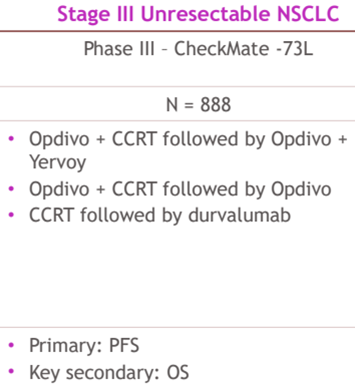 In the field of hematological oncology, BMS has terminated the Phase III clinical trial of the CD3/BCMA bispecific antibody alnuctamab as a monotherapy for relapsed/refractory multiple myeloma (MM), as well as the Phase II clinical trial of alnuctamab in combination with the molecular glue degrader mezigdomide for the same indication. Mezigdomide still has two ongoing Phase III clinical trials for MM. Alnuctamab has now been removed from BMS’s pipeline. Additionally, two autoimmune candidate drugs in Phase I clinical trials (a CD40 monoclonal antibody and an undisclosed NME) have been discontinued.In the field of autoimmune diseases, the Phase III YELLOWSTONE study of S1PR1/R5 modulator ozanimod in patients with moderate to severe Crohn's disease (CD) failed to meet its primary endpoint, marking its failure. Similarly, according to the PharmaCube database, a Phase II clinical trial of TYK2 inhibitor deucravacitinib for alopecia areata was also terminated in May this year. However, BMS is exploring the use of deucravacitinib in psoriatic arthritis (PsA), Sjögren's syndrome, and systemic lupus erythematosus (SLE), with three corresponding Phase III clinical trials currently underway to expand the drug’s indications beyond its already approved use for psoriasis.In addition to the oncology and autoimmune fields, BMS also terminated the Phase I clinical trial of the cardiovascular disease candidate drug FXIa inhibitor and the Phase II clinical trial of the myosin activator danicamtiv in the first half of the year.GSK Abandoned Clinical Studies of Three Early-Stage Candidate Drugs in the First Half of the Year: CRK12 Inhibitor GSK3186899 and Proteasome Inhibitor GSK3494245Phase I Clinical Study for the Treatment of Visceral Leishmaniasis, andPhase II Clinical Study of HPV Vaccine GSK4106647.Eli Lilly removed a total of 7 clinical studies in the first half of the year, including: GITR antagonist LY3844583 for autoimmune diseases, NRG4 antagonist LY3461767 for heart failure, PI3K selective inhibitor LOXO-783 for cancer, and another undisclosed molecule for autoimmune Phase I clinical study; GBA1 gene therapy PR001 for Type 2 Gaucher disease Phase I/II clinical study; CDK4/6 inhibitor abemaciclib for hormone-sensitive prostate cancer Phase III study, and SGLT2 inhibitor empagliflozin for myocardial infarction (Post MI) Phase III study.In 2020, Eli Lilly acquired Prevail Therapeutics for $880 million, gaining AAV9 gene therapies for neurodegenerative diseases, including the potential first-in-class GBA1 gene therapy LY3884961 (PR001). This year, Lilly terminated the Phase I/II clinical study of PR001 for the treatment of infantile Type 2 Gaucher disease (NCT04411654). However, two other Phase I/II studies for Gaucher disease (NCT05487599) and Parkinson’s disease (NCT04127578) will continue, with expected completion around 2030. Similarly, in the early stages of development, LOXO-783 is a highly selective PI3Kα H1047X allosteric inhibitor independently developed by Lilly. The Phase I PIKASSO-01 study (NCT05307705) of this drug in breast cancer/other solid tumors has also been terminated.The Phase III CYCLONE-2 study (NCT03706365) of CDK4/6 inhibitor abemaciclib in combination with abiraterone acetate plus prednisone for the first-line treatment of metastatic castration-resistant prostate cancer (mCRPC) did not meet its primary endpoint of radiographic progression-free survival (rPFS) and showed no significant improvement in the secondary endpoint of OS. Eli Lilly has removed this study from its pipeline. Abemaciclib has two ongoing Phase III clinical trials for breast cancer (NCT03155997, NCT05169567).
 Pfizer terminated eight clinical research projects in the first half of the year, including two Duchenne muscular dystrophy (DMD) clinical studies of the gene therapy fordadistrogene movaparvovec (PF-06939926), a Phase II clinical study of the RSV and COVID-19 combined vaccine PF-07960613, a Phase II clinical study of the CGRP receptor antagonist Zavzpret (zavegepant) for migraine prevention, two Phase II clinical studies of the S1P inhibitor Velsipity (etrasimod), and a Phase I study of the recombinant AAV gene therapy VTX-801 for Wilson’s Disease.Pfizer to Terminate Development of DMD Gene Therapy Fordadistrogene Movaparvovec After Phase III CIFFREO Study Fails to Meet Primary Endpoint. Although fordadistrogene movaparvovec encountered setbacks during its development, Pfizer's two other hemophilia gene therapies, giroctocogene fitelparvovec and fidanacogene elaparvovec, have shown relatively smoother progress. The Phase III study of giroctocogene fitelparvovec for the treatment of hemophilia A was successful, and fidanacogene elaparvovec received conditional marketing authorization from the European Commission in July this year for the treatment of hemophilia B.Velsipity is a selective sphingosine-1-phosphate (S1P) receptor modulator that binds to S1P receptors 1, 4, and 5. It was developed by Arena Pharmaceuticals, which Pfizer acquired in 2022. Everest Medicines holds the exclusive rights for the development, manufacturing, and commercialization of the drug in Greater China and South Korea. Velsipity has been approved for ulcerative colitis (UC). Pfizer terminated two Phase II clinical trials investigating the drug for atopic dermatitis and alopecia areata in the first half of this year. However, the Phase II clinical trials for Crohn's disease (CD) and eosinophilic esophagitis (EoE) will continue unaffected, with Pfizer advancing its efforts to expand new indications in the autoimmune field. Zavzpret, a nasal spray for migraine launched by Pfizer in 2023, had its Phase II clinical trial for an oral formulation in migraine prevention discontinued, signaling Pfizer’s decision to delay the development of the oral version of Zavzpret.
 In the first half of 2024, Merck & Co., Inc. terminated nine clinical research programs, mainly due to adjustments in the clinical development plan for the TIGIT antibody vibostolimab + pembrolizumab combination (MK-7684A). According to financial reports, MK-7684A removed melanoma-related studies in Phase III clinical trials while retaining two Phase III clinical studies related to NSCLC and SCLC. In Phase II clinical trials, seven studies related to biliary tract cancer, breast cancer, cervical cancer, esophageal cancer, gastric cancer, liver cancer, and head and neck squamous cell carcinoma were removed, while six Phase II clinical studies related to bladder cancer, colorectal cancer, endometrial cancer, ovarian cancer, prostate cancer, and colorectal cancer were retained.MSD's next-generation key candidate drug in the metabolic disease field—MK-5475 (sGC stimulator) Inhalation Powder for the treatment of pulmonary arterial hypertension (PAH)—has also been removed from the updated pipeline list. The Phase II/III clinical study (NCT04732221) has been completed, but specific results have not yet been disclosed. MSD has initiated a Phase II clinical study (NCT05612035) of MK-5475 for patients with pulmonary hypertension associated with chronic obstructive pulmonary disease (PH-COPD).
 In the first half of 2024, Novo Nordisk terminated two clinical research projects. The first was a once-monthly subcutaneous injection of a GLP-1/GIP dual receptor agonist, for which the Phase I clinical study for diabetes treatment has been discontinued. However, regarding the GLP-1/GIP portfolio, Novo Nordisk still has a once-weekly candidate drug in ongoing development. In its Q1 financial report, Novo Nordisk announced that it had initiated a Phase II diabetes clinical study for the once-weekly GLP-1/GIP project.Another candidate drug is the VAP-1 inhibitor NN6561. Novo Nordisk discontinued the ongoing Phase I clinical trial related to metabolic-associated steatohepatitis (MASH) for portfolio considerations and will not further develop the drug.The above 10 MNCs have removed more than 80 projects from their updated pipelines in the first half of 2024. In terms of disease areas, oncology accounts for nearly half. Regarding targets, there is no significant concentration trend, with only three targets—TIGIT, PD-(L)1, and SHP2—being optimized and adjusted by two MNCs simultaneously.Among the marketed PD-(L)1 drugs, Roche terminated two Phase III clinical trials of atezolizumab ("T+A" adjuvant therapy for liver cancer, in combination with capecitabine/carboplatin or gemcitabine as first-line treatment for TNBC), and BMS terminated one Phase III clinical trial of nivolumab (in combination with ipilimumab for locally advanced unresectable Stage III NSCLC).Roche and MSD both adopted an immunotherapy combination strategy in the development of TIGIT inhibitors, jointly discontinuing three Phase III clinical trials and eight Phase II clinical trials. Novartis' and Roche's SHP2 allosteric inhibitors (TNO155 and RG6433), which were in Phase II and Phase I clinical stages respectively, have now disappeared from their updated pipelines.Among the 10 MNCs that terminated their R&D projects, Phase I and Phase II clinical projects accounted for 75%. In new drug development, although early attempts may encounter failures, these bold explorations into unknown fields will become a solid cornerstone on the path to success, ultimately bringing good news to patients.
Copyright © 2024 PHARMCUBE. All Rights Reserved.
Welcome to forward, share, and reasonably cite. When citing, please clearly indicate the source of the article in a prominent position.For reprinting, please leave a message to the WeChat Official Account's backend or send a message, and indicate the name and ID of the official account.
Disclaimer: The information in this WeChat article is for general reference only and should not be used directly as decision-making content. PharmaCube assumes no responsibility for any loss incurred by any party due to the use of the content herein.
↑Click to scan the QR code and go directly to the live broadcast↑