Amivantamab Plus Lazertinib: First Chemotherapy-Free Dual-Target Regimen Approved for First-Line EGFR-Mutated Advanced NSCLC, Demonstrating Superiority Over Osimertinib

Johnson & Johnson
Medical Device R&D and Manufacturer
Click on the blue words "Ejiayi" above to follow us

Johnson & Johnson recently announced that the U.S. FDA has approved its bispecific antibody Rybrevant (amivantamab) in combination with the third-generation epidermal growth factor receptor (EGFR) tyrosine kinase inhibitor (TKI) oral medication Lazcluze (lazertinib) forFirst-line treatment for adult patients with locally advanced or metastatic non-small cell lung cancer (NSCLC) whose tumors have EGFR exon 19 deletions or exon 21 L858R substitution mutations as detected by an FDA-approved test.Previous trial results showed that, compared with the active control drug, the combination therapy of Rybrevant and Lazcluze reduced the risk of disease progression or death by 30% in patients.
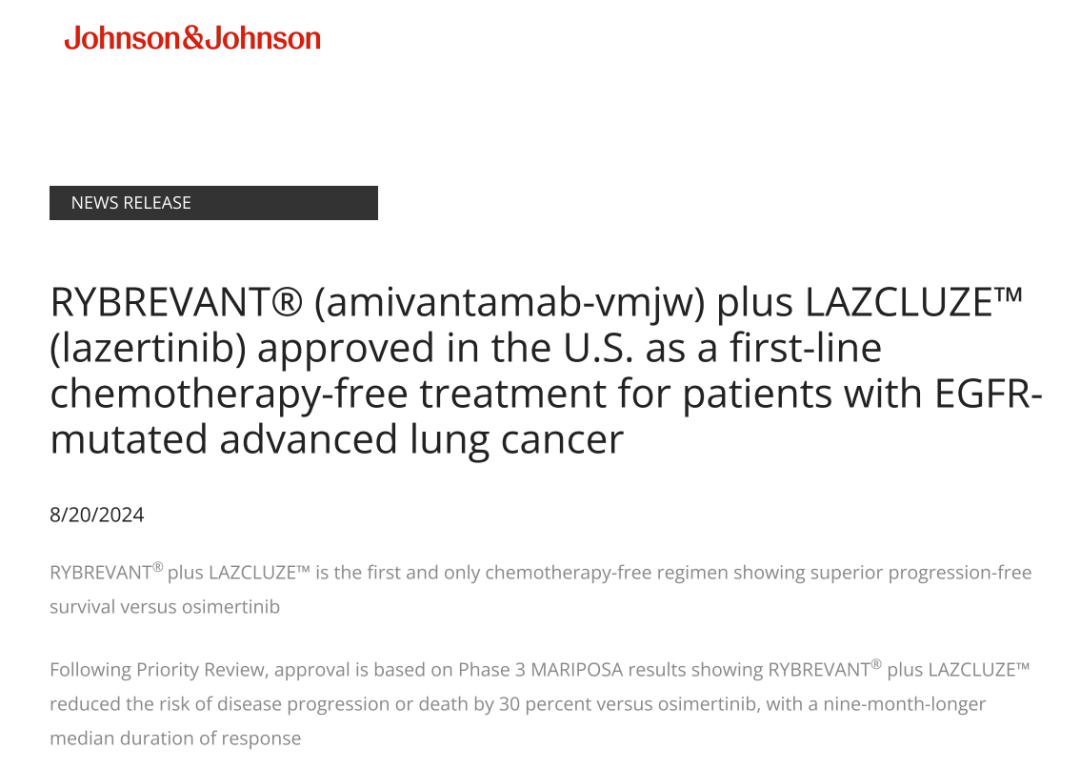
With this milestone, amivantamab in combination with lazertinib becomes the first and only multi-target, chemotherapy-free regimen proven to be superior to osimertinib, approved as a first-line treatment for EGFR-mutant NSCLC patients. Amivantamab is an EGFR/c-MET bispecific antibody that engages the immune system, while lazertinib is a highly selective, brain-penetrant, third-generation oral EGFR TKI. The combination of amivantamab and lazertinib is the only multi-target regimen that directly addresses two common EGFR mutations.

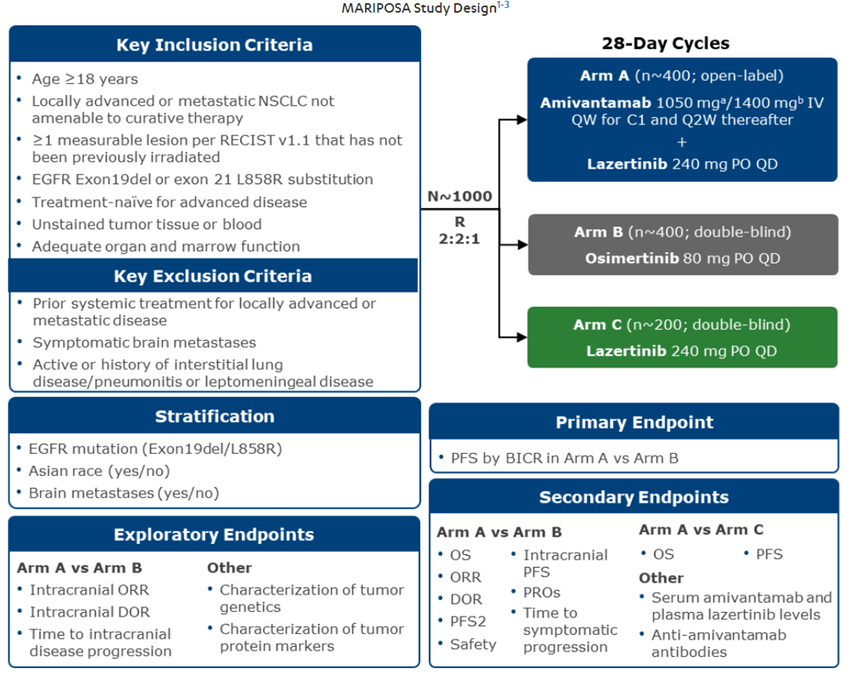
MARIPOSA Study (NCT04487080) is a Phase 3, multicenter, randomized study primarily investigating the efficacy and safety of amivantamab and lazertinib combination therapy as a first-line treatment for EGFR-mutated non-small cell lung cancer, with osimertinib (osi) and lazertinib monotherapy (laz) serving as control groups.
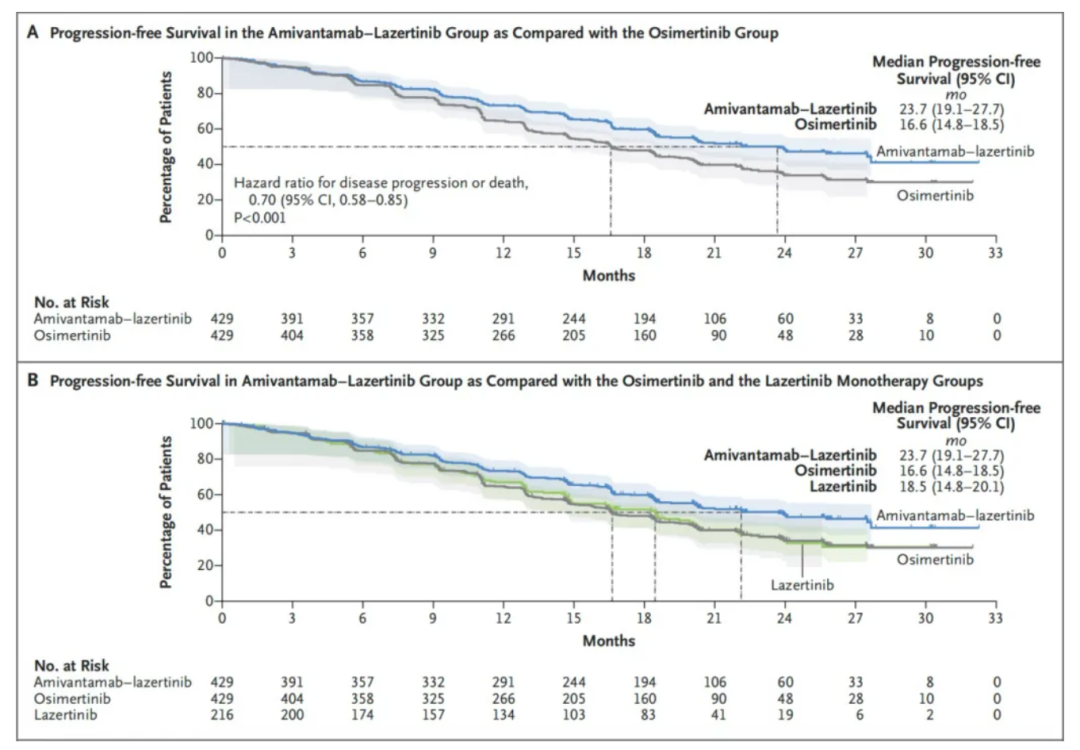
Interim analysis results of the MARIPOSA study reported at the 2023 European Society for Medical Oncology (ESMO) Congress showed that, compared to Osimertinib (Osi) monotherapy, the combination of Amivantamab and Lazertinib as first-line treatment for patients with EGFR-mutated NSCLC significantly prolonged median PFS (23.7 months vs 16.6 months, HR 0.70, 95% CI: 0.58-0.85, P<0.001). This benefit was observed regardless of the presence of brain metastases.
At the 2023 European Society for Medical Oncology Asia (ESMO Asia) conference, subgroup analysis data from the MARIPOSA study further demonstrated that this regimen provided a consistent PFS benefit for Asian patients as it did for the overall population (27.5 months vs 18.3 months, HR 0.65, 95% CI: 0.50-0.83, P<0.001). Moreover, for patients receiving Amivantamab in combination with Lazertinib for over four months, regardless of whether treatment interruptions occurred due to adverse reactions within the first four months, the patients' PFS, ORR, and duration of response (DoR) were not significantly negatively impacted.
The trial will continue to evaluate OS as a key secondary endpoint. Safety data and discontinuation rates due to adverse events are consistent with previous study data for each drug. In terms of side effects, the combination therapy has a higher rate of side effects compared to osimertinib monotherapy, primarily due to chemotherapy.
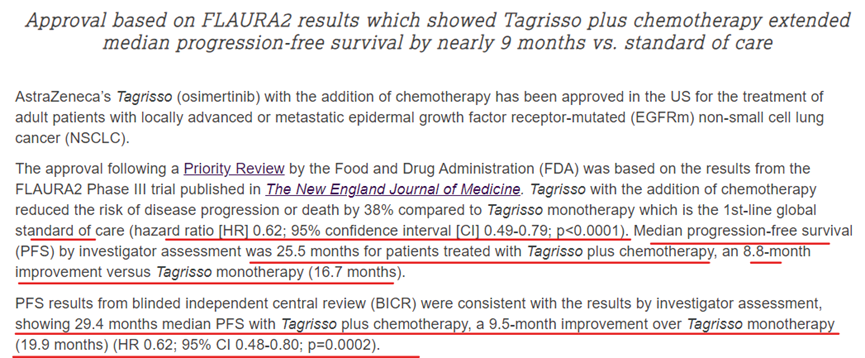
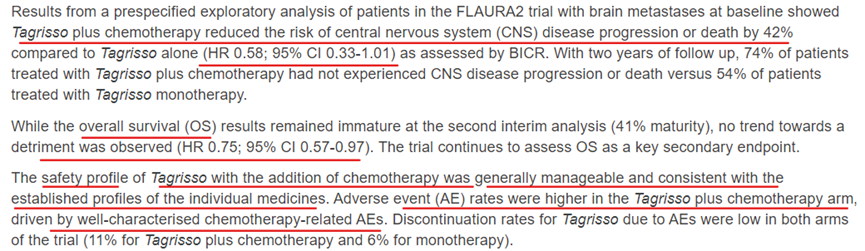
Both are first-line treatments. A horizontal comparison between Amivantamab + Lazertinib and Osimertinib + Chemotherapy:Amivantamab Combined with Lazertinib Shows Median PFS of 23.7 Months vs 16.6 Months (Osimertinib) in First-Line Treatment for EGFR-Mutated NSCLC, Delaying Progression by 7.1 Months; Median PFS in the Osimertinib Plus Chemotherapy Group is 29.4 Months, Improving by 9.5 Months Compared to the Osimertinib Monotherapy Group (19.9 Months).From the clinical results, osimertinib combined with chemotherapy has shown better efficacy, but similarlyFor osimertinib monotherapy, the mPFS was 16.6 months for Johnson & Johnson and 19.9 months for AstraZeneca, possibly due to differences in the enrolled populations, leading to relatively shorter mPFS for Amivantamab + Lazertinib compared to osimertinib monotherapy.
However, in terms of patient compliance, Amivantamab + Lazertinib is more efficient and convenient compared to Osimertinib + chemotherapy. Patients do not need to frequently visit the hospital for chemotherapy, nor worry about the side effects of chemotherapy. Additionally, Johnson & Johnson is also developing a subcutaneous administration method for Amivantamab, and preliminary results indicate that, compared to intravenous administration, subcutaneous administration does not reduce efficacy. Therefore, it will provide a better treatment experience for patients in the future.
In the above analysis, the combination therapy of amivantamab and lazertinib demonstrated superior efficacy to osimertinib across multiple dimensions. Particularly in patients with detectable ctDNA at the start of treatment, co-mutations in TP53, or liver metastases, the combination therapy of amivantamab and lazertinib has the potential to become the new standard treatment for advanced NSCLC with EGFR-sensitive mutations.
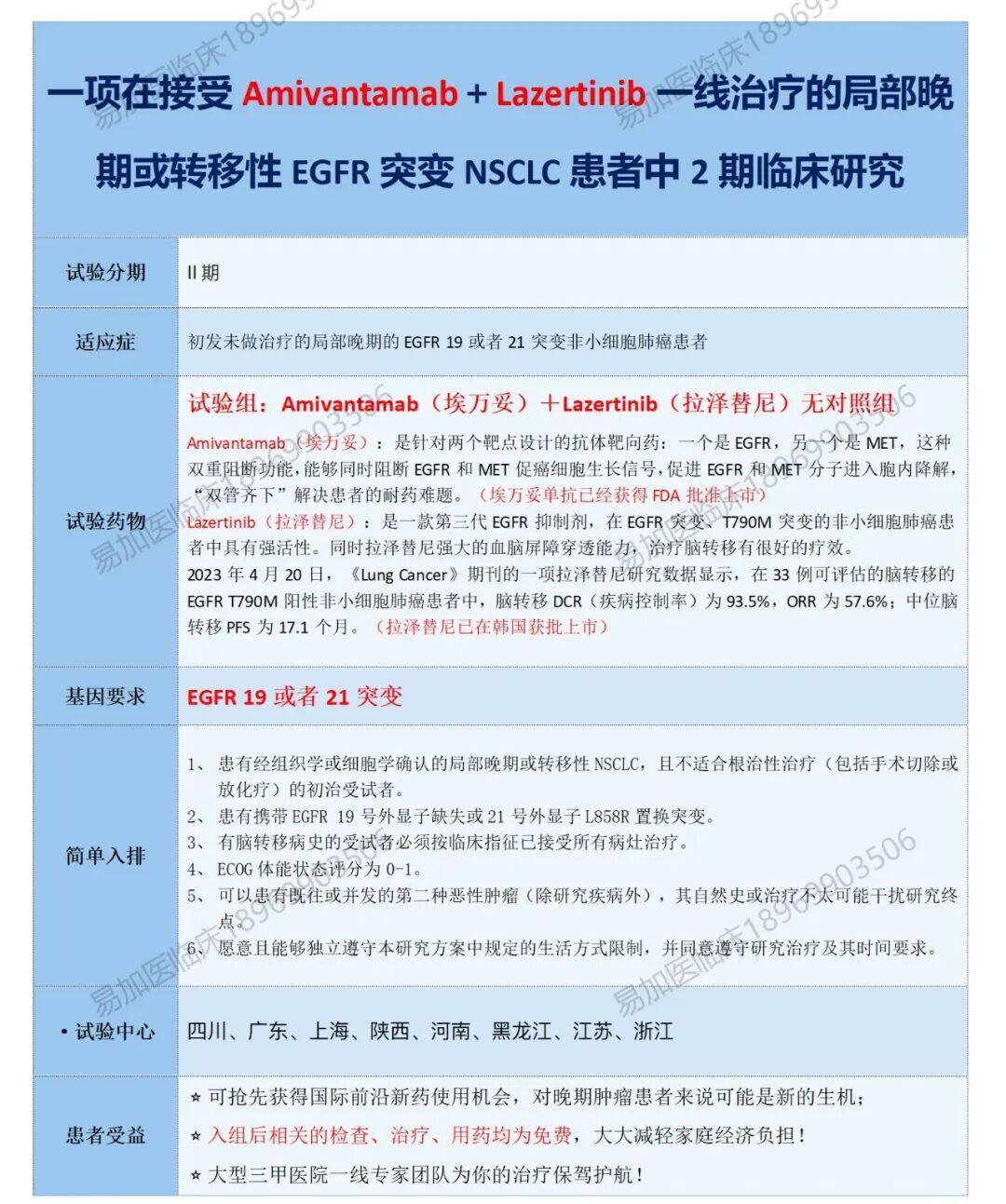
Currently, clinical trials for the same drug are recruiting in China, and the specific requirements are as follows. Patients who need more information can consult by adding the assistant at the end of the article.
If tumor patients want to learn more in the first timeNew Drug Information, welcome to scan the QR code below for consultation. You can also join "Sunlight EasyFamilyCare–Cancer Patient Support Group", sharing experiences and exchanging information with tens of thousands of cancer patients/family members.
Reference Source: https://www.jnj.com/media-center/press-releases/rybrevant-amivantamab-vmjw-plus-lazcluze-lazertinib-approved-in-the-u-s-as-a-first-line-chemotherapy-free-treatment-for-patients-with-egfr-mutated-advanced-lung-cancer
This article is for popular science education. If there is any infringement, please contact us to delete it.