Medtronic Divests Paceart Optima™ Remote Cardiac Monitoring Line Amid Industry Challenges

PaceMate
Developer of Cardiac Data Management Platform

Medtronic
Chronic Disease Medical Device and Therapy Developer


Source: Medical Device Business Review
Author: Commenter
Reproduction without authorization is prohibited, and reproduction is allowed 24 hours later.
With the integrated development of medical and information technology, solutions to problems such as uneven distribution of medical resources and difficulties in cross-time-and-space medical interactions have been put on the agenda. Telemedicine has gradually become a popular research area in the healthcare industry.
According to a previous Vision Research report, the market size of remote patient monitoring systems is expected to reach USD 5.7 billion by 2030, with a compound annual growth rate during the forecast period from 2022 to 2030. 20.1%,Many leading medical device companies are eager to try here.
However, after the COVID-19 pandemic subsided, telemedicine did not become a real trend; instead, it has been fading from our sight.
At the end of last year, Telemedicine star Avail Medsystems goes bankrupt and closes down. Six months later, its partner in ChinaMedtronic recently chose to divest its remote monitoring system, a once-booming track that now seems to stand again at the crossroads of fate.
On August 27, 2024, PaceMate, Inc., a pioneer in cardiac data management and remote monitoring, announced its acquisition.MedtronicThe company's core workflow solution, Paceart Optima™ system.

It is reported that,Paceart Optima™ Is a comprehensive workflow solution forCompile and manage patient cardiac device data,CanCollect, store, and retrieve information from programmers and remote monitoring systems of all major cardiac device manufacturers (including Medtronic, Boston Scientific, Abbott, Biotronik, etc.)。
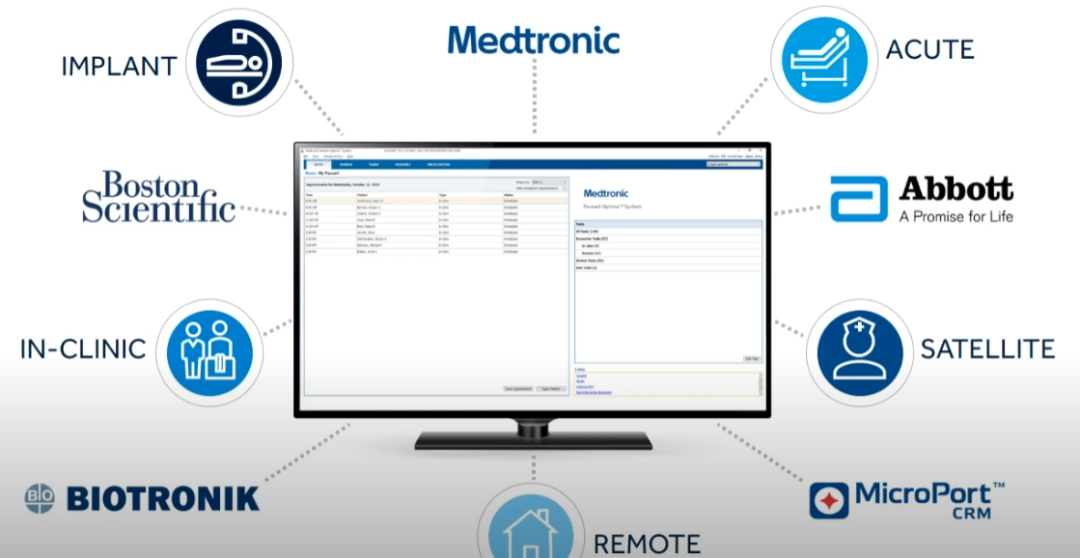
Through the capture of a series of data, Paceart OptimaCan help doctors and medical teams better monitor and manage patients' cardiac conditions, thereby providing more accurate personalized treatment plans.
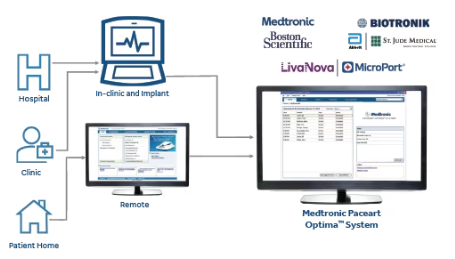
Given the powerful reach of Paceart Optima, this acquisitionEnabling PaceMate, Inc. to have global coverageNearly 1,000 clinics have been added.
Notably, cardiac data management and remote monitoring are the core focus of PaceMate, with its flagship product PaceMateLIVE™ being widely recognized.Best-in-class remote cardiac monitoring software.
Kweli P. Thompson, Senior Vice President and President of Medtronic's Cardiac Rhythm Management, stated: "After a comprehensive evaluation,We look forward to"PaceMate is the best organization to serve Paceart customers and their future cardiac data workflow needs."
In fact, the Paceart Optima system that Medtronic is divesting this time is just one of its remote healthcare product series.Medtronic has also created Get Ready,The World's Largest Remote Monitoring Network Platform for Cardiac Implantable Devices: MyCareLinkAnd many other patient management and monitoring products.
In 2018, the CareLink remote monitoring system was launched respectivelyMyCareLink SmartAndCareLink Express Mobile, the former isThe First in the WorldRemote monitoring tools based on smartphone apps can upload pacemaker data to the network and display the data on the doctor's end, helping doctors promptly understand the patient's condition.
The latter isThe World's FirstPacemaker remote monitoring services for medical institutions provide professional-grade in-hospital or inter-hospital CIEDs follow-up cloud platforms and data management solutions.
However, after a strong start, Medtronic's expansion in this field has not continued at full speed. In recent years, the company has focused more on areas such as neurovascular, structural heart, and soft tissue robotics.
At the same time, the remaining medical device companies in the remote monitoring layout also face challenges to varying degrees.Including technical issues, market competition, insufficient funding, and regulatory barriers, among other challenges.
AliveCor is an American producer of remote intelligent ECG monitoring devices, established in 2011.
The company, based on its self-developed AI support platform, provides instant analysis services for detecting atrial fibrillation (AF) and normal sinus rhythm in electrocardiograms, as well as mobile ECG solutions, for users with poor cardiac function. Investors includeJapanese health care company Omron Healthcare, etc.
In recent years, with the rapid development of wearable devices and health monitoring technology, AliveCor has faced competition from tech giants such as Apple, Fitbit, and Samsung.
Previously, AliveCor filed a patent infringement lawsuit against Apple, accusing Apple of infringing its patents with the ECG feature built into the Apple Watch. This litigation process was complex and lengthy, with AliveCor achieving partial victories in the lawsuit.
However, Apple also temporarily shelved the ITC's ban by having AliveCor's relevant patents declared invalid through the Patent Trial and Appeal Board (PTAB).

Both parties have appealed the ruling, and the future outcome remains uncertain.
iRhythm Technologies, an innovative digital healthcare solutions company for cardiac monitoring, was founded in September 2006 and went public in 2016, with nearly 2000 employees.
The company is redefining the clinical diagnostic approach for arrhythmias by combining wearable biosensing technology with AI capabilities.
On May 2, 2024, the company disclosed its financial results for the first quarter ended March 31, 2024. Despite an increase in revenue,But both net loss and gross profit are on a downward trend.
The company reported a net loss of $45.7 million, compared to the expected loss of $31.48 million, with a diluted loss per share of $1.47, surpassing the predicted loss per share of $0.98.
Experts analyzed that the reasons for the decline in gross margin were the accelerated recognition of costs related to the traditional Zio XT components, as well as the increase in staff numbers and operating expenses.
Avail Medsystems, which gained prominence during the COVID-19 pandemic for its remote systems, was listed as one of the 23 privately-held medical technology companies expected to achieve significant success in 2023.
During the pandemic, medical device sales representatives were unable to enter operating rooms, so it was necessary toVirtual Environment Connects Medical Device Sales Representatives with Operating Room Teams.
The company has developed a consistent mobile hardware platform that integrates software into operating rooms, connecting remote participants through a secure cloud-based digital telepresence network in both audio and visual ways. It also acts as a hub for advanced digital functions, including artificial intelligence and machine learning.
However, with the easing of the pandemic, medical sales representatives are once again able to enter hospitals.The demand for the Avail system has decreased, and the company failed to complete a new round of financing to sustain growth.
Moreover, the increase in surgical sites did not accompany a corresponding growth in the number of surgeries and medical equipment sales, leading to a gradual loss of product advantage. Ultimately, the company's operations were short-lived, and it announced closure by the end of 2023.
Compared with traditional offline medical services,TelemedicineBreaking through the limitations of time and space, microscopically, it saves the cost of back-and-forth travel for individuals; macroscopically, it can promote the optimal allocation of medical resources.
However, this track, once highly anticipated, has not developed ideally in recent years.So, are the aforementioned obstructed companies isolated cases or a trend? Where do the problems with remote digital healthcare lie? Is it still worth the layout?
There is no doubt that the main advantage of telemedicine comes from the separation of location between patients and medical institutions. Patients can enjoy medical services without traveling long distances to the hospital.But the problem also stems from this.
First, in terms of diagnosis and treatment,The spatial separation between doctors and patients increases the barriers to effective communication.
The diagnosis in telemedicine relies on the transmission of digital information such as images and sound. However, existing technologies struggle to match the sensory resolution of visual inspection, auscultation, and palpation achieved during in-person doctor consultations, as well as the precision of high-grade hospital instruments, potentially affecting diagnostic accuracy.
Secondly, in terms of monitoring,Remote medical monitoring needs to ensure real-time and continuous monitoring of patients' vital signs. However, due to limitations in technology, network, and other factors, there are many uncertainties in real-time and continuous monitoring, which may also lead to a reduction in the effectiveness of monitoring.
If this core issue is difficult to resolve, then when time and space are not yet fully restricted and telemedicine is not the only option, it is hard for people to entrust matters of life and health to this still uncertain choice at a critical juncture.。
Another obstacle to remote digital healthcare comes from digital security threats.
Remote digital healthcare involves the transmission of large amounts of medical data, including sensitive information such as patients' personal information, medical records, diagnostic results, and drug prescriptions. If effective encryption and security measures are not implemented during transmission, the data may be illegally intercepted, tampered with, or leaked.
The leaked information may be used for illegal activities such as identity theft, fraud, and malicious marketing, causing financial losses and psychological stress to patients.
For example, Medtronic sold this timeThe Paceart Optima system has previously exposed cybersecurity vulnerabilities.CVSS score as high as 9.8.
*The final score of the vulnerability rating ranges from 0 to 10. Vulnerabilities with scores between 7 and 10 are generally considered severe, those with scores between 4 and 6.9 are medium-level vulnerabilities, and those with scores between 0 and 3.9 are low-level vulnerabilities.
CISA warned at the time that malicious actors could exploit the vulnerability by sending specially crafted messages to the Paceart Optima system to execute remote code attacks.
"Remote code execution may lead to theCardiac Device DataDelete, Steal, or Modify, or further network penetration using the Paceart Optima system, a DoS attack may cause the Paceart Optima system to slow down or become unresponsive."
Although the vulnerability was fixed, how to standardize and safeguard the information security of remote digital healthcare remains a significant challenge for telemedicine planners.
Moreover, due to the highly integrated nature of telemedicine with technology, many tech giants have also extended their reach into this field.
In addition to the previously mentioned patent battle between AliveCor and Apple, Apple and Samsung are also accelerating their research and development in the CGM field.

Compared with the powerful technical strength, substantial funds, and user base of technology giants, the survival space of medical device companies has undoubtedly been greatly squeezed.
Conclusion
Overall, remote digital healthcare relies more on the full establishment of an ecosystem, but at present, the medical system's management regulations have not been adequately matched, and it is difficult to provide patients with trustworthy medical security.
This is alsoAn important reason why telemedicine and even the entire Internet healthcare sector have struggled to achieve a major breakthrough is that, under the demand for cost reduction and efficiency improvement, it is understandable that Medtronic has chosen to let go to a certain extent.
The cooling of telemedicine, in the final analysis, is because its true era has not yet arrived.
The content of this article is for reference only and does not constitute investment advice. Readers are expected to effectively distinguish.If any platform reprints this article, it must take responsibility for the content of the article. Medical Device Business Review is not responsible for the impact of secondary dissemination caused by reprints.
*Advertisement



If you find the content rewarding, welcomeStar Marker、Like、Forward!
Your support is our greatest motivation