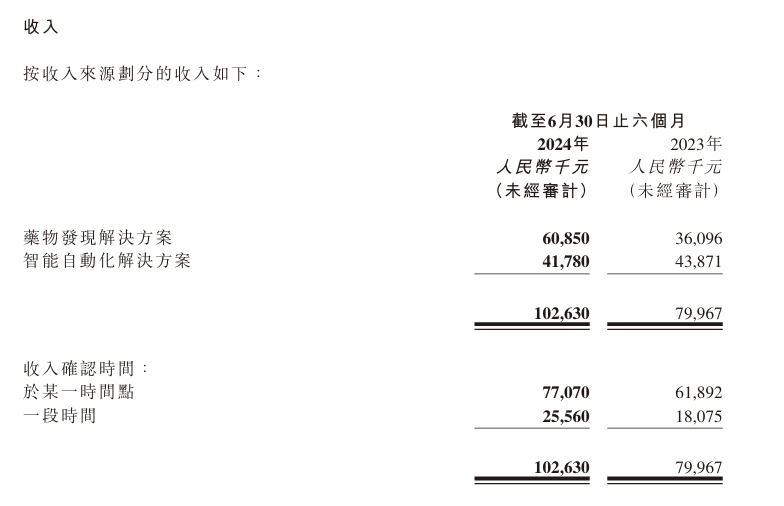
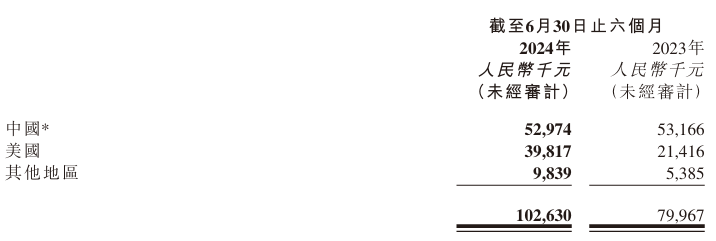
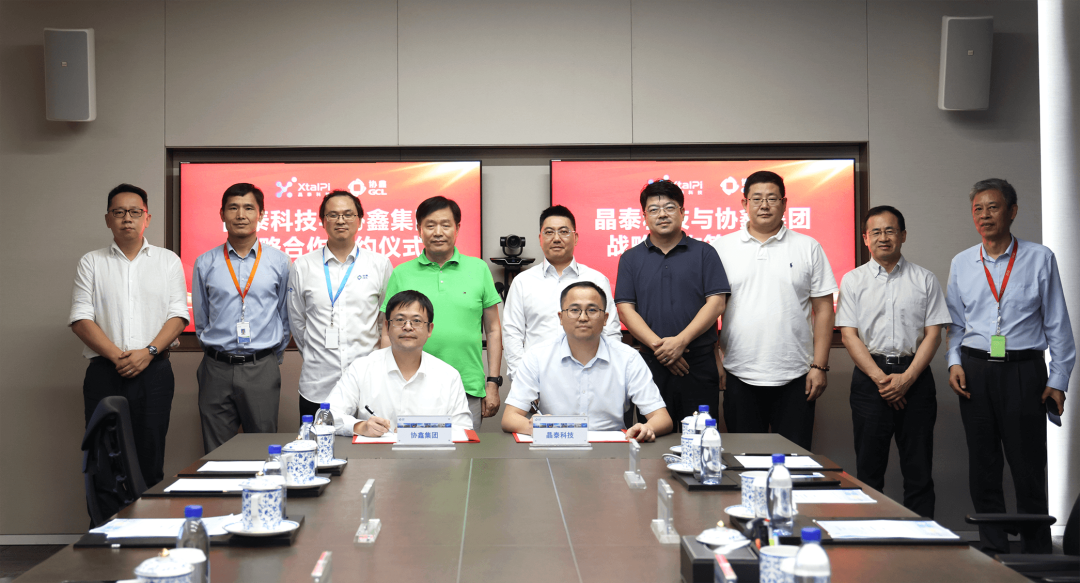
Recently, XtalPi released its financial report for the first half of 2024, which is also the company's first earnings report since its IPO in June. As of June 30, XtalPi's revenue reachedRMB 103 million, year-on-year growth28.3%; The loss in the first half of the year reachedRMB 1.238 billion, an increase of 100% year-on-year. However, the vast majority of this was due to investment fair value changes, resulting in a loss of 875 million yuan for this portion. Excluding the fair value change of convertible and redeemable preferred shares, in factXtalPi's Adjusted Net Loss (Non-IFRS Measure)RMB 251 million, representing a 29.6% reduction in losses compared to the same period last year. The major highlight in the financial report is that XtalPi has alreadyNew Energy Leader GCL Group Reaches Five-Year Strategic Cooperation Agreement, with a total cooperation amount as high as1.35Billion USD (approximately10RMB 100 million). In addition, the financial report confirmed that XtalPi has been included as a constituent stock of the Hang Seng Index in Hong Kong and will take effect on September 9, 2024. Narrowed Loss in the First Half of the Year Currently, XtalPi's revenue mainly comes from two parts: one is providing drug discovery solutions, and the other is intelligent automation solutions, primarily including solid-state research services and automated chemical synthesis services. Among them, the revenue of drug discovery solutions during the reporting period was respectivelyRMB 60.85 million, representing a year-on-year increase of approximately 68%; Revenue from intelligent automation solutions wasRMB 41.78 million, a year-on-year decrease of 4.8%, the company said, mainly due to the decrease in this part of the revenue. Figure: XtalPi's Semi-Annual Report In terms of revenue structure, customers in the China region account for more than 50% of the revenue, approximately 52.974 million yuan, while customers in the U.S. region account for about 40% of the revenue. Figure: XtalPi's Semi-Annual Report R&D investment in the first half of the year was 210 million yuan, a year-on-year decrease of 10.3%.This is due to the improved efficiency of XtalPi's R&D activities, resulting in a reduced need for R&D staff and lower demand for R&D consumables. In the disclosed R&D progress, the vast majority is aboutMacromoleculeDrugs and Automated Synthesis Platform: 1. XtalPi Completes the Construction of a Single-Cell Large Model for Target Discovery and Drug Screening; 2. Established an mRNA display peptide library and screening technology for the selection of peptide drug molecules, including the screening of linear peptides, monocyclic peptides, and bicyclic peptide binders based on drug targets. As of June 30, 2024, the scale of the encoded peptide library has reached 10^12 to 10^13. 3. In the first half of the year, the company completed the development of the XtalFold2 algorithm, adding support for ultra-large complexes and enabling the processing of proteins with more than 2,000 amino acids.ReConducted structural predictions on compounds, significantly expanding their application scope. 4. The company's self-developed platform has generated real experimental data to train more than 10 artificial intelligence models for chemical reaction prediction, with the prediction accuracy of these models exceeding 80% in three reaction types commonly used in medicinal chemistry. 5. In terms of automation, the company uses artificial intelligence technology to screen constituent elements and recommend reaction conditions in library synthesis, which significantly improves the reaction success rate, with a success rate of over 90% in real business scenarios. Expand Overseas Business, Secure Major Energy Contract In the context of China's pharmaceuticals industry still being in the doldrums, XtalPi’s revenue structure is primarily based onPharmaceuticals + Clients in ChinaFocused on improving commercial sources. XtalPi Chooses to Walk on Two Legs: While Striving to Expand Overseas Biopharmaceutical Customers, Increasing the Proportion of Overseas Customers, Especially in the United States; On the other hand, it is heavily betting on new materials business, with research and development coveringPower Battery, organic synthesis research, traditional Chinese medicine, chemical industry, cosmetics, food and other fields. One particularly noteworthy point in this earnings report is that XtalPiGCL GroupSign a 5-year strategic cooperation agreement. According to the official R&D entrustment agreement, GCL will pay XtalPi approximately1.35Billion USD (approximately10(Billion RMB)R&D expenses. This also means that the company has secured a landmark collaboration in the fields of new materials and energy. Figure: XtalPi and GCL Group Sign Strategic Cooperation Agreement GCL Group is a leading new energy enterprise in China, with business scopes including wind and solar power generation, hydrogen storage, integrated source-grid-load-storage, new energy, clean energy, and mobile energy. As of now, the assets of GCL GroupScale exceeds 200 billion yuan, with annual revenue approaching 200 billion yuanThe group owns several A-share and H-share listed companies, including GCL Technology, GCL Integration (002506.SZ), GCL New Energy (00451.HK), and GCL Energy (002015.SZ), with more than 40,000 employees. According to the "2023 China Top 500 Manufacturing Enterprises" list, GCL Group ranked second in the photovoltaic industry with a revenue of 181.9 billion yuan. Under this strategic cooperation, XtalPi will provide CGN withCalciumTitanium Ore, supramolecular, lithium-ion batteries, cathode materials, carbon-silicon materials, and other fieldsOrder-based services for the R&D of high-tech new energy materials, jointly developing a series of differentiated new materials with industry competitiveness and industrial application potential. At the same time, XtalPi will also build for GCLMaterial FieldLarge ModelDrivenAI+Automated Intelligent Creation System, achieving rapid design of new materials/composites, high customization of functional materials, and efficient development and application of processes, helping GCL become an AI-driven new energy company. The two parties also plan to jointly establish a New Materials Research Institute in the Shenzhen-Hong Kong River Delta Cooperation Zone, to jointly promote the green, low-carbon, and high-quality development of China's energy industry, and to inject inexhaustible green intellectual momentum into new industrialization. In terms of large molecule pharmaceuticals business, XtalPi launched overseas in the first half of the year.AiluxThe brand has established market recognition. As of now, XtalPi hasMacromoleculeBusiness has signed contracts with more than 20 customers globally, about half of which are overseas clients., including large multinational pharmaceutical companies and small to medium-sized biotechnology firms. The collaboration covers the discovery of early-stage macromolecules (including antibodies), antibody engineering, and computational services based on artificial intelligence models. In terms of international expansion, XtalPi has also launched a collaborative project with Singapore's national drug discovery platform, the Experimental Drug Development Centre (EDDC). NewSingapore is a must-pass route for pharmaceutical companies to expand into Southeast Asia.International giants such as Amgen, Merck, GlaxoSmithKline, and Pfizer have all established R&D centers or regional headquarters here. Even business stability,The rising prosperity of traditional Chinese medicine is also a field favored by XtalPi.。 July 2024, XtalPiAwarded the Construction Project of the Intelligent Automation Integration and Innovation Platform for Traditional Chinese Medicine New Drug Development in Guangdong Provincial Laboratory, with a contract value of RMB 44.9 million, dedicated to building the first fully automatic platform for the separation and analysis of active ingredients in traditional Chinese medicine in China. Obviously, after the underlying platform of the AI + robotics platform has been打通, XtalPi is continuously expanding its boundaries, extending its reach to industries such as chemistry, materials, agriculture, and the environment. The 1 billion yuan energy cooperation is enough to show that XtalPi is striving to shed the label of AI pharmaceuticals.