Merck Opens New London Lab to Advance Immunology Research and Expand UK Presence

MSD
Pharmaceutical R&D and Manufacturer
Disclaimer: Due to limited proficiency, errors are inevitable, and some information may not be the most up-to-date. Feel free to point out in the comments. This article is only for the introduction of medical and health-related drugs, not a recommendation of treatment plans (if involved); this article does not constitute any investment advice.
Merck & Co., Inc. opened a new laboratory in London, part of the U.S. drugmaker's plan to expand its footprint in the UK and leverage its scientific expertise to complement its pipeline.
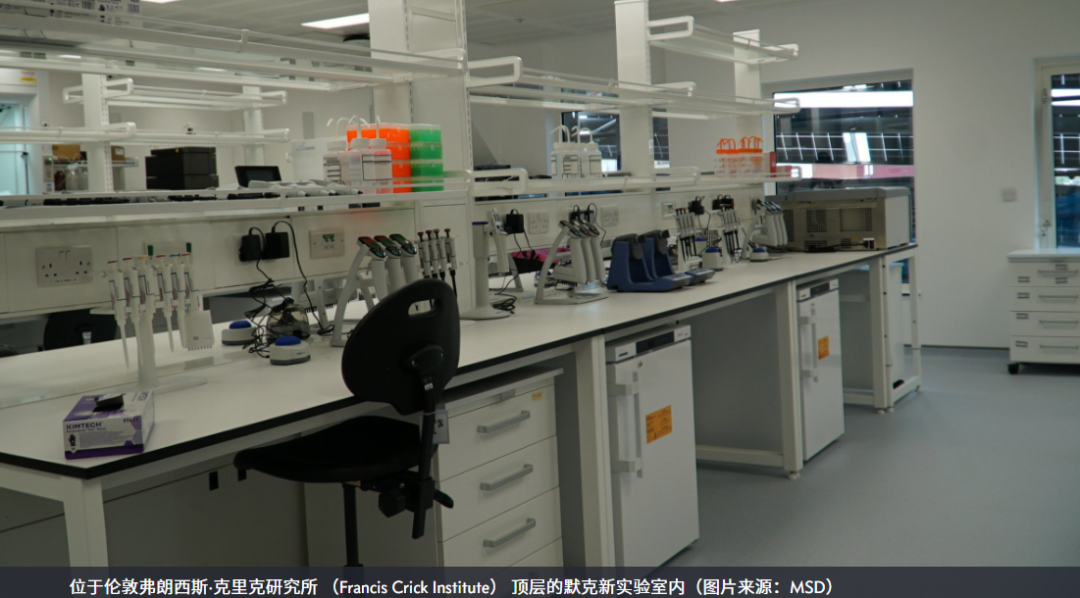
Merck & Co., Inc., known as MSD outside the United States, has taken over the site located atThe entire top floor of the Francis Crick Institute in King's Cross, the institute is a laboratory of GSK and AstraZeneca, equipped with professional labs for preclinical research. The Crick Institute invested 17 million US dollars in building the lab, and MSD provided equipment within a space of 1,098 square meters (11,800 square feet).
The new laboratory will focus on the preclinical development of Merck's neuroscience pipeline and, for the first time in the UK, push the company into the field of immunology research. There is a large chemistry lab, two smaller antibody development labs, one for biologics and one for biomarkers.
"Immunology is one of the key investment therapeutic areas on a growth trajectory. London is part of that growth," said Darren McKerrecher, Head of Discovery Chemistry at Merck, in an interview with Endpoints News at the new lab.
London is developing into a biotechnology and pharmaceutical hub, with areas like Canary Wharf investing $500 million in new life sciences buildings, and other major pharmaceutical companies also entering the region.
Merck has a larger facility under construction not far away. McKerrecher stated that the company is building a facility worth£1 billion ($1.3 million) headquarters, also located in King's Cross, with a total area of 25,000 square meters, spanning 10 floors, and employing 800 staff, 180 of whom will be R&D scientists. After the headquarters opens, MSD will relocate from the Crick Institute and its Moorgate location.
McKerrecher said that London not only provides proximity to potential partners such as University College London and the Wellcome Trust, but also offers Merck access to top talent. With Merck's new wet lab facilities, it is one of the few, if not the only, large pharmaceutical companies in London providing wet lab work. "We have the best options," McKerrecher said.
McKerrecher stated that the company is currently hiring approximately 50 employees rapidly, and the Crick Institute laboratory will be operating at full capacity in the first quarter of 2025.
MSD has been planning for life after Keytruda, the blockbuster cancer drug that accounted for 40% of the company’s revenue last year but will lose patent protection in 2028.
"We are excited about the next phase of the pipeline after Keytruda, and I think it’s generating a lot of excitement. And it’s not just in one therapeutic area," McKerrecher said. But it also includes a focus on immunology, where the company discussed the cross-scientific work in immuno-oncology. McKerrecher said it is also looking for candidates to develop treatments for irritable bowel disease and systemic sclerosis.