Source: Eye Future;Editor: Bai XiaofeiReprint Requirements: Can be reprinted 24 hours after the first publication, source must be credited.
Recently,The First Batch in ChinaJohnson & Johnson VisionTECNIS Symfony™ Toric IOL Intraocular LensImplant Surgery inShanghai Pure Eye HospitalSuccessfully carried out.Director Zhou Jing of the Cataract and Lens Diseases, Presbyopia Correction Center successfully appliedFemtosecond Laser Combined with TECNIS Symfony™ Toric IOL Implantation,Only One Surgery RequiredSolved the vision needs of a patient with severe cataracts.
TECNIS Symfony™ Toric IOL isThe World's FirstExtended Depth of Focus Toric Intraocular Lens, alsoJohnson & Johnson Vision's Continuous Focus FamilyThe First ProductToric Intraocular Lens, specifically designed for cataract patients with astigmatism. This product utilizes the patented "Echelette diffraction grating" technology to provide continuous, uninterrupted vision at all distances.Officially received registration approval from the National Medical Products Administration in October 2023, entering the Chinese market.
This productExtended Depth of Focus Toric Intraocular LensThe successful application marks another breakthrough for Pure Eye Hospital in introducing advanced technology for cataract treatment.Further enriches the options for intraocular lenses for cataract patients with astigmatism, and bring them a higher-quality integrated treatment solution for cataract surgery and astigmatism correction.
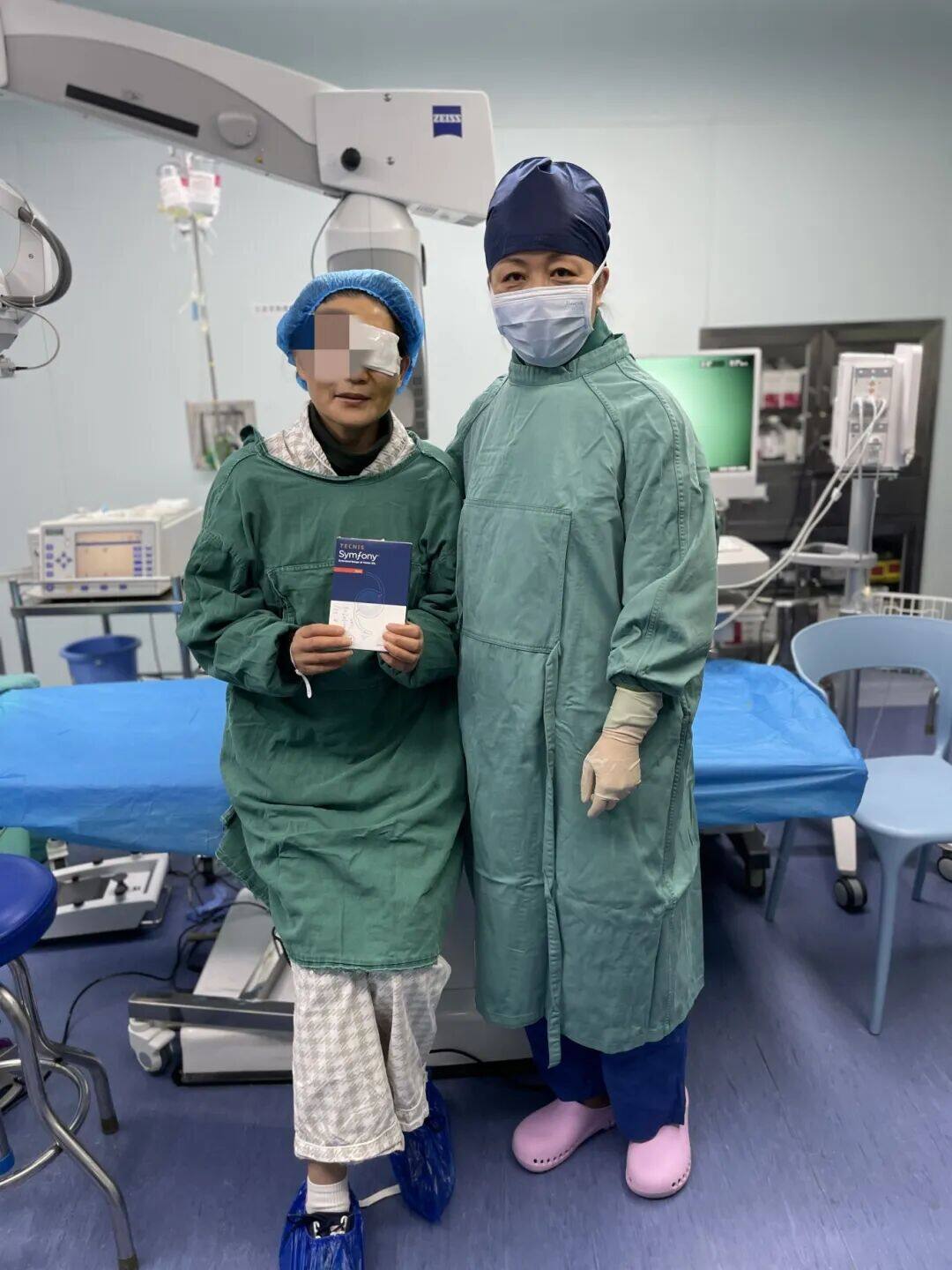
▲Originated fromShanghai Pure Eye Hospital
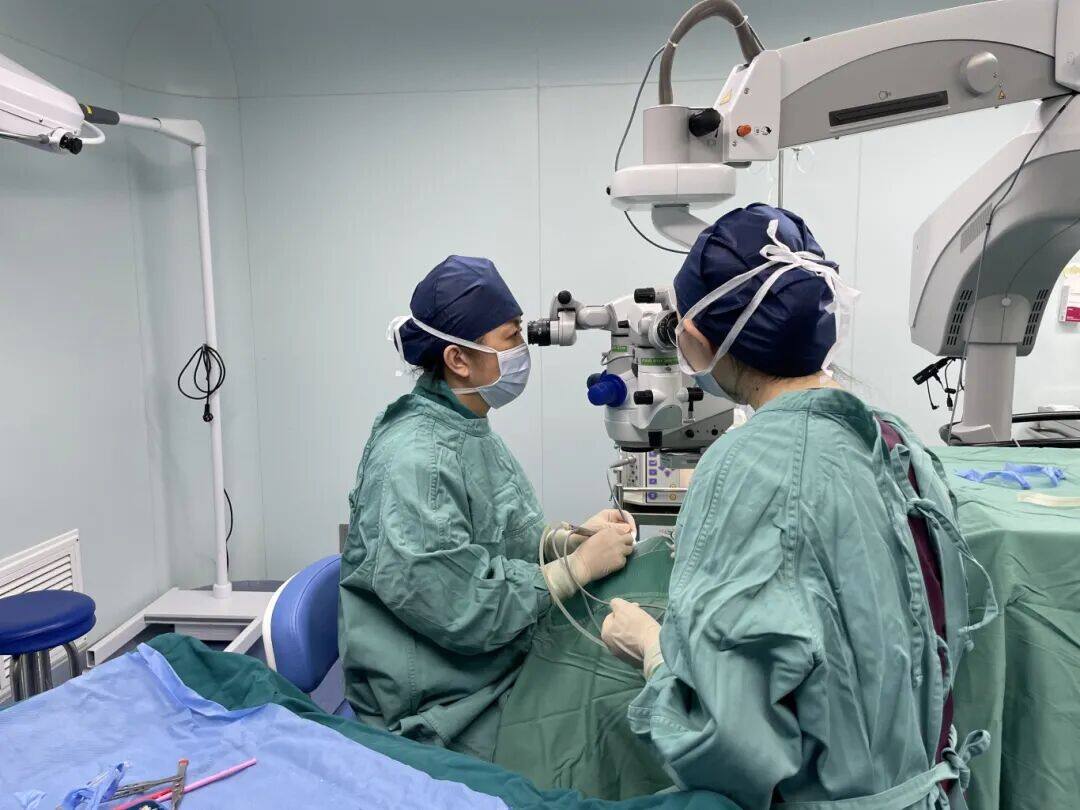
# Patient Details and Surgical PlanAunt Zhang, 58, has had hyperopia and astigmatism in both eyes since childhood. As she ages,Aunt Zhang's distant and near vision in both eyes has significantly declined, and she usually needs to wear multiple pairs of glasses to meet the needs of normal viewing., and usually have a series of severe visual fatigue symptoms such as easy tearing, eye soreness, dryness, and blurred vision.Aunt Zhang came to Shanghai Pure Eye Hospital for an examination. Dr. Zhou Jing, the leader of the cataract department and the director of the presbyopia correction center, conducted a detailed examination for Aunt Zhang and formulated a personalized surgical plan.Removed Aunt Zhang's cataract lens through femtosecond laser cataract surgery., simultaneouslyCombined TECNIS Symfony™ Toric IOL Implantation,One Surgery to Solve Patients' Distance, Intermediate, and Near Vision Needs, removing the glasses that had troubled her for many years. Aunt Zhang's postoperative vision recovered well, and she was very satisfied with the results.▲Director Zhou Jing Performs Surgery on Patient
Director Zhou stated, "The TECNIS Symfony™ Toric IOL, as a newly categorized intraocular lens for extended depth of focus and astigmatism correction,Combining advanced EDOF technology with astigmatism correction technology, Aiming atProvide patients with continuous, all-day vision from far to intermediate and near distances without astigmatism., high-quality image contrast, and excellent stability. AndActively responding to the national volume-based procurement of intraocular lenses, it was selected for the national volume-based procurement upon its market launch.", laying a solid foundation for its widespread clinical application and enhancing patient accessibility and satisfaction."# TECNIS Symfony™ Toric Intraocular Lens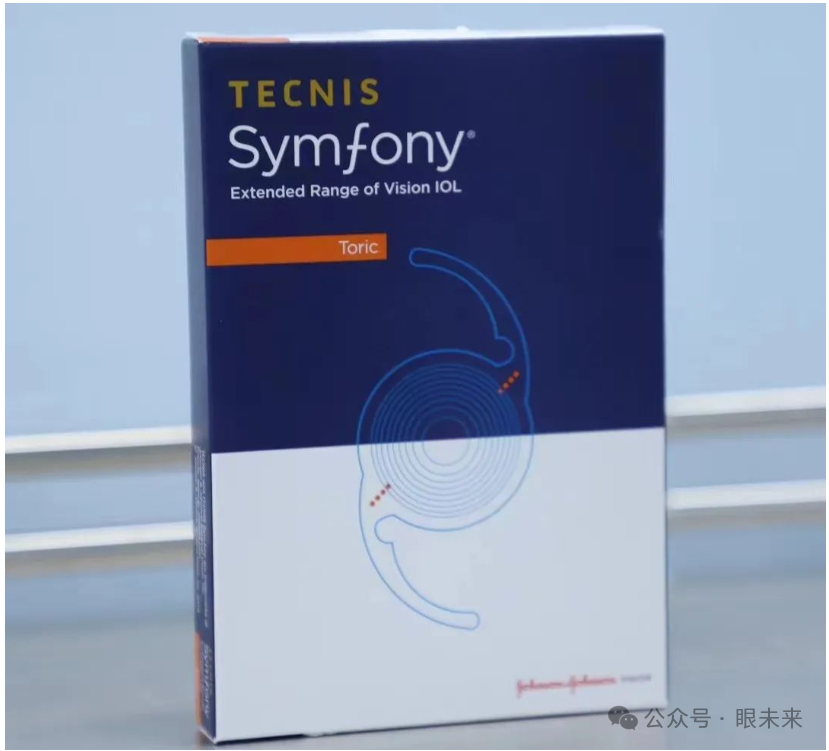 ▲Source: Company's official website
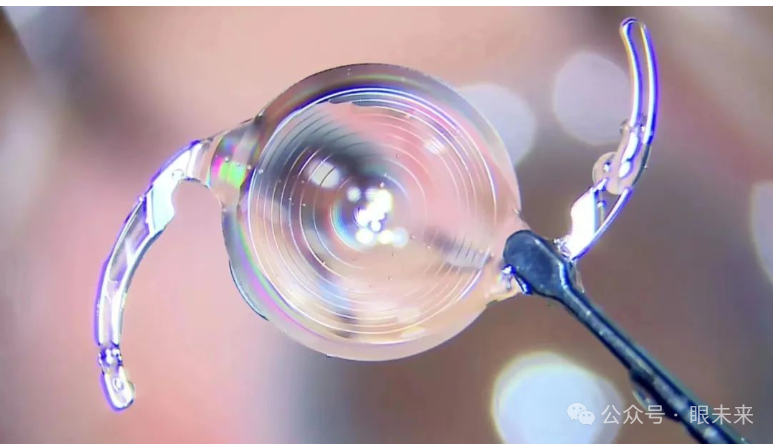
TECNIS Symfony™ Toric IOL isThe World's FirstExtended Depth of Focus Toric Intraocular Lens, specifically designed for cataract patients with astigmatism. The product utilizes a patented "Echelette Diffraction Grating"Technology,Provide full-range continuous vision without dispersion; Patent "Achromatic Active Achromatism Technology",Active correction of chromatic aberration,Providing High-Quality Contrast Sensitivity; and hasExcellent Stability, including long-term, refractive, and rotational stability.
 ▲Source: Company Official Website
By combining the EDOF continuous vision crystal patent"Echelette Diffraction Grating" TechnologyAndMultifocal LensThe technology, the crystal canAchieveFrom 33cm to far distance, providing high-quality continuous vision of 0.8 or above for cataract or presbyopia correction patients, enabling cataract patients with astigmatism to correct corneal astigmatism while achieving continuous, all-day, all-distance vision from far to near without blur.
It adoptsInnovative Hydrophobic Acrylic Material, canEffectively filter harmful ultraviolet light and reduce optical interference, ensuring nighttime driving safety while allowing beneficial blue light to pass through, enhancing visibility in low-light conditionsVisual quality, providing patients with better circadian rhythms, systemic health, mood, and sleep.
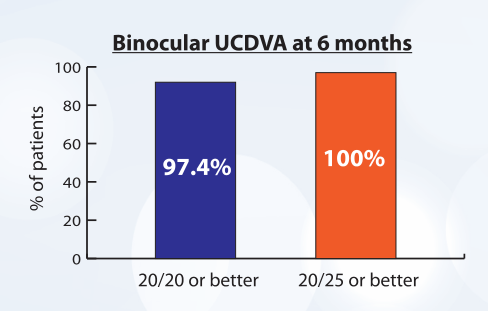
TECNIS Symfony™ Toric IOL has a certain tolerance for large Alpha angles and IOL decentration, with low dependency on pupil size, among mainstream presbyopia-correcting intraocular lenses.Can provide better low-light vision, offering patients superior visual quality, with a high rate of glasses-free vision at far and intermediate distances.。Studies have shown that in the case of residual astigmatism as high as 1.0 D,Using TECNIS Symfony™ Toric IOL can still maintain 20/20 or better vision.。After implantation of the TECNIS Symfony™ Toric IOL, an average postoperative cylinder correction of 0.32 ± 0.34D can be achieved.In a prospective, open-label, 6-month study, cataract patients with preoperative astigmatism who received the TECNIS Symfony™ Toric IOL implantation (n=39) achieved an average postoperative cylindrical correction of 0.32 ± 0.34D.92% of patients had postoperative residual refractive cylinder astigmatism ≤0.5D, and 97% of patients had postoperative residual refractive cylinder astigmatism ≤1.0D.。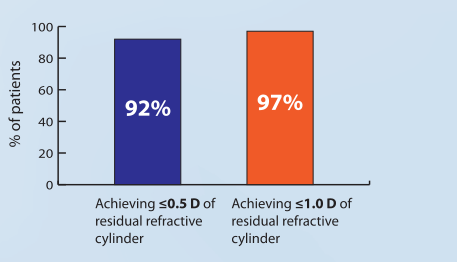
Compared with single-focus IOL, Toric IOL implantation can achieve less postoperative residual astigmatism and a higher rate of spectacle independence.However, postoperative attention should be paid to the risk of IOL rotation.Rotation of Toric IOL generally occurs within 1 week after surgery, and a rotation of more than 30° can completely negate the astigmatism correction effect. Therefore, more careful examination is needed in the early postoperative period after Toric IOL implantation.Generally, methods such as slit-lamp microscope examination after mydriasis, residual astigmatism detection, and wavefront aberration meter detection can be used to evaluate the clinical effect of the surgery and the stability of the IOL.。
TECNIS Symfony™ Toric IOL meets the ANSI Z80.30 rotational stability requirements for toric intraocular lenses.。A prospective, unmasked, randomized clinical trial evaluated the rotational stability of the TECNIS Symfony™ Toric IOL. The results showed,Among the listed time period/method combinations, except for one (89%),The percentage of eyes with rotation ≤5 degrees is greater than 90%.。The proportion of eyes with rotation ≤5 degrees analyzed using image analysis from 1 day to 1 month and from 1 day to 3 months was statistically significant.(p values all < 0.05)
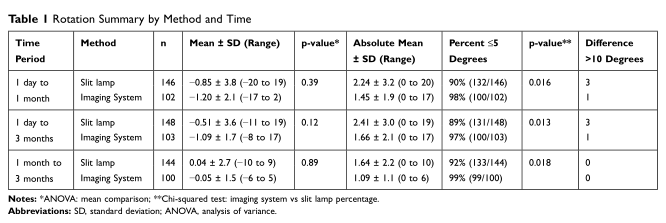 ▲Rotational Summary Data Based on Slit Lamp Measurements or Image Analysis Systems
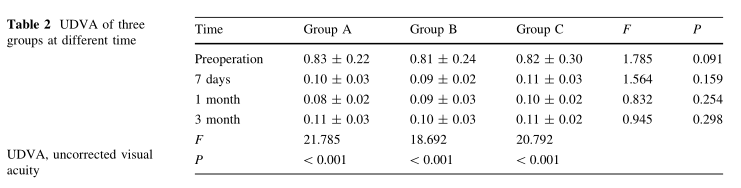
The Kappa angle refers to the angle between the visual axis (nodal axis) and the optical axis (pupil axis). In corneal refractive surgery, the ideal ablation center should completely overlap with the visual axis. With the advancement of cataract surgery techniques and the continuous improvement of intraocular lenses, especially the application of multifocal intraocular lenses with refractive or diffractive optical centers,A large Kappa angle can lead to postoperative visual quality degradation and visual discomfort such as glare.。TECNIS Symfony™ IOL Has Better Tolerance for Kappa Angle。A prospective clinical study enrolled 152 eyes of 103 patients who successively underwent cataract surgery and were implanted with TECNIS Symfony™ IOL at Daqing Oilfield General Hospital from January 2019 to September 2019. Patients were divided into three groups according to the preoperative Kappa angle (r):A(00.4)。Before surgery and 7 days, 1 month, and 3 months after surgeryPerform uncorrected visual acuity examination. Conduct comprehensive optometry, high-order aberration, and defocus examination 3 months after surgery.The results showed,Compared with preoperative levels, the uncorrected visual acuity of patients in all three groups significantly improved postoperatively.(P<0.001)。In addition,TECNIS Symfony™ IOL has a wide range of diopters and good tolerance for refractive errors.。
A prospective, comparative, non-randomized interventional study enrolled 44 patients (88 eyes) who underwent cataract surgery with bilateral implantation of either the extended range of vision intraocular lens (TECNIS Symfony™ IOL) or a monofocal intraocular lens (TECNIS ZCB00). Visual acuity, refraction, defocus curve, contrast sensitivity, optical phenomena, spectacle independence, and patient satisfaction were assessed at 4 months postoperatively.
The results showed,Most visual and refractive parameters showed no significant differences postoperatively between the two groups (all P≥0.27).The binocular uncorrected intermediate and near visual acuity in the continuous vision group was significantly better (P < 0.01).。
One of the reasons why patients choose the TECNIS Symfony™ IOL after LASIK surgery is its excellent tolerance for refractive errors.Not only that, but compared to monofocal IOL,TECNIS Symfony™ IOL Group Has Lower Dependence on Glasses for Intermediate and Near Vision。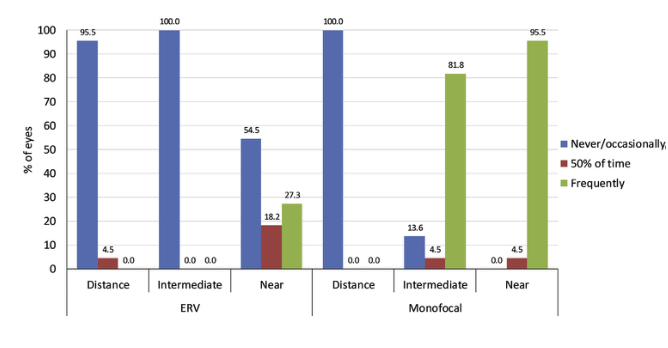 ▲Distribution of Spectacle Dependence Levels After Intraocular Lens Surgery
# About Johnson & Johnson
Johnson & Johnson (NYSE: JNJ), founded in 1886, is the world's most comprehensive healthcare enterprise with a wide range of business operations, coveringConsumer Goods, Pharmaceuticals, Medical DevicesThree major fields. Headquartered in New Brunswick, New Jersey, USA, with over 260 operating companies in more than 60 countries and regions worldwide, and a global workforce exceeding 140,000 employees.Johnson & Johnson Vision isJohnson & Johnson's ophthalmology division, with a rich product line, including: Johnson & Johnson Vision Care and Vision Health businesses.The main business of Johnson & Johnson Vision is surgical operations and related consumables., covering related surgical operations such as cataract and laser refractive surgery, with products including the artificial lens brand TECNIS, etc.Johnson & Johnson Vision Care mainly focuses on the contact lens business., with brands Acuvue and cosmetic lenses Blink, which are leading brands in the industry. In 1988, they launched the world's first replacement contact lens, and subsequently introduced daily disposables and cosmetic lenses, driving the transformation of the vision correction products industry at that time.